
Lee White (2)
Author of A Crazy Day At the Critter Cafe
For other authors named Lee White, see the disambiguation page.
Works by Lee White
What Are You Glad About? What Are You Mad About?: Poems for When a Person Needs a Poem (2016) — Illustrator — 93 copies, 6 reviews
The Maps of Memory: Return to Butterfly Hill (The Butterfly Hill Series) (2020) — Illustrator — 25 copies, 1 review
Tagged
Common Knowledge
- Short biography
- American illustrator specializing in watercolor style children's books.
"Lee White is a Denver based illustrator working in both traditional and digital mediums. His work can be seen all over the world in children's books and gallery walls. Lee has an affinity for storytelling and creating fun and whimsical worlds." -- official website
Members
Reviews
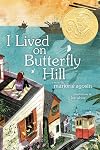
Reading children’s historical fiction I am always amazed at how much I don’t know about other countries. Celeste’s family is torn apart by a dictator’s rule in Chile. Although never mentioned by name, Pinochet is the model. History does repeat itself, as evidenced in her grandmother’s memories of escaping the Nazis in Germany. Agosin’s description of the dictatorship as an “earthquake of the soul” is poetic language for a horrible event. Eleven-year-old Celeste’s account of show more the disruption of school and family puts a real face to history. Both her parents go into hiding and she emigrates to Maine, living with an aunt until the dictator is deposed. Excellent historical fiction. show less
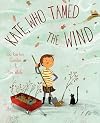
"What to do?" a man wonders from his house on the tip-top of a dusty hill, and his words (and his hat) float down to Kate on the wind. Kate knows that she cannot stop the wind, but she pulls a wagon full of tree saplings up to the man. Together they plant them. "The trees grew, and the wind blew, and the time flew. The time flew as the trees grew...and Kate did, too." The illustrations show Kate growing up and the man aging as the trees grow up to provide a windbreak.
A gentle story in show more rhythmic language, full of rhyme, about an intergenerational friendship, creative problem-solving, and ecosystems. Back matter includes "more about marvelous trees," and how readers can make a difference. The color palette and style is reminiscent of Kenard Pak's books about the seasons changing (Goodbye Summer, Hello Autumn). show less
A gentle story in show more rhythmic language, full of rhyme, about an intergenerational friendship, creative problem-solving, and ecosystems. Back matter includes "more about marvelous trees," and how readers can make a difference. The color palette and style is reminiscent of Kenard Pak's books about the seasons changing (Goodbye Summer, Hello Autumn). show less

This book whisked me away to Valparaíso, where I imagined myself riding a colorful cable car down the hills overlooking the ocean, as a pod of pelicans flew gracefully overhead. In my hands, I could almost feel the warmth of a bag filled with freshly baked empanadas from one of the charming bakeries just down the road.
This is a beautifully written realistic fiction for middle-grade children about the military takeover of Chile through the eyes of a young girl. It explores the themes of show more loss, displacement, and the power of hope and resilience. I learned that the author had escaped the terror of the Pinochet dictatorship with her family and drew heavily from her experience in this book.
Celeste, the protagonist, is smart, imaginative, and compassionate. She lives a privileged life and deeply loves her family, friends, and home. I particularly loved her bond with her grandmother. I love it when children are close to their grandparents.
What didn't work for me, however, were the length of the book and the pacing of the story. At 464 pages, this book is quite long! While I enjoyed and breezed through the first part of the novel, the second part dragged on to the point where I found myself getting bored and skipping pages, and the third part felt overly fantastical and rushed.
Despite these shortcomings, I find "I Lived on Butterfly Hill" a thought-provoking novel that sheds light on a dark chapter in Chilean history. Anyone interested in historical fiction or stories of resilience will enjoy this book. show less
This is a beautifully written realistic fiction for middle-grade children about the military takeover of Chile through the eyes of a young girl. It explores the themes of show more loss, displacement, and the power of hope and resilience. I learned that the author had escaped the terror of the Pinochet dictatorship with her family and drew heavily from her experience in this book.
Celeste, the protagonist, is smart, imaginative, and compassionate. She lives a privileged life and deeply loves her family, friends, and home. I particularly loved her bond with her grandmother. I love it when children are close to their grandparents.
What didn't work for me, however, were the length of the book and the pacing of the story. At 464 pages, this book is quite long! While I enjoyed and breezed through the first part of the novel, the second part dragged on to the point where I found myself getting bored and skipping pages, and the third part felt overly fantastical and rushed.
Despite these shortcomings, I find "I Lived on Butterfly Hill" a thought-provoking novel that sheds light on a dark chapter in Chilean history. Anyone interested in historical fiction or stories of resilience will enjoy this book. show less
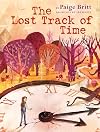
The Lost Track of Time
Paige Britt
320 page
Copy: ARC, publication date: 31 March 2015
Read: not sure; probably back in January
Spoilers: A fair bit, including ones for The Phantom Tollbooth
Crossposted: Children of an Idle Mind, Life Piled on Life
I adored this book. Scholastic has really hit it out of the park for the 2015 (more on this in later reviews), but this one has the making of a classic. Remember The Phantom Tollbooth? Or, at any rate, hopefully you remember it? (When I finished reading show more this book, and gushed about it to my best friend, she informed me that she hadn't actually read Tollbooth, and if she were living near me, I would have thrown copies at her. As it was, I just mailed one)
Most of the point of Phantom Tollbooth, aside from the word-play--complete with vocabulary: that's how I learned words like dodecahedron and din and doldrum and a lots of words starting with letters other than d--and the sheer adventure of the story, was that one needs to use one's mind. It was aimed at teaching young readers that boredom is laziness and that intelligence creates the best kind of adventure. It is, in short, truly inspiring.
But in multiple re-readings over time, I came up with a few quibbles. Firstly, the main character Milo is a boy. Now, there is nothing inherently wrong with being a boy. I suppose we need a few of those hanging around, and, frankly, at this point in children's literature, it is actually becoming more and more difficult to find books for intelligent boys who don't like spaceships or Greek gods. However, Tollbooth was published in 1961, and the only female characters are the Princesses of Rhyme and Reason, who have disappeared and are waiting to be rescued up in their Castle in the Air. Although I love the book, we don't need more princesses-in-need-of-rescue and, to be perfectly frank, why the fuck didn't a pair of sisters named Rhyme and Reason rescue themselves? (In more sympathetic moments, I suspect that they were taking a nice vacation and Milo's rescue was something of a nuisance). So: feminism is quibble one.
Quibble two: from what I can see, as neither child nor parent, kids don't seem to have any time to be bored. Sports, and lessons, and enforced hobbies; camps, clubs, classes; the horror that is smart phones: I don't actually think that middle class kids with well meaning parents actually have time to get bored. Getting bored is really important--as long as one doesn't get too bored, of course. Getting bored is what makes one's imagination kick into gear, it's what makes us go on adventures. No one goes on a true adventure because it would look good on a college transcript.
The Lost Track of Time addresses both of these quibbles. To be honest, my beef with Tollbooth was mostly subconscious until I came across this book. Penelope, the intrepid adventurer, suffers under a well-meaning organizational development type mother who runs her daughter's life like Penelope is another event to plan. Their various schedules--during which every fifteen minutes is accounted for--might be humorous to the target audience (8-12), but was verging on tear-jerking for me. To never have any free time! It is bad enough as an adult(ish), but for a child! Heartbreaking and all too much a part of reality.
Penelope, like Milo, escapes her predicament into an allegorical world of word-play and adventure, complete with anthropomorphized puns (my favorite was the Wild Bore), and a mythic figure to be rescued (The Great Moodler, moodling being day-dreaming). Her journey teaches the reader that schedules, just like boredom, can always go overboard.
Recommended for over-scheduled girls (if they can sneak away from their mothers to read it); for grandmothers to give to over-scheduled girls; and for anyone who has been an over-scheduled girl (warning: in that case, there could be tears.) show less
Paige Britt
320 page
Copy: ARC, publication date: 31 March 2015
Read: not sure; probably back in January
Spoilers: A fair bit, including ones for The Phantom Tollbooth
Crossposted: Children of an Idle Mind, Life Piled on Life
I adored this book. Scholastic has really hit it out of the park for the 2015 (more on this in later reviews), but this one has the making of a classic. Remember The Phantom Tollbooth? Or, at any rate, hopefully you remember it? (When I finished reading show more this book, and gushed about it to my best friend, she informed me that she hadn't actually read Tollbooth, and if she were living near me, I would have thrown copies at her. As it was, I just mailed one)
Most of the point of Phantom Tollbooth, aside from the word-play--complete with vocabulary: that's how I learned words like dodecahedron and din and doldrum and a lots of words starting with letters other than d--and the sheer adventure of the story, was that one needs to use one's mind. It was aimed at teaching young readers that boredom is laziness and that intelligence creates the best kind of adventure. It is, in short, truly inspiring.
But in multiple re-readings over time, I came up with a few quibbles. Firstly, the main character Milo is a boy. Now, there is nothing inherently wrong with being a boy. I suppose we need a few of those hanging around, and, frankly, at this point in children's literature, it is actually becoming more and more difficult to find books for intelligent boys who don't like spaceships or Greek gods. However, Tollbooth was published in 1961, and the only female characters are the Princesses of Rhyme and Reason, who have disappeared and are waiting to be rescued up in their Castle in the Air. Although I love the book, we don't need more princesses-in-need-of-rescue and, to be perfectly frank, why the fuck didn't a pair of sisters named Rhyme and Reason rescue themselves? (In more sympathetic moments, I suspect that they were taking a nice vacation and Milo's rescue was something of a nuisance). So: feminism is quibble one.
Quibble two: from what I can see, as neither child nor parent, kids don't seem to have any time to be bored. Sports, and lessons, and enforced hobbies; camps, clubs, classes; the horror that is smart phones: I don't actually think that middle class kids with well meaning parents actually have time to get bored. Getting bored is really important--as long as one doesn't get too bored, of course. Getting bored is what makes one's imagination kick into gear, it's what makes us go on adventures. No one goes on a true adventure because it would look good on a college transcript.
The Lost Track of Time addresses both of these quibbles. To be honest, my beef with Tollbooth was mostly subconscious until I came across this book. Penelope, the intrepid adventurer, suffers under a well-meaning organizational development type mother who runs her daughter's life like Penelope is another event to plan. Their various schedules--during which every fifteen minutes is accounted for--might be humorous to the target audience (8-12), but was verging on tear-jerking for me. To never have any free time! It is bad enough as an adult(ish), but for a child! Heartbreaking and all too much a part of reality.
Penelope, like Milo, escapes her predicament into an allegorical world of word-play and adventure, complete with anthropomorphized puns (my favorite was the Wild Bore), and a mythic figure to be rescued (The Great Moodler, moodling being day-dreaming). Her journey teaches the reader that schedules, just like boredom, can always go overboard.
Recommended for over-scheduled girls (if they can sneak away from their mothers to read it); for grandmothers to give to over-scheduled girls; and for anyone who has been an over-scheduled girl (warning: in that case, there could be tears.) show less
Lists
Awards


You May Also Like
Associated Authors
Statistics
- Works
- 20
- Members
- 2,330
- Popularity
- #11,014
- Rating
- 3.9
- Reviews
- 90
- ISBNs
- 91
- Languages
- 4