
Stephen Wolfram
Author of A New Kind of Science
About the Author
Stephen Worfram is a distinguished scientist and best-selling author, and the creator of some of the world's most respected software systems, including Mathematica, Wolfram/Alpha and the Wolfram Language. For more than 30 years he has been the CEO of the global technology company Wolfram Research.
Works by Stephen Wolfram
Idea Makers: Personal Perspectives on the Lives & Ideas of Some Notable People (2016) 109 copies, 1 review
Theory and Application of Cellular Automata (Advanced Series on Complex Systems, Volume 1) (1986) 9 copies
Das Geheimnis hinter ChatGPT: Wie die KI arbeitet und warum sie funktioniert (German Edition) (2023) 3 copies
Associated Works
Tagged
Common Knowledge
- Birthdate
- 1959-08-29
- Gender
- male
- Education
- University of Oxford (St John's College)
California Institute of Technology (PhD ∙ Theoretical Physics ∙ 1979) - Occupations
- mathematician
- Organizations
- Wolfram Research (founder)
California Institute of Technology (1979-1983)
Institute for Advanced Study (1983-1986)
University of Illinois, Urbana-Champaign (1986-1988) - Relationships
- Wolfram, Hugo (father)
- Nationality
- UK
UK - Birthplace
- London, England, UK
- Associated Place (for map)
- England, UK
Members
Reviews
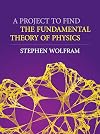
We are barely out of the period where we thought the Earth perched on the back of a turtle, was flat, was at the center of the universe and that we had discovered everything there was to discover without even knowing about atoms. Do we now suddenly know enough to be able to propose a unified theory of physics and therefore the universe? Do we now know every particle and its role?
Stephen Wolfram has a kind of workaround for those questions. Decades ago, he got waylaid by the potential of show more computers and the joys of discovery and invention in that field. Now, having just turned 60, he is coming back to his roots (He published his first physics paper at 15), throwing the doors wide open to tackle the holy grail – the underlying, fundamental theory of physics that dictates how the universe works, why it looks and works the way it does, and where it goes from here.
In his nearly 800 page announcement, called A Project To Find the Fundamental Theory of Physics, Wolfram expresses his delight to be able to do this now. He says had he tried decades ago, he would not have had the tools to launch or succeed in this effort. He created those tools himself, for other purposes. And along the way, he picked up a better understanding of what he faces: “We won’t be able to get even close to running those models for as long as the universe does. And at the outset it’s not clear that we’ll be able to tell enough from what we can do to see if it matches up with physics.”
He drops some important hints as to what has changed in his mind:
-“General relativity and quantum mechanics are basically the same thing.” This solves a huge conflict in modeling, and Wolfram “proves” it using simplified examples of causal invariance that by definition, end up branching back to the same state. This conveniently eliminates any potential conflicts.
-“I have an estimate that says that 10200 times more ‘activity’ in the hypergraph that represents our universe is going to ‘maintaining the structure of space’ than is going into maintaining all the matter we know exists in the universe.” So the universe is largely on maintenance.
Let those points guide your own theory attempts.
The book is about the fundamentals of modeling. He shows with great simplicity that a rule for a variable produces astoundingly complex images if repeated often enough. The book is festooned with an immense variety of results, from the basic rule to the first simple iterations, the point where before or after the very next step takes it into a new level, and then a 3D model of the result. If only for the graphics, the book is gorgeous. Wolfram makes great use of color to show what has changed from iteration to iteration, how structures differ, and to highlight what he talks about.
It is also an inspiration. If such simple rules (For every occurrence of AB, substitute BA) produce such sophisticated structures, there must be a way to structure a universe somewhere in there. In typical Wolfram fashion, he is opening up the treasure chest of tools and data to all comers. His meetings are livestreamed and recorded. He is making the collection of rules experiments, called notebooks, available to all, and allowing anyone to create their own using his tools. One way or another, Wolfram would love to see someone make a major breakthrough in the ultimate quest of physics. Starting with this book is a pleasant way to begin.
It could have been dauntingly technical, but Wolfram has made it appealing to all comers. Readers do not have to absorb the formulas or ponder the origins of the universe to enjoy it. The sections are color coded with tabs on the outer corners. It is actually a fast read. My only complaints are tiny type and graphics (This is the first book I have read with magnifying glass handy instead of a search engine), and paper so thin that images from the back side of the page are clearly interfering.
For this project to work, Wolfram simplifies by saying he thinks the universe is just a computer, carrying out formulas and rules. It’s all routine and predictable. He says the only thing special in the universe is ourselves.
David Wineberg show less
Stephen Wolfram has a kind of workaround for those questions. Decades ago, he got waylaid by the potential of show more computers and the joys of discovery and invention in that field. Now, having just turned 60, he is coming back to his roots (He published his first physics paper at 15), throwing the doors wide open to tackle the holy grail – the underlying, fundamental theory of physics that dictates how the universe works, why it looks and works the way it does, and where it goes from here.
In his nearly 800 page announcement, called A Project To Find the Fundamental Theory of Physics, Wolfram expresses his delight to be able to do this now. He says had he tried decades ago, he would not have had the tools to launch or succeed in this effort. He created those tools himself, for other purposes. And along the way, he picked up a better understanding of what he faces: “We won’t be able to get even close to running those models for as long as the universe does. And at the outset it’s not clear that we’ll be able to tell enough from what we can do to see if it matches up with physics.”
He drops some important hints as to what has changed in his mind:
-“General relativity and quantum mechanics are basically the same thing.” This solves a huge conflict in modeling, and Wolfram “proves” it using simplified examples of causal invariance that by definition, end up branching back to the same state. This conveniently eliminates any potential conflicts.
-“I have an estimate that says that 10200 times more ‘activity’ in the hypergraph that represents our universe is going to ‘maintaining the structure of space’ than is going into maintaining all the matter we know exists in the universe.” So the universe is largely on maintenance.
Let those points guide your own theory attempts.
The book is about the fundamentals of modeling. He shows with great simplicity that a rule for a variable produces astoundingly complex images if repeated often enough. The book is festooned with an immense variety of results, from the basic rule to the first simple iterations, the point where before or after the very next step takes it into a new level, and then a 3D model of the result. If only for the graphics, the book is gorgeous. Wolfram makes great use of color to show what has changed from iteration to iteration, how structures differ, and to highlight what he talks about.
It is also an inspiration. If such simple rules (For every occurrence of AB, substitute BA) produce such sophisticated structures, there must be a way to structure a universe somewhere in there. In typical Wolfram fashion, he is opening up the treasure chest of tools and data to all comers. His meetings are livestreamed and recorded. He is making the collection of rules experiments, called notebooks, available to all, and allowing anyone to create their own using his tools. One way or another, Wolfram would love to see someone make a major breakthrough in the ultimate quest of physics. Starting with this book is a pleasant way to begin.
It could have been dauntingly technical, but Wolfram has made it appealing to all comers. Readers do not have to absorb the formulas or ponder the origins of the universe to enjoy it. The sections are color coded with tabs on the outer corners. It is actually a fast read. My only complaints are tiny type and graphics (This is the first book I have read with magnifying glass handy instead of a search engine), and paper so thin that images from the back side of the page are clearly interfering.
For this project to work, Wolfram simplifies by saying he thinks the universe is just a computer, carrying out formulas and rules. It’s all routine and predictable. He says the only thing special in the universe is ourselves.
David Wineberg show less
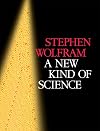
Many of the reviews of this book have been quite savage, but the savageness, it seems to me, is inversely related to the fraction of the book that the reviewer had actually read. I, like many others, was aware of the marketing hype before its publication, and waited for its production with a feeling something like that of a child anticipating a Christmas, an incomprehensible number of weeks off.
I actually read a good part of this book, and found it to be something quite awesome. Moreover, I show more was not at all put off by its idiosyncratic style, and I much appreciated its typography, layout and the richness in its illustrations. I was awed at the scope of the work, much provoked and entertained by it. A faithful user of Mathematica (I used it to derive my first simulation of the trebuchet, described at www.algobeautytreb.com), I am awed by the number of programs that Wolfram lists.
Perhaps the most impressive aspect of this work is the breadth of topics that are covered. Computational hydrodynamics and thermodynamics, free will and language, cryptography and logic, quantum mechanics and Feynmen diagrams, crystallization, coarsening foams and sandpiles, evolution and embryology, traffic and financial markets. Is there any other work having a single author that encompasses such a collection?
The notes section, about 300 pages long, is wonderful to read all by itself. Each topic has its bit of history related, and there are many descriptions of things discovered and things yet to be discovered, told in a most entertaining and readable style. I could even recommend, perhaps, that some readers should read this section first.
My reaction toward the "bottom line" hypothesis, that cellular automata provide a real breakthrough in understanding the world, is a little agnostic, perhaps. Interesting in many ways, and the hydrodynamic model is clearly a fruitful one--I've seen some quite stunning movies of certain phenomena (such as two liquids of different density that are mixing). I really can't evaluate some of the claims Wolfram makes, and others seem to be a bit overblown. I guess my feeling is something like the child that woke up on Christmas morning hoping for that bicycle, but finding a chemistry set instead. While I didn't get exactly what I'd hoped for, the chemistry set is intriguing--something may come of it yet! show less
I actually read a good part of this book, and found it to be something quite awesome. Moreover, I show more was not at all put off by its idiosyncratic style, and I much appreciated its typography, layout and the richness in its illustrations. I was awed at the scope of the work, much provoked and entertained by it. A faithful user of Mathematica (I used it to derive my first simulation of the trebuchet, described at www.algobeautytreb.com), I am awed by the number of programs that Wolfram lists.
Perhaps the most impressive aspect of this work is the breadth of topics that are covered. Computational hydrodynamics and thermodynamics, free will and language, cryptography and logic, quantum mechanics and Feynmen diagrams, crystallization, coarsening foams and sandpiles, evolution and embryology, traffic and financial markets. Is there any other work having a single author that encompasses such a collection?
The notes section, about 300 pages long, is wonderful to read all by itself. Each topic has its bit of history related, and there are many descriptions of things discovered and things yet to be discovered, told in a most entertaining and readable style. I could even recommend, perhaps, that some readers should read this section first.
My reaction toward the "bottom line" hypothesis, that cellular automata provide a real breakthrough in understanding the world, is a little agnostic, perhaps. Interesting in many ways, and the hydrodynamic model is clearly a fruitful one--I've seen some quite stunning movies of certain phenomena (such as two liquids of different density that are mixing). I really can't evaluate some of the claims Wolfram makes, and others seem to be a bit overblown. I guess my feeling is something like the child that woke up on Christmas morning hoping for that bicycle, but finding a chemistry set instead. While I didn't get exactly what I'd hoped for, the chemistry set is intriguing--something may come of it yet! show less

There's an old warning passed down in STEM circles. Back when the loom was the most advanced machine on the planet, the leading metaphor for how brains worked was as a loom. As telephones began being strung across the country, the this metaphor shifted---now the brain was like a telephone switchboard. These days the brain is like a computer, but I'm reasonably sure it's going to stay a computer. My point is that our familiarities inform the metaphors we use, but it's worth keeping in mind show more *that these things are just metaphors.*
Wolfram falls victim to this. Not only are brains computers, but they are in fact /computation itself/. Intelligence is merely computation. Weather systems are merely computations. Thus, Wolfram says, weather systems are intelligent too. This is a neat trick of semantics, but it's ultimately useless. The word "intelligence" refers to human-like-things, and not to weather-like-things, regardless of any computational similarities they have under the surface. Wolfram eventually concedes the point, but it left a sour taste in my mouth. If he's going to argue in clear circles like this one, why should I trust his reasoning on other things where I find the causal relationships less clear?
"Everything is computation" is the claim, and Wolfram follows this argument to its limit---that Godelian proofs are thus a limiting factor in every endeavor. We're unable to predict the future because of the halting problem. We're unable to distinguish meaning because doing so is equivalent to solving the halting problem. Et cetera.
This all may be true, but it seems like grasping at straws from a man who has this to say about mathematics: "what I’ve concluded is that actually the mathematics we have today is really just a historical accident: the direct generalization of the arithmetic and geometry that happened to be used in ancient Babylon. So it’s just history that makes the particular axiom systems we’re using seem meaningful to us."
Yes, the halting problem is a very real phenomenon, but the vast majority of the time it doesn't strike in full generality; we can often approximate solutions. And, this is all based on the assumption that the universe itself is subject to Curry-Howard. Maybe, but then again the only evidence we have is that there don't appear to be any NP-complete problems in nature.
Computation and the Future of the Human Condition isn't all bad though. It's a short enough read that you can get through it in one sitting, and it'll definitely provoke interesting thoughts. That being said, it's not Wolfram's best work. A better read is his blog post Showing Off to the Universe (http://blog.stephenwolfram.com/2018/01/showing-off-to-the-universe-beacons-for-the-afterlife-of-our-civilization/) which better details his arguments and is free. show less
Wolfram falls victim to this. Not only are brains computers, but they are in fact /computation itself/. Intelligence is merely computation. Weather systems are merely computations. Thus, Wolfram says, weather systems are intelligent too. This is a neat trick of semantics, but it's ultimately useless. The word "intelligence" refers to human-like-things, and not to weather-like-things, regardless of any computational similarities they have under the surface. Wolfram eventually concedes the point, but it left a sour taste in my mouth. If he's going to argue in clear circles like this one, why should I trust his reasoning on other things where I find the causal relationships less clear?
"Everything is computation" is the claim, and Wolfram follows this argument to its limit---that Godelian proofs are thus a limiting factor in every endeavor. We're unable to predict the future because of the halting problem. We're unable to distinguish meaning because doing so is equivalent to solving the halting problem. Et cetera.
This all may be true, but it seems like grasping at straws from a man who has this to say about mathematics: "what I’ve concluded is that actually the mathematics we have today is really just a historical accident: the direct generalization of the arithmetic and geometry that happened to be used in ancient Babylon. So it’s just history that makes the particular axiom systems we’re using seem meaningful to us."
Yes, the halting problem is a very real phenomenon, but the vast majority of the time it doesn't strike in full generality; we can often approximate solutions. And, this is all based on the assumption that the universe itself is subject to Curry-Howard. Maybe, but then again the only evidence we have is that there don't appear to be any NP-complete problems in nature.
Computation and the Future of the Human Condition isn't all bad though. It's a short enough read that you can get through it in one sitting, and it'll definitely provoke interesting thoughts. That being said, it's not Wolfram's best work. A better read is his blog post Showing Off to the Universe (http://blog.stephenwolfram.com/2018/01/showing-off-to-the-universe-beacons-for-the-afterlife-of-our-civilization/) which better details his arguments and is free. show less
Dear FSM, what a rambling mess of a book. This review is going to be longer than usual for me, as I have a lot of bile to get out of my system.
As I read through the first several pages, I was bemused by the author's arrogant and lofty tone. I was willing to give him a bit of credit, if he had any logical backup behind it.
Finished the introduction. The book makes clear its intentions: to analyze and reduce complex phenomenon to simple mathematical representations. Not bad, but hardly show more revolutionary. This had been done in various forms since Newton, perhaps even earlier, if you play fast and loose with my terms. Simple rules can produce complex results. Every CompSci student now knows this.
After this, the book rapidly goes downhill. What follows are several hundred slogging pages of examples, and after that, faulty hypothetical applications to such disparate fields as evolution, cognitive science, complexity theory, gravity, quantum mechanics, etc. Most of his methods are either demonstrably false, or so reduced in effectiveness as to be useless, or restatements of ideas already discovered - without giving any fair credit. The author frequently downplays the contributions of other scientists, even trying to reduce Turing, Zuse, and Goedel to mere footnotes in his book, and blandly restating simplified or distorted or useless or plagiarized versions of their discoveries.
The author's arrogant tone does nothing to help his case. This book is a damned foolish waste of time, and I expected a hell of a lot better. What a shame. The creator of Mathematica and Wolfram Alpha (both excellent tools) should stick with those. show less
As I read through the first several pages, I was bemused by the author's arrogant and lofty tone. I was willing to give him a bit of credit, if he had any logical backup behind it.
Finished the introduction. The book makes clear its intentions: to analyze and reduce complex phenomenon to simple mathematical representations. Not bad, but hardly show more revolutionary. This had been done in various forms since Newton, perhaps even earlier, if you play fast and loose with my terms. Simple rules can produce complex results. Every CompSci student now knows this.
After this, the book rapidly goes downhill. What follows are several hundred slogging pages of examples, and after that, faulty hypothetical applications to such disparate fields as evolution, cognitive science, complexity theory, gravity, quantum mechanics, etc. Most of his methods are either demonstrably false, or so reduced in effectiveness as to be useless, or restatements of ideas already discovered - without giving any fair credit. The author frequently downplays the contributions of other scientists, even trying to reduce Turing, Zuse, and Goedel to mere footnotes in his book, and blandly restating simplified or distorted or useless or plagiarized versions of their discoveries.
The author's arrogant tone does nothing to help his case. This book is a damned foolish waste of time, and I expected a hell of a lot better. What a shame. The creator of Mathematica and Wolfram Alpha (both excellent tools) should stick with those. show less
Lists
Awards


You May Also Like


Associated Authors
Statistics
- Works
- 35
- Also by
- 1
- Members
- 2,765
- Popularity
- #9,275
- Rating
- 3.4
- Reviews
- 34
- ISBNs
- 56
- Languages
- 3
- Favorited
- 1
