
Folio Archives 264: A Shameful Revenge and Other Stories by Maria de Zayas y Sotomayor 1963
Talk Folio Society Devotees
Join LibraryThing to post.
1wcarter
A Shameful Revenge and Other Stories by Maria de Zayas y Sotomayor 1963
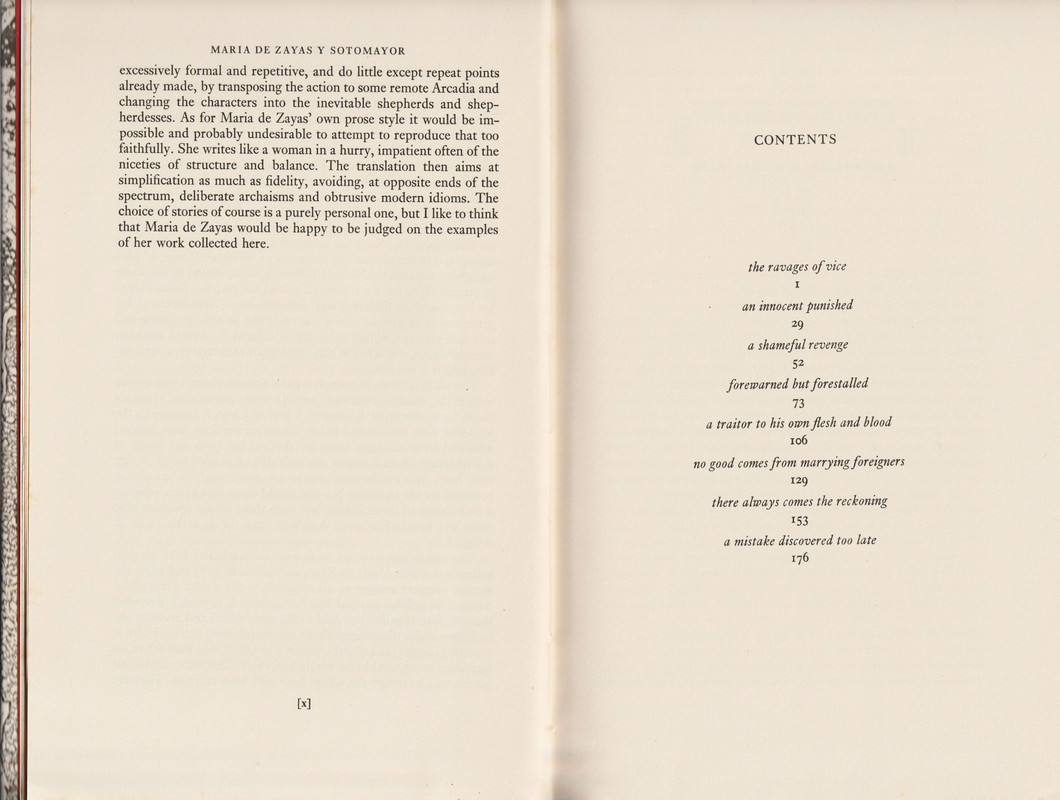
Maria de Zayas y Sotomayor lived between about 1590 and 1660, but exactly when in her life she wrote these stories is unknown. Her creatively convoluted intrigues are amazing short stories for their era, particularly as they were written by a woman at a time when educated women in Spain were kept very much under the control of their husbands – as described in several of the stories.
The tales are all about romantic intrigues, forbidden love and the constant hunt by men for women. In most of the stories, the woman has the last laugh as the man becomes a character of ridicule for his misdeeds, but sometimes the woman who has trusted a man is left destitute. Each tale has a moral and all are set in the upper levels of Spanish society. Many have unexpected plot twists that are amazingly sophisticated for the era.
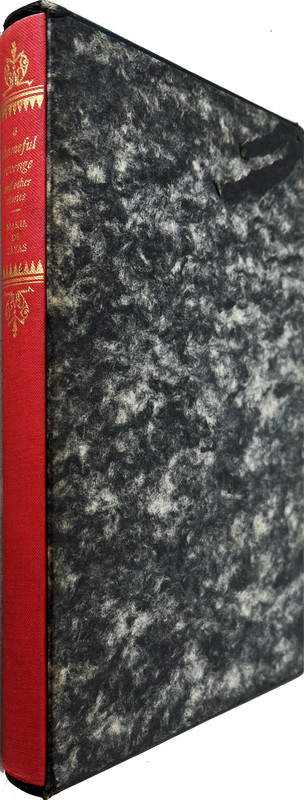
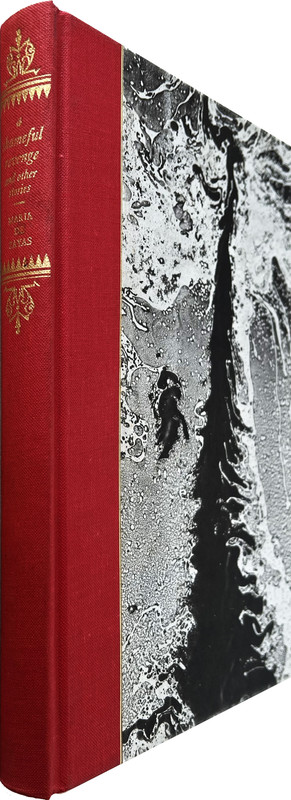
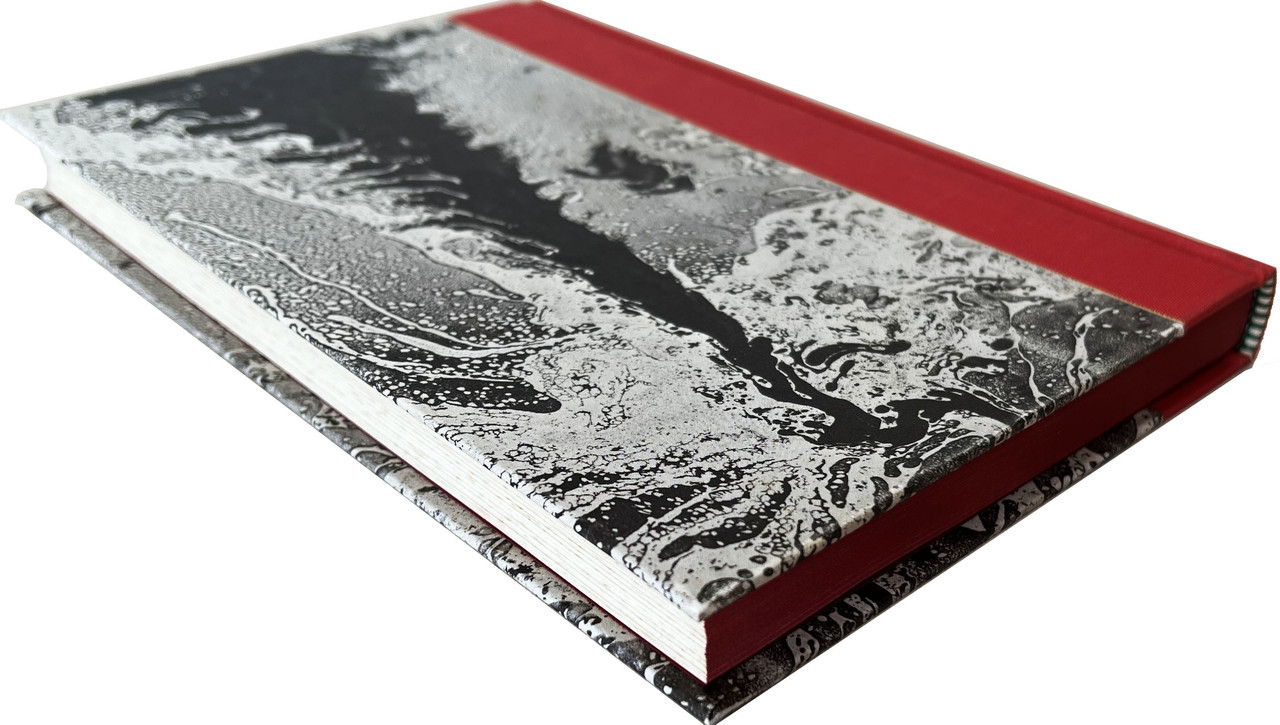
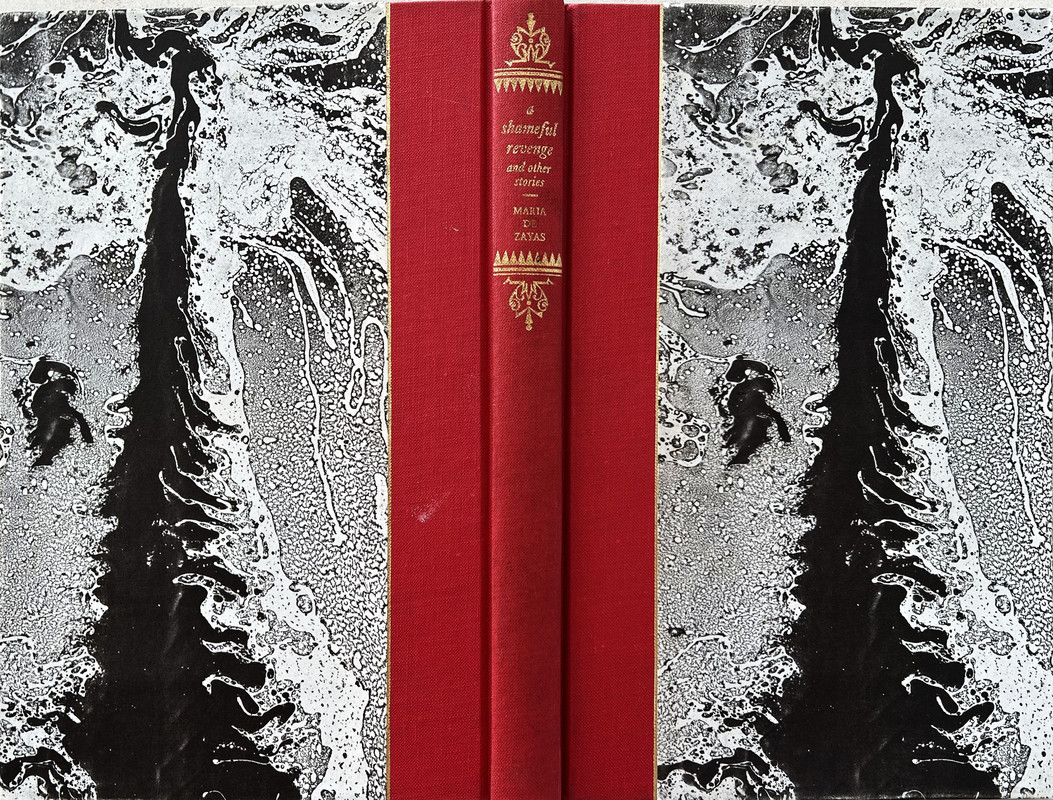
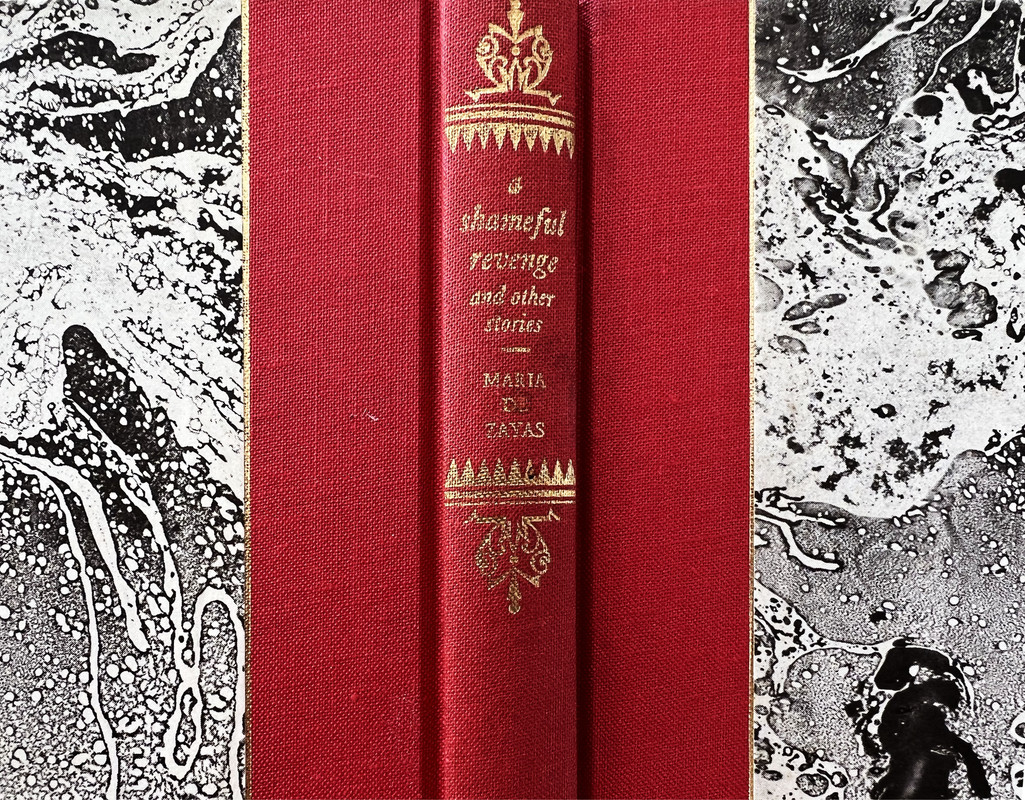
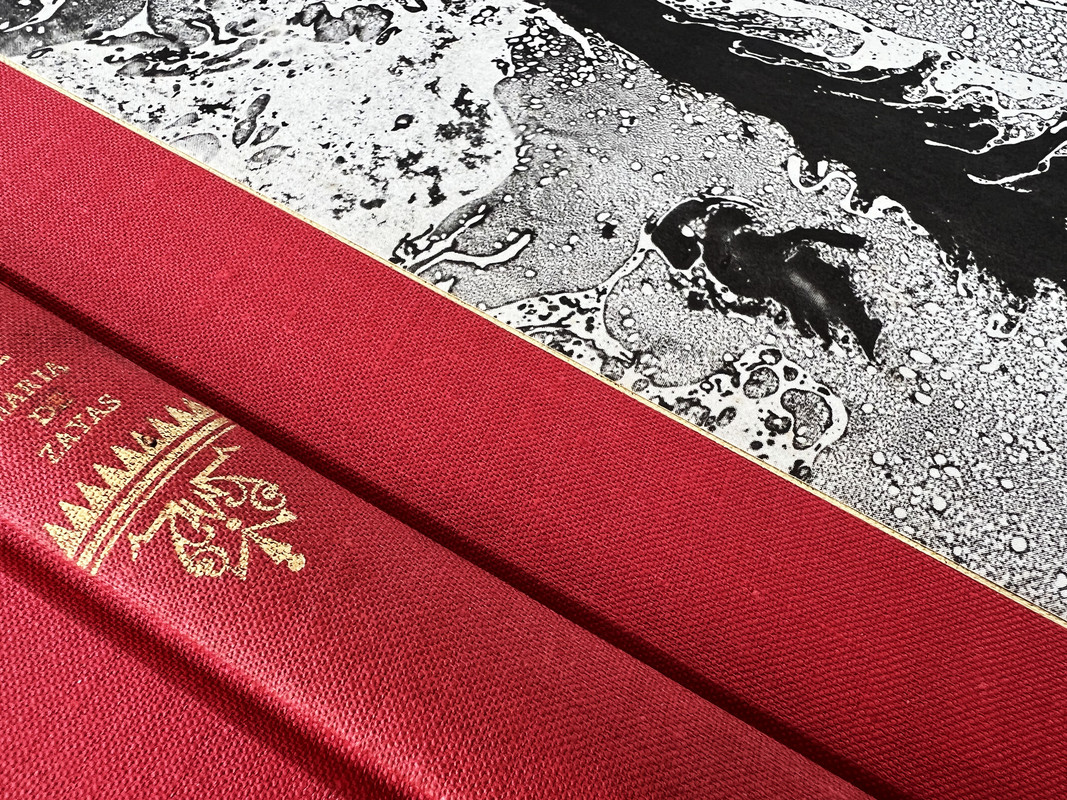
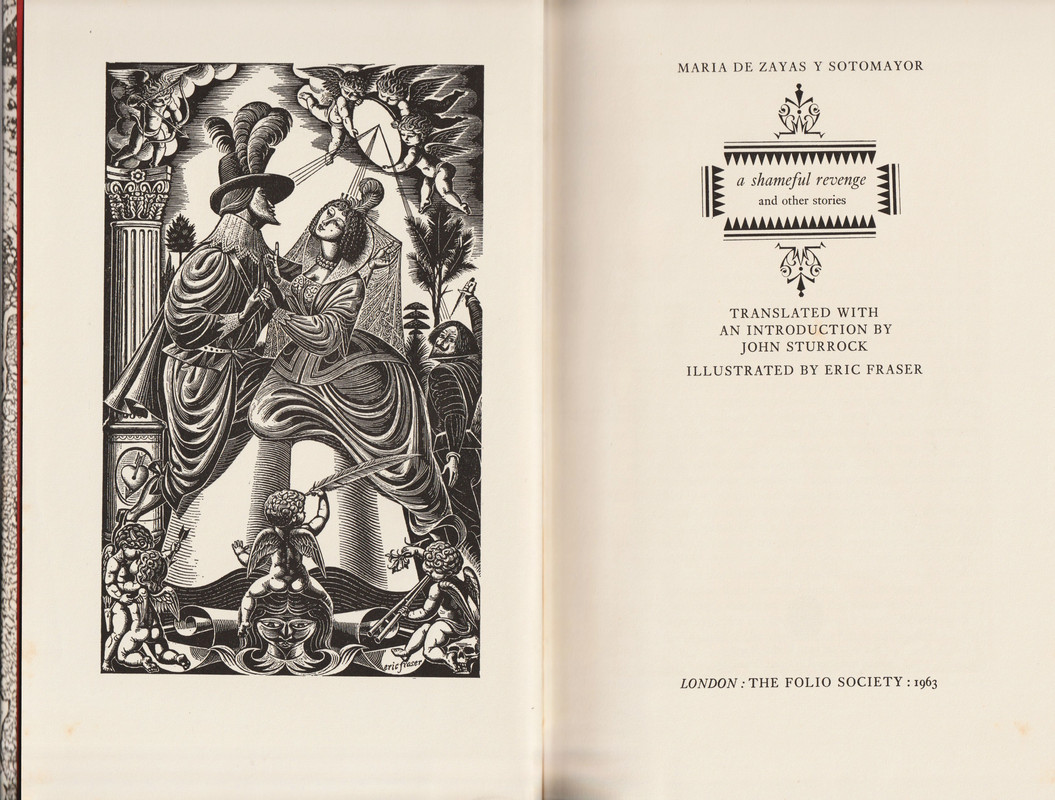
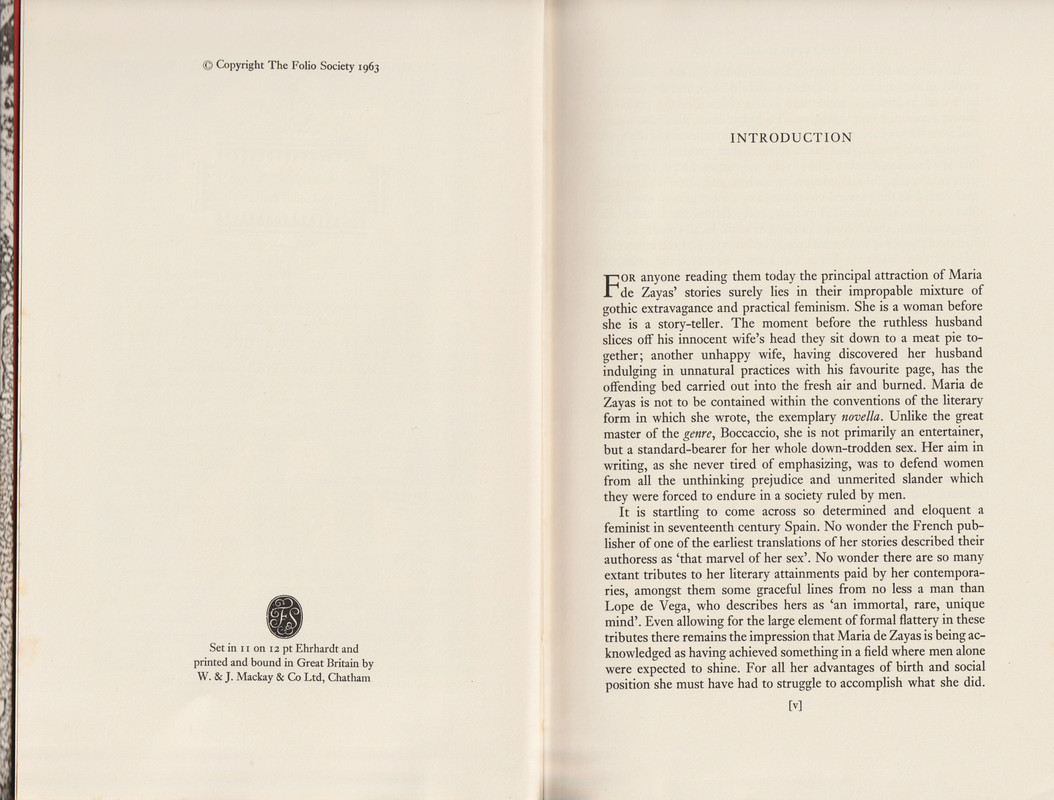
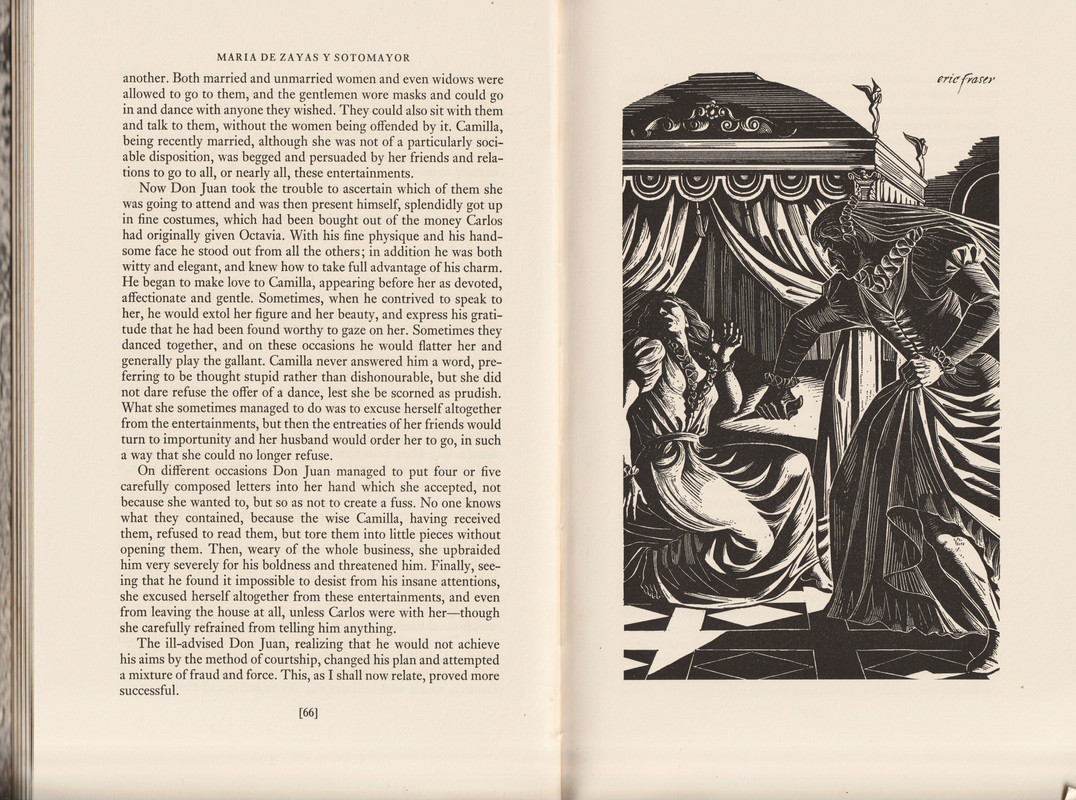
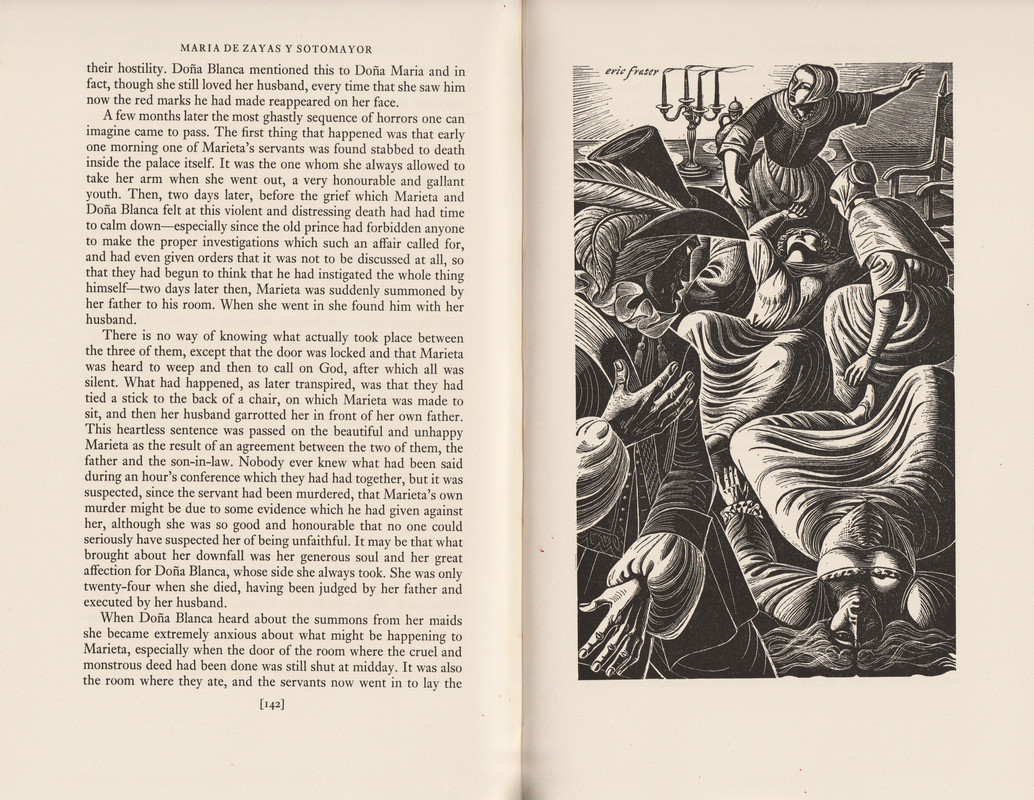
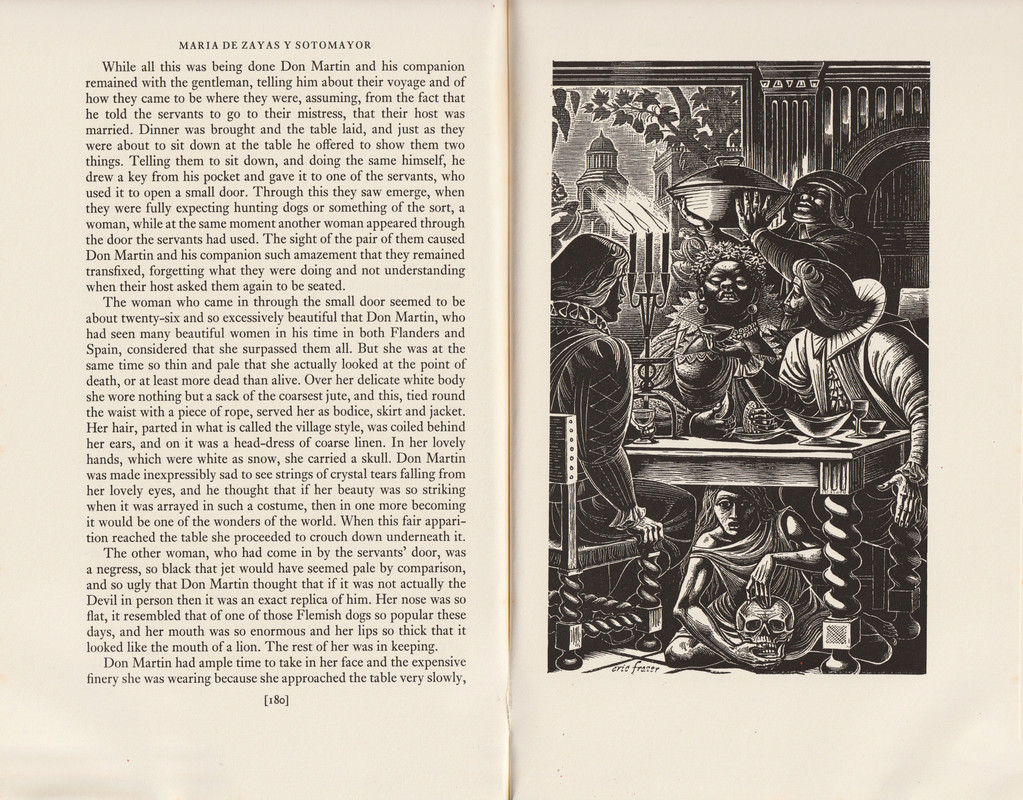
The eight short stories each have their own full page illustrative engraving by Eric Fraser who also did a frontispiece, and there is a six page introduction by the translator, John Sturrock. The book has xii + 200 pages and is housed in a mottled grey slipcase 23.5x15cm.The endpapers are dark red, and the page tops are stained the same colour. The book is quarter bound in red cloth with gilt trim between the cloth and the paper covers that are printed with a black and white marbled pattern.
A very different and unusual choice for a Folio Society publication, and a fascinating insight into the social mores of the time.
 . . . .
An index of the other illustrated reviews in the "Folio Archives" series can be viewed here.
Maria de Zayas y Sotomayor lived between about 1590 and 1660, but exactly when in her life she wrote these stories is unknown. Her creatively convoluted intrigues are amazing short stories for their era, particularly as they were written by a woman at a time when educated women in Spain were kept very much under the control of their husbands – as described in several of the stories.
The tales are all about romantic intrigues, forbidden love and the constant hunt by men for women. In most of the stories, the woman has the last laugh as the man becomes a character of ridicule for his misdeeds, but sometimes the woman who has trusted a man is left destitute. Each tale has a moral and all are set in the upper levels of Spanish society. Many have unexpected plot twists that are amazingly sophisticated for the era.
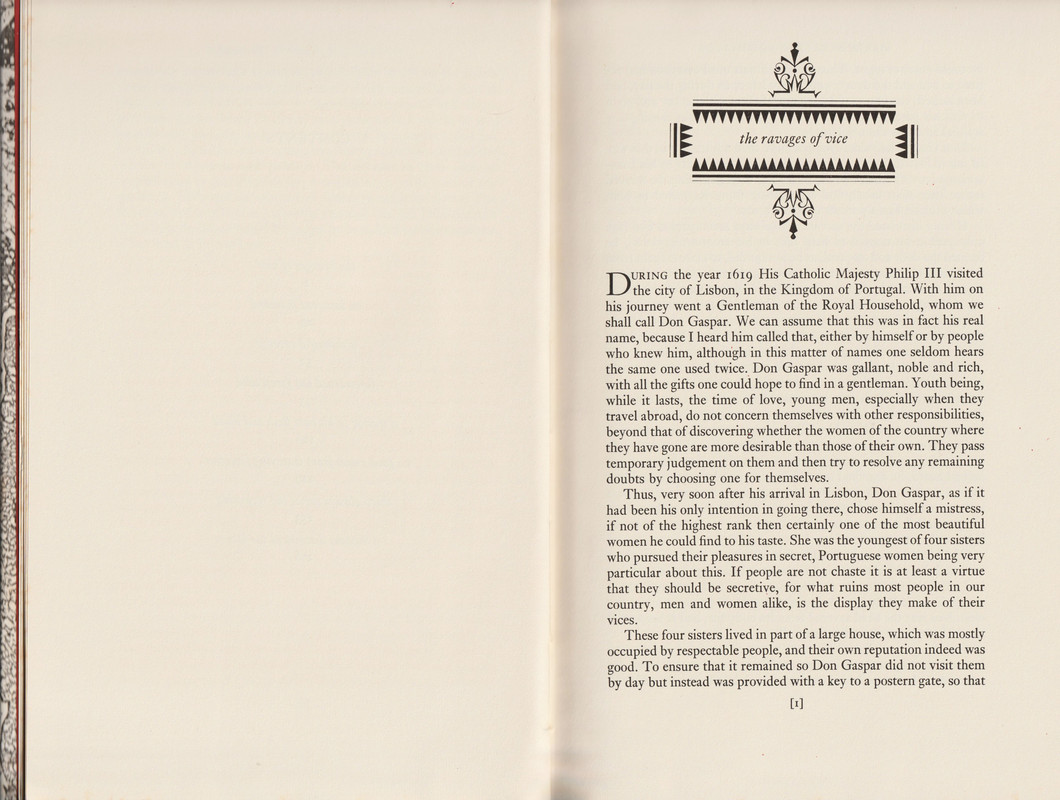
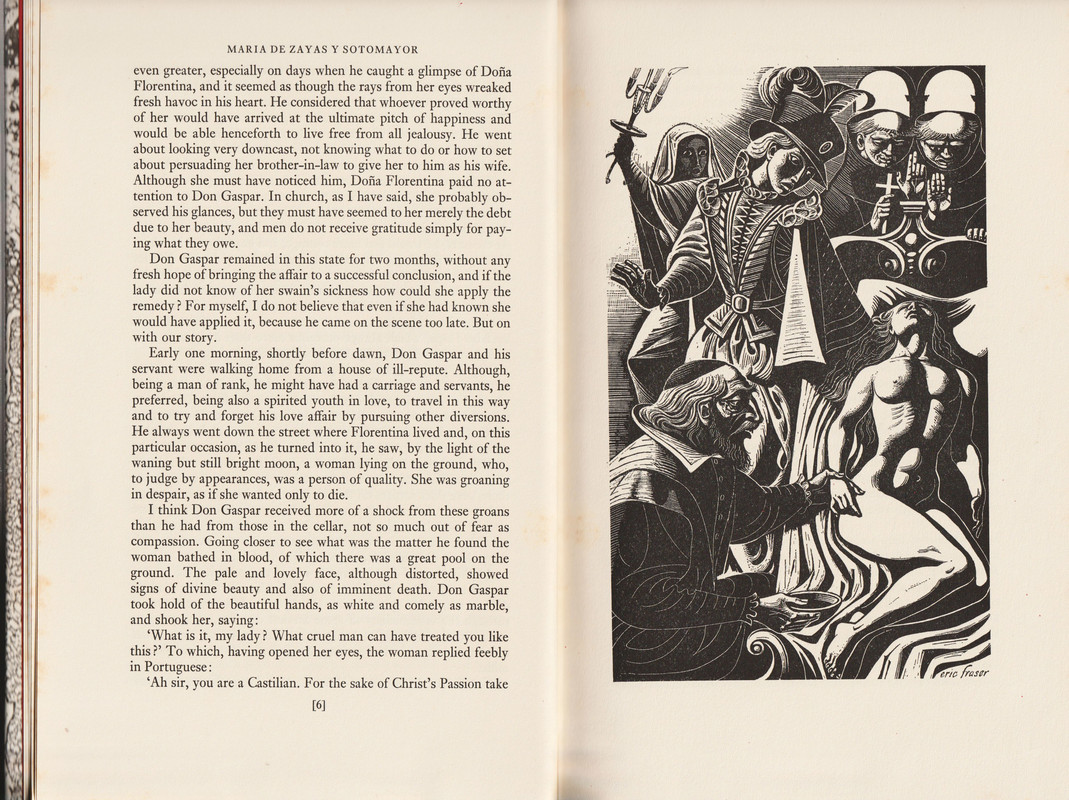
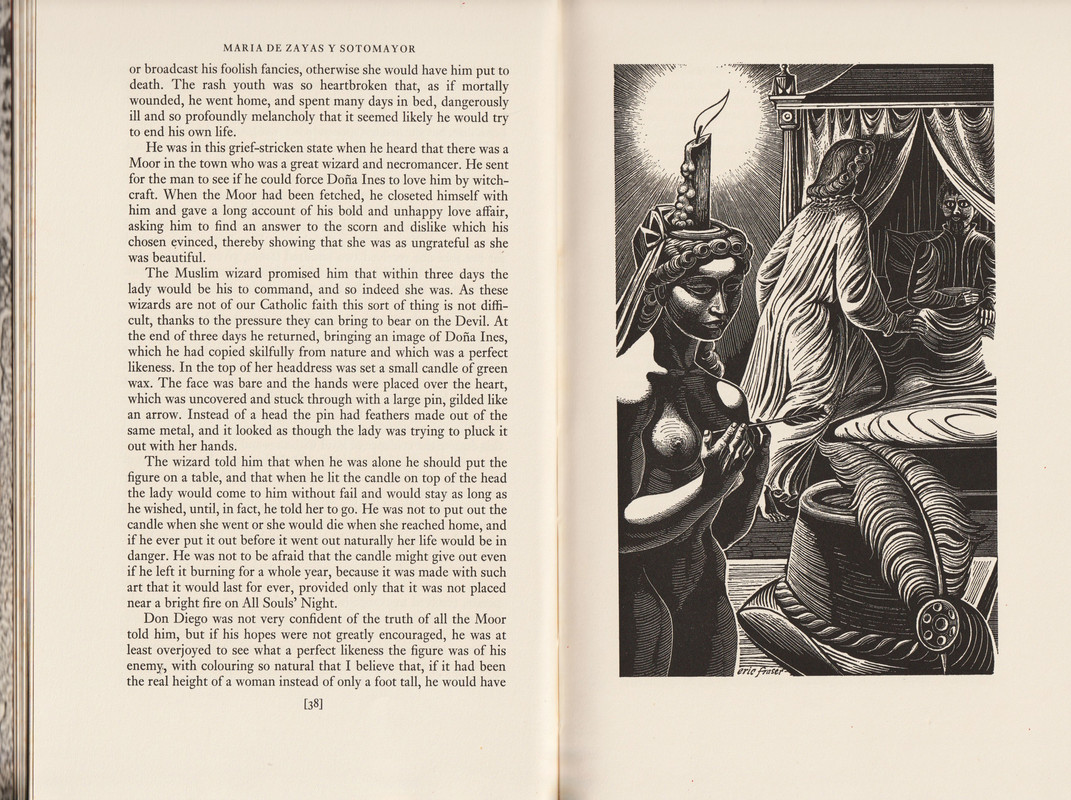
The eight short stories each have their own full page illustrative engraving by Eric Fraser who also did a frontispiece, and there is a six page introduction by the translator, John Sturrock. The book has xii + 200 pages and is housed in a mottled grey slipcase 23.5x15cm.The endpapers are dark red, and the page tops are stained the same colour. The book is quarter bound in red cloth with gilt trim between the cloth and the paper covers that are printed with a black and white marbled pattern.
A very different and unusual choice for a Folio Society publication, and a fascinating insight into the social mores of the time.
 . . . .
An index of the other illustrated reviews in the "Folio Archives" series can be viewed here.
3red_guy
Me as well - and incredibly cheap on Abe - not to mention the fabulous Eric Fraser illustrations. When I read complaints about illustrations being 'only' black and white, after I finish shaking my head sadly he is one of the first artists I think of.
I would like to know a lot more about Spain's Golden Age literature apart from Don Quixote. I did once see a Lope de Vega play (El Perro del Hortelano) which was hugely enjoyable even given that I speak barely a word of Spanish, but that's about it. Thanks again, Warwick.
I would like to know a lot more about Spain's Golden Age literature apart from Don Quixote. I did once see a Lope de Vega play (El Perro del Hortelano) which was hugely enjoyable even given that I speak barely a word of Spanish, but that's about it. Thanks again, Warwick.
4PartTimeBookAddict
Started this book today. Unique stories. Excellent illustrations. Great heft for a little volume. Nice thick paper. And letterpress printed? This is basically free on the secondary market and worth at least twice that much!
7PartTimeBookAddict
>5 folio_books: Thanks. I thought so, but am no expert unless it's a very deep bite. Do you know what year their letterpress printing was phased out?
9Jayked
Folio changed over from letterpress at the same time as other publishers. Letterpress, when everyone was using it, was no guarantee of quality, and some of the features seen nowadays as desirable -- e.g. indentations on the paper -- were commonly regarded as flaws. Here's a quote from Joe Whitlock Blundell in his series "Designs on Books" from Folio magazine of Summer 1994.
"Thus, although in some respects the trade book has improved over the years -- type is normally of a decent size in hardbacks nowadays, paper quality has generally improved, and (contrary to a common belief) printing is far clearer and more even since litho took over from letterpress as the principal method of printing in the 1970s..."
Letterpress wears out relatively quickly. You can control that by extra care in the run of a small limited edition, but for a regular run of a Folio publication the strictures mentioned above for trade books apply.
"Thus, although in some respects the trade book has improved over the years -- type is normally of a decent size in hardbacks nowadays, paper quality has generally improved, and (contrary to a common belief) printing is far clearer and more even since litho took over from letterpress as the principal method of printing in the 1970s..."
Letterpress wears out relatively quickly. You can control that by extra care in the run of a small limited edition, but for a regular run of a Folio publication the strictures mentioned above for trade books apply.
10BooksFriendsNotFood
>9 Jayked: I was watching a YT video once about the FS Letterpress Shakespeare volumes and it was mentioned that you could only rarely feel a slight bite to the text, if at all, because proper letterpress printing just barely kisses the page, enough to get the text printed without leaving an indentation.
This is why I'm not often interested in letterpress from FS because I want that bite! If letterpress just looks like normal printing, then it doesn't really have any extra value for me even though I understand that a lot of labor must have gone into it.
This is why I'm not often interested in letterpress from FS because I want that bite! If letterpress just looks like normal printing, then it doesn't really have any extra value for me even though I understand that a lot of labor must have gone into it.

