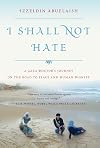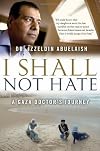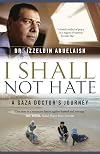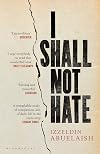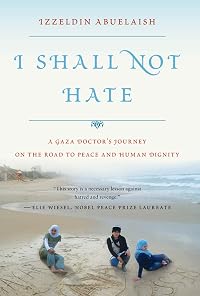
I Shall Not Hate: A Gaza Doctor's Journey on the Road to Peace and Human Dignity
by Izzeldin Abuelaish
On This Page
Description
Harvard-trained Palestinian doctor Izzeldin Abuelaish's recounts his extraordinary life of devotion to medicine and reconciliation between Israelis and Palestinians.Tags
Recommendations























Member Reviews
It has taken me a long time to actually sit down and read this book. Part of the reason was when it first arrived, I realized that I had heard the NPR stories and interviews with the author's oldest daughter when she participated in the Creativity for Peace Camp in the U.S. in 2005. How very sad to learn that her voice is no more.
I cannot imagine how incredibly painful it must have been for the author to write this book. Shortly after losing his wife to leukemia, while contemplating the best way to continue to raise his 8 children, suddenly 3 of them are killed by a shell from an Israeli tank while they were in their home.
The author describes life in Gaza, from growing up in a refugee camp, leaving as a young adult for his education, show more then returning with his wife in order to raise their children near their extended family. He communicates the importance of family in a community that is hemmed in on all sides.
He describes the routine hassle of commuting to work twice a week through the Gaza border to work as a physician in an Israeli hospital. His writing expresses an unwavering faith that medicine and the language of healing can do more than heal physical illness, but can help to heal the spiritual illness of hatred. And such healing will bring justice for the young women that have been lost to him. show less
I cannot imagine how incredibly painful it must have been for the author to write this book. Shortly after losing his wife to leukemia, while contemplating the best way to continue to raise his 8 children, suddenly 3 of them are killed by a shell from an Israeli tank while they were in their home.
The author describes life in Gaza, from growing up in a refugee camp, leaving as a young adult for his education, show more then returning with his wife in order to raise their children near their extended family. He communicates the importance of family in a community that is hemmed in on all sides.
He describes the routine hassle of commuting to work twice a week through the Gaza border to work as a physician in an Israeli hospital. His writing expresses an unwavering faith that medicine and the language of healing can do more than heal physical illness, but can help to heal the spiritual illness of hatred. And such healing will bring justice for the young women that have been lost to him. show less
 This review was written for LibraryThing Early Reviewers.
By turns inspiring and heart-breaking, hopeful and horrifying, I Shall Not Hate is Izzeldin Abuelaish's account of an extraordinary life. A Harvard-trained Palestinian doctor who was born and raised in the Jabalia refugee camp in the Gaza Strip and "who has devoted his life to medicine and reconciliation between Israelis and Palestinians" (New York Times), Abuelaish has been crossing the lines in the sand that divide Israelis and Palestinians for most of his life - as a physician who treats patients on both sides of the line, as a humanitarian who sees the need for improved health and education for women as the way forward in the Middle East. And, most recently, as the father whose daughters were killed by Israeli soldiers on January show more 16, 2009, during Israel's incursion into the Gaza Strip. His response to this tragedy made news and won him humanitarian awards around the world. Instead of seeking revenge or sinking into hatred, Abuelaish called for the people in the region to start talking to each other. His deepest hope is that his daughters will be "the last sacrifice on the road to peace between Palestinians and Israelis." show less
Given the extreme horrors that are going on in Gaza at the moment, it felt only right to read something this year relating to Gaza, and I appreciate the couple of CRers who recommended this to be through their fine reviews. It's a difficult book to both read and to review, especially given that the horrors which the doctor who wrote this book describes back in 2009 were but the tip of the iceberg of what was to come in Gaza.
Izzeldin Abuelaish, who would go on to be nominated for the Nobel Peace Prize, writes with eloquence about the modern day hell that is life in Gaza. Whatever your politics, it's hard to think of many other places in the world where such a large body people are hemmed into such a relatively small space with so little show more freedom of movement, their land borders, sea and airspace blockaded by Israel with the Palestinians having next to no control over the transportation of basic necessities such as food and medicine into their land. Complex geopolitical wrangling has existed for a very long time in this part of the world and there is fault on both sides, but Abuelaish tries to put his own politics aside and to instead put a human face to the real victims of this ongoing struggle.
The futility of guns and rockets in achieving any type of peaceful resolution to the conflict is core to Abuelaish's message in this book. As an eminent fertility specialist, he spent a considerable amount of his career working in a hospital in Israel, endeavouring to help couples regardless of their faith or nationality and building firm friendships with many Israelis. This, he believes, is a rare privilege in this part of the world, where Palestinians and Israelis have little opportunity to engage with each other, where they only know the 'other side' as faceless enemies, which makes peace all the more difficult. As such, he endeavoured to ensure his own children made the most of opportunities to attend peace camps with Israeli young people, and instilled a strong sense of love and humanity in his children's upbringing. Incredibly sadly, three of his daughters and a niece were killed when an Israeli tank opened fire from the street on the bedroom they were in, and Abuelaish works hard, not just in this novel but in the numerous talks he has given over the years, to prevent them from being faceless statistics - he wants us to see their faces, to know something of their individual personalities, the career dreams they had. He also wants us to know, however hard it is to read, the reality of this type of warfare, his daughters limbs scattered around the wreckage of their bedroom, one daughter decapitated. It's utterly harrowing, but I think it's important not to look the other way to the reality of other people's sufferings.
Coming as I do from Northern Ireland, I appreciate how what Abuelaish says about dialogue being the only route to peace is so true, and also how peace will never be established whilst two peoples are kept largely separated from each other. Peace requires getting to know each other, to stop demonising the other side as something less than human, to look for what we have in common rather than what divides us.
Peace seems further away than ever for Palestinians and Israelis at this point, but we must live in hope. At one point in his career, Abuelaish works with some Israeli doctors on the impact of conflict trauma on Palestinian children living in Gaza and Israeli children living near the border with Gaza. Fifteen years ago PTSD was already becoming endemic amongst these children - it's so difficult to think about what the future holds for the children of today in these areas.
4 stars - a true lesson in compassion but so very hard to read given current events. show less
Izzeldin Abuelaish, who would go on to be nominated for the Nobel Peace Prize, writes with eloquence about the modern day hell that is life in Gaza. Whatever your politics, it's hard to think of many other places in the world where such a large body people are hemmed into such a relatively small space with so little show more freedom of movement, their land borders, sea and airspace blockaded by Israel with the Palestinians having next to no control over the transportation of basic necessities such as food and medicine into their land. Complex geopolitical wrangling has existed for a very long time in this part of the world and there is fault on both sides, but Abuelaish tries to put his own politics aside and to instead put a human face to the real victims of this ongoing struggle.
The futility of guns and rockets in achieving any type of peaceful resolution to the conflict is core to Abuelaish's message in this book. As an eminent fertility specialist, he spent a considerable amount of his career working in a hospital in Israel, endeavouring to help couples regardless of their faith or nationality and building firm friendships with many Israelis. This, he believes, is a rare privilege in this part of the world, where Palestinians and Israelis have little opportunity to engage with each other, where they only know the 'other side' as faceless enemies, which makes peace all the more difficult. As such, he endeavoured to ensure his own children made the most of opportunities to attend peace camps with Israeli young people, and instilled a strong sense of love and humanity in his children's upbringing. Incredibly sadly, three of his daughters and a niece were killed when an Israeli tank opened fire from the street on the bedroom they were in, and Abuelaish works hard, not just in this novel but in the numerous talks he has given over the years, to prevent them from being faceless statistics - he wants us to see their faces, to know something of their individual personalities, the career dreams they had. He also wants us to know, however hard it is to read, the reality of this type of warfare, his daughters limbs scattered around the wreckage of their bedroom, one daughter decapitated. It's utterly harrowing, but I think it's important not to look the other way to the reality of other people's sufferings.
Coming as I do from Northern Ireland, I appreciate how what Abuelaish says about dialogue being the only route to peace is so true, and also how peace will never be established whilst two peoples are kept largely separated from each other. Peace requires getting to know each other, to stop demonising the other side as something less than human, to look for what we have in common rather than what divides us.
Peace seems further away than ever for Palestinians and Israelis at this point, but we must live in hope. At one point in his career, Abuelaish works with some Israeli doctors on the impact of conflict trauma on Palestinian children living in Gaza and Israeli children living near the border with Gaza. Fifteen years ago PTSD was already becoming endemic amongst these children - it's so difficult to think about what the future holds for the children of today in these areas.
4 stars - a true lesson in compassion but so very hard to read given current events. show less
Every once in a while you read a book that really sticks with you. I Shall Not Hate by Izzeldin Abuelaish is one of those books.
Dr. Izzeldin Abuelaish has survived more heartbreak and suffering than any one man should ever have to endure. A Palestinian doctor who was born and raised in the Gaza Strip, Dr. Abuelaish has devoted his life to treating all patients on both sides of the Palestinian/Israeli border. Following the sudden death of his wife from cancer in late 2008, Dr. Abuelaish and his eight children were still trying to piece their lives back together when another tragedy struck. On January 16, 2009, Israeli shells hit his home, killing three daughters and a niece. Yet through it all, Dr. Abuelaish still holds to his beliefs show more and steadfastly maintains that he will not hate.
It's hard to read this book and not think of recent headlines covering the Palestinian/Israeli conflict. When I heard of the latest clashes, I did notice myself truly paying attention to the number of people injured and killed on both sides. For me, this book has forever put a human voice to those casualty numbers we sometimes hear and always quickly forget.
This book was difficult to read on many levels, but that should not deter others from reading it. First, as a person who has never traveled to Middle East and has not be raised in the Muslim faith, this book was complicated when it came to names of places and events as well as when trying to understand distances and historical references. I would have liked to have seen many more maps and translation guides to explain the culture and the region. Secondly, this book was obviously very tragic, sometimes beyond words. On sheer human heartbreaking terms, this is a family that lost a mother, three sisters and a niece all within the span of a few short months.
However, for all of the difficulties I had reading this book, I would still recommend I Shall Not Hate. As the title indicates, Dr. Abuelaish chooses to live his life as a model for all citizens of this planet. And for that reason, his story transcends politics and religion. His is a human story of what can happen and how each of us has a choice in how we respond. show less
Dr. Izzeldin Abuelaish has survived more heartbreak and suffering than any one man should ever have to endure. A Palestinian doctor who was born and raised in the Gaza Strip, Dr. Abuelaish has devoted his life to treating all patients on both sides of the Palestinian/Israeli border. Following the sudden death of his wife from cancer in late 2008, Dr. Abuelaish and his eight children were still trying to piece their lives back together when another tragedy struck. On January 16, 2009, Israeli shells hit his home, killing three daughters and a niece. Yet through it all, Dr. Abuelaish still holds to his beliefs show more and steadfastly maintains that he will not hate.
It's hard to read this book and not think of recent headlines covering the Palestinian/Israeli conflict. When I heard of the latest clashes, I did notice myself truly paying attention to the number of people injured and killed on both sides. For me, this book has forever put a human voice to those casualty numbers we sometimes hear and always quickly forget.
This book was difficult to read on many levels, but that should not deter others from reading it. First, as a person who has never traveled to Middle East and has not be raised in the Muslim faith, this book was complicated when it came to names of places and events as well as when trying to understand distances and historical references. I would have liked to have seen many more maps and translation guides to explain the culture and the region. Secondly, this book was obviously very tragic, sometimes beyond words. On sheer human heartbreaking terms, this is a family that lost a mother, three sisters and a niece all within the span of a few short months.
However, for all of the difficulties I had reading this book, I would still recommend I Shall Not Hate. As the title indicates, Dr. Abuelaish chooses to live his life as a model for all citizens of this planet. And for that reason, his story transcends politics and religion. His is a human story of what can happen and how each of us has a choice in how we respond. show less
This review was written for LibraryThing Early Reviewers.The sheer amount of adversity Abuelaish has had to overcome is astounding, only surpassed by the incredible amount of humanity he somehow still possesses.
Abuelaish takes the time to humanise the ongoing Israeli-Palestinian conflict in terms of the effect it has had on people on both sides - in particular in giving firsthand accounts of what daily life in Gaza entails, to grow up in poverty and insecurity, to be constantly denied basic rights, and to be treated as subhuman -, making it a fairly accessible introduction into this ongoing complicated quagmire.
Seeing as his main message is for peaceful coexistence, for both sides to come together through their shared humanity, he is extremely careful to attribute blame to both. As a result, show more the tone is almost too measured, perhaps intentionally (so as to avoid criticisms of politicising agendas via emotional manipulation) depriving what would have otherwise been intensely devastating scenes of their potency.
Thankfully, the inclusions of third person accounts of Abuelaish painted a more human portrait of him: someone who has had to hide every bit of dissatisfaction and frustration at the unfairness and inequality he is subjected to daily in order to go about his professional and personal life, to be beyond reproach by the Israelis so as to be in a position of power to effect change for Palestinians, but then perhaps then setting an impossible standard for future Palestinians?
I would love an update from Abuelaish (the book included one from 2011) about his thoughts on the current situation and his life since the book was published.
Extra: The Guardian's review is also well worth a read. show less
Abuelaish takes the time to humanise the ongoing Israeli-Palestinian conflict in terms of the effect it has had on people on both sides - in particular in giving firsthand accounts of what daily life in Gaza entails, to grow up in poverty and insecurity, to be constantly denied basic rights, and to be treated as subhuman -, making it a fairly accessible introduction into this ongoing complicated quagmire.
Seeing as his main message is for peaceful coexistence, for both sides to come together through their shared humanity, he is extremely careful to attribute blame to both. As a result, show more the tone is almost too measured, perhaps intentionally (so as to avoid criticisms of politicising agendas via emotional manipulation) depriving what would have otherwise been intensely devastating scenes of their potency.
Thankfully, the inclusions of third person accounts of Abuelaish painted a more human portrait of him: someone who has had to hide every bit of dissatisfaction and frustration at the unfairness and inequality he is subjected to daily in order to go about his professional and personal life, to be beyond reproach by the Israelis so as to be in a position of power to effect change for Palestinians, but then perhaps then setting an impossible standard for future Palestinians?
I would love an update from Abuelaish (the book included one from 2011) about his thoughts on the current situation and his life since the book was published.
Extra: The Guardian's review is also well worth a read. show less
This heartbreaking yet optimistic and remarkable memoir by a Palestinian OB/GYN who lost three daughters in an accidental bombing attack by Israeli Defense Forces in 2008 begins with the author's birth in a camp in the Gaza Strip, seven years after his father's family fled for their lives and abandoned their home during the 1948 Palestinian exodus (Nakba). Abuelaish overcame crushing poverty and difficult odds through hard work, studying at night by the light of a lamp, and won a scholarship to study medicine at Cairo University. Despite the deplorable living conditions in the Gaza Strip, he decided to return there after he completed his training, to serve the people who nurtured and supported him.
Abuelaish was befriended by Israeli show more citizens in childhood, when he worked and lived with a Jewish family for several months as a teenager, and during the early years of his medical career, when he referred difficult cases to doctors in Israel who were impressed by his knowledge and good will. He became one of the first Palestinian physicians to complete a residency program and serve on the medical staff at an Israeli hospital, where he continued to earn the respect and devotion of his colleagues and patients. Through these interactions he realized that many Israelis did not hate Palestinians and wished to live in peace alongside them, despite repeated wars and the extremist positions of leaders and politicians on both sides.
Abuelaish worked tirelessly in support of the Palestinian people, realizing that medicine could serve as a bridge to connect well meaning Israelis and Palestinians to overcome the humanitarian crisis in Gaza. However, the escalation of the battles between Palestinian insurgents and the Israeli Defense Forces made his goals more impossible to achieve, particularly after the crackdown and bombing campaign that occurred after Hamas took control of the Palestinian Parliament in 2006. After his wife's death in 2008, Abuelaish decided to emigrate with his children, to provide better lives and opportunities for them and to ensure their safety from the escalating violence in Gaza. Unfortunately, just before they were able to leave, an Israeli bomb ripped through the apartment building that he had built for his family, killing three of his daughters and a beloved niece. The tragedy was broadcast live on Israeli television, as he described the aftermath to a reporter by phone just after the bomb struck.
Despite the personal tragedy, Abuelaish, who now lives with his remaining children in Toronto, remains optimistic about the prospects for peace in his homeland, due largely to the many friends he has made in Israel and Gaza. In his opinion, peace will come when leaders and politicians act in the broad interests of Israelis and Palestinians, rather than pursuing narrow goals or listening to the voices of extremists on both sides. He strongly supports an increased role for women in Palestinian society, as he believes that they are more likely to seek a peaceful resolution to the crisis than their often belligerent male counterparts. In honor of his three deceased daughters he has set up a foundation, Daughters for Life, which will provide scholarships for Palestinian women to attend high school and university, and create or support programs aimed to improve the lives of women in Gaza and the West Bank.
The book ends with a touching tribute to his late daughters and beloved wife, a list of lessons that he has learned, and a call to action to ensure that the crisis can be resolved once and forever.
I Shall Not Hate is an amazing story, and Dr. Abuelaish's celebration of life and belief in his fellow man in the face of personal tragedy should provide inspiration to everyone that we can solve the world's problems, if we care about our fellow men and women as brothers and sisters and take the time to listen to each other. show less
Abuelaish was befriended by Israeli show more citizens in childhood, when he worked and lived with a Jewish family for several months as a teenager, and during the early years of his medical career, when he referred difficult cases to doctors in Israel who were impressed by his knowledge and good will. He became one of the first Palestinian physicians to complete a residency program and serve on the medical staff at an Israeli hospital, where he continued to earn the respect and devotion of his colleagues and patients. Through these interactions he realized that many Israelis did not hate Palestinians and wished to live in peace alongside them, despite repeated wars and the extremist positions of leaders and politicians on both sides.
Abuelaish worked tirelessly in support of the Palestinian people, realizing that medicine could serve as a bridge to connect well meaning Israelis and Palestinians to overcome the humanitarian crisis in Gaza. However, the escalation of the battles between Palestinian insurgents and the Israeli Defense Forces made his goals more impossible to achieve, particularly after the crackdown and bombing campaign that occurred after Hamas took control of the Palestinian Parliament in 2006. After his wife's death in 2008, Abuelaish decided to emigrate with his children, to provide better lives and opportunities for them and to ensure their safety from the escalating violence in Gaza. Unfortunately, just before they were able to leave, an Israeli bomb ripped through the apartment building that he had built for his family, killing three of his daughters and a beloved niece. The tragedy was broadcast live on Israeli television, as he described the aftermath to a reporter by phone just after the bomb struck.
Despite the personal tragedy, Abuelaish, who now lives with his remaining children in Toronto, remains optimistic about the prospects for peace in his homeland, due largely to the many friends he has made in Israel and Gaza. In his opinion, peace will come when leaders and politicians act in the broad interests of Israelis and Palestinians, rather than pursuing narrow goals or listening to the voices of extremists on both sides. He strongly supports an increased role for women in Palestinian society, as he believes that they are more likely to seek a peaceful resolution to the crisis than their often belligerent male counterparts. In honor of his three deceased daughters he has set up a foundation, Daughters for Life, which will provide scholarships for Palestinian women to attend high school and university, and create or support programs aimed to improve the lives of women in Gaza and the West Bank.
The book ends with a touching tribute to his late daughters and beloved wife, a list of lessons that he has learned, and a call to action to ensure that the crisis can be resolved once and forever.
I Shall Not Hate is an amazing story, and Dr. Abuelaish's celebration of life and belief in his fellow man in the face of personal tragedy should provide inspiration to everyone that we can solve the world's problems, if we care about our fellow men and women as brothers and sisters and take the time to listen to each other. show less
Izzeldin Abuelaish has every reason to hate the Israelis. Born in a squalid refugee camp in Gaza, his family unable to return to the prosperous farm they had lived on for generations, Abuelaish grew up in abject poverty. Even as a child, he had to work to help support the family, and his schooling was always in danger of being curtailed. But thanks to his mother and his own unquenchable desire to learn, Abuelaish persevered and succeeded beyond all expectations.
Once established as a doctor, Abuelaish returned to live in Gaza and he raised a family there, but worked in Israel. Such a situation is highly unusual given both the restrictions of movement in and out of Gaza, and the distrust between Israelis and Palestinians. Abuelaish was show more the first Palestinian doctor to be on staff at an Israeli hospital, and he used every opportunity both there and abroad to talk about the horrible conditions within Gaza and to advocate for mutual understanding and peace.
In 2008 Hamas was launching a steady stream of missiles against Israeli border towns, and on December 27 the Israelis struck Gaza with a surprise air strike followed by three weeks of ground assault. With no way out of Gaza, Abuelaish relied on his renown as a doctor working in Israel to protect him and his family. But no place was safe from Operation Cast Lead. The tragic outcome became an international firestorm, and Abuelaish found his opportunities to promote peace open up to the international stage, if he could find it within himself to continue.
I Shall Not Hate is the story of a remarkable man. Self-made, with noble aspirations, and subject to tragedy after tragedy, Abuelaish has a heartbreaking story to tell. But what makes the book a must-read is the message within the story. The idea that Palestinian-Israeli peace can be achieved and will be if enough people connect, learn each other’s stories, and agree to move ahead without casting blame and seeking revenge. I was reluctant to read I Shall Not Hate, because I didn’t want to become lost in the pain of his losses. Once I began, however, I was unable to put it down again, and I found that despite tragedy, the book is essentially one of hope. Perhaps not all is lost. show less
Once established as a doctor, Abuelaish returned to live in Gaza and he raised a family there, but worked in Israel. Such a situation is highly unusual given both the restrictions of movement in and out of Gaza, and the distrust between Israelis and Palestinians. Abuelaish was show more the first Palestinian doctor to be on staff at an Israeli hospital, and he used every opportunity both there and abroad to talk about the horrible conditions within Gaza and to advocate for mutual understanding and peace.
In 2008 Hamas was launching a steady stream of missiles against Israeli border towns, and on December 27 the Israelis struck Gaza with a surprise air strike followed by three weeks of ground assault. With no way out of Gaza, Abuelaish relied on his renown as a doctor working in Israel to protect him and his family. But no place was safe from Operation Cast Lead. The tragic outcome became an international firestorm, and Abuelaish found his opportunities to promote peace open up to the international stage, if he could find it within himself to continue.
I Shall Not Hate is the story of a remarkable man. Self-made, with noble aspirations, and subject to tragedy after tragedy, Abuelaish has a heartbreaking story to tell. But what makes the book a must-read is the message within the story. The idea that Palestinian-Israeli peace can be achieved and will be if enough people connect, learn each other’s stories, and agree to move ahead without casting blame and seeking revenge. I was reluctant to read I Shall Not Hate, because I didn’t want to become lost in the pain of his losses. Once I began, however, I was unable to put it down again, and I found that despite tragedy, the book is essentially one of hope. Perhaps not all is lost. show less
This review was written for LibraryThing Early Reviewers.Members
- Recently Added By
Lists

Best Autobiographies and Memoirs
370 works; 67 members

Best Biographies, Autobiographies and Memoirs
465 works; 160 members

Non-Fiction Worth Reading
1,015 works; 255 members

Best Israeli Reading
55 works; 12 members

Best Books Read for TIOLI
49 works; 13 members

Best books read in 2011
200 works; 51 members

A High School Trip to Israel
30 works; 2 members

Favorite Books Published in 2010
11 works; 3 members
Author Information

1 Work 629 Members
Some Editions
Awards and Honors
Awards
Distinctions
Notable Lists
Common Knowledge
- Canonical title
- I Shall Not Hate: A Gaza Doctor's Journey on the Road to Peace and Human Dignity
- Original title
- I Shall Not Hate: A Gaza Doctor's Journey
- Original publication date
- 2010
- People/Characters
- Dr. Izzeldin Abuelaish, M.D.
- Important places
- Palestine; Gaza; Toronto, Ontario, Canada
- Important events
- Gaza War (2008 | 2009)
- Epigraph*
- Het hoopvolle verhaal van een arts die zich inzet voor vrede in de Gazastrook en Israël
- Dedication
- To the memory of my parents- my mother, Dalal, and my father, Mohammad
To the memory of my wife, Nadia, my daughters, Bessan, Mayar and Aya, and my niece Noor
To children everywhere. Their only weapons are love and hope.... - First words
- It was as close to heaven and as far from hell as I could get that day, an isolated stretch of beach just four kilometres from the misery of Gaza City, where waves roll up on the shore as if to wash away yesterday and leave ... (show all)a fresh start for tommorow.
- Quotations
- ...you shouldn't hate something you don't know, because it may turn out to be the bearer of your greatest fortune.
If I could know that my daughters were the last sacrifice on the road to peace between Palestinians and Israelis, then I would accept their loss. - Last words
- (Click to show. Warning: May contain spoilers.)I will keep moving but I need you to join me in this long journey.
- Blurbers
- Wiesel, Elie; Carter, Jimmy
- Original language
- English
*Some information comes from Common Knowledge in other languages. Click "Edit" for more information.
Classifications
Statistics
- Members
- 629
- Popularity
- 46,247
- Reviews
- 61
- Rating
- (4.13)
- Languages
- 7 — Arabic, Dutch, English, French, German, Italian, Spanish
- Media
- Paper, Audiobook, Ebook
- ISBNs
- 24
- ASINs
- 14