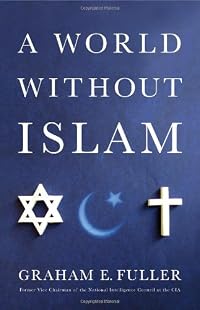
A World Without Islam
by Graham E. Fuller
On This Page
Description
This book will reshape the way we think about Islam's relationship with the West. What if Islam never existed? To some, it's a comforting thought: no clash of civilizations, no holy wars, no terrorists. Here, political scientist and expert on the Muslim world Graham E. Fuller guides us through history, geopolitics, and religion to investigate whether or not Islam is indeed the cause of some of today's most emotional and important international crises. Fuller takes us from the birth of Islam show more to the fall of Rome to the rise and collapse of the Ottoman Empire. He examines and analyzes the roots of terrorism, the conflict in Israel, and the role of Islam in supporting and energizing the anti-imperial struggle. Provocatively, he finds that contrary to the claims of many politicians, thinkers, theologians, and soldiers, a world without Islam might not look vastly different from what we know today.--From publisher description. show lessTags
Recommendations























Member Reviews
I must confess I approached this work with a bit of scepticism, expecting that a rosy picture would be given, and any problems swept under the rug. However, it turned out to be a well-argued thesis that the problems between the West and the Islamic world are relatable to a larger set of differences and antagonisms that have to do with geo-political tensions from way back in history e.g. between Rome and Byzantium (Constantinople), rather than with any specific quirks of the religion itself. Indeed, the author argues that even without Islam, there would probably still be these tensions between the West and the East (the Rest?), if nothing else between Western (Roman, Catholic) Christianity and Eastern (Greek, Orthodox, Russian) show more Christianity. Of special interest to me as a reader from India, are the chapters on Islam and Russia, Islam and China, and Islam and India (the last a region that rarely figures in international accounts). On the whole, this is a book that throws a fresh and self-revealing light on the phenomenon of Islamic and other fundamentalisms, and should be of great help in approaching the present-day 'fault-lines' in international relations. However, I could not help feeling that the author ended up sounding a bit disingenuous toward the end, by throwing the entire burden of accommodation on forces outside the Muslim world. Perhaps a better understanding can be aided by comparing with other world religions apart from Christianity, especially the way Buddhism has spread and held its place in different polities. "Just sayin'". show less
As someone who already has a general understanding of Islam, and a passion and fondness for this faith, it is so refreshing to see someone try to put things back into perspective, especially given the fact that so many are so ill-informed about Islam and what it teaches. With so many focusing on Islam as "the enemy" merely because they don't know or understand anything more than what their preachers or newscasters have told them, its so important for someone to be the voice that nudges us out of our dazed and deluded states and brings things back into focus – Graham Fuller is that voice.
Despite whether one agrees with his hypothesis that things would have happened along the same lines without the existence of Islam (something I do show more believe he does well to support), one must admit how important it is that someone show us the other side of this “war with Islam” and bring us back to realizing the things that have roused the people of the Middle East into feeling and acting the way they do.
Most people don't even try to understand what breeds extremism. Do we not think that we have any responsibility in the condition of the extremism we see? This extremism isn't something that is purely religious. It is geopolitical frustrations being acted out in the name of religion, in reaction to many perceived injustices, which the author does well to show.
We need to try to understand and get to the root of the problem. As he says, determining the motivation helps us to find the solution. Until we acknowledge that they have legitimate grievances our relationship with them will never improve. Extremism is bred out of extreme circumstances. It comes from intense pressure. It doesn't just decide to pop up on its own. And its not a reflection of Islam as a whole, nor even is it the true face of Islam. So we need to acknowledging that these groups do not represent the entirety of Muslims, and work to understand why they feel so much animosity, what has driven them to this point. Just because the way they choose to express themselves isn't one we find very appropriate doesn't mean they don't have legitimate issues that need to be addressed, and the author goes well into those issues.
He does well to show us our need to understand that religion is just one ideology that is abused and used for the benefit and advancements of other causes. He shows religion not as cause of the issues/problems we see, but as a vehicle for those issues - issues that originate from other sources - and shows how the faith of Islam is being used and abused to advance these causes in spite of the actual teachings and tenants of the religion.
This shows the problems are not Islam and would exist even without Islam there to commandeer, because these issues would still exist, since the frictions and tensions we see throughout history and today have far more to do with political/geopolitical, societal, economic (etc), issues than theological ones. In a time when people want to blame all the problems on a religion they don't understand is important for someone to remind us of that. Just because these extremists use the system of ideals that is Islam for their own means in a way that completely ignores some of the major principles of the Islamic faith does not mean that Islam itself is the problem. Instead it is merely the backdrop/vehicle these geopolitical, social (etc) issues were able to erupt through, and they would have erupted even without the arrival or existence of Islam.
We need to take a step back and try to identify the real motivation, the real source of the problem, in order to understand how to handle the situation and to find a solution, rather than continue to be sucked into mere perpetuation. We need to realize our way of handling the situation isn't going to work because its not really handling said situation as long as we refuse to see the underlying issues and insist on “Islamicizing” the problem. The bridge can only come from understanding each other and our issues, their history, and effect, and we're the ones who need to take that step – as well as other steps he offers in the text.
I have to add, as I conclude, that all the facts presented within his book line up with all the other sources I've read. I didn't find one fact or historical claim made that I hadn't seen elsewhere, in other sources I hold to be credible, so I don't doubt the author's own credibility, and would recommend this to anyone who thinks they have an understanding of Islam or the “war on terror”(or anyone who wants to). It really is a must read, indeed, it is a book I'm going to refer others to often, I'm sure. :) show less
Despite whether one agrees with his hypothesis that things would have happened along the same lines without the existence of Islam (something I do show more believe he does well to support), one must admit how important it is that someone show us the other side of this “war with Islam” and bring us back to realizing the things that have roused the people of the Middle East into feeling and acting the way they do.
Most people don't even try to understand what breeds extremism. Do we not think that we have any responsibility in the condition of the extremism we see? This extremism isn't something that is purely religious. It is geopolitical frustrations being acted out in the name of religion, in reaction to many perceived injustices, which the author does well to show.
We need to try to understand and get to the root of the problem. As he says, determining the motivation helps us to find the solution. Until we acknowledge that they have legitimate grievances our relationship with them will never improve. Extremism is bred out of extreme circumstances. It comes from intense pressure. It doesn't just decide to pop up on its own. And its not a reflection of Islam as a whole, nor even is it the true face of Islam. So we need to acknowledging that these groups do not represent the entirety of Muslims, and work to understand why they feel so much animosity, what has driven them to this point. Just because the way they choose to express themselves isn't one we find very appropriate doesn't mean they don't have legitimate issues that need to be addressed, and the author goes well into those issues.
He does well to show us our need to understand that religion is just one ideology that is abused and used for the benefit and advancements of other causes. He shows religion not as cause of the issues/problems we see, but as a vehicle for those issues - issues that originate from other sources - and shows how the faith of Islam is being used and abused to advance these causes in spite of the actual teachings and tenants of the religion.
This shows the problems are not Islam and would exist even without Islam there to commandeer, because these issues would still exist, since the frictions and tensions we see throughout history and today have far more to do with political/geopolitical, societal, economic (etc), issues than theological ones. In a time when people want to blame all the problems on a religion they don't understand is important for someone to remind us of that. Just because these extremists use the system of ideals that is Islam for their own means in a way that completely ignores some of the major principles of the Islamic faith does not mean that Islam itself is the problem. Instead it is merely the backdrop/vehicle these geopolitical, social (etc) issues were able to erupt through, and they would have erupted even without the arrival or existence of Islam.
We need to take a step back and try to identify the real motivation, the real source of the problem, in order to understand how to handle the situation and to find a solution, rather than continue to be sucked into mere perpetuation. We need to realize our way of handling the situation isn't going to work because its not really handling said situation as long as we refuse to see the underlying issues and insist on “Islamicizing” the problem. The bridge can only come from understanding each other and our issues, their history, and effect, and we're the ones who need to take that step – as well as other steps he offers in the text.
I have to add, as I conclude, that all the facts presented within his book line up with all the other sources I've read. I didn't find one fact or historical claim made that I hadn't seen elsewhere, in other sources I hold to be credible, so I don't doubt the author's own credibility, and would recommend this to anyone who thinks they have an understanding of Islam or the “war on terror”(or anyone who wants to). It really is a must read, indeed, it is a book I'm going to refer others to often, I'm sure. :) show less
It is fortunate that Fuller does not still work for the CIA or we would be in an even more difficult state. Fuller appears to be sincere but he fails miserably to demonstrate that Islam is not central to current religious violence. In this weakly supported and uneven work he wants to advance the thesis that the West would be confronted with violence even without the presence of Islam. To advance his argument he tendentiously presents flimsy evidence and a skewed selection of resources including the quixotic Tariq Ramadan, the slipperiest Islamic apologist on the planet, copious quotations from Wikipedia, and only the most favorable views of Islam by Western scholars (long-time apologists Karen Armstrong, John Esposito, Edward Said, et. show more al.).
There is something to be said for the historical cottage industry of books purporting to tell us what might have happened if such and such a thing did not happen. For example, what if Lee had not ordered Pickett's charge, or on a larger scale, what if the South had won the Civil War? Fuller's book is in this genre, about what could have been, but, of course, no one can disprove what did not happen. In Fuller's wishful manner of thinking, the bad things that individual Muslims have done is largely ignored for the impossible to refute what did not happen. Fuller posits that dire events would have transpired regardless of what Muslims have done and if the world was not inhabited by Islam.
Fuller's ideas are implausible and airy headed. Failing to wrestle with the pre-modern mentality of Islam in its confrontation with modern life is irresponsible in the extreme. People have died as a result of Islamic theology and thinking people, Muslim and non-Muslim alike, need to take that reality seriously.
I wonder if Fuller considered the Peace of Westphalia, which ended the European wars of religion, because he did not account for the fact that Europe no longer after Westphalia felt compelled to fight on behalf of religious dominance. Does he have an equivalent Muslim agreement? No. Moreover, where is any evidence that the Muslim world has experienced anything of the sort of Western Enlightenment? Reformation? No. It is not necessary for the Islamic world to duplicate the West but if his argument is to be considered credible he would have to point to something within Islamic history that verified the ending of religiously motivated hatreds and warring. Instead, the evidence points to considerable religious hostility within Islam, not to mention extensive religiously motivated killing of kaffirs.
There is not a hint of modernizing Islam, an Enlightenment-like need for Islamic reform, or a requirement to accommodate or moderate an Islamic political agenda in the light of contemporary, secular, classically liberal thought. The gist of his argument is that the Islamic world has been wronged and it is the West's fault that religion is now being seen as the unifying force within the Islamic world. show less
There is something to be said for the historical cottage industry of books purporting to tell us what might have happened if such and such a thing did not happen. For example, what if Lee had not ordered Pickett's charge, or on a larger scale, what if the South had won the Civil War? Fuller's book is in this genre, about what could have been, but, of course, no one can disprove what did not happen. In Fuller's wishful manner of thinking, the bad things that individual Muslims have done is largely ignored for the impossible to refute what did not happen. Fuller posits that dire events would have transpired regardless of what Muslims have done and if the world was not inhabited by Islam.
Fuller's ideas are implausible and airy headed. Failing to wrestle with the pre-modern mentality of Islam in its confrontation with modern life is irresponsible in the extreme. People have died as a result of Islamic theology and thinking people, Muslim and non-Muslim alike, need to take that reality seriously.
I wonder if Fuller considered the Peace of Westphalia, which ended the European wars of religion, because he did not account for the fact that Europe no longer after Westphalia felt compelled to fight on behalf of religious dominance. Does he have an equivalent Muslim agreement? No. Moreover, where is any evidence that the Muslim world has experienced anything of the sort of Western Enlightenment? Reformation? No. It is not necessary for the Islamic world to duplicate the West but if his argument is to be considered credible he would have to point to something within Islamic history that verified the ending of religiously motivated hatreds and warring. Instead, the evidence points to considerable religious hostility within Islam, not to mention extensive religiously motivated killing of kaffirs.
There is not a hint of modernizing Islam, an Enlightenment-like need for Islamic reform, or a requirement to accommodate or moderate an Islamic political agenda in the light of contemporary, secular, classically liberal thought. The gist of his argument is that the Islamic world has been wronged and it is the West's fault that religion is now being seen as the unifying force within the Islamic world. show less
 This review was written for LibraryThing Early Reviewers.
Personal note: When reading the description of this book, I was sure that it would be an apologia of some kind. However, the credentials of the author are quite impressive and not exactly that of an overly-liberal apologist for Islam, and so I decided to ignore the book jacket and read the book without any kind of preconceptions about what it was going to be. What I found was a well-researched, well-reasoned, and well-balanced book calling for the United States to take a practical and realistic approach towards people in the Muslim world. I currently have lent my copy to my very Muslim mother and next on the list of people to whom to lend this book is a rabidly secular friend of mine. I truly think this book is helpful and informative show more for people on all sides of the Islam debate.
The author cites quite a lot of history and research and taught me things about the various manifestations of Islam of which I, an ex-Muslim who is well-versed in Islam and Muslim issues, was unaware prior to reading this book. His call for understanding the fact that "Islam" is not a monolithic and abstract enemy to be fought and that Muslims are not some unified force against which the West must struggle is a refreshing one. Additionally, he does not engage the conservative/Republican vs. liberal/Democrat dichotomy, which lends much in the way of clarity to his facts, research, and opinions. The only point with which I disagree with the author is the idea that Islam should not be blamed in any way for any of the current world issues that involve Muslims; if someone his or herself claims that his or her actions were for Islam, to doubt that claim would be to engage in the No True Scotsman fallacy http://en.wikipedia.org/wiki/No_true_Scotsman). Still, the book is well worth reading no matter what your political persuasion simply based on its informative nature. show less
The author cites quite a lot of history and research and taught me things about the various manifestations of Islam of which I, an ex-Muslim who is well-versed in Islam and Muslim issues, was unaware prior to reading this book. His call for understanding the fact that "Islam" is not a monolithic and abstract enemy to be fought and that Muslims are not some unified force against which the West must struggle is a refreshing one. Additionally, he does not engage the conservative/Republican vs. liberal/Democrat dichotomy, which lends much in the way of clarity to his facts, research, and opinions. The only point with which I disagree with the author is the idea that Islam should not be blamed in any way for any of the current world issues that involve Muslims; if someone his or herself claims that his or her actions were for Islam, to doubt that claim would be to engage in the No True Scotsman fallacy http://en.wikipedia.org/wiki/No_true_Scotsman). Still, the book is well worth reading no matter what your political persuasion simply based on its informative nature. show less
This review was written for LibraryThing Early Reviewers.To some non-Muslims, a world without Islam would be a far better place than it is now. Graham E. Fuller, a former Vice Chairman of the National Intelligence Council of the C.I.A., however, argues that “it might actually be quite similar to what we see today.” In particular, the tensions between the West and the Middle East would be no less severe.
Fuller argues that we in the West have “been obtuse toward nationalism and identity issues in the Middle East and have lumped it all into the basket of “Islam.”’ Fuller identifies forces at work that would have caused a similar confrontational atmosphere to arise even without the religious dimension. He wishes to convince the reader that the “present crisis of East-West show more relations, or between the West and ‘Islam,’ has really very little to do with religion and everything to do with cultural frictions, interests, rivalries, and clashes.”
Fuller traces the history of the cultural clash to the division of the Roman Empire between its Roman speaking western half and it Grecophone eastern half, hundreds of years before the birth of Islam. Major political differences between the two halves of the empire were exacerbated by differences in opinion on the nature of Jesus. Interestingly, the areas of the Empire where the Monophysite view of Jesus took root were early adopters of Islam with its simpler theology than Christianity. (The Monophysite view holds that Jesus was only divine and not fully human.)
Fuller contends that if Mohammed had never appeared on the scene, Eastern Orthodoxy would have been the dominant religion in the eastern Mediterranean. Rome and Constantinople would have been rival powers throughout the Middle Ages in any event. The Eastern Empire remained dismayed by what it saw as papal arrogation of jurisdictional authority. For Constantinople, the pope was merely the “Patriarch of Rome,” with no greater authority than the four other Christian patriarchs. In the tenth century, a vicious geopolitical struggle erupted over who would convert the powerful new Bulgarian state to Christianity, and Constantinople won.
Fuller’s thesis is that geopolitics trumps religion in shaping history, and he cites several examples where that seem clearly to be the case. In 1054, the long simmering theological and political dispute between Rome and Constantinople came to a head, with mutual excommunications emanating from both the pope and the Patriarch of Constantinople. The theological issue concerned whether “the Holy Spirit proceeds directly from the Father,” as Constantinople professed or whether it “proceeds from the Father and the Son together,” as Rome asserted. That was the issue that ostensibly caused the Great Schism, a split that persists to this day. By 1182, anti-Latin sentiment ran so strong in Constantinople that a dispute with Venetian (Roman Catholic) merchants turned into a riot in which 80,000 “Latins” were massacred in the city! Fuller speculates that if Eastern Orthodoxy had maintained its secular power in the Middle East, it would not be far-fetched to see it carrying the torch of anti-Western feeling in that part of the world.
Fuller piles on other examples in which disputes ostensibly religious in origin would be better understood by examining the power politics of the situation. For example, the crusaders of the notorious fourth crusade found that Constantinople itself was a much juicier plumb than the Holy Land. They sacked the capital of their ostensible allies and never made it to Jerusalem.
In describing the rise of Islam, Fuller notes that the first dynasty of Arab conquerors was more interested in political power than religious conversion. Under the Umayyad caliphate, only about 10% of the conquered population were converted to Islam. By contrast, under the next caliphate, the Abbasid, the conversion rate went from 40% to nearly 100% by the eleventh century. (In this case, the strategy that proved so effective was the choice to “Convert or pay a higher tax.”)
Islam’s encounters with Russia provide another example of politics trumping religion. The tsars subdued their Muslim southern neighbors in the “Stans” without provoking jihad. However, after the communist revolution, the Soviets came to see Islam as an anti-Bolshevik force, and aggressively persecuted Muslims. Nevertheless, Muslims around the world viewed the Soviet Union as a counter force to Western imperialism.
In my opinion, Fuller’s thesis ultimately fails. The fact that some disputes are better described as primarily political rather than religious does not mean that all such disputes are. Compare the analysis in Robert R. Reilly’s Closing of the Muslim Mind, a description of a pivotal struggle waged within the Muslim world nearly a millennium ago. In a heated battle over the role of reason, the side of irrationality won. The deformed theology that resulted, Reilly reveals, produced the spiritual pathology of Islamism, and a deeply dysfunctional culture. To Reilly, the geopolitical disparity between Islam and the West is a direct result of a conscious decision of early Muslim religious leaders to reject reason as a source of truth and of later Muslim religious leaders to follow that pernicious precedent.
When Fuller writes about the modern world, the very evidence he cites militates against his thesis. In describing the abandonment of the British on the Asian subcontinent, he simply can’t come up with evidence to say that the horrific massacres were anything but religiously motivated. In describing the difficulties of absorbing Muslims into European culture, he even says, “Muslims may, in fact, now be one of the more difficult cultural groups to fully absorb, precisely because of the inherent long-standing strength of that culture, its pride and historical self-consciousness, and its strong resolve to protect Islamic culture and community.”
Fuller is correct in pointing out the political and ethnic aspects of the current problems with dealing with Muslims. However, some of his recommendations for dealing with these problems are not much short of crazy. His principal suggestion, italicized in the original, is that “Washington should act as if Islam did not exist in formulating its policies in the Middle East.” He says the United States must accept that under democratic processes Islamist parties will be legitimately elected in most Muslim countries, but he adds that those parties will be quickly discredited “in a year or so” if they cannot deliver to the public what they promised. He seems to have forgotten Iran and Hammas.
A reformulation of Fuller’s thesis might be, “Forget Islam; those people would be just as disagreeable if they were Greek Orthodox.” I doubt it.
[JAB] show less
Fuller argues that we in the West have “been obtuse toward nationalism and identity issues in the Middle East and have lumped it all into the basket of “Islam.”’ Fuller identifies forces at work that would have caused a similar confrontational atmosphere to arise even without the religious dimension. He wishes to convince the reader that the “present crisis of East-West show more relations, or between the West and ‘Islam,’ has really very little to do with religion and everything to do with cultural frictions, interests, rivalries, and clashes.”
Fuller traces the history of the cultural clash to the division of the Roman Empire between its Roman speaking western half and it Grecophone eastern half, hundreds of years before the birth of Islam. Major political differences between the two halves of the empire were exacerbated by differences in opinion on the nature of Jesus. Interestingly, the areas of the Empire where the Monophysite view of Jesus took root were early adopters of Islam with its simpler theology than Christianity. (The Monophysite view holds that Jesus was only divine and not fully human.)
Fuller contends that if Mohammed had never appeared on the scene, Eastern Orthodoxy would have been the dominant religion in the eastern Mediterranean. Rome and Constantinople would have been rival powers throughout the Middle Ages in any event. The Eastern Empire remained dismayed by what it saw as papal arrogation of jurisdictional authority. For Constantinople, the pope was merely the “Patriarch of Rome,” with no greater authority than the four other Christian patriarchs. In the tenth century, a vicious geopolitical struggle erupted over who would convert the powerful new Bulgarian state to Christianity, and Constantinople won.
Fuller’s thesis is that geopolitics trumps religion in shaping history, and he cites several examples where that seem clearly to be the case. In 1054, the long simmering theological and political dispute between Rome and Constantinople came to a head, with mutual excommunications emanating from both the pope and the Patriarch of Constantinople. The theological issue concerned whether “the Holy Spirit proceeds directly from the Father,” as Constantinople professed or whether it “proceeds from the Father and the Son together,” as Rome asserted. That was the issue that ostensibly caused the Great Schism, a split that persists to this day. By 1182, anti-Latin sentiment ran so strong in Constantinople that a dispute with Venetian (Roman Catholic) merchants turned into a riot in which 80,000 “Latins” were massacred in the city! Fuller speculates that if Eastern Orthodoxy had maintained its secular power in the Middle East, it would not be far-fetched to see it carrying the torch of anti-Western feeling in that part of the world.
Fuller piles on other examples in which disputes ostensibly religious in origin would be better understood by examining the power politics of the situation. For example, the crusaders of the notorious fourth crusade found that Constantinople itself was a much juicier plumb than the Holy Land. They sacked the capital of their ostensible allies and never made it to Jerusalem.
In describing the rise of Islam, Fuller notes that the first dynasty of Arab conquerors was more interested in political power than religious conversion. Under the Umayyad caliphate, only about 10% of the conquered population were converted to Islam. By contrast, under the next caliphate, the Abbasid, the conversion rate went from 40% to nearly 100% by the eleventh century. (In this case, the strategy that proved so effective was the choice to “Convert or pay a higher tax.”)
Islam’s encounters with Russia provide another example of politics trumping religion. The tsars subdued their Muslim southern neighbors in the “Stans” without provoking jihad. However, after the communist revolution, the Soviets came to see Islam as an anti-Bolshevik force, and aggressively persecuted Muslims. Nevertheless, Muslims around the world viewed the Soviet Union as a counter force to Western imperialism.
In my opinion, Fuller’s thesis ultimately fails. The fact that some disputes are better described as primarily political rather than religious does not mean that all such disputes are. Compare the analysis in Robert R. Reilly’s Closing of the Muslim Mind, a description of a pivotal struggle waged within the Muslim world nearly a millennium ago. In a heated battle over the role of reason, the side of irrationality won. The deformed theology that resulted, Reilly reveals, produced the spiritual pathology of Islamism, and a deeply dysfunctional culture. To Reilly, the geopolitical disparity between Islam and the West is a direct result of a conscious decision of early Muslim religious leaders to reject reason as a source of truth and of later Muslim religious leaders to follow that pernicious precedent.
When Fuller writes about the modern world, the very evidence he cites militates against his thesis. In describing the abandonment of the British on the Asian subcontinent, he simply can’t come up with evidence to say that the horrific massacres were anything but religiously motivated. In describing the difficulties of absorbing Muslims into European culture, he even says, “Muslims may, in fact, now be one of the more difficult cultural groups to fully absorb, precisely because of the inherent long-standing strength of that culture, its pride and historical self-consciousness, and its strong resolve to protect Islamic culture and community.”
Fuller is correct in pointing out the political and ethnic aspects of the current problems with dealing with Muslims. However, some of his recommendations for dealing with these problems are not much short of crazy. His principal suggestion, italicized in the original, is that “Washington should act as if Islam did not exist in formulating its policies in the Middle East.” He says the United States must accept that under democratic processes Islamist parties will be legitimately elected in most Muslim countries, but he adds that those parties will be quickly discredited “in a year or so” if they cannot deliver to the public what they promised. He seems to have forgotten Iran and Hammas.
A reformulation of Fuller’s thesis might be, “Forget Islam; those people would be just as disagreeable if they were Greek Orthodox.” I doubt it.
[JAB] show less
Bacaan hebat yang membawa wacana Islamphobia (dan juga anti-Amerika) yang selalu tersasar perbicaraannya kembali ke landasan yang lebih waras. Dengan mencadangkan hipotesis kepada pembaca (tentunya lebih kepada pembaca barat) akan sebuah dunia tanpa Islam, Fuller membawa pembaca menelusuri sejarah, geopolitik dan agama hingga pada akhirnya memaksa pembaca berfikir, apakah dunia hari ini akan berbeza jika Islam tidak pernah wujud.
Buku ini pada dasarnya ialah satu refleksi pemikiran seorang pemikir Amerika, yang juga bekas timbalan pengerusi National Intelligence Council di CIA, terhadap dasar-dasar Amerika Syarikat terhadap dunia Islam terutama dunia Arab dan Timur Tengah yang membawa kepada kewujudan keganasan global dan peristiwa show more 9/11.
Dengan jelas Fuller membawa pembaca menelusuri sejarah perhubungan Timur-Barat sejak zaman sebelum Islam (Byzantine - Rom), zaman kebangkitan Islam, perang salib, reformasi agama di barat, penjajahan barat sehinggalah kewujudan Amerika Syarikat sebagai kuasa besar dunia hari ini. Sepanjang perjalanan itu Fuller menghujahkan bahawa setiap konflik yang berlaku di antara Islam-Barat bukanlah produk agama semata-mata. Bagi beliau yang lebih mendominasi setiap konflik Timur-Barat (dibaca Islam-Barat) itu adalah lebih kepada pertembungan pengaruh, kuasa, ekonomi, geopolitik dan sebagainya.
Beliau juga mencadangkan penyelesaian yang lebih rasional terhadap masalah keganasan yang menghantui dunia hari ini dengan menyarankan Amerika (dan barat) melihat perkara keganasan ini melangkaui tembok agama sebaliknya memahami realiti yang berlaku adalah produk daripada sebab-akibat sejarah, politik dan kuasa.
Buku yang sangat sesuai dibaca bagi meluaskan horizon pemikiran kita tentang sejarah hubungan timur-Barat dan memahami pemikiran alternatif dunia barat terhadap konflik yang melanda dunia Islam hari ini. show less
Buku ini pada dasarnya ialah satu refleksi pemikiran seorang pemikir Amerika, yang juga bekas timbalan pengerusi National Intelligence Council di CIA, terhadap dasar-dasar Amerika Syarikat terhadap dunia Islam terutama dunia Arab dan Timur Tengah yang membawa kepada kewujudan keganasan global dan peristiwa show more 9/11.
Dengan jelas Fuller membawa pembaca menelusuri sejarah perhubungan Timur-Barat sejak zaman sebelum Islam (Byzantine - Rom), zaman kebangkitan Islam, perang salib, reformasi agama di barat, penjajahan barat sehinggalah kewujudan Amerika Syarikat sebagai kuasa besar dunia hari ini. Sepanjang perjalanan itu Fuller menghujahkan bahawa setiap konflik yang berlaku di antara Islam-Barat bukanlah produk agama semata-mata. Bagi beliau yang lebih mendominasi setiap konflik Timur-Barat (dibaca Islam-Barat) itu adalah lebih kepada pertembungan pengaruh, kuasa, ekonomi, geopolitik dan sebagainya.
Beliau juga mencadangkan penyelesaian yang lebih rasional terhadap masalah keganasan yang menghantui dunia hari ini dengan menyarankan Amerika (dan barat) melihat perkara keganasan ini melangkaui tembok agama sebaliknya memahami realiti yang berlaku adalah produk daripada sebab-akibat sejarah, politik dan kuasa.
Buku yang sangat sesuai dibaca bagi meluaskan horizon pemikiran kita tentang sejarah hubungan timur-Barat dan memahami pemikiran alternatif dunia barat terhadap konflik yang melanda dunia Islam hari ini. show less
Fantastic, full of depth & insight, even at points when i disagreed with him he made his point very clearly & respectfully. Very historically & politically informed. Not just some book of apologism for Islam because it's very clear how his perspective is informed from very real experiences & data, it's not a matter of bias. He acknowledges divergent opinions and engages with them clearly & factually.
Members
- Recently Added By
Author Information

21 Works 513 Members
Graham E. Fuller is a former vice chairman of the National Intelligence Council at the CIA, a former senior political scientist at RAND, and a current adjunct professor of history at Simon Fraser University. He is the author of numerous books about the Middle East, including The Future of Political Islam. He has lived and worked in the Muslim show more world for nearly two decades. show less
Common Knowledge
- First words
- Imagine, if you will, a world without Islam.
- Last words
- (Click to show. Warning: May contain spoilers.)We in the West will be on a sounder path if we can de-Islamize our perceptions of regional issues and view them simply as universal human social and political problems for which we, too, share some responsibility.
- Blurbers
- Aslan, Reza; Esposito, John L.; Ahmed, Akbar S.
Classifications
Statistics
- Members
- 203
- Popularity
- 160,543
- Reviews
- 16
- Rating
- (3.65)
- Languages
- English, Turkish
- Media
- Paper, Ebook
- ISBNs
- 7
- ASINs
- 4