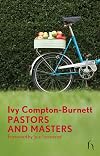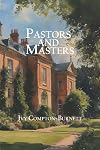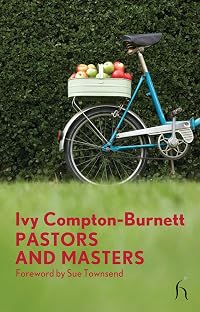
Pastors and Masters
by Ivy Compton-Burnett
On This Page
Description
"The sight of duty does make one shiver," said Miss Herrick. "The actual doing of it would kill one, I think." Ever anxious to keep up appearances, self-avowed intellectual and scholar Nicholas Herrick knows that to involve himself in the running of his own school would be a condescension too far. Assembling around himself a cast of fittingly fawning friends and aides, he sets about unveiling his final masterpiece. Described in contemporary reviews as "a work of genius," Pastors and show more Masters inaugurated the writing career of an author gifted with a rare skill for characterization and for wry portrayals of domestic scenes. show lessTags
Recommendations


















Member Reviews
Ivy Compton-Burnett’s ‘Pastors and Masters’ is a brief dark novella. Written almost entirely as dialogue, this early book of Compton-Burnett’s is not always the easiest of reads, but it rewards persistence. The sharp-sighted depiction of idle headmaster Nicholas Herrick and his coterie of friends and colleagues cuts cleanly and cruelly through their deceptions. At the end of the book, a couple of her characters dismiss Austen “‘Personally, I can’t get over the littleness in her books,’ said Miss Basden.” Little do these characters realise how perfectly they have been assassinated in one of those ‘books written by ladies’ that the Reverend Peter Fletcher so dismisses. The restrained environment of a small boy’s show more school in an old college town is the ivory on which Ivy Compton-Burnett paints her devastating portrait of petty human interactions. This world feels deeply bleak, but also sharply funny. show less
 This review was written for LibraryThing Early Reviewers.
How/why I acquired this: well, it was an Early Reviewers book, but I requested it because Compton-Burnett featured in The Uncommon Reader, which I read last year. A book by C-B (can't remember which one) is the first book borrowed by the Queen. She reads it to be polite, and finds it very dry. However, some time later, when she is more well-read, she picks up the same book by accident, and this time finds it very witty and amusing.
Not a lot really happens in Pastors and Masters. There is one key event, but if I summarised it, it would not sound like enough to hang a whole book on. The focus is really on the characters - all of whom are intensely dislikeable, running the gamut from martyred and passive-aggressive to self-involved and show more downright bitchy. And that is where the humour lies - the book is told almost entirely in dialogue, so people condemn themselves out of their own mouths while they think they are putting others down.
Now, because there are so many layers, and because many of the characters are self-consciously terribly clever, sometimes the utterances take a lot of puzzling out. So I would agree with Alan Bennett's categorisation. And apparently Compton-Burnett herself described her books as 'easy to put down'!
That might sound as if I didn't enjoy this book. That's not actually true: and I will certainly keep it and read it again. But this is definitely a book you have to be in the right mood for. When I was, I found the book very sharp and witty. When I wasn't, I didn't have the patience to wonder over every line to figure out what was really being said, and it draaaagged.
Recommended for: someone who is feeling cerebral, and wants something astringent. show less
Not a lot really happens in Pastors and Masters. There is one key event, but if I summarised it, it would not sound like enough to hang a whole book on. The focus is really on the characters - all of whom are intensely dislikeable, running the gamut from martyred and passive-aggressive to self-involved and show more downright bitchy. And that is where the humour lies - the book is told almost entirely in dialogue, so people condemn themselves out of their own mouths while they think they are putting others down.
Now, because there are so many layers, and because many of the characters are self-consciously terribly clever, sometimes the utterances take a lot of puzzling out. So I would agree with Alan Bennett's categorisation. And apparently Compton-Burnett herself described her books as 'easy to put down'!
That might sound as if I didn't enjoy this book. That's not actually true: and I will certainly keep it and read it again. But this is definitely a book you have to be in the right mood for. When I was, I found the book very sharp and witty. When I wasn't, I didn't have the patience to wonder over every line to figure out what was really being said, and it draaaagged.
Recommended for: someone who is feeling cerebral, and wants something astringent. show less
This review was written for LibraryThing Early Reviewers.This little wisp of a book is really an extended farce skit. Written almost entirely in dialogue, sometimes without even indications of setting, or that the dialogue has shifted to other characters and setting, it reads much like a play or screenplay. The chat is witty and amusing enough, but for its full enjoyment it requires more knowledge of the inner workings and social conventions of British public schools that some American readers are likely to have. The surprise at the end is too slight, too farcelike, and the unveiling of it too improbable to support even so slight a structure as this book has.
"Let's go up to the fire, Miss Bentley," said Mrs. Merry, and leave the men to talk about the newspapers in the cold."
"Why, what a way for your wife to talk in your presence, Mr. Merry!" said Delia.
"I don't suppose wives ought to talk at all in their husband's presence, said Herrick.
"Civilised countries are so artificial," said Emily. "But you should not speak true words in jest, Nicholas. It is not open of you."
"Well, what about us single women, Miss Herrick?"
"Well, I don't suppose we ought to talk at all. I expect we ought to be exposed at birth, or something like that."
"How would it be known at birth which of us were going to be single?" siad Delia.
"That is really clever of you," said Emily. "Though people exposed at birth would be show more single, wouldn't they?"
"Well,l we were certainly classed by the state with paupers and idiots and children, before we had the vote," said Miss Basden. "I mean we women were."
"And no nice children, or paupers either, and no really sensible idiots, would talk in people's presence, " said Bumpus.
And so writes [a:Ivy Compton-Burnett|79313|Ivy Compton-Burnett|https://images.gr-assets.com/authors/1248533054p2/79313.jpg] with her witty, clipped dialogue which makes up the bulk of the book. [b:Pastors and Masters|1686904|Pastors and Masters|Ivy Compton-Burnett|https://i.gr-assets.com/images/S/compressed.photo.goodreads.com/books/1611594295l/1686904._SY75_.jpg|1683679] describes the relationships of those involved with a private English school through their conversation. I found it delightful if confusing as I struggled to clarify their connections (see Wikipedia for a who's who). The gist of the book is a promised new novel written by Mr. Herrick, proprietor of the school, who discovers a colleague has also written a new novel and they plan a joint reading where it all falls apart. Most enjoyable. show less
"Why, what a way for your wife to talk in your presence, Mr. Merry!" said Delia.
"I don't suppose wives ought to talk at all in their husband's presence, said Herrick.
"Civilised countries are so artificial," said Emily. "But you should not speak true words in jest, Nicholas. It is not open of you."
"Well, what about us single women, Miss Herrick?"
"Well, I don't suppose we ought to talk at all. I expect we ought to be exposed at birth, or something like that."
"How would it be known at birth which of us were going to be single?" siad Delia.
"That is really clever of you," said Emily. "Though people exposed at birth would be show more single, wouldn't they?"
"Well,l we were certainly classed by the state with paupers and idiots and children, before we had the vote," said Miss Basden. "I mean we women were."
"And no nice children, or paupers either, and no really sensible idiots, would talk in people's presence, " said Bumpus.
And so writes [a:Ivy Compton-Burnett|79313|Ivy Compton-Burnett|https://images.gr-assets.com/authors/1248533054p2/79313.jpg] with her witty, clipped dialogue which makes up the bulk of the book. [b:Pastors and Masters|1686904|Pastors and Masters|Ivy Compton-Burnett|https://i.gr-assets.com/images/S/compressed.photo.goodreads.com/books/1611594295l/1686904._SY75_.jpg|1683679] describes the relationships of those involved with a private English school through their conversation. I found it delightful if confusing as I struggled to clarify their connections (see Wikipedia for a who's who). The gist of the book is a promised new novel written by Mr. Herrick, proprietor of the school, who discovers a colleague has also written a new novel and they plan a joint reading where it all falls apart. Most enjoyable. show less
I won this book from Librarything in their Early Reviewers draw, and it’s a lovely little thing. Hesperus Press is another publisher whose raison d’être is bringing back neglected works into print and their list sounds very interesting (Pushkin, Flaubert and Charles Lamb etc). Printed on quality off-white paper with super matt wraparound soft covers, this novella was a physical pleasure to read. The reading itself was a little more difficult.
This was ICB’s breakthrough novel after one previous effort, and at a mere 98 pages is a swift read. Published in 1925 at the age of 41, Pastors and Masters is set in a minor prep school of which Nicholas Herrick is the nominal headmaster. However apart from taking prayers in the morning he show more leaves everything to Mr Merry (who, gasp! is not a qualified teacher), plus Mrs Merry, Mr Burgess (who, phew! is qualified), and Matron Miss Basden. Herrick and his younger sister Emily, prefer more intellectual pursuits engaging his friends in debate, and bragging about the book he is writing – will it ever get finished and be published? This is the basis of the plot, on which I’ll expound no further to save the twist in tail for you.
ICB’s style though takes a bit of getting used to. There’s little descriptive prose, it’s mostly dialogue and that is really clipped, and the characters never shut up! They’re constantly talking, mostly at each other, in engagements of verbal sparring, scoring points off each other. This was a group stuck in an old Victorian way of doing things, full of fake gentility. It was impossible to find a single likeable character who actually had anything interesting to say or did anything of merit whatsoever, something I suspect was a deliberate ploy of ICB.
‘How good we all are at talking without ever saying anything we think!’ said Bumpus.
‘It is not always politic to say what we think,’ said Miss Basden.
‘It is not so easy,’ said Masson.
‘Some times I suppose it is right to say it, whether or not we like it, and whether or not it is liked, said Delia.
‘Yes, yes the thing to be done,’ said Miss Lydia, sighing.
‘Oh, just possibly. Once or twice in a lifetime,’ said Mr Bentley to his daughter.
‘Nearer once than twice,’ said Bumpus.
An interesting introduction to ICB’s work, but just as I really got into it, it was over. Recommendations for a mature ICB to read some time in the future would be appreciated – hang on a minute, didn’t the Queen borrow one from the mobile library in The Uncommon Reader? show less
This was ICB’s breakthrough novel after one previous effort, and at a mere 98 pages is a swift read. Published in 1925 at the age of 41, Pastors and Masters is set in a minor prep school of which Nicholas Herrick is the nominal headmaster. However apart from taking prayers in the morning he show more leaves everything to Mr Merry (who, gasp! is not a qualified teacher), plus Mrs Merry, Mr Burgess (who, phew! is qualified), and Matron Miss Basden. Herrick and his younger sister Emily, prefer more intellectual pursuits engaging his friends in debate, and bragging about the book he is writing – will it ever get finished and be published? This is the basis of the plot, on which I’ll expound no further to save the twist in tail for you.
ICB’s style though takes a bit of getting used to. There’s little descriptive prose, it’s mostly dialogue and that is really clipped, and the characters never shut up! They’re constantly talking, mostly at each other, in engagements of verbal sparring, scoring points off each other. This was a group stuck in an old Victorian way of doing things, full of fake gentility. It was impossible to find a single likeable character who actually had anything interesting to say or did anything of merit whatsoever, something I suspect was a deliberate ploy of ICB.
‘How good we all are at talking without ever saying anything we think!’ said Bumpus.
‘It is not always politic to say what we think,’ said Miss Basden.
‘It is not so easy,’ said Masson.
‘Some times I suppose it is right to say it, whether or not we like it, and whether or not it is liked, said Delia.
‘Yes, yes the thing to be done,’ said Miss Lydia, sighing.
‘Oh, just possibly. Once or twice in a lifetime,’ said Mr Bentley to his daughter.
‘Nearer once than twice,’ said Bumpus.
An interesting introduction to ICB’s work, but just as I really got into it, it was over. Recommendations for a mature ICB to read some time in the future would be appreciated – hang on a minute, didn’t the Queen borrow one from the mobile library in The Uncommon Reader? show less
This review was written for LibraryThing Early Reviewers.A slim novel with an attractive cover, the style is clipped and oblique and makes any action quite impenetrable. It started off well enough, a school having breakfast, but then got lost in a maze of conversations. Time seemed to slip around; events were portrayed in one chapter and then turned up again in the middle of the next, so I was never sure of the time scales. Unfortunately, this did not make me want to read another of her books; I prefer something with a stronger narrative.
This review was written for LibraryThing Early Reviewers.I received this little novel from the Librarything early reviewers scheme. I was interested in reading a Compton-Burnett novel, as I recently read a biography about the novelist Elizabeth Taylor, and Compton-Burnett was a good friend of hers, and was referred to in the book a great deal.
In the forward to the novel, Sue Townsend suggests that readers might find it a hard read at times, that Compton-Burnett's style takes some getting used to. The novel is written almost completely in dialogue. I didn't however find it a difficult read, the style is a little unusual prehaps, but the writing is so very good that it flows easily and makes for a quick and lively read. The characters are quirky fully developed in spite of being written about show more in a style that one might think doesn't lend itself to the description of characters, and yet within the great swathes of dialogue there emerges strong and distinct characters. This is the first book by this author I have read, but it probably won't be the last. show less
In the forward to the novel, Sue Townsend suggests that readers might find it a hard read at times, that Compton-Burnett's style takes some getting used to. The novel is written almost completely in dialogue. I didn't however find it a difficult read, the style is a little unusual prehaps, but the writing is so very good that it flows easily and makes for a quick and lively read. The characters are quirky fully developed in spite of being written about show more in a style that one might think doesn't lend itself to the description of characters, and yet within the great swathes of dialogue there emerges strong and distinct characters. This is the first book by this author I have read, but it probably won't be the last. show less
This review was written for LibraryThing Early Reviewers.Members
- Recently Added By
Lists

Books I've Read More Than Once
602 works; 49 members
Author Information

26 Works 2,651 Members
Ivy Compton-Burnett was born in Pinner, Middlesex, England on June 5, 1884. She studied classics at Royal Holloway College, London University, where she graduated in 1906. After publishing her first novel, Dolores, in 1911 she went on to become a prolific writer. Her other works include Pastors and Masters, Brothers and Sisters, Men and Wives, The show more Mighty and Their Fall, More Women Than Men, A House and Its Head, Manservant and Maidservant, and Two Worlds and Their Ways. In 1956, she won the James-Tait Black Memorial Award for Fiction for Mother and Son. In 1967, she was made a Dame Commander of the Order of the British Empire. She died on August 27, 1969. (Bowker Author Biography) show less
Some Editions
Series
Belongs to Publisher Series
Common Knowledge
- Original publication date
- 1925
- People/Characters
- Nicholas Herrick; Mr Merry; Miss Basden; Emily Herrick
Classifications
Statistics
- Members
- 137
- Popularity
- 239,624
- Reviews
- 12
- Rating
- (3.19)
- Languages
- English, German
- Media
- Paper
- ISBNs
- 7
- ASINs
- 5