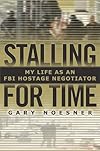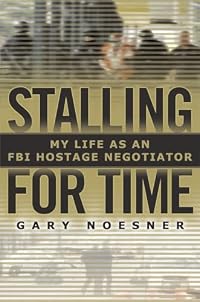
Stalling for Time : My Life as an FBI Hostage Negotiator
by Gary Noesner
On This Page
Description
The FBI’s chief hostage negotiator recounts harrowing standoffs, including the Waco siege with David Koresh and the Branch Davidians, in a memoir that inspired the miniseries Waco, now on Netflix.“Riveting . . . the most in-depth and absorbing section is devoted to the 1993 siege near Waco, Texas.”—The Washington Post
In Stalling for Time, the FBI’s chief hostage negotiator takes readers on a harrowing tour through many of the most famous hostage crises in the history of the show more modern FBI, including the siege at Waco, the Montana Freemen standoff, and the D.C. sniper attacks. Having helped develop the FBI’s nonviolent communication techniques for achieving peaceful outcomes in tense situations, Gary Noesner offers a candid, fascinating look back at his years as an innovator in the ranks of the Bureau and a pioneer on the front lines. Whether vividly recounting showdowns with the radical Republic of Texas militia or clashes with colleagues and superiors that expose the internal politics of America’s premier law enforcement agency, Stalling for Time crackles with insight and breathtaking suspense. Case by case, minute by minute, it’s a behind-the-scenes view of a visionary crime fighter in action. show less
Tags
Recommendations




















Member Reviews
Entertaining. I was often so absorbed that I felt like I could jump into a hostage negotiation situation myself. But that would be silly because I know that I would make a terrible negotiator.
At times it felt a little whitewashed. I would have found it more interesting if he had included some personal failures. Unless every mistake, like in this book, was really someone else's fault for the duration of his 32 year career.
At times it felt a little whitewashed. I would have found it more interesting if he had included some personal failures. Unless every mistake, like in this book, was really someone else's fault for the duration of his 32 year career.
After having watched the Waco documentary on Netflix, I really wanted to read more. I found Noesner's book to be a very interesting read since it wasn't just about Waco. He had an incredible career with the FBI and some of his highest profile cases were highlighted in this book. It certainly lends the credibility to how much of an expert he was in his field and how his approach should not have been overruled at Waco. Fascinating read but also quite sad once you realize how disjointed the massive governmental organizations really are.
This was an informative book about how the FBI negotiator/hostage negotiator team came into being and developed over the years from one of the men who worked his way up the ladder of the Bureau. Noesner is an excellent writer and the whole book is short (222 pp.) This is a fast read.
There are 12 chapters and an epilogue with each chapter taking a different case Noesner was involved with or advised on. Early on the hostage negotiation team was a subsidiary of the SWAT-style assault team. As time went on the hostage negotiation team became more of an equal partner in these conflict resolution situations. This was written in 2010, but a reprint edition was out in 2018.
The biggest cases he worked on were the siege at Ruby Ridge and the show more conflagration by the Branch Davidians.
The ending of the book cover the Washington DC snipers Mohammed and Malvo. Malvo was in the news recently about the possibility of his parole, as his imposed life sentence may have been unconstitutional for someone under the age of 18. The FBI has a museum in Washington DC and they have the car the snipers used to shoot from on display there.
The author desires to reinforce that diplomacy and negotiation are allied skills to further cooperation with the international community. He believes that sometimes giving in to terrorist demands is not acquiescence to terrorism. He seems to mean the application of the distinction of tactical versus strategic here. This is a good distinction but without a particular context, this is void of meaning. Noesner maintains that punitive military action is always needed, when necessary. Noesner says that he has worked with US Army Delta Force and US Navy SEAL teams. He says that his son is a Navy SEAL team member. His position again is that these men should not be used except when absolutely necessary. The author says that he wrote this book to show his admiration for the work the FBI does. Unfortunately, the FBI looks like it may take years to recover from the abuses of Director James Comey and the Bureau’s leadership under Barack Obama.
The book title comes from Noesner’s philosophy that drawing people out from their immediate passionate anger to talk things through leads to a much preferable resolution than violence. By stalling for time the negotiator can draw up an accurate psychological profile of the hostage taker and therefore better listen and understand their demands which they make. show less
There are 12 chapters and an epilogue with each chapter taking a different case Noesner was involved with or advised on. Early on the hostage negotiation team was a subsidiary of the SWAT-style assault team. As time went on the hostage negotiation team became more of an equal partner in these conflict resolution situations. This was written in 2010, but a reprint edition was out in 2018.
The biggest cases he worked on were the siege at Ruby Ridge and the show more conflagration by the Branch Davidians.
The ending of the book cover the Washington DC snipers Mohammed and Malvo. Malvo was in the news recently about the possibility of his parole, as his imposed life sentence may have been unconstitutional for someone under the age of 18. The FBI has a museum in Washington DC and they have the car the snipers used to shoot from on display there.
The author desires to reinforce that diplomacy and negotiation are allied skills to further cooperation with the international community. He believes that sometimes giving in to terrorist demands is not acquiescence to terrorism. He seems to mean the application of the distinction of tactical versus strategic here. This is a good distinction but without a particular context, this is void of meaning. Noesner maintains that punitive military action is always needed, when necessary. Noesner says that he has worked with US Army Delta Force and US Navy SEAL teams. He says that his son is a Navy SEAL team member. His position again is that these men should not be used except when absolutely necessary. The author says that he wrote this book to show his admiration for the work the FBI does. Unfortunately, the FBI looks like it may take years to recover from the abuses of Director James Comey and the Bureau’s leadership under Barack Obama.
The book title comes from Noesner’s philosophy that drawing people out from their immediate passionate anger to talk things through leads to a much preferable resolution than violence. By stalling for time the negotiator can draw up an accurate psychological profile of the hostage taker and therefore better listen and understand their demands which they make. show less
Interesting, especially the author's depiction of the dichotomy between the tactical and negotiating arms of law enforcement. Given his experience and position as head of the FBI negotiating system, as well as his experience at Waco, Texas (among others) he is in a position to judge. Unfortunately, as he states in the conclusion, the personalities and psychological profiles of most of those who choose law enforcement as a career tilt the scale in the wrong direction. Interesting, too, in light of our current issues with the police. Definitely worth a read if the topic interests you.
This is an excellent memoir by the top FBI negotiator (who is famous for Waco, where his strategy was reasonably effective for a while until overridden by tactical and the commander). He articulates why negotiation is an important tool in resolving barricaded subject sieges, and uses real world examples where it worked exceptionally well — such as the Freemen standoff, but especially the many sieges which don’t become well known because they are resolved successfully with little or no loss of life.
This doesn’t go so much into a how to of doing hostage negotiations (which would be of limited applicability), but more about why it is important and examples of how it has worked. However, there is more than enough detail to learn the show more basic principles. show less
This doesn’t go so much into a how to of doing hostage negotiations (which would be of limited applicability), but more about why it is important and examples of how it has worked. However, there is more than enough detail to learn the show more basic principles. show less
This is more one person's high points as a hostage negotiator and the reader will recognize the big cases that he worked on. The book was ok but not what I was hoping for. You don't get as much out of what makes him such an excellent negotiator as someone that can analyze a situation and see what everyone else is doing wrong. Not sure if that is more looking at each situation in hindsight since it is a memoir of his time in the job or that he knew at the time when everything was going right and wrong.
IF you are interested in the FBI it does give some insight working and the interdepartmental competition and it does cover the work it does that most people have no idea is the FBI's job.
IF you are interested in the FBI it does give some insight working and the interdepartmental competition and it does cover the work it does that most people have no idea is the FBI's job.
Wonderful insight into what an FBI negotiator does. Lots of information that most people may not know about the inner workings of a negotiation team.
Members
- Recently Added By
Author Information

2 Works 293 Members
Common Knowledge
- Canonical title
- Stalling for Time : My Life as an FBI Hostage Negotiator
- Original title
- Stalling for Time : My Life as an FBI Hostage Negotiator
- Original publication date
- 2010
- Blurbers
- Cullen, Dave; Cialdini, Robert B.; Huddy, John; Stone, Douglas; Bergen, Peter; Monahan, Tom (show all 9); Sage, Byron; Wind, Bruce; Kidd, William
- Original language
- English
Classifications
- Genres
- Nonfiction, Biography & Memoir, General Nonfiction, History
- DDC/MDS
- 363.25092 — Society, Government, and Culture Social problems and social services Public Safety - Police, Crime Investigation Police services Criminal investigation & forensics
- LCC
- HV6598 .N64 — Social sciences Social pathology. Social and public welfare. Criminology Social pathology. Social and public welfare. Criminology Crimes and offenses
- BISAC
Statistics
- Members
- 291
- Popularity
- 110,118
- Reviews
- 8
- Rating
- (3.70)
- Languages
- English
- Media
- Paper, Audiobook, Ebook
- ISBNs
- 7
- ASINs
- 2