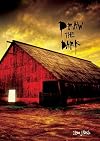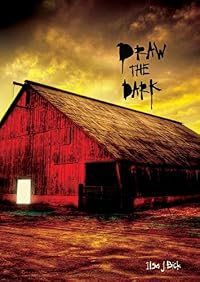
Draw the Dark
by Ilsa J. Bick
On This Page
Description
Seventeen-year-old Christian Cage lives with his uncle in Winter, Wisconsin, where his nightmares, visions, and strange paintings draw him into a mystery involving German prisoners of war, a mysterious corpse, and Winter's last surviving Jew.Tags
Recommendations



Member Reviews
Draw the Dark is a fantasy young adult novel unlike anything I've ever read. No, seriously, the idea behind it was just so unique that I really couldn't help but want to get back to this book immediately. Does it really get any better than a guy (our hero) who can draw your death? Okay, so realistically I'm sure it must suck for the drawee and it definitely must suck to me the drawer since he has no idea what's going on with this power most of the time, but for us as readers, it's really pretty awesome.
So, YA Fantasy tends to be a hit or miss with me with, unfortunately for me, more being misses. But maybe it's because Draw the Dark has a male protagonist or because it was just so different, I ended up enjoying it. And man, did I feel show more for Christian. I would not want to suffer from not even one percent of the guilt he was feeling. The main thing that I loved about Christian was the he wasn't going on thinking "This is my burden to bear and I'm going to bear it alone! Oh woe, how nobody understands me! I'm going to be the hero!". He didn't have that sense of self-importance that I've seen with other male-driven YA novels. When things were getting serious, he accepted help. He wasn't as naive to think that he could do this alone; he knew he couldn't. I loved him for it. He was a team player.
I have always loved awesomely creepy books and boy was Draw the Dark awesomely creepy! I was a bit relieved that I read it during the day since I knew I would've been too creeped out to sleep with the lights off. When Draw the Dark wasn't creeping me out, it was filling me with dread for all of the characters. And when it wasn't doing that, it was astounding me with all of the knowledge that I was gaining by reading this. I had no idea that the U.S. housed POW from WWII (a gaping hole in my education perhaps?) and I love it when a fiction book teaches me about something I was wildly ignorant about. It wasn't just the WWII element, but the psychology as well (I'm a psychology major so I love all this type of stuff) and the ESP. The facts were given in a way that there were far from dry and really added to the story.
So, anyway, I have to say that Draw the Dark is one of the best fantasy novels I have read to date. It was filled with everything I love in a book: intrigue, horror, wisdom, knowledge, and it was wonderfully twisty (I was really blown away when everything unraveled...in a completely good way). This made me turn the pages (or click in my instance) at a frantic speed. It's highly recommended. show less
So, YA Fantasy tends to be a hit or miss with me with, unfortunately for me, more being misses. But maybe it's because Draw the Dark has a male protagonist or because it was just so different, I ended up enjoying it. And man, did I feel show more for Christian. I would not want to suffer from not even one percent of the guilt he was feeling. The main thing that I loved about Christian was the he wasn't going on thinking "This is my burden to bear and I'm going to bear it alone! Oh woe, how nobody understands me! I'm going to be the hero!". He didn't have that sense of self-importance that I've seen with other male-driven YA novels. When things were getting serious, he accepted help. He wasn't as naive to think that he could do this alone; he knew he couldn't. I loved him for it. He was a team player.
I have always loved awesomely creepy books and boy was Draw the Dark awesomely creepy! I was a bit relieved that I read it during the day since I knew I would've been too creeped out to sleep with the lights off. When Draw the Dark wasn't creeping me out, it was filling me with dread for all of the characters. And when it wasn't doing that, it was astounding me with all of the knowledge that I was gaining by reading this. I had no idea that the U.S. housed POW from WWII (a gaping hole in my education perhaps?) and I love it when a fiction book teaches me about something I was wildly ignorant about. It wasn't just the WWII element, but the psychology as well (I'm a psychology major so I love all this type of stuff) and the ESP. The facts were given in a way that there were far from dry and really added to the story.
So, anyway, I have to say that Draw the Dark is one of the best fantasy novels I have read to date. It was filled with everything I love in a book: intrigue, horror, wisdom, knowledge, and it was wonderfully twisty (I was really blown away when everything unraveled...in a completely good way). This made me turn the pages (or click in my instance) at a frantic speed. It's highly recommended. show less
I am a ghost in a land of phantoms and remembered nightmares.
To be perfectly honest, the only reason that this book didn't get a 5-teacup rating is because of the method of narration toward the beginning of the story. It was written as people talk, complete with an overuse of "well," "like," and an ellipsis ended every third sentence. That thankfully ended after the first chapter or so, but while it was there, it was bordering on painful to read.
The rest of the book was pure dark deliciousness. This is a book that doesn't pull any punches with what the reader can handle. I know a lot of people get their knickers in a twist when books for teens have swearing and expressions of sexuality. This has swearing, sexuality, crude humour, show more complete jackasses, and gory death.
The story contained in Draw the Dark was multilayered. The issue of the sideways place, the overarching mystery surrounding David Witek, and Christian's everyday life and troubles with Karl Dekker all played their part and tied in with each other smoothly. Happily, the story didn't end with the revelations of the Witek mystery, which I had been fearing it would. It continues on after that, ties up loose ends that could easily have been overlooked by readers, and ends the story in such a way that I really can't imagine a more satisfying ending. I can imagine a happier one, sure, but not one more satisfying, nor so right-feeling.
Draw the Dark is truly a wonderful book, one that will make you want to keep turning the pages long after your common sense tells you it's time to do something else. This isn't just a book for teens. It's a book for fans of horror in general, for those who enjoy a well-told supernatural mystery, and for those who want an example of what great first-person writing is. (Once you get past the beginning, that is.) Truly, this is not a book to be missed. show less
To be perfectly honest, the only reason that this book didn't get a 5-teacup rating is because of the method of narration toward the beginning of the story. It was written as people talk, complete with an overuse of "well," "like," and an ellipsis ended every third sentence. That thankfully ended after the first chapter or so, but while it was there, it was bordering on painful to read.
The rest of the book was pure dark deliciousness. This is a book that doesn't pull any punches with what the reader can handle. I know a lot of people get their knickers in a twist when books for teens have swearing and expressions of sexuality. This has swearing, sexuality, crude humour, show more complete jackasses, and gory death.
The story contained in Draw the Dark was multilayered. The issue of the sideways place, the overarching mystery surrounding David Witek, and Christian's everyday life and troubles with Karl Dekker all played their part and tied in with each other smoothly. Happily, the story didn't end with the revelations of the Witek mystery, which I had been fearing it would. It continues on after that, ties up loose ends that could easily have been overlooked by readers, and ends the story in such a way that I really can't imagine a more satisfying ending. I can imagine a happier one, sure, but not one more satisfying, nor so right-feeling.
Draw the Dark is truly a wonderful book, one that will make you want to keep turning the pages long after your common sense tells you it's time to do something else. This isn't just a book for teens. It's a book for fans of horror in general, for those who enjoy a well-told supernatural mystery, and for those who want an example of what great first-person writing is. (Once you get past the beginning, that is.) Truly, this is not a book to be missed. show less
Review Courtesy of Dark Faerie Tales
Quick and Dirty: The mysteries that surround Winter, Wisconsin and Christian Cage make this an interesting and surprising read.
Opening Sentence: So. Everything I need to leave is here: My brushes. Paint. The wall.
The Review:
Christian Cage wakes up one morning after an intense dream about a kid pleading with his father with red paint covered hands, but no notion of how it got there. After being accused of vandalizing a barn with Nazi imagery despite not remembering any of it, Christian’s life starts to spiral downhill in a haze of mysteries, reoccurring dreams based on historical events, and odd mutterings in his head that make Christian afraid that he is actually going crazy. Christian does his own show more research to find out what is happening to him and what went on in his town decades ago that seems to be reaching out to him now through his dreams and flashbacks.
Christian, a teenage orphan living with his uncle in a tiny town in Wisconsin, is a quiet loner who draws and paints on his walls, sometimes in his sleep, of what he calls the sideways place, an alternate world he believes his parents are trapped in. Christian has the uncanny talent of being able to draw other people’s fears that come alive when he is angry, which has lead to pain and death of those close to him, including his Aunt Jean.
The book is written from a first person point of view of a troubled teen that doesn’t fit in to the society he lives in, but is comfortable with who he is. Christian seems like a genuine person, and the book follows his thoughts and actions as he tries to figure out the mysteries that surround him and his tiny town.
The other characters are just as intriguing as Christian. His uncle, Hank, and his therapist, Dr. Ranier, are well written and believable as real people with their hidden past and emotions that come out as the book progresses and Christian learns more about those around him.
Overall, I enjoyed the book and the urge to find out about the mysteries that Christian was uncovering, including whether the sideways place was real, or if he is actually crazy. I also liked that Christian is an artist, and a knowledgeable guy. I identified with that, and would expect other artsy readers will also find this book an interesting read.
The ending leaves the reader questioning what is real and what is possible in this intriguing, very different novel that kept me reading to the very end, and wanting more after it was over.
Notable Scene:
Something changed in my head after that. Maybe it was the day finally catching up to me, or perhaps my subconscious picked up on yet another tumbler falling into place. But when I heard about that dead baby, there was this sensation of something going click in my mind, almost the same as when I drew, only not as nice. I knew without knowing how, that the baby and the weirdness I’d done at Mr. Eisenmann’s barn were somehow connected. Winter was too small, the history too intertwined for all of this not to be. I had no idea how these two things could be connected, but they were. My problem was I couldn’t talk to anyone about my feelings. Heck, I wasn’t even sure what they were. Even if I had, I’d probably have sounded pretty crazy. Considering that’s how most people saw me anyway, maybe that would’ve been par for the course and there’d have been no harm done.
But. Even now, I wonder what would’ve happened if I’d spoken up just a little sooner. If I had, maybe a couple other people wouldn’t have gotten killed. I don’t know that for sure, but I think so.
FTC Advisory: Carolrhoda Books provided me with a copy of Draw the Dark. No goody bags, sponsorships, “material connections,” or bribes were exchanged for my review. show less
Quick and Dirty: The mysteries that surround Winter, Wisconsin and Christian Cage make this an interesting and surprising read.
Opening Sentence: So. Everything I need to leave is here: My brushes. Paint. The wall.
The Review:
Christian Cage wakes up one morning after an intense dream about a kid pleading with his father with red paint covered hands, but no notion of how it got there. After being accused of vandalizing a barn with Nazi imagery despite not remembering any of it, Christian’s life starts to spiral downhill in a haze of mysteries, reoccurring dreams based on historical events, and odd mutterings in his head that make Christian afraid that he is actually going crazy. Christian does his own show more research to find out what is happening to him and what went on in his town decades ago that seems to be reaching out to him now through his dreams and flashbacks.
Christian, a teenage orphan living with his uncle in a tiny town in Wisconsin, is a quiet loner who draws and paints on his walls, sometimes in his sleep, of what he calls the sideways place, an alternate world he believes his parents are trapped in. Christian has the uncanny talent of being able to draw other people’s fears that come alive when he is angry, which has lead to pain and death of those close to him, including his Aunt Jean.
The book is written from a first person point of view of a troubled teen that doesn’t fit in to the society he lives in, but is comfortable with who he is. Christian seems like a genuine person, and the book follows his thoughts and actions as he tries to figure out the mysteries that surround him and his tiny town.
The other characters are just as intriguing as Christian. His uncle, Hank, and his therapist, Dr. Ranier, are well written and believable as real people with their hidden past and emotions that come out as the book progresses and Christian learns more about those around him.
Overall, I enjoyed the book and the urge to find out about the mysteries that Christian was uncovering, including whether the sideways place was real, or if he is actually crazy. I also liked that Christian is an artist, and a knowledgeable guy. I identified with that, and would expect other artsy readers will also find this book an interesting read.
The ending leaves the reader questioning what is real and what is possible in this intriguing, very different novel that kept me reading to the very end, and wanting more after it was over.
Notable Scene:
Something changed in my head after that. Maybe it was the day finally catching up to me, or perhaps my subconscious picked up on yet another tumbler falling into place. But when I heard about that dead baby, there was this sensation of something going click in my mind, almost the same as when I drew, only not as nice. I knew without knowing how, that the baby and the weirdness I’d done at Mr. Eisenmann’s barn were somehow connected. Winter was too small, the history too intertwined for all of this not to be. I had no idea how these two things could be connected, but they were. My problem was I couldn’t talk to anyone about my feelings. Heck, I wasn’t even sure what they were. Even if I had, I’d probably have sounded pretty crazy. Considering that’s how most people saw me anyway, maybe that would’ve been par for the course and there’d have been no harm done.
But. Even now, I wonder what would’ve happened if I’d spoken up just a little sooner. If I had, maybe a couple other people wouldn’t have gotten killed. I don’t know that for sure, but I think so.
FTC Advisory: Carolrhoda Books provided me with a copy of Draw the Dark. No goody bags, sponsorships, “material connections,” or bribes were exchanged for my review. show less
Shelved as a Young adult novel, I feel it is incorrectly categorized, instead it should just be standard dark fantasy. The only aspects of this that make it YA is the 17 year old protagonist and the heavy handed coming-of-age vein, other wise it is “King/Koontz-lite”.
Winter, Wisconsin. Murder. Nazis. Dead Bodies. Ghostly visions. Fatal fires. A boy who can draw people’s nightmares. All of these topics are discussed on the cover liner notes. What is not discussed is how well put together it is. It was surprisingly enjoyable from a number of perspectives.
Detailing the events around social outcast Christian Cage. Dark opens with Christian, being investigated for graffiti on a local building, red spray paint with swastikas and eyes. show more Christian does not remember vandalizing anything. This isn’t the first time that Cage has been in trouble with the law. The suicide of a school teacher brought him into the limelight when much younger.
Cage is an obsessive artist, falling into a near hypnotic groove, pulling visions into his art. Christian’s shadowy and often cynical work leads him to investigate a mystery that has been buried in his town since WW2.
In ‘Draw the Dark’, Ilsa Bick cobbles together a solid story. Not to be viewed as a negative point, people with half a care about WW2 era history will have key points figured out very fast, main plot points are not as “little-known” as the marketing blurbs will insinuate. As such, some of the plot twists are more like a cinnamon-y churro and less like a tangy knotted pretzel (mmm. soo hungry now). It is really all about the character progression and the deeper details of individuals lives, personal interactions, forgotten history, unheard conversations, and the desire to bury the past. It is the malleable characters and the incredibly solid framework of the tale that make the book.
Readers be warned that there is no evidence that this is the first book in a series. There are a large number of loose ends at the end, things you will wish were explained are left unresolved. It is not detrimental to the story, just something that might frustrate some. show less
Winter, Wisconsin. Murder. Nazis. Dead Bodies. Ghostly visions. Fatal fires. A boy who can draw people’s nightmares. All of these topics are discussed on the cover liner notes. What is not discussed is how well put together it is. It was surprisingly enjoyable from a number of perspectives.
Detailing the events around social outcast Christian Cage. Dark opens with Christian, being investigated for graffiti on a local building, red spray paint with swastikas and eyes. show more Christian does not remember vandalizing anything. This isn’t the first time that Cage has been in trouble with the law. The suicide of a school teacher brought him into the limelight when much younger.
Cage is an obsessive artist, falling into a near hypnotic groove, pulling visions into his art. Christian’s shadowy and often cynical work leads him to investigate a mystery that has been buried in his town since WW2.
In ‘Draw the Dark’, Ilsa Bick cobbles together a solid story. Not to be viewed as a negative point, people with half a care about WW2 era history will have key points figured out very fast, main plot points are not as “little-known” as the marketing blurbs will insinuate. As such, some of the plot twists are more like a cinnamon-y churro and less like a tangy knotted pretzel (mmm. soo hungry now). It is really all about the character progression and the deeper details of individuals lives, personal interactions, forgotten history, unheard conversations, and the desire to bury the past. It is the malleable characters and the incredibly solid framework of the tale that make the book.
Readers be warned that there is no evidence that this is the first book in a series. There are a large number of loose ends at the end, things you will wish were explained are left unresolved. It is not detrimental to the story, just something that might frustrate some. show less
Christian Cage lives with his uncle, the town sheriff, since his parents disappeared when he was young. He's an outsider, picked on at school for being the weird kid. He's socially awkward and his only release is his art. He's an amazing artist, but he has a secret -- he believes his art is responsible for some of the bad things that have happened to him and his family.
Lately Christian has been having vivid dreams, so vivid that they almost seem like visions. When he sleepwalks himself out to the town jillionaire's barn and vandalizes it with swastikas, he has an inkling that his dreams are trying to tell him something. His town, Winter, Wisconsin, seems to have swept a lot of its history under the rug. And when Christian Dreams, he show more becomes a boy, David, who is witness to some of Winter's long-forgotten secrets. Secrets that may be surfacing when a mummified baby turns up in the wall of a recently-purchased house.
As Christian finds himself deeper and deeper into this mystery, he finds himself both fascinated and terrified by the prospect that his ethnically German neighbors may be descended from Nazi prisoners. He struggles to control his ability to slip back in time, while maintaining some semblance of sanity and maybe even get closer to his only friend -- and, yeah, cute girl -- Sarah. He feels a responsibility to David, to tell his story, discover the origin of the baby in the wall, and find out why there are no longer any Jews in Winter. And he wonders if his newfound ability can help him find his parents in "the sideways place" where he believes they might be trapped.
With so many threads of story, DRAW THE DARK is an absolutely ambitious novel. But it is artfully woven together, piece by piece, and I'd love to see it mentioned for the 2011 Edgar Award in the Young Adult category. show less
Lately Christian has been having vivid dreams, so vivid that they almost seem like visions. When he sleepwalks himself out to the town jillionaire's barn and vandalizes it with swastikas, he has an inkling that his dreams are trying to tell him something. His town, Winter, Wisconsin, seems to have swept a lot of its history under the rug. And when Christian Dreams, he show more becomes a boy, David, who is witness to some of Winter's long-forgotten secrets. Secrets that may be surfacing when a mummified baby turns up in the wall of a recently-purchased house.
As Christian finds himself deeper and deeper into this mystery, he finds himself both fascinated and terrified by the prospect that his ethnically German neighbors may be descended from Nazi prisoners. He struggles to control his ability to slip back in time, while maintaining some semblance of sanity and maybe even get closer to his only friend -- and, yeah, cute girl -- Sarah. He feels a responsibility to David, to tell his story, discover the origin of the baby in the wall, and find out why there are no longer any Jews in Winter. And he wonders if his newfound ability can help him find his parents in "the sideways place" where he believes they might be trapped.
With so many threads of story, DRAW THE DARK is an absolutely ambitious novel. But it is artfully woven together, piece by piece, and I'd love to see it mentioned for the 2011 Edgar Award in the Young Adult category. show less
A dark & creepy story about a 17 yr old boy with strange "powers", along with a great murder-mystery from 1945. I don't think this is YA--except for the protag being a 17 yr old boy, the story reads like a suspense novel, with some added creepy paranormal goodies. So if you're not a fan of YA, don't let that deter you from this story--it was a good one, with barely any teen angst.I might have given it 5 stars, but for the 1st & last chapters. They were about his missing parents & a "sideways place", and when you read the 1st chapter, you assume you are going to get some answers about that stuff, but then they are barely touched on during the book, until you get to the last chapter and are like WTF? I really didn't know how to take the show more last page--she has left herself open for a sequel, and I'm hoping that was the point, otherwise I'm pissed about the ending. I received this as a free ARC from NetGalley. No goodies (other than the story) were acquired by me. show less
Draw the Dark was a pleasant surprise. It's dark in a delightfully creepy way. Bad things happened in Winter before Christian was born and he has the opportunity to set them right. The plot threads include self-discovery, a mystery and high school horror. I enjoyed the way Bick combined the subplots with the main plot.
It's nice to see a teenage protagonist who doesn't have everything figured out. He wants friends but doesn't have them. When he finally gets one it's partly because she points out he can't recognize when someone is being friendly towards him.
I've read several books with World War II as the setting and this was the first time I'd heard about POW Camps in the U.S. with German soldiers. It was nice to have a new element show more added to my knowledge of the war. show less
It's nice to see a teenage protagonist who doesn't have everything figured out. He wants friends but doesn't have them. When he finally gets one it's partly because she points out he can't recognize when someone is being friendly towards him.
I've read several books with World War II as the setting and this was the first time I'd heard about POW Camps in the U.S. with German soldiers. It was nice to have a new element show more added to my knowledge of the war. show less
Members
- Recently Added By
Author Information

38+ Works 3,405 Members
Awards and Honors
Awards
Notable Lists
Common Knowledge
- Canonical title
- Draw the Dark
Classifications
- Genres
- Fiction and Literature, Teen, Young Adult, Horror
- DDC/MDS
- 813.6 — Literature & rhetoric American literature in English American fiction in English 2000-
- LCC
- PZ7 .B47234 .D — Language and Literature Fiction and juvenile belles lettres Fiction and juvenile belles lettres Juvenile belles lettres
- BISAC
Statistics
- Members
- 156
- Popularity
- 209,259
- Reviews
- 11
- Rating
- (3.80)
- Languages
- English, German
- Media
- Paper, Audiobook, Ebook
- ISBNs
- 10