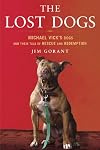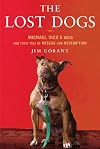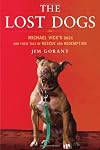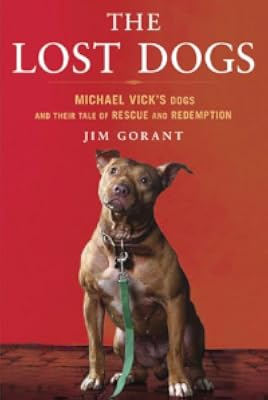
The Lost Dogs: Michael Vick's Dogs and Their Tale of Rescue and Redemption
by Jim Gorant
The Lost Dogs (Michael Vick) (1)
On This Page
Description
This book tells the story of survival and our powerful bond with man's best friend, in the aftermath of the nation's most notorious case of animal cruelty. Animal lovers and sports fans were shocked when the story broke about NFL player Michael Vick's brutal dog fighting operation. But what became of the dozens of dogs who survived? As the author discovered, their story is the truly newsworthy aspect of this case. Expanding on his Sports Illustrated cover story, this book traces the effort show more to bring Vick to justice and turns the spotlight on these infamous pit bulls, which were saved from euthanasia by an outpouring of public appeals coupled with a court order that Vick pay nearly a million dollars in "restitution" to the dogs. As an ASPCA led team evaluated each one, they found a few hardened fighters, but many more lovable, friendly creatures desperate for compassion. In this book, we meet these amazing animals, a number of which are now living in loving homes, while some even work in therapy programs: Johnny Justice participates in Paws for Tales, which lets kids get comfortable with reading aloud by reading to dogs; Leo spends three hours a week with cancer patients and troubled teens. At the heart of the stories are the rescue workers who transformed the pups from victims of animal cruelty into healing caregivers themselves. show lessTags
Recommendations























Member Reviews
I almost didn't buy this book. I almost left it on the shelf after telling myself that it was only going to make me cry. I told myself that maybe after reading the Sports Illustrated article that I already knew the story and didn't need to read this book. Then I looked at the cover picture again and thought, "This is exactly why dog fighters are allowed to continue thier heartless trade, because good people decide, "I don't need to know about that, it's only going to make me sad."
And sad I was, I broke into a great heaving,messy,wet bawl in the middle of the 5pm rush hour commute at South Station in Boston after making the poor choice to start reading this book on my way home from work.
The book is a good solid timeline of what show more investigators, prosecutors and police know happened on Michael Vick's property both while he was there and what happened with his knowledge and approval when he was not there.
The sub title of this book, "Micahel Vick's dogs and thier tale of rescue and redemption" is lovely but a little misleading. Many of the dogs from Vick's property were resued and placed with loving families but many others were not so lucky.
I think sorts fans would like to belive that maybe Michael Vick didn't really know what was going on, maybe it wasn't really as bad as the evening news made the situation sound. Was Michael Vick really involved or was he away alot and didn't really know what others were doing on his property? He was there, he participated and he took pleasure and joy from maiming and eventually killing the creatures in his care.
This is a very hard book to read and not for the squeemish but it's such an important book because it documents the facts of this particular case and opens our reluctant eyes to the evil that men do so we may recognise it when it comes to our neighborhood.
Was it really as bad as we've heard? Yes, in fact, it was worse. As nice as it is to read about how happy the lucky dogs that survived are, we should never forget what this man, and many others like him, did and still do. show less
And sad I was, I broke into a great heaving,messy,wet bawl in the middle of the 5pm rush hour commute at South Station in Boston after making the poor choice to start reading this book on my way home from work.
The book is a good solid timeline of what show more investigators, prosecutors and police know happened on Michael Vick's property both while he was there and what happened with his knowledge and approval when he was not there.
The sub title of this book, "Micahel Vick's dogs and thier tale of rescue and redemption" is lovely but a little misleading. Many of the dogs from Vick's property were resued and placed with loving families but many others were not so lucky.
I think sorts fans would like to belive that maybe Michael Vick didn't really know what was going on, maybe it wasn't really as bad as the evening news made the situation sound. Was Michael Vick really involved or was he away alot and didn't really know what others were doing on his property? He was there, he participated and he took pleasure and joy from maiming and eventually killing the creatures in his care.
This is a very hard book to read and not for the squeemish but it's such an important book because it documents the facts of this particular case and opens our reluctant eyes to the evil that men do so we may recognise it when it comes to our neighborhood.
Was it really as bad as we've heard? Yes, in fact, it was worse. As nice as it is to read about how happy the lucky dogs that survived are, we should never forget what this man, and many others like him, did and still do. show less
As I was nose deep into Gorant’s harrowing tale of many a bloody and brutal murder at the cruel hands of dog fighters, I was feeling October’s spookiness creep around me. My husband was out, the baby was asleep and all I could think of was the horrible acts of insane killing that went on only a few states above the one I now call home. Only slightly less chilling than the actual telling, was the fact that only months before the awful truth came out to the media about the Vick property, we had been so head-over-heels in love with “our” QB that we’d almost named our own dog “Mike”.
The fall had made its initial but rapid descent into cool Appalachian weather and was making itself known, loud and clear against the windows via show more the trees outside. Our older, albeit smaller dog, Teddy (Ted Williams being name-safe and very well dead), was stationed, in his cat-like position, curled up like a jellybean, high atop a couch cushion on the other end of the living room. Donnie (not renamed after the fact but, thankfully, never actually named for the former Falcons player) was nowhere to be seen.
I read on, clenching my teeth in fear as I thought about the cruel acts, described with a sports-writer’s cool, frankness. Just about the time this frankness was being applied to the ways (now less a spoiler than a scandal and sensation) in which the “dud dogs” or the ones who either couldn’t wouldn’t or shouldn’t be fought, were “let go”, I heard a thump. A heart wrenching, mind racing, Halloween-season “thump”.
My aforementioned heart stuck in my throat and I froze. I sat waiting for Teddy: The Fearless Wonder to rise up and attack. I waited for, the yet unseen, Donnie to act on some thread of what people so often refer to as this instinct within pit bulls to rip-tear-ruin.
As neither dog was heard from, I surrendered to my role as chosen house guardian. I shakily sat up from my previously warm hideout on the couch and peered down at where it sounded like the “thump” had originated. Suddenly, my heart slowed and I burst out into full out laughter.
I had found Donnie.
My rather ferocious “Bully” had been closer than I’d thought, though, perhaps he’d been dreaming of a far away place. He tends to sleep rump-up, melting off of the couch, slowly, very slowly, over the course of the evening. He had, indeed, melted right off of the couch. By this point, he had woken up and, being only bruised regarding his ego, was licking my face to his heart’s content, most likely attempting to curtail my giggles.
This has been a typical story in our day-to-day existence over the past four years following Donnie’s arrival into our lives.
Weird to think, then, that it took a horrific story like the one Gorant wrote about in Lost Dogs, to bring any bit of pit magic to the media. Of course, it will take many more such tales (tails?) to make much of a dent, unfortunately and with each heartwarming story of dogs rescued and rehomed, there will be those for whom a story of a dog fighting ring will only solidify the “monster myths” of pit bulls.
For me, The Lost Dogs was less about the political storm of who was right or who was wrong or what kind of person gets behind a statement like: Oh, please, they’re just dogs”. It was about people and puppies and second chances for both. Or sometimes neither.
I loved learning about the breed and the rescue culture (the specifically pit-bull versus “any dog” rescue) from the eyes of person who hasn’t been steeped inside the world of BadRap and BSL’s, yet. I often find that dog books are written by people who are dog-people or who were “saved” by pit bulls. Gorant’s books didn’t give that impression. It shed much needed light on the Pit-Rescue work being done nation wide but it could and should be read by the less fanatic pit-people.
It will be hard for people of dog leaning (or people who don’t like dying and stuff) to read the first bit but I promise it will be worth it. And Donnie will thank you. After he has collected himself from his recent battles with our (he is sure) very tricky couch. show less
The fall had made its initial but rapid descent into cool Appalachian weather and was making itself known, loud and clear against the windows via show more the trees outside. Our older, albeit smaller dog, Teddy (Ted Williams being name-safe and very well dead), was stationed, in his cat-like position, curled up like a jellybean, high atop a couch cushion on the other end of the living room. Donnie (not renamed after the fact but, thankfully, never actually named for the former Falcons player) was nowhere to be seen.
I read on, clenching my teeth in fear as I thought about the cruel acts, described with a sports-writer’s cool, frankness. Just about the time this frankness was being applied to the ways (now less a spoiler than a scandal and sensation) in which the “dud dogs” or the ones who either couldn’t wouldn’t or shouldn’t be fought, were “let go”, I heard a thump. A heart wrenching, mind racing, Halloween-season “thump”.
My aforementioned heart stuck in my throat and I froze. I sat waiting for Teddy: The Fearless Wonder to rise up and attack. I waited for, the yet unseen, Donnie to act on some thread of what people so often refer to as this instinct within pit bulls to rip-tear-ruin.
As neither dog was heard from, I surrendered to my role as chosen house guardian. I shakily sat up from my previously warm hideout on the couch and peered down at where it sounded like the “thump” had originated. Suddenly, my heart slowed and I burst out into full out laughter.
I had found Donnie.
My rather ferocious “Bully” had been closer than I’d thought, though, perhaps he’d been dreaming of a far away place. He tends to sleep rump-up, melting off of the couch, slowly, very slowly, over the course of the evening. He had, indeed, melted right off of the couch. By this point, he had woken up and, being only bruised regarding his ego, was licking my face to his heart’s content, most likely attempting to curtail my giggles.
This has been a typical story in our day-to-day existence over the past four years following Donnie’s arrival into our lives.
Weird to think, then, that it took a horrific story like the one Gorant wrote about in Lost Dogs, to bring any bit of pit magic to the media. Of course, it will take many more such tales (tails?) to make much of a dent, unfortunately and with each heartwarming story of dogs rescued and rehomed, there will be those for whom a story of a dog fighting ring will only solidify the “monster myths” of pit bulls.
For me, The Lost Dogs was less about the political storm of who was right or who was wrong or what kind of person gets behind a statement like: Oh, please, they’re just dogs”. It was about people and puppies and second chances for both. Or sometimes neither.
I loved learning about the breed and the rescue culture (the specifically pit-bull versus “any dog” rescue) from the eyes of person who hasn’t been steeped inside the world of BadRap and BSL’s, yet. I often find that dog books are written by people who are dog-people or who were “saved” by pit bulls. Gorant’s books didn’t give that impression. It shed much needed light on the Pit-Rescue work being done nation wide but it could and should be read by the less fanatic pit-people.
It will be hard for people of dog leaning (or people who don’t like dying and stuff) to read the first bit but I promise it will be worth it. And Donnie will thank you. After he has collected himself from his recent battles with our (he is sure) very tricky couch. show less
Last year I read Wallace by Jim Gorant and loved it. Since it was one of my favorite books of the year I knew that I had to read this book too.
My concern before starting was that the stories of how Michael Vick and his friends tortured and mistreated the pit bulls they used for dog fighting would be too much to stomach. Although there are some horrific details about what some of the dogs went through, it is mostly presented in a manner of what evidence the police were able to collect. In addition, the main focus of the story is not on what a horrible human Michael Vick is, but on how the amazing dogs rescued from his home were rehabilitated. In fact, Vick is not mentioned much at all after the first chapters.
I knew from watching shows show more like The Dog Whisperer and Pit Boss, reading books like Wallace, and meeting many sweet and gentle pit bulls throughout my life that these are dogs with an undeserved bad reputation. This book solidifies that line of thinking. I was surprised when the author shared that in a litter of 12 pit bull puppies you would be lucky if you could train one to be a fighter because it works against years of evolving as pack animals. Even though their purpose was fighting, the dogs taken from Vick did not need to be rehabilitated because they were aggressive; they needed to be socialized and trained to live in a house with a family.
The story follows the dogs from rescue to rehabilitation, but we also get to meet the army of people who work to help dogs like Vick's every day. Difficult to read at times, this book left me with a good feeling knowing that for every bottom feeder like Vick in the world there are 100 good ones. show less
My concern before starting was that the stories of how Michael Vick and his friends tortured and mistreated the pit bulls they used for dog fighting would be too much to stomach. Although there are some horrific details about what some of the dogs went through, it is mostly presented in a manner of what evidence the police were able to collect. In addition, the main focus of the story is not on what a horrible human Michael Vick is, but on how the amazing dogs rescued from his home were rehabilitated. In fact, Vick is not mentioned much at all after the first chapters.
I knew from watching shows show more like The Dog Whisperer and Pit Boss, reading books like Wallace, and meeting many sweet and gentle pit bulls throughout my life that these are dogs with an undeserved bad reputation. This book solidifies that line of thinking. I was surprised when the author shared that in a litter of 12 pit bull puppies you would be lucky if you could train one to be a fighter because it works against years of evolving as pack animals. Even though their purpose was fighting, the dogs taken from Vick did not need to be rehabilitated because they were aggressive; they needed to be socialized and trained to live in a house with a family.
The story follows the dogs from rescue to rehabilitation, but we also get to meet the army of people who work to help dogs like Vick's every day. Difficult to read at times, this book left me with a good feeling knowing that for every bottom feeder like Vick in the world there are 100 good ones. show less
When authorities first raided Michael Vick’s home in rural Virginia, the NFL player claimed that he had simply allowed the wrong people to take advantage of him, and that had no knowledge of the dog fighting on the premises. Despite the mounting evidence, – buried dog carcasses, testimony by the gardener who witnessed the horrific treatment of dogs, blood splatters all over the room used as the fighting pit, and so on – Vick continued to proclaim his innocence. Only when his business partners spilled all the facts in the hopes of getting reduced sentences did Vick realize that he was backed into a corner.
The bust of the dog fighting operation on Vick’s property was the result of cooperation between state and federal authorities; show more it was the result of hard work by people who refused to give up and pushed on in spite of the obstacles. Because of Vick’s notoriety, the case also received intense media coverage and brought much needed attention to the plight of dogs involved in such operations. Because of Vick’s wealth, the fine he was forced to pay gave his dogs another chance at life, whereas most fighting dogs are usually euthanized.
I was hesitant to read the The Lost Dogs by Jim Gorant. I love animals, and reading about the cruelty they have to endure at the hands of people like Vick is sometimes too much to bear. However, The Lost Dogs was so well written and so sensitive to the subject matter that I can honestly say it was one of my favorite books this year.
Yes, The Lost Dogs is about dog fighting and all that that entails, but graphic descriptions are sparse and are by no means the focal point of the book. One third of the book is spent discussing the events leading up to the bust, the investigation and the ensuing ramifications for Vick and his friends. The rest of The Lost Dogs is dedicated to the dogs that were rescued and their journey back from the hell that they experienced. Ultimately, the book is one of hope and a tribute to the people who dedicated their hearts and their time to helping these dogs survive. show less
The bust of the dog fighting operation on Vick’s property was the result of cooperation between state and federal authorities; show more it was the result of hard work by people who refused to give up and pushed on in spite of the obstacles. Because of Vick’s notoriety, the case also received intense media coverage and brought much needed attention to the plight of dogs involved in such operations. Because of Vick’s wealth, the fine he was forced to pay gave his dogs another chance at life, whereas most fighting dogs are usually euthanized.
I was hesitant to read the The Lost Dogs by Jim Gorant. I love animals, and reading about the cruelty they have to endure at the hands of people like Vick is sometimes too much to bear. However, The Lost Dogs was so well written and so sensitive to the subject matter that I can honestly say it was one of my favorite books this year.
Yes, The Lost Dogs is about dog fighting and all that that entails, but graphic descriptions are sparse and are by no means the focal point of the book. One third of the book is spent discussing the events leading up to the bust, the investigation and the ensuing ramifications for Vick and his friends. The rest of The Lost Dogs is dedicated to the dogs that were rescued and their journey back from the hell that they experienced. Ultimately, the book is one of hope and a tribute to the people who dedicated their hearts and their time to helping these dogs survive. show less
This book was exactly what I hoped it would be. It's divided into three sections:
1) The dog fighting stuff. In appropriately descriptive detail, Gorant narrates the events that led up to the bust of Michael Vick's dog-fighting operation.
2) The legal stuff: What to do with the dogs? At the time of Vick's arrest and the seizure of 51 fighting dogs, it was assumed that all of the dogs would be put down. A few people in the animal rescue community suggested that that didn't have to be true, and they placed nearly every dog.
3) Rehabilitating the dogs. Gorant tells what happened to a handful of the dogs that were placed in foster homes, adopted and sent to live in rescue centers. At the end of the book, every single dog is listed, along with show more a blurb about what happened to them.
Throughout the book, Gorant intersperses chapters from the point of view of one of the more traumatized dogs. When I first started reading the book, more than a year ago, I found this cloying and off-putting. He can't really know what the dog was thinking. But when I picked up the book again this weekend, I read the whole thing in one day. I just went with it. This is that dog's story as Gorant imagined it, and I was moved. show less
1) The dog fighting stuff. In appropriately descriptive detail, Gorant narrates the events that led up to the bust of Michael Vick's dog-fighting operation.
2) The legal stuff: What to do with the dogs? At the time of Vick's arrest and the seizure of 51 fighting dogs, it was assumed that all of the dogs would be put down. A few people in the animal rescue community suggested that that didn't have to be true, and they placed nearly every dog.
3) Rehabilitating the dogs. Gorant tells what happened to a handful of the dogs that were placed in foster homes, adopted and sent to live in rescue centers. At the end of the book, every single dog is listed, along with show more a blurb about what happened to them.
Throughout the book, Gorant intersperses chapters from the point of view of one of the more traumatized dogs. When I first started reading the book, more than a year ago, I found this cloying and off-putting. He can't really know what the dog was thinking. But when I picked up the book again this weekend, I read the whole thing in one day. I just went with it. This is that dog's story as Gorant imagined it, and I was moved. show less
A great book with some shaky areas
The Lost Dogs is at its best when it deals in facts: introducing the players in the legal case, for example, and explaining forensic evidence and dog-handling protocols in clear, quick prose. The first half of the book falls mostly into this category: fascinating and easy to follow, keeping the reader engaged through the legal talk with reminders about what the dogs faced during their time at Bad Newz.
Unfortunately, the quality breaks down somewhat when addressing people's thoughts and feelings, dog emotions, and other "abstract" concepts, either coming off too stiff and detached or over-compensating with sentimentality. Some of the descriptions of the dogs' lives in foster homes or in rescues fall into show more this trap.
Gorant's journalistic style suits a more objective tone. He is able to evoke strong images and emotions and create tension without overdoing it, which is what makes the low points frustrating. Still definitely worth a read for pit bull lovers (vindication!) or critics (this case might change your mind). show less
The Lost Dogs is at its best when it deals in facts: introducing the players in the legal case, for example, and explaining forensic evidence and dog-handling protocols in clear, quick prose. The first half of the book falls mostly into this category: fascinating and easy to follow, keeping the reader engaged through the legal talk with reminders about what the dogs faced during their time at Bad Newz.
Unfortunately, the quality breaks down somewhat when addressing people's thoughts and feelings, dog emotions, and other "abstract" concepts, either coming off too stiff and detached or over-compensating with sentimentality. Some of the descriptions of the dogs' lives in foster homes or in rescues fall into show more this trap.
Gorant's journalistic style suits a more objective tone. He is able to evoke strong images and emotions and create tension without overdoing it, which is what makes the low points frustrating. Still definitely worth a read for pit bull lovers (vindication!) or critics (this case might change your mind). show less
About the Michael Vick case: football player who was an influential part of a dogfighting operation, owning and training pit bull type dogs. When he got busted, unlike in previous similar cases, the dogs were not immediately euthanized. Usually they’re deemed too dangerous and vicious to ever live in a home setting again. This case proved it all wrong. Rescue facilities, animal sanctuaries, dog trainers and foster groups stepped to evaluate and work with these dogs, giving them a chance at a better life. Some needed serious medical treatment. Most were terrified of loud noises, the proximity of people, anything unknown. They had lived such limited lives as fighting dogs, many did not know how to walk on a leash, navigate stairs, or show more even play with toys.
The book begins by telling how the dogfighting operation was discovered, the state the dogs lived in, the methods that were probably used on them (brutal and uncaring to say the least), how all the pieces of the case were put together, where the dogs stayed while it was all getting figured out (some in better places than others), where they all went afterwards (varied depending on their condition and needs) and how their rehabilitation worked out. Some dogs’ stories are covered in a lot of detail, others just get a blip at the end, where there’s a section that tells what happened to each and every one of them. Fifty-one dogs were seized from the property, forty-seven of those deemed worth attempting to save. Only three ended up not making it. One had serious medical problems and was euthanized. Another died in an unfortunate accident. And only one was considered so violent and aggressive it couldn’t be handled at all. All the rest lived through their ordeal and improved with a lot of effort and patience on the part of many people. Their responses varied- ranging from timid and skittish to suspicious and guarded to outright threatening. Many were fostered out and eventually adopted into family homes. Others had to live their whole lives in a sanctuary, due to behavior issues or an inability to be safe around other dogs. But they all did far better than anyone really expected, and it set a precedent for saving other dogs from similar situations, instead of just automatically euthanizing them.
Some parts of this, of course, are hard to read due to the mistreatment and suffering of the animals. The first hundred pages in particular are rather dry and I almost didn’t continue- it starts out just all about the case, more the people involved than the dogs. I didn’t really care about what kind of coffee or beer the investigators had while conniving with each other, or who did what to further his career- but I get it, this author is more used to sports writing and the book is based on a sensational case. I suppose for readers who like reading true crime it’s compelling, but for me it was just something to get through in order to read the part I was more interested about: the dogs. I’m pleased to see the author wrote another book after this one, The Found Dogs, detailing where many of these same dogs are ten years later. I’ll be interested to read that one if I can find a copy. show less
The book begins by telling how the dogfighting operation was discovered, the state the dogs lived in, the methods that were probably used on them (brutal and uncaring to say the least), how all the pieces of the case were put together, where the dogs stayed while it was all getting figured out (some in better places than others), where they all went afterwards (varied depending on their condition and needs) and how their rehabilitation worked out. Some dogs’ stories are covered in a lot of detail, others just get a blip at the end, where there’s a section that tells what happened to each and every one of them. Fifty-one dogs were seized from the property, forty-seven of those deemed worth attempting to save. Only three ended up not making it. One had serious medical problems and was euthanized. Another died in an unfortunate accident. And only one was considered so violent and aggressive it couldn’t be handled at all. All the rest lived through their ordeal and improved with a lot of effort and patience on the part of many people. Their responses varied- ranging from timid and skittish to suspicious and guarded to outright threatening. Many were fostered out and eventually adopted into family homes. Others had to live their whole lives in a sanctuary, due to behavior issues or an inability to be safe around other dogs. But they all did far better than anyone really expected, and it set a precedent for saving other dogs from similar situations, instead of just automatically euthanizing them.
Some parts of this, of course, are hard to read due to the mistreatment and suffering of the animals. The first hundred pages in particular are rather dry and I almost didn’t continue- it starts out just all about the case, more the people involved than the dogs. I didn’t really care about what kind of coffee or beer the investigators had while conniving with each other, or who did what to further his career- but I get it, this author is more used to sports writing and the book is based on a sensational case. I suppose for readers who like reading true crime it’s compelling, but for me it was just something to get through in order to read the part I was more interested about: the dogs. I’m pleased to see the author wrote another book after this one, The Found Dogs, detailing where many of these same dogs are ten years later. I’ll be interested to read that one if I can find a copy. show less
Members
- Recently Added By
Lists

Favorite Animal Non-Fiction
293 works; 144 members
Author Information
5 Works 604 Members
Awards and Honors
Awards
Distinctions
Series

Common Knowledge
- People/Characters
- Michael Vick
- Important places
- Surry County, Virginia, USA
- First words
- An article I wrote about the Michael Vick dogs appeared on the cover of the December 29, 2008, issue of Sports Illustrated.
- Last words
- (Click to show. Warning: May contain spoilers.)It is a destination I never expected to reach, and for the passage I'm forever grateful to The Lost Dogs.
Classifications
- Genres
- Nonfiction, General Nonfiction
- DDC/MDS
- 636.08 — Applied science & technology Agriculture Farm Animals & Pets General Zootechny
- LCC
- HV4746 .G67 — Social sciences Social pathology. Social and public welfare. Criminology Social pathology. Social and public welfare. Protection, assistance and relief Protection of animals. Animal rights. Animal
- BISAC
Statistics
- Members
- 445
- Popularity
- 68,769
- Reviews
- 28
- Rating
- (4.20)
- Languages
- English, Korean
- Media
- Paper, Audiobook, Ebook
- ISBNs
- 14
- ASINs
- 4