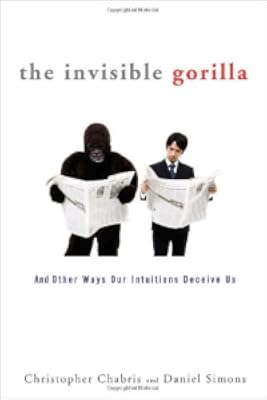
The Invisible Gorilla: And Other Ways Our Intuitions Deceive Us
by Christopher Chabris, Daniel Simons
On This Page
Description
Two experts in psychology and human behavior examine misperception and understanding, explaining why people fail to recognize the evidence right in front of them, and providing a kind of x-ray vision that will enable readers to conquer faulty thinking.Tags
Recommendations


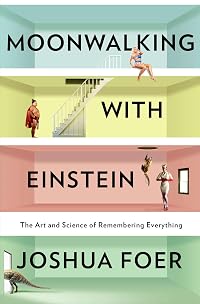
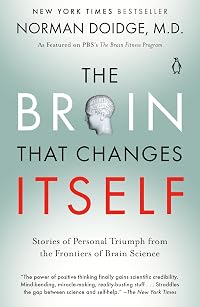
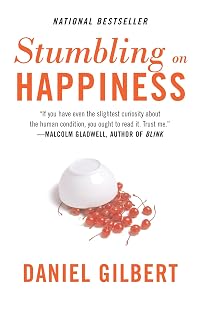
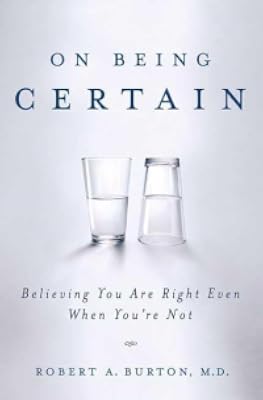
Member Recommendations
Member Reviews
Любопитна книга, която ни дава възможност да погледнем в самите себе си - ама не в оня псевдо-дзен-духовно-израстване-паоло-коелю булшит смисъл, ами в истинския, научния, като изследва начина, по който мозъкът ни възприема и обработва информация.
Пълна с любопитни примери за това как виждаме/чуваме/четем едно, а запомняме друго, тя е полезно четиво както за маркетинг специалиста (не, не е насочена към това, show more спокойно), но главно за всеки, който иска да се запознае с недостатъците на собствените си сетива и възприятие. И ако не после да внимава за тях, поне да е наясно, че ги има. show less
Пълна с любопитни примери за това как виждаме/чуваме/четем едно, а запомняме друго, тя е полезно четиво както за маркетинг специалиста (не, не е насочена към това, show more спокойно), но главно за всеки, който иска да се запознае с недостатъците на собствените си сетива и възприятие. И ако не после да внимава за тях, поне да е наясно, че ги има. show less
Embrace doubt! Doubt is good!
It's a theme in my life lately .. and an unspoken theme underlying the book.
What do we really know? It's a book that will give you doubt to what you really know. Could it be that when we're most confident, that we are most wrong?
The book began with a bang and puttered to the end. The book felt exhausting and perhaps unsettling. It's not that the material was dense, but it's scary to see our shortcomings.
Our brains don't work the way we commonly think they work, and the Matrix is real.
Ok, so maybe not the second one, but that first one is the core of this book, which tackles the "Every day illusions" concerning attention, memory, etc., and picks apart many of our "common sense" ideas which the authors call "intuition". If you've ever seen the famous "Gorilla on the basketball court" video, then you have an inkling of what the authors are talking about. Our brains developed to handle a world in which most of us no longer live. The speed of our lives now, the technologies we use, and the media to which we are subject outpace us and we have not yet developed the brainpower to handle it. Thus we fall prey in so many different ways to a show more variety of illusions about how we think and what our brains can do. Usually these just lead to some embarrassment or odd looks, but they can also lead to disaster, failure, even death.
Big Stuff, you must admit.
I liked in particular the care the authors took in pointing out that it is almost impossible for anyone -- themselves included, as they used their own experiences as examples -- to completely avoid these illusions, that the the brain processes that cause them aren't necessarily bad, especially in the appropriate context (the illusion of attention, for example, which tells us we can pay attention to more things than we actually can, is an outcropping of our ability to tightly focus for long periods, which is a very handy skill to have) are useful and perfectly fine. It's when we don't realize our limitations that we get in trouble.
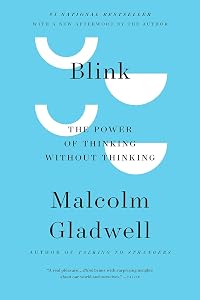
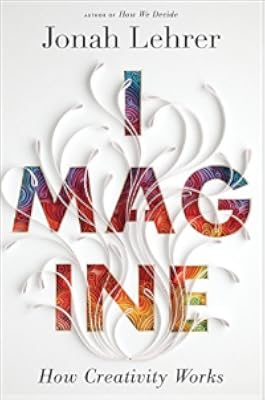
Another interesting point -- the authors are taking on (in a polite, academic, but never-the-less pointed way) Malcolm Gladwell's [The Tipping Point] and ]Blink] to underline certain illusions they think he is propagating. I've read both those books recently and I found the "debate" interesting. Of course, I also saw a lot of cross over with Jonah Lehrer's [How We Decide] and they specifically called out recommendations for other books on my reading list. This whole cognitive psychology/behavioral economics thing is REALLY fascinating.
It does cast the movie The Matrix into a whole new light, though. A scary, scary new light. show less
Ok, so maybe not the second one, but that first one is the core of this book, which tackles the "Every day illusions" concerning attention, memory, etc., and picks apart many of our "common sense" ideas which the authors call "intuition". If you've ever seen the famous "Gorilla on the basketball court" video, then you have an inkling of what the authors are talking about. Our brains developed to handle a world in which most of us no longer live. The speed of our lives now, the technologies we use, and the media to which we are subject outpace us and we have not yet developed the brainpower to handle it. Thus we fall prey in so many different ways to a show more variety of illusions about how we think and what our brains can do. Usually these just lead to some embarrassment or odd looks, but they can also lead to disaster, failure, even death.
Big Stuff, you must admit.
I liked in particular the care the authors took in pointing out that it is almost impossible for anyone -- themselves included, as they used their own experiences as examples -- to completely avoid these illusions, that the the brain processes that cause them aren't necessarily bad, especially in the appropriate context (the illusion of attention, for example, which tells us we can pay attention to more things than we actually can, is an outcropping of our ability to tightly focus for long periods, which is a very handy skill to have) are useful and perfectly fine. It's when we don't realize our limitations that we get in trouble.
Another interesting point -- the authors are taking on (in a polite, academic, but never-the-less pointed way) Malcolm Gladwell's [The Tipping Point] and ]Blink] to underline certain illusions they think he is propagating. I've read both those books recently and I found the "debate" interesting. Of course, I also saw a lot of cross over with Jonah Lehrer's [How We Decide] and they specifically called out recommendations for other books on my reading list. This whole cognitive psychology/behavioral economics thing is REALLY fascinating.
It does cast the movie The Matrix into a whole new light, though. A scary, scary new light. show less
I do not not trust my eyes or my memory as confidently as I did in the past. It is not because of age but wisdom. I've read several books on analytic thinking, scientific discoveries on how our memories are formed and reconstructed, and common observation failures as outlined in this book. The more I read, the more I realize that I must, as The New York Times review observed, be humble about my observation abilities.
This book reflects the foolishness of exalting the importance of eyewitness testimony above other empirical data in investigations and court cases. The eyes do not always have it and we can sometimes see but not see. I would not believe it but having failed to see the gorilla as I dutifully counted the basketball passes on show more the video described in this book, I am convinced. The book also explains why failing to register everything we see is not a failure or weakness but a neurological necessity to keep us from sensory overload.
The description of various observational experiments and examples from business and law enforcement reinforced the validity of the book's arguments. However, the authors did not leave readers to bemoan their condition or completely distrust their senses but provide techniques to help readers observe and understand common blind spots and how to compensate for them in their thinking and with interactions with others. show less
This book reflects the foolishness of exalting the importance of eyewitness testimony above other empirical data in investigations and court cases. The eyes do not always have it and we can sometimes see but not see. I would not believe it but having failed to see the gorilla as I dutifully counted the basketball passes on show more the video described in this book, I am convinced. The book also explains why failing to register everything we see is not a failure or weakness but a neurological necessity to keep us from sensory overload.
The description of various observational experiments and examples from business and law enforcement reinforced the validity of the book's arguments. However, the authors did not leave readers to bemoan their condition or completely distrust their senses but provide techniques to help readers observe and understand common blind spots and how to compensate for them in their thinking and with interactions with others. show less
Don't be so sure. That's the message I took from The Invisible Gorilla.
This is a very, very interesting book about how 'everyday illusions' deceive us. Chapter by chapter, the authors unpick our tightly woven beliefs about how we think we see the world. For instance, we assume that if we look directly at something (e.g. a cyclist on the road) we will notice it. This is a dangerous assumption, especially because it is incorrect in many circumstances. We assume we remember something 'like it was yesterday'. We assume we understand the nature of cause and effect. All wrong assumptions.
You'll think you are a critical thinking genius by the end of the book, but of course that would be falling into the Illusion of Knowledge and the Illusion show more of Memory. Like I said, don't be so sure.
As a bonus, on the journey through the various everyday illusions, myths around vaccinations and the Mozart Effect get comprehensively busted.
I listened to the audio version of this, so my experience will have been slightly different to those who read it, but I really enjoyed it and will grab a hard copy one day to revisit for reference. show less
This is a very, very interesting book about how 'everyday illusions' deceive us. Chapter by chapter, the authors unpick our tightly woven beliefs about how we think we see the world. For instance, we assume that if we look directly at something (e.g. a cyclist on the road) we will notice it. This is a dangerous assumption, especially because it is incorrect in many circumstances. We assume we remember something 'like it was yesterday'. We assume we understand the nature of cause and effect. All wrong assumptions.
You'll think you are a critical thinking genius by the end of the book, but of course that would be falling into the Illusion of Knowledge and the Illusion show more of Memory. Like I said, don't be so sure.
As a bonus, on the journey through the various everyday illusions, myths around vaccinations and the Mozart Effect get comprehensively busted.
I listened to the audio version of this, so my experience will have been slightly different to those who read it, but I really enjoyed it and will grab a hard copy one day to revisit for reference. show less
http://nwhyte.livejournal.com/2539703.html
If you haven't already done so, watch this video, and count how many times the players in white pass the basketball to each other - both aerial passes and bounce passes.
https://youtu.be/vJG698U2Mvo
I hope you watched the video through to the end.
This book is about how we are not as observant, or indeed as smart, as we think. We think we are fully aware of our surroundings, but in fact one of the things that we aren't aware of is precisely the extent to which we are not aware of our surroundings. We think we can remember specific events in full detail, but other people who were there may have completely different memories in perfectly good faith. We trust people who display confidence in show more themselves and their own judgement, yet in fact they are no more likely to be right or trustworthy than people with lower apparent confidence. We don't know as much as we think we do, and often we don't realise how little we know (the Dunning-Kruger effect). We mistake correlation for causation. And we believe that there may be mental tricks to unlocking our brain's full potential, when in fact the only thing that really has been shown to work for everyone is just keeping fit.
Chabris and Simons wittily and forcefully pull apart each of these illusions, fully backed by research and worked examples that you can try on yourself (and on willing friends and relatives). The conclusion is that we must be eternally vigilant, especially about ourselves.
I've had some bad luck with popular psychology books recently - in particular a couple of stinkers by Pinker - but this is much better. Recommended. show less
If you haven't already done so, watch this video, and count how many times the players in white pass the basketball to each other - both aerial passes and bounce passes.
https://youtu.be/vJG698U2Mvo
I hope you watched the video through to the end.
This book is about how we are not as observant, or indeed as smart, as we think. We think we are fully aware of our surroundings, but in fact one of the things that we aren't aware of is precisely the extent to which we are not aware of our surroundings. We think we can remember specific events in full detail, but other people who were there may have completely different memories in perfectly good faith. We trust people who display confidence in show more themselves and their own judgement, yet in fact they are no more likely to be right or trustworthy than people with lower apparent confidence. We don't know as much as we think we do, and often we don't realise how little we know (the Dunning-Kruger effect). We mistake correlation for causation. And we believe that there may be mental tricks to unlocking our brain's full potential, when in fact the only thing that really has been shown to work for everyone is just keeping fit.
Chabris and Simons wittily and forcefully pull apart each of these illusions, fully backed by research and worked examples that you can try on yourself (and on willing friends and relatives). The conclusion is that we must be eternally vigilant, especially about ourselves.
I've had some bad luck with popular psychology books recently - in particular a couple of stinkers by Pinker - but this is much better. Recommended. show less
Anyone who has read enough Discworld or Harry Potter books knows that we muggles are very good at ignoring what our brains tell us shouldn't be there.
As a trope in fiction this phenomenon is known as the weirdness censor, but it's just fiction, right? Just because something is unexpected doesn't mean we wouldn't see it, right? Enter the invisible gorilla experiment. It's a fun experiment, but unfortunately it's one you can't do if you know about it; even knowing the name of the experiment kind of makes doing it pointless. But still, if you want to try it out then it's the first video at this webpage. The other videos are cute little experiments to try too.
Done? Okay. The experiment is easy: a 30 second video is shown of six people walking around in a small area. Three of the people wear white, and three wear black. The people wearing white pass a basketball around amongst themselves, and so do the people in black. The task is simply to count how many times the people in white pass the ball. It's harder than it sounds as everyone is constantly moving and there are two balls flying around, but the answer is about 15 passes. That's not the point. The point was: did you notice the person in the gorilla costume walk across the screen about half way through the video? They stopped in the middle of all the people, started at the camera, and beat their chest. If you did see the gorilla your response to this enquiry is probably “Of course I saw the gorilla, how could anyone not see the gorilla?” If you didn't see the gorilla your response is probably more like “Of course there wasn't a gorilla, I think I'd notice something like that.”
Knowing that the experiment involves invisible gorillas means you'd almost certainly notice the gorilla, but amongst those people who go into the experiment unprimed, i.e. not expecting to see a gorilla, about half of them don't see the gorilla. And now I've written “gorilla” too many times and it looks funny. Gorilla gorilla gorilla. Dammit.
Anyway. Those dry psychology types refer to this real life weirdness censor as inattentional blindness. If you're focusing on one task you can easily be blind to other salient events going on around you. In itself this isn't a problem; the problem arises because of inattentional blindness blindness. Get a large number of people to do the invisible gorilla experiment and about half of them will fail to see the gorilla. But describe the experiment to a large number of people and ask if they would have seen the gorilla and almost all of them will say that they would.
This book discusses various ways in which people are both blind to something, but also blind to their blindness. Being pop-science it leans pretty heavily on anecdotes, but hammers home the fact that anecdotes do not good science make. It provides references to experiments when these have been carried out, and freely admits when such experiments either haven't or can't be carried out. The tone sometimes comes across as kind of self-helpy, which is unfortunate since I'm pretty sure that is absolutely not what the authors are trying to achieve. All in all it's a fun, if occasionally depressing, look at the limitations of how people perceive the world and, more importantly, how they perceive themselves. show less
ᴡʜᴀᴛ ᴅᴏ ʏᴏᴜ ᴛʜɪɴᴋ, said Death. ᴀᴍ ɪ ʀᴇᴀʟʟʏ ʜᴇʀᴇ, ʙᴏʏ?show more
“Yes,” said Mort slowly. “I… I’ve watched people. They look at you but they don’t see you, I think. You do something to their minds.”
Death shook his head.
ᴛʜᴇʏ ᴅᴏ ɪᴛ ᴀʟʟ ᴛʜᴇᴍsᴇʟᴠᴇs, he said. ᴛʜᴇʀᴇ’s ɴᴏ ᴍᴀɢɪᴄ. ᴘᴇᴏᴘʟᴇ ᴄᴀɴ’ᴛ sᴇᴇ ᴍᴇ, ᴛʜᴇʏ sɪᴍᴘʟʏ ᴡᴏɴ’ᴛ ᴀʟʟᴏᴡ ᴛʜᴇᴍsᴇʟᴠᴇs ᴛᴏ ᴅᴏ ɪᴛ. ᴜɴᴛɪʟ ɪᴛ’s ᴛɪᴍᴇ, ᴏꜰ ᴄᴏᴜʀsᴇ.
ᴡɪzᴀʀᴅs ᴄᴀɴ sᴇᴇ ᴍᴇ, ᴀɴᴅ ᴄᴀᴛs. ʙuᴛ ʏᴏᴜʀ ᴀvᴇʀᴀɢᴇ ʜᴜᴍᴀɴ… ɴᴏ, ɴᴇvᴇʀ. He blew a smoke ring at the sky, and added, sᴛʀᴀɴɢᴇ ʙᴜᴛ ᴛʀᴜᴇ.It's quite a common trope in any kind of fantasy or science fiction that's set in the real world but that also features aliens or magic or vampires or superclowns. Obviously the real world doesn't have these things (probably) so in the fictional universe it's explained that people simply look the other way in the face of overwhelming evidence. Why does that sound familiar?
–[b:Mort|828352|Mort (Discworld, #4)|Terry Pratchett|https://d.gr-assets.com/books/1327866639s/828352.jpg|1857065], Terry Pratchett
As a trope in fiction this phenomenon is known as the weirdness censor, but it's just fiction, right? Just because something is unexpected doesn't mean we wouldn't see it, right? Enter the invisible gorilla experiment. It's a fun experiment, but unfortunately it's one you can't do if you know about it; even knowing the name of the experiment kind of makes doing it pointless. But still, if you want to try it out then it's the first video at this webpage. The other videos are cute little experiments to try too.
Done? Okay. The experiment is easy: a 30 second video is shown of six people walking around in a small area. Three of the people wear white, and three wear black. The people wearing white pass a basketball around amongst themselves, and so do the people in black. The task is simply to count how many times the people in white pass the ball. It's harder than it sounds as everyone is constantly moving and there are two balls flying around, but the answer is about 15 passes. That's not the point. The point was: did you notice the person in the gorilla costume walk across the screen about half way through the video? They stopped in the middle of all the people, started at the camera, and beat their chest. If you did see the gorilla your response to this enquiry is probably “Of course I saw the gorilla, how could anyone not see the gorilla?” If you didn't see the gorilla your response is probably more like “Of course there wasn't a gorilla, I think I'd notice something like that.”
Knowing that the experiment involves invisible gorillas means you'd almost certainly notice the gorilla, but amongst those people who go into the experiment unprimed, i.e. not expecting to see a gorilla, about half of them don't see the gorilla. And now I've written “gorilla” too many times and it looks funny. Gorilla gorilla gorilla. Dammit.
Anyway. Those dry psychology types refer to this real life weirdness censor as inattentional blindness. If you're focusing on one task you can easily be blind to other salient events going on around you. In itself this isn't a problem; the problem arises because of inattentional blindness blindness. Get a large number of people to do the invisible gorilla experiment and about half of them will fail to see the gorilla. But describe the experiment to a large number of people and ask if they would have seen the gorilla and almost all of them will say that they would.
This book discusses various ways in which people are both blind to something, but also blind to their blindness. Being pop-science it leans pretty heavily on anecdotes, but hammers home the fact that anecdotes do not good science make. It provides references to experiments when these have been carried out, and freely admits when such experiments either haven't or can't be carried out. The tone sometimes comes across as kind of self-helpy, which is unfortunate since I'm pretty sure that is absolutely not what the authors are trying to achieve. All in all it's a fun, if occasionally depressing, look at the limitations of how people perceive the world and, more importantly, how they perceive themselves. show less
Members
- Recently Added By
Lists

Non-Fiction Worth Reading
1,025 works; 264 members

The Great Courses: Your Deceptive Mind
60 works; 1 member

Books recommended by Calgary Public Library staff
1,588 works; 4 members

Books Read in 2025
4,128 works; 98 members
Author Information

9+ Works 1,122 Members
3 Works 1,127 Members
Some Editions
Awards and Honors
Notable Lists
Common Knowledge
- Canonical title*
- Il gorilla invisibile... e altri modi in cui le nostre intuizioni ci ingannano
- Original publication date
- 2010
- First words
- Around two o'clock on the cold, overcast morning of January 25, 1995, a group of four black men left the scene of a shooting at a hamburger restaurant in the Grove Hall section of Boston.
- Last words
- (Click to show. Warning: May contain spoilers.)Our final hope is that you will always consider this possibility before you jump to a harsher conclusion.
*Some information comes from Common Knowledge in other languages. Click "Edit" for more information.
Classifications
Statistics
- Members
- 1,091
- Popularity
- 23,505
- Reviews
- 30
- Rating
- (3.97)
- Languages
- 7 — Dutch, English, French, German, Italian, Portuguese, Spanish
- Media
- Paper, Audiobook, Ebook
- ISBNs
- 21
- ASINs
- 13
