
Coastliners
by Joanne Harris
On This Page
Description
Joanne Harris writes fiction that engages every one of the senses: reviewers called Chocolat "delectable" and Five Quarters of the Orange "sweet and powerful." In her new novel, she takes readers to a tiny French island where you can almost taste the salt on your lips.The island, called Le Devin, is shaped somewhat like a sleeping woman. At her head is the village of Les Salants, while the more prosperous village of La Houssinière lies at her feet. You could walk between the towns in an show more hour, but they could not feel further apart, for between them lie years of animosity.
The townspeople of Les Salants say that if you kiss the feet of their patron saint and spit three times, something you've lost will come back to you. And so Madeleine, who grew up on the island, returns after an absence of ten years spent in Paris. She is haunted by this place, and has never been able to feel at home anywhere else.
But when she arrives, she will find that her father—who once built fishing boats that fueled the town's livelihood—has become even more silent than ever, withdrawing almost completely into an interior world. And his decline seems reflected in the town itself, for when the only beach in Les Salants washed away, all tourism drifted back to La Houssinière.
Madeleine herself has been adrift for a long time, yet almost against her will she soon finds herself united with the village's other lost souls is a struggle for survival and salvation.
. show less
Tags
Recommendations

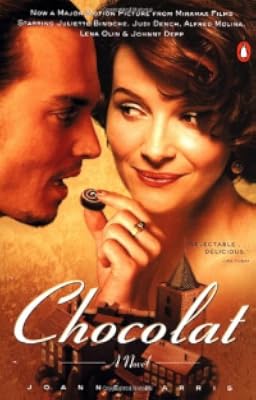
























Member Recommendations
jayne_charles Totally different stories, but whilst reading 'Wildcat Moon' I was constantly reminded of 'Coastliners'. Something subliminal there definitely
Member Reviews
Following her mother’s death, beautiful young artist Mado returns to her childhood island home to take care of her taciturn, distant father. (I mention that she’s a beautiful young artist because what are the odds she’d be a plain, dumpy, 40-year-old shorthand typist?) Tiny as Le Devin is, its two communities are nonetheless locked in ancestral rivalry, with yet more, and even more bitter rivalries between the families that make up those communities. Mado’s home of Les Salants is badly run down and depressed but, with the help of attractive drifter Flynn (there is always an attractive drifter; given how commonplace they apparently are, it’s strange I’ve never met one. Perhaps it’s because I’m not a beautiful young show more artist), Mado sets events in motion that bring life back to the village and its people. But good things don’t last forever, and there are forces at work that Mado never imagined.
A pleasant, lightweight read, with no major surprises. I had some difficulty keeping track of the characters, and who was related to whom, but the island itself, and island life, is given an affectionate depiction. show less
A pleasant, lightweight read, with no major surprises. I had some difficulty keeping track of the characters, and who was related to whom, but the island itself, and island life, is given an affectionate depiction. show less
Imagine an island with two villages, one at the head of the island, one at the foot. It takes less than an hour to walk from one village to the other, but their distance apart is great. One village thrives because it has a beach, and the beach draws tourists and their money. The other village is poor, “backward,” and without prospects. The inhabitants of the two villages have been at odds with each other for a long, long time.
This is the setting for Joanne Harris’ Coastliners. The main character, Mado, has returned to her home on the island, and realizes that the flooding in Les Salants, on her end of the island, is due to the recently extended dike at the rich end of the island, near the village of Les Immortelles. The show more breakwater has changed the flow of the current, and the tides have been turned so that sand is deposited at the foot of the island. The mackerel have also moved from Les Salants to Les Immortelles. She realizes the shift of the current will eventually destroy her village of Les Salants.
Mado confronts the leading business man from Les Immortelles. She tries to tell him about the flooding and how the extended dike will destroy Les Salants. He is duly sympathetic, but rational. “Imagine a pair of Siamese twins,” he says. “Sometimes it’s necessary to separate them so that one may survive.”
Mado considers there must be a way for Les Salants to save itself. One night the villagers believe their saint has miraculously appeared and has called them to take action, and they devise a plan to build their own breakwater, expressing their faith that the tides will again turn in their favor.
As secrets and subterfuge unfold, the reader will discover messages about relationships and ripple effects, about two groups, divided by beliefs, economics, and manmade barriers, and art and life mirrored in the tidewaters.
Deb Carpenter-Nolting show less
This is the setting for Joanne Harris’ Coastliners. The main character, Mado, has returned to her home on the island, and realizes that the flooding in Les Salants, on her end of the island, is due to the recently extended dike at the rich end of the island, near the village of Les Immortelles. The show more breakwater has changed the flow of the current, and the tides have been turned so that sand is deposited at the foot of the island. The mackerel have also moved from Les Salants to Les Immortelles. She realizes the shift of the current will eventually destroy her village of Les Salants.
Mado confronts the leading business man from Les Immortelles. She tries to tell him about the flooding and how the extended dike will destroy Les Salants. He is duly sympathetic, but rational. “Imagine a pair of Siamese twins,” he says. “Sometimes it’s necessary to separate them so that one may survive.”
Mado considers there must be a way for Les Salants to save itself. One night the villagers believe their saint has miraculously appeared and has called them to take action, and they devise a plan to build their own breakwater, expressing their faith that the tides will again turn in their favor.
As secrets and subterfuge unfold, the reader will discover messages about relationships and ripple effects, about two groups, divided by beliefs, economics, and manmade barriers, and art and life mirrored in the tidewaters.
Deb Carpenter-Nolting show less
I love Joanne Harris and have read most of her books but this one was probably my least favorite. It is similar in flavor to many of her books but it didn't draw me in as it usually does. She always manages to bring the setting and people to life in a very realistic way while still peppering some romanticism and fantasy to it as well. She does the same here but, for some reason, it fell flat for me here. Maybe I just don't appreciate the detailed description of life on a small coastal town as much as I do detailed descriptions of chocolate. It is still an enjoyable read, though.
Mado returns to her island home after the death of her mother. It's been 10 years since she has lived in her father's house and she's dismayed to find the village in such a shabby state. The few remaining inhabitants find themselves constrained by their own self-serving natures and by Mother Nature herself. Mado works to untangle family secrets and shared history. She's also curious about Flynn, the solitary outsider who has recently taken on odd jobs around the village. Can Mado pull the threads of the net together and change things for the better?
The entire time I was reading this book I felt that it was the same story as Chocolat, without the food. The prodigal comes to the village, becomes the catalyst for change, and finds love show more with an outsider. Another book that I kept flashing on while reading was Wuthering Heights. I'm sure some of that happened to be due to the stormy weather - substitute the moors for the sea, and there you are.
Now that I've read several of Harris' books I'm beginning to see her formula. Also, while in Five Quarters of the Orange and Chocolat I found the insertion of french words charming, this time around I found them annoying. Only time will tell if that is just my particular chemistry with this one book or an omen of things to come with the rest of her books. I did enjoy it. It wasn't at the top of the barrel, but it was certainly wasn't at the bottom either. A solid entry in the Harris canon. show less
The entire time I was reading this book I felt that it was the same story as Chocolat, without the food. The prodigal comes to the village, becomes the catalyst for change, and finds love show more with an outsider. Another book that I kept flashing on while reading was Wuthering Heights. I'm sure some of that happened to be due to the stormy weather - substitute the moors for the sea, and there you are.
Now that I've read several of Harris' books I'm beginning to see her formula. Also, while in Five Quarters of the Orange and Chocolat I found the insertion of french words charming, this time around I found them annoying. Only time will tell if that is just my particular chemistry with this one book or an omen of things to come with the rest of her books. I did enjoy it. It wasn't at the top of the barrel, but it was certainly wasn't at the bottom either. A solid entry in the Harris canon. show less
3 stars was generous of me. No aspect was really strong here, though the setting did keep me reading. Also it was nice that, unlike in the last book I read, the English usage and punctuation were pretty standard.
This novel is about a place and the local characters seen through the eyes of someone who is almost an outsider. A novel about home and belonging; about love and family; life and death.
Returning home to a small island just off the Breton coast, after her mother's death, Mado finds the village in decline. Seen as interfering, she tries to return life to the village. The relationships, feuds and lives of the locals play out against the sea — what it gives and what it takes.
Joanne Harris writes with obvious love about this small community; creating wonderful images of life and the power of nature.
Returning home to a small island just off the Breton coast, after her mother's death, Mado finds the village in decline. Seen as interfering, she tries to return life to the village. The relationships, feuds and lives of the locals play out against the sea — what it gives and what it takes.
Joanne Harris writes with obvious love about this small community; creating wonderful images of life and the power of nature.
Åter i Les Salants efter tio år i förskingringen försöker Mado finna sig tillrätta med bylivets stilla rytm, med det isolerade samhällets nedärvda misstänksamhet och gamla familjefejder. Men hon har svårt att acceptera och bara se på hur öborna tycks ha givit upp – inför det vikande fisket och inför havet som erövrar mer och mer av deras kust för varje besvärligt tidvatten. Mado blir alltmer besatt av tanken att få sin hemby att bli lika välmående som La Houssinière. Men när hennes framtidsplaner bara möts av bybornas fördomar och vidskepelse, vänder hon sig till den gåtfulle främlingen som bosatt sig på ön. Tillsammans beslutar de sig för att bygga ett rev som ska vända tidvattnet och rädda den snabbt show more eroderande stranden – bara en strand kan locka turisterna till deras sida av ön.
Sakta återvänder livet till Les Salants, men samtidigt vaknar minnet av förflutna tragedier och begravda hemligheter... show less
Sakta återvänder livet till Les Salants, men samtidigt vaknar minnet av förflutna tragedier och begravda hemligheter... show less
Members
- Recently Added By
Lists

Stories set in Western Europe
36 works; 1 member
Author Information

52+ Works 32,139 Members
Joanne Harris was born in Barnsley, Yorkshire, England on July 3, 1964. She studied Modern and Mediaeval Languages at St Catharine's College, Cambridge. While working as a teacher for fifteen years, she published three novels: The Evil Seed (1989), Sleep, Pale Sister (1993) and Chocolat (1999), which was made into a film starring Juliette Binoche show more and Johnny Depp. Her other works include Blackberry Wine, Five Quarters of the Orange, Coastliners, Holy Fools, The Lollipop Shoes and Runemarks. She also co-wrote two cookbooks with cookery writer Fran Warde: The French Kitchen and The French Market. (Bowker Author Biography) show less
Some Editions
Series
Belongs to Publisher Series
Gallimard, Folio (4169)
Work Relationships
Is contained in
Common Knowledge
- Canonical title
- Coastliners
- Original title
- Coastliners
- Original publication date
- 2002
- People/Characters
- Mado; Flynn; Grosjean
- Important places
- Marais salants de Guérande, Brittany, France; Brittany, France
- Epigraph
- No man is an island, entire of itself; every man is a piece of the Continent, a part of the main - John Donne ... (show all)To see a world in a grain of sand, And a heaven in a wild flower, Hold Infinity in the palm of your hand, And Eternity in an hour. - William Blake
- Dedication
- to my mother Jeannette Payen Short
- First words
- Islands are different.
- Last words
- (Click to show. Warning: May contain spoilers.)Might as well spit in the wind as try.
Classifications
Statistics
- Members
- 1,642
- Popularity
- 13,682
- Reviews
- 43
- Rating
- (3.31)
- Languages
- 16 — Catalan, Czech, Danish, Dutch, English, Finnish, French, German, Hungarian, Italian, Norwegian, Portuguese, Slovenian, Spanish, Swedish, Turkish
- Media
- Paper, Audiobook, Ebook
- ISBNs
- 59
- ASINs
- 13