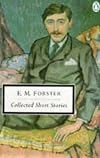
Collected Short Stories
by E. M. Forster
On This Page
Description
Dedicated to Hermes - messenger to the gods and conductor of souls to the afterworld - this collection is composed of masterpieces of fantasy. Written at various dates before World War I, these 12 stories contain themes that were to re-emerge in E.M. Forster's later work, in particular the attempt to escape from the respectable claim of reality.Tags
Recommendations

















Member Reviews
This was my first date with E.M. Forster and I confess that I was a tad nervous. I was expecting this collection of short stories to consist of twelve rather dry character studies, what Eddie Izzard described as British men opening doors and stammering at one another.
So I was pleased indeed when our little tête-à-tête opened not with twenty pages of matchstick arranging, but with a snappy supernatural tale. Except the supernatural trappings are really a vehicle for Forster to criticise British attitudes towards their more colourful European neighbours. In a few short pages Forster manages to make us understand that the story's narrator is what literary critics refer to as an arrogant tosspot with a stick up his posterior. E.M. also show more explores attitudes to nature in post-Industrial Revolution Europe, and there's even a subtle dig at Christianity—a goat's hoof-print leading a character to surmise that the Prince of Darkness was at hand, rather than the nature loving Pan. (Fauns are something of a recurring theme in the first half of the collection, as is their being mistaken for Satan.)
Thus, while the quality of the first story soothed my original fears, it did raise another concern. If Forster's début work could pile so many coherent themes atop one another in so short a space, then presumably his later, more developed works would achieve even more. I haven't really explored themes and allusions in written compositions since I did a GCSE in English Literature over ten years ago. I simply wasn't convinced that I'd be able to "get" the majority of his stories, especially given the apparent need for a classical education to even be aware of half of the allusions (the first three stories alone invoke Pan, Achilles, and the story of Daphne). Sure I read a lot, but I know there's a difference between reading fifty books in a year and being well read. Fortunately Forster helped me out. The quaint re-imagining of the legend of Daphne, Other Kingdom, for example, is narrated by the ignoble Mr Inksip, a teacher of Latin and Ancient Greek. The tale of Daphne escaping Apollo's advances by turning into a tree is never specifically mentioned, but enough Greek mythology is discussed to drag out a half-formed memory of the myth whence it had been laying dormant in some dark part of my mind.
All this talk of allusions and so on would be moot if the book had footnotes explaining everything, but by now I should probably be able to make many of the connections myself. And so I took it nice and slow, pausing to think about (but striving not to overthink) each story rather than rushing through the pages as is my custom. And Forster held my hand (on a first date too, what a floozy).
As if to remind the reader that stories and poems can (and should!) be read for enjoyment rather than dry academic interest, and that a twenty page story shouldn't warrant two hundred pages of commentary and analysis, Forster's second story, The Celestial Omnibus contrasts the two approaches. Its central characters are a young boy who enjoys reading, even if he can't comment on Homer's use of dactylic hexameter, and a "cultured" gentleman who owns a voluminous library but pours scorn on the boy's frivolous attitudes. One evening the boy finds a bus service to a Heaven populated not by angels but by all the great authors and poets and their creations. The incredulous gentleman accompanies the boy the next night in order to demonstrate that the bus was imagined, only to discover its reality and join the boy. In a nice touch it is Dante who drives the coach on this second night with the message "Abandon all audacity ye who enter here" (give or take) emblazoned within the vehicle in Latin, a slight variation on Dante's more famous line. En route the boy is chastised by the gentleman for "wasting time" the previous evening with Dickens' Mrs Gamp and Fielding's Tom Jones rather than asking profound questions of Shakespeare and Homer and Dante. And yet upon arriving at Heaven it is the boy who finds himself transported by joy, surrounded and adored by a plethora of characters. The gentleman meanwhile is solemnly told by Dante that poetry is a means not an end, that it is sustenance for the soul, not a replacement for one. It all ends on a bittersweet note with the gentleman's fall and the boy's ascendancy, and yet the reader is left to realise that the fallen gentleman held the boy's return ticket to the mortal world. Books may be a form of escapism from whatever ails us—in the boy's case his unkind parents—but if we could escape completely, would we really want to?
Another highlight in the collection is its centrepiece, the lovely novelette The Machine Stops. It's set in a future where globalisation and technologicalisation have reached their limits (or more accurately an impasse) and the human race has become totally homogeneous, living underground in identical cells only to experience virtual lectures and hear new ideas, and utterly dependent upon a vast global machine that serves their every need. In time people even come to worship the machine, willingly forgetting its human origins. While there's a hint of dystopia about the setting, it's interesting that Forster doesn't suggest there's some evil mastermind or cabal behind this desensualisation of the human race. There is a central committee that bans visits to the surface and that instigates the Church of the Machine, but as the omniscient narrator points out, they merely announce the measures, they are not responsible for them. Rather there is an invincible pressure among the people en masse towards these ideas. Forster, it is fair to say, had reservations about increasing dependence on machines. And reading the story here in 2012 and seeing the uncanny similarities between his Machine and the internet makes it all the more potent and unsettling.
Sadly the second half of the collection didn't live up to the promise of the first. Forster's interesting ideas on our attitudes towards nature are replaced by a triplet of rather directionless tales about the afterlife, all of which sound rather hollow given Forster's religious views. His secular humanist attitude almost works in his favour in Mr Andrews, a tiny story that ponders what would happen if all religions were both right and ultimately unfulfilling, and it was human contact and kindness rather than some idealised paradise that would provide us with total happiness. It's quaint and all that but easily forgotten. The other two stories in the trio are The Point of it, to which Forster's literary friend's apparently asked "What is the point of it?" I'm inclined to agree with them. And then there's Co-ordination, which feels like an eight page joke set in Heaven, Hell, and Earth, but it's one of those jokes where when the punchline comes I didn't laugh, just kept listening, and there was an awkward silence, and then Forster had to mumble something about that being the punchline and then I had to force a laugh, and it was all rather uncomfortable.
The collection ends with The Eternal Moment, a thought provoking little tale that can't quite seem to make its mind up what it is. It centres around an ageing author who returns to a small German village that she made famous through her début novel. She finds that her fears that the village's new-found fame will have spoiled it are all too justified, with the village itself become ugly in appearance and the inhabitants ugly in attitude. So it seems to be a tale about the problems of tourism, a mildly interesting story with mildly uninteresting characters, but perhaps ahead of its time (like The Machine Stops) for recognising the Googlewhack effect of tourism—if a remote town becomes famous for being quaint and untouched and off the beaten track and so on, then tourists will flock there, and it will be dull and knackered and accessible from the newly built airport next door. Half way through the story it switched focus to an Italian man that the author had a brief tryst with on her original visit to the area decades earlier. She finds her lithe, romantic, ingenuous lover has become a waddling, sanctimonious little turd who Forster isn't subtle about painting as an utter scoundrel. The story shuffles to a close with the author embracing her old age and pondering in a grimly happy fashion on her life while the other characters pretend nothing has happened.
Thus the date ended and I dropped Forster back at his bookshelf. Was it good? Mostly, yes. As the evening wore on I found my companion somewhat less charming that I did initially, which poses a problem, since Forster's later more famous works are apparently more like these later stories than the fresh, interesting ones at the beginning of the collection. So I probably won't be giving him a call anytime soon.
What's that? Was there a goodnight kiss? No, because this is a book I'm talking about and that would be peculiar. You strange, crazy person, you. show less
So I was pleased indeed when our little tête-à-tête opened not with twenty pages of matchstick arranging, but with a snappy supernatural tale. Except the supernatural trappings are really a vehicle for Forster to criticise British attitudes towards their more colourful European neighbours. In a few short pages Forster manages to make us understand that the story's narrator is what literary critics refer to as an arrogant tosspot with a stick up his posterior. E.M. also show more explores attitudes to nature in post-Industrial Revolution Europe, and there's even a subtle dig at Christianity—a goat's hoof-print leading a character to surmise that the Prince of Darkness was at hand, rather than the nature loving Pan. (Fauns are something of a recurring theme in the first half of the collection, as is their being mistaken for Satan.)
Thus, while the quality of the first story soothed my original fears, it did raise another concern. If Forster's début work could pile so many coherent themes atop one another in so short a space, then presumably his later, more developed works would achieve even more. I haven't really explored themes and allusions in written compositions since I did a GCSE in English Literature over ten years ago. I simply wasn't convinced that I'd be able to "get" the majority of his stories, especially given the apparent need for a classical education to even be aware of half of the allusions (the first three stories alone invoke Pan, Achilles, and the story of Daphne). Sure I read a lot, but I know there's a difference between reading fifty books in a year and being well read. Fortunately Forster helped me out. The quaint re-imagining of the legend of Daphne, Other Kingdom, for example, is narrated by the ignoble Mr Inksip, a teacher of Latin and Ancient Greek. The tale of Daphne escaping Apollo's advances by turning into a tree is never specifically mentioned, but enough Greek mythology is discussed to drag out a half-formed memory of the myth whence it had been laying dormant in some dark part of my mind.
All this talk of allusions and so on would be moot if the book had footnotes explaining everything, but by now I should probably be able to make many of the connections myself. And so I took it nice and slow, pausing to think about (but striving not to overthink) each story rather than rushing through the pages as is my custom. And Forster held my hand (on a first date too, what a floozy).
As if to remind the reader that stories and poems can (and should!) be read for enjoyment rather than dry academic interest, and that a twenty page story shouldn't warrant two hundred pages of commentary and analysis, Forster's second story, The Celestial Omnibus contrasts the two approaches. Its central characters are a young boy who enjoys reading, even if he can't comment on Homer's use of dactylic hexameter, and a "cultured" gentleman who owns a voluminous library but pours scorn on the boy's frivolous attitudes. One evening the boy finds a bus service to a Heaven populated not by angels but by all the great authors and poets and their creations. The incredulous gentleman accompanies the boy the next night in order to demonstrate that the bus was imagined, only to discover its reality and join the boy. In a nice touch it is Dante who drives the coach on this second night with the message "Abandon all audacity ye who enter here" (give or take) emblazoned within the vehicle in Latin, a slight variation on Dante's more famous line. En route the boy is chastised by the gentleman for "wasting time" the previous evening with Dickens' Mrs Gamp and Fielding's Tom Jones rather than asking profound questions of Shakespeare and Homer and Dante. And yet upon arriving at Heaven it is the boy who finds himself transported by joy, surrounded and adored by a plethora of characters. The gentleman meanwhile is solemnly told by Dante that poetry is a means not an end, that it is sustenance for the soul, not a replacement for one. It all ends on a bittersweet note with the gentleman's fall and the boy's ascendancy, and yet the reader is left to realise that the fallen gentleman held the boy's return ticket to the mortal world. Books may be a form of escapism from whatever ails us—in the boy's case his unkind parents—but if we could escape completely, would we really want to?
Another highlight in the collection is its centrepiece, the lovely novelette The Machine Stops. It's set in a future where globalisation and technologicalisation have reached their limits (or more accurately an impasse) and the human race has become totally homogeneous, living underground in identical cells only to experience virtual lectures and hear new ideas, and utterly dependent upon a vast global machine that serves their every need. In time people even come to worship the machine, willingly forgetting its human origins. While there's a hint of dystopia about the setting, it's interesting that Forster doesn't suggest there's some evil mastermind or cabal behind this desensualisation of the human race. There is a central committee that bans visits to the surface and that instigates the Church of the Machine, but as the omniscient narrator points out, they merely announce the measures, they are not responsible for them. Rather there is an invincible pressure among the people en masse towards these ideas. Forster, it is fair to say, had reservations about increasing dependence on machines. And reading the story here in 2012 and seeing the uncanny similarities between his Machine and the internet makes it all the more potent and unsettling.
Sadly the second half of the collection didn't live up to the promise of the first. Forster's interesting ideas on our attitudes towards nature are replaced by a triplet of rather directionless tales about the afterlife, all of which sound rather hollow given Forster's religious views. His secular humanist attitude almost works in his favour in Mr Andrews, a tiny story that ponders what would happen if all religions were both right and ultimately unfulfilling, and it was human contact and kindness rather than some idealised paradise that would provide us with total happiness. It's quaint and all that but easily forgotten. The other two stories in the trio are The Point of it, to which Forster's literary friend's apparently asked "What is the point of it?" I'm inclined to agree with them. And then there's Co-ordination, which feels like an eight page joke set in Heaven, Hell, and Earth, but it's one of those jokes where when the punchline comes I didn't laugh, just kept listening, and there was an awkward silence, and then Forster had to mumble something about that being the punchline and then I had to force a laugh, and it was all rather uncomfortable.
The collection ends with The Eternal Moment, a thought provoking little tale that can't quite seem to make its mind up what it is. It centres around an ageing author who returns to a small German village that she made famous through her début novel. She finds that her fears that the village's new-found fame will have spoiled it are all too justified, with the village itself become ugly in appearance and the inhabitants ugly in attitude. So it seems to be a tale about the problems of tourism, a mildly interesting story with mildly uninteresting characters, but perhaps ahead of its time (like The Machine Stops) for recognising the Googlewhack effect of tourism—if a remote town becomes famous for being quaint and untouched and off the beaten track and so on, then tourists will flock there, and it will be dull and knackered and accessible from the newly built airport next door. Half way through the story it switched focus to an Italian man that the author had a brief tryst with on her original visit to the area decades earlier. She finds her lithe, romantic, ingenuous lover has become a waddling, sanctimonious little turd who Forster isn't subtle about painting as an utter scoundrel. The story shuffles to a close with the author embracing her old age and pondering in a grimly happy fashion on her life while the other characters pretend nothing has happened.
Thus the date ended and I dropped Forster back at his bookshelf. Was it good? Mostly, yes. As the evening wore on I found my companion somewhat less charming that I did initially, which poses a problem, since Forster's later more famous works are apparently more like these later stories than the fresh, interesting ones at the beginning of the collection. So I probably won't be giving him a call anytime soon.
What's that? Was there a goodnight kiss? No, because this is a book I'm talking about and that would be peculiar. You strange, crazy person, you. show less
This was my first date with E.M. Forster and I confess that I was a tad nervous. I was expecting this collection of short stories to consist of twelve rather dry character studies, what Eddie Izzard described as British men opening doors and stammering at one another.
So I was pleased indeed when our little tête-à-tête opened not with twenty pages of matchstick arranging, but with a snappy supernatural tale. Except the supernatural trappings are really a vehicle for Forster to criticise British attitudes towards their more colourful European neighbours. In a few short pages Forster manages to make us understand that the story's narrator is what literary critics refer to as an arrogant tosspot with a stick up his posterior. E.M. also show more explores attitudes to nature in post-Industrial Revolution Europe, and there's even a subtle dig at Christianity—a goat's hoof-print leading a character to surmise that the Prince of Darkness was at hand, rather than the nature loving Pan. (Fauns are something of a recurring theme in the first half of the collection, as is their being mistaken for Satan.)
Thus, while the quality of the first story soothed my original fears, it did raise another concern. If Forster's début work could pile so many coherent themes atop one another in so short a space, then presumably his later, more developed works would achieve even more. I haven't really explored themes and allusions in written compositions since I did a GCSE in English Literature over ten years ago. I simply wasn't convinced that I'd be able to "get" the majority of his stories, especially given the apparent need for a classical education to even be aware of half of the allusions (the first three stories alone invoke Pan, Achilles, and the story of Daphne). Sure I read a lot, but I know there's a difference between reading fifty books in a year and being well read. Fortunately Forster helped me out. The quaint re-imagining of the legend of Daphne, Other Kingdom, for example, is narrated by the ignoble Mr Inksip, a teacher of Latin and Ancient Greek. The tale of Daphne escaping Apollo's advances by turning into a tree is never specifically mentioned, but enough Greek mythology is discussed to drag out a half-formed memory of the myth whence it had been laying dormant in some dark part of my mind.
All this talk of allusions and so on would be moot if the book had footnotes explaining everything, but by now I should probably be able to make many of the connections myself. And so I took it nice and slow, pausing to think about (but striving not to overthink) each story rather than rushing through the pages as is my custom. And Forster held my hand (on a first date too, what a floozy).
As if to remind the reader that stories and poems can (and should!) be read for enjoyment rather than dry academic interest, and that a twenty page story shouldn't warrant two hundred pages of commentary and analysis, Forster's second story, The Celestial Omnibus contrasts the two approaches. Its central characters are a young boy who enjoys reading, even if he can't comment on Homer's use of dactylic hexameter, and a "cultured" gentleman who owns a voluminous library but pours scorn on the boy's frivolous attitudes. One evening the boy finds a bus service to a Heaven populated not by angels but by all the great authors and poets and their creations. The incredulous gentleman accompanies the boy the next night in order to demonstrate that the bus was imagined, only to discover its reality and join the boy. In a nice touch it is Dante who drives the coach on this second night with the message "Abandon all audacity ye who enter here" (give or take) emblazoned within the vehicle in Latin, a slight variation on Dante's more famous line. En route the boy is chastised by the gentleman for "wasting time" the previous evening with Dickens' Mrs Gamp and Fielding's Tom Jones rather than asking profound questions of Shakespeare and Homer and Dante. And yet upon arriving at Heaven it is the boy who finds himself transported by joy, surrounded and adored by a plethora of characters. The gentleman meanwhile is solemnly told by Dante that poetry is a means not an end, that it is sustenance for the soul, not a replacement for one. It all ends on a bittersweet note with the gentleman's fall and the boy's ascendancy, and yet the reader is left to realise that the fallen gentleman held the boy's return ticket to the mortal world. Books may be a form of escapism from whatever ails us—in the boy's case his unkind parents—but if we could escape completely, would we really want to?
Another highlight in the collection is its centrepiece, the lovely novelette The Machine Stops. It's set in a future where globalisation and technologicalisation have reached their limits (or more accurately an impasse) and the human race has become totally homogeneous, living underground in identical cells only to experience virtual lectures and hear new ideas, and utterly dependent upon a vast global machine that serves their every need. In time people even come to worship the machine, willingly forgetting its human origins. While there's a hint of dystopia about the setting, it's interesting that Forster doesn't suggest there's some evil mastermind or cabal behind this desensualisation of the human race. There is a central committee that bans visits to the surface and that instigates the Church of the Machine, but as the omniscient narrator points out, they merely announce the measures, they are not responsible for them. Rather there is an invincible pressure among the people en masse towards these ideas. Forster, it is fair to say, had reservations about increasing dependence on machines. And reading the story here in 2012 and seeing the uncanny similarities between his Machine and the internet makes it all the more potent and unsettling.
Sadly the second half of the collection didn't live up to the promise of the first. Forster's interesting ideas on our attitudes towards nature are replaced by a triplet of rather directionless tales about the afterlife, all of which sound rather hollow given Forster's religious views. His secular humanist attitude almost works in his favour in Mr Andrews, a tiny story that ponders what would happen if all religions were both right and ultimately unfulfilling, and it was human contact and kindness rather than some idealised paradise that would provide us with total happiness. It's quaint and all that but easily forgotten. The other two stories in the trio are The Point of it, to which Forster's literary friend's apparently asked "What is the point of it?" I'm inclined to agree with them. And then there's Co-ordination, which feels like an eight page joke set in Heaven, Hell, and Earth, but it's one of those jokes where when the punchline comes I didn't laugh, just kept listening, and there was an awkward silence, and then Forster had to mumble something about that being the punchline and then I had to force a laugh, and it was all rather uncomfortable.
The collection ends with The Eternal Moment, a thought provoking little tale that can't quite seem to make its mind up what it is. It centres around an ageing author who returns to a small German village that she made famous through her début novel. She finds that her fears that the village's new-found fame will have spoiled it are all too justified, with the village itself become ugly in appearance and the inhabitants ugly in attitude. So it seems to be a tale about the problems of tourism, a mildly interesting story with mildly uninteresting characters, but perhaps ahead of its time (like The Machine Stops) for recognising the Googlewhack effect of tourism—if a remote town becomes famous for being quaint and untouched and off the beaten track and so on, then tourists will flock there, and it will be dull and knackered and accessible from the newly built airport next door. Half way through the story it switched focus to an Italian man that the author had a brief tryst with on her original visit to the area decades earlier. She finds her lithe, romantic, ingenuous lover has become a waddling, sanctimonious little turd who Forster isn't subtle about painting as an utter scoundrel. The story shuffles to a close with the author embracing her old age and pondering in a grimly happy fashion on her life while the other characters pretend nothing has happened.
Thus the date ended and I dropped Forster back at his bookshelf. Was it good? Mostly, yes. As the evening wore on I found my companion somewhat less charming that I did initially, which poses a problem, since Forster's later more famous works are apparently more like these later stories than the fresh, interesting ones at the beginning of the collection. So I probably won't be giving him a call anytime soon.
What's that? Was there a goodnight kiss? No, because this is a book I'm talking about and that would be peculiar. You strange, crazy person, you. show less
So I was pleased indeed when our little tête-à-tête opened not with twenty pages of matchstick arranging, but with a snappy supernatural tale. Except the supernatural trappings are really a vehicle for Forster to criticise British attitudes towards their more colourful European neighbours. In a few short pages Forster manages to make us understand that the story's narrator is what literary critics refer to as an arrogant tosspot with a stick up his posterior. E.M. also show more explores attitudes to nature in post-Industrial Revolution Europe, and there's even a subtle dig at Christianity—a goat's hoof-print leading a character to surmise that the Prince of Darkness was at hand, rather than the nature loving Pan. (Fauns are something of a recurring theme in the first half of the collection, as is their being mistaken for Satan.)
Thus, while the quality of the first story soothed my original fears, it did raise another concern. If Forster's début work could pile so many coherent themes atop one another in so short a space, then presumably his later, more developed works would achieve even more. I haven't really explored themes and allusions in written compositions since I did a GCSE in English Literature over ten years ago. I simply wasn't convinced that I'd be able to "get" the majority of his stories, especially given the apparent need for a classical education to even be aware of half of the allusions (the first three stories alone invoke Pan, Achilles, and the story of Daphne). Sure I read a lot, but I know there's a difference between reading fifty books in a year and being well read. Fortunately Forster helped me out. The quaint re-imagining of the legend of Daphne, Other Kingdom, for example, is narrated by the ignoble Mr Inksip, a teacher of Latin and Ancient Greek. The tale of Daphne escaping Apollo's advances by turning into a tree is never specifically mentioned, but enough Greek mythology is discussed to drag out a half-formed memory of the myth whence it had been laying dormant in some dark part of my mind.
All this talk of allusions and so on would be moot if the book had footnotes explaining everything, but by now I should probably be able to make many of the connections myself. And so I took it nice and slow, pausing to think about (but striving not to overthink) each story rather than rushing through the pages as is my custom. And Forster held my hand (on a first date too, what a floozy).
As if to remind the reader that stories and poems can (and should!) be read for enjoyment rather than dry academic interest, and that a twenty page story shouldn't warrant two hundred pages of commentary and analysis, Forster's second story, The Celestial Omnibus contrasts the two approaches. Its central characters are a young boy who enjoys reading, even if he can't comment on Homer's use of dactylic hexameter, and a "cultured" gentleman who owns a voluminous library but pours scorn on the boy's frivolous attitudes. One evening the boy finds a bus service to a Heaven populated not by angels but by all the great authors and poets and their creations. The incredulous gentleman accompanies the boy the next night in order to demonstrate that the bus was imagined, only to discover its reality and join the boy. In a nice touch it is Dante who drives the coach on this second night with the message "Abandon all audacity ye who enter here" (give or take) emblazoned within the vehicle in Latin, a slight variation on Dante's more famous line. En route the boy is chastised by the gentleman for "wasting time" the previous evening with Dickens' Mrs Gamp and Fielding's Tom Jones rather than asking profound questions of Shakespeare and Homer and Dante. And yet upon arriving at Heaven it is the boy who finds himself transported by joy, surrounded and adored by a plethora of characters. The gentleman meanwhile is solemnly told by Dante that poetry is a means not an end, that it is sustenance for the soul, not a replacement for one. It all ends on a bittersweet note with the gentleman's fall and the boy's ascendancy, and yet the reader is left to realise that the fallen gentleman held the boy's return ticket to the mortal world. Books may be a form of escapism from whatever ails us—in the boy's case his unkind parents—but if we could escape completely, would we really want to?
Another highlight in the collection is its centrepiece, the lovely novelette The Machine Stops. It's set in a future where globalisation and technologicalisation have reached their limits (or more accurately an impasse) and the human race has become totally homogeneous, living underground in identical cells only to experience virtual lectures and hear new ideas, and utterly dependent upon a vast global machine that serves their every need. In time people even come to worship the machine, willingly forgetting its human origins. While there's a hint of dystopia about the setting, it's interesting that Forster doesn't suggest there's some evil mastermind or cabal behind this desensualisation of the human race. There is a central committee that bans visits to the surface and that instigates the Church of the Machine, but as the omniscient narrator points out, they merely announce the measures, they are not responsible for them. Rather there is an invincible pressure among the people en masse towards these ideas. Forster, it is fair to say, had reservations about increasing dependence on machines. And reading the story here in 2012 and seeing the uncanny similarities between his Machine and the internet makes it all the more potent and unsettling.
Sadly the second half of the collection didn't live up to the promise of the first. Forster's interesting ideas on our attitudes towards nature are replaced by a triplet of rather directionless tales about the afterlife, all of which sound rather hollow given Forster's religious views. His secular humanist attitude almost works in his favour in Mr Andrews, a tiny story that ponders what would happen if all religions were both right and ultimately unfulfilling, and it was human contact and kindness rather than some idealised paradise that would provide us with total happiness. It's quaint and all that but easily forgotten. The other two stories in the trio are The Point of it, to which Forster's literary friend's apparently asked "What is the point of it?" I'm inclined to agree with them. And then there's Co-ordination, which feels like an eight page joke set in Heaven, Hell, and Earth, but it's one of those jokes where when the punchline comes I didn't laugh, just kept listening, and there was an awkward silence, and then Forster had to mumble something about that being the punchline and then I had to force a laugh, and it was all rather uncomfortable.
The collection ends with The Eternal Moment, a thought provoking little tale that can't quite seem to make its mind up what it is. It centres around an ageing author who returns to a small German village that she made famous through her début novel. She finds that her fears that the village's new-found fame will have spoiled it are all too justified, with the village itself become ugly in appearance and the inhabitants ugly in attitude. So it seems to be a tale about the problems of tourism, a mildly interesting story with mildly uninteresting characters, but perhaps ahead of its time (like The Machine Stops) for recognising the Googlewhack effect of tourism—if a remote town becomes famous for being quaint and untouched and off the beaten track and so on, then tourists will flock there, and it will be dull and knackered and accessible from the newly built airport next door. Half way through the story it switched focus to an Italian man that the author had a brief tryst with on her original visit to the area decades earlier. She finds her lithe, romantic, ingenuous lover has become a waddling, sanctimonious little turd who Forster isn't subtle about painting as an utter scoundrel. The story shuffles to a close with the author embracing her old age and pondering in a grimly happy fashion on her life while the other characters pretend nothing has happened.
Thus the date ended and I dropped Forster back at his bookshelf. Was it good? Mostly, yes. As the evening wore on I found my companion somewhat less charming that I did initially, which poses a problem, since Forster's later more famous works are apparently more like these later stories than the fresh, interesting ones at the beginning of the collection. So I probably won't be giving him a call anytime soon.
What's that? Was there a goodnight kiss? No, because this is a book I'm talking about and that would be peculiar. You strange, crazy person, you. show less
http://nhw.livejournal.com/1058044.html
I knew that one of these stories is "The Machine Stops", a riposte to H.G. Wells' visions of a mechanised future, but I expected the rest to be vignettes in Forster's distinctive but generally naturalistic aesthetic style. I was therefore surprised to find that of the twelve stories, ten can be classified as fantasy (and "The Machine Stops" as science fiction) with only the last one, "The Eternal Moment" having no overtly unrealistic elements. And they are interesting stories, too, sometimes giving a wicked spin to traditional concepts of death and the afterlife, sometimes just being wicked. I hadn't really considered Forster as a genre writer before, so it was quite a revelation.
One trick he does show more rather well is the unreliable narrator - a couple of his viewpoint characters are overconfident men who reveal enough of themselves that the reader can be sure that the writer does not sympathise with them. I have found other uses of the "unreliable narrator" unsatisfactory, if there is no discernible hint that (to adapt Achebe's phrase about Conrad) the character enjoys anything less than the author's complete confidence. Forster can drop those hints entirely discernibly without damaging the integrity (or readability) of his narrative; one of the things that makes him a great writer. show less
I knew that one of these stories is "The Machine Stops", a riposte to H.G. Wells' visions of a mechanised future, but I expected the rest to be vignettes in Forster's distinctive but generally naturalistic aesthetic style. I was therefore surprised to find that of the twelve stories, ten can be classified as fantasy (and "The Machine Stops" as science fiction) with only the last one, "The Eternal Moment" having no overtly unrealistic elements. And they are interesting stories, too, sometimes giving a wicked spin to traditional concepts of death and the afterlife, sometimes just being wicked. I hadn't really considered Forster as a genre writer before, so it was quite a revelation.
One trick he does show more rather well is the unreliable narrator - a couple of his viewpoint characters are overconfident men who reveal enough of themselves that the reader can be sure that the writer does not sympathise with them. I have found other uses of the "unreliable narrator" unsatisfactory, if there is no discernible hint that (to adapt Achebe's phrase about Conrad) the character enjoys anything less than the author's complete confidence. Forster can drop those hints entirely discernibly without damaging the integrity (or readability) of his narrative; one of the things that makes him a great writer. show less
Uneven collection, though thematically coherent. "Story of a Panic" is excellent. "The Machine Stops" is prescient science fiction.
Ratings
Members
- Recently Added By
Lists

Short Story Collections and Anthologies
261 works; 42 members

unread and uncatalogued
48 works; 1 member
Author Information

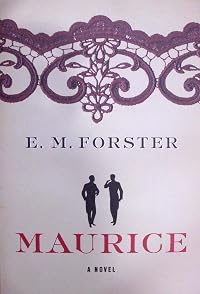
Edward Morgan Forster was born on January 1, 1879, in London, England. He never knew his father, who died when Forster was an infant. Forster graduated from King's College, Cambridge, with B.A. degrees in classics (1900) and history (1901), as well as an M.A. (1910). In the mid-1940s he returned to Cambridge as a professor, living quietly there show more until his death in 1970. Forster was named to the Order of Companions of Honor to the Queen in 1953. Forster's writing was extensively influenced by the traveling he did in the earlier part of his life. After graduating from Cambridge, he lived in both Greece and Italy, and used the latter as the setting for the novels Where Angels Fear to Tread (1905) and A Room with a View (1908). The Longest Journey was published in 1907. Howard's End was modeled on the house he lived in with his mother during his childhood. During World War I, he worked as a Red Cross Volunteer in Alexandria, aiding in the search for missing soldiers; he later wrote about these experiences in the nonfiction works Alexandria: A History and Guide and Pharos and Pharillon. His two journeys to India, in 1912 and 1922, resulted in A Passage to India (1924), which many consider to be Forster's best work; this title earned the James Tait Black Memorial Prize. Forster wrote only six novels, all prior to 1925 (although Maurice was not published until 1971, a year after Forster's death, probably because of its homosexual theme). For much of the rest of his life, he wrote literary criticism (Aspects of the Novel) and nonfiction, including biographies (Goldsworthy Lowes Dickinson), histories, political pieces, and radio broadcasts. Howard's End, A Room with a View, and A Passage to India have all been made into successful films. (Bowker Author Biography) show less
Some Editions
Series
Belongs to Publisher Series
Work Relationships
Contains
Common Knowledge
- Original publication date
- 1947
- Disambiguation notice
- The Story of a Panic - The Other Side of the Hedge - The Celestial Omnibus - Other Kingdom - The Curate's Friend - The Road from Colonus - The Machine Stops - The Point of It - Mr Andrews - Co-ordination - The Story of the Si... (show all)ren - The Eternal Moment.
Classifications
Statistics
- Members
- 439
- Popularity
- 70,345
- Reviews
- 4
- Rating
- (3.38)
- Languages
- English, German
- Media
- Paper
- ISBNs
- 4
- ASINs
- 20