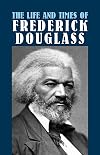
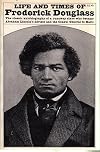
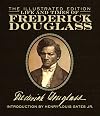
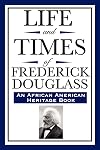
Life and Times of Frederick Douglass
by Frederick Douglass 
On This Page
Description
The Life and Times of Frederick Douglass was Douglass' third autobiography. In it he was able to go into greater detail about his life as a slave and his escape from slavery, as he and his family were no longer in any danger from the reception of his work. It is also the only of Douglass' autobiographies to discuss his life during and after the Civil War, including his encounters with American Presidents such as Lincoln, Grant, and Garfield.Tags
Recommendations













Member Reviews
The story of acquiring this volume is a long story full of sighs. But having read it, it seems silly to complain about anything so trivial.
Reading this book, I wanted to become a Quaker and go on nationwide speaking tours. I wanted to smack a lot of stupid, racist white people. I marveled at both the force of Frederick Douglass's personality and also all the factors that had to fall into place to make his legacy possible. I also marveled at the way he wrote his multiple autobiographies -- not as if posterity would have much interest in him as a person, but that posterity would want to know what this transitional time in history was like. As if 150 years later, it wouldn't be his name looming large, while most of the people he show more name-checks throughout are forgotten.
An excellent last book for Less Stupid Civil War Reading Group, as it probably goes the furthest into the post-war changes in society. show less
Reading this book, I wanted to become a Quaker and go on nationwide speaking tours. I wanted to smack a lot of stupid, racist white people. I marveled at both the force of Frederick Douglass's personality and also all the factors that had to fall into place to make his legacy possible. I also marveled at the way he wrote his multiple autobiographies -- not as if posterity would have much interest in him as a person, but that posterity would want to know what this transitional time in history was like. As if 150 years later, it wouldn't be his name looming large, while most of the people he show more name-checks throughout are forgotten.
An excellent last book for Less Stupid Civil War Reading Group, as it probably goes the furthest into the post-war changes in society. show less
Very inspiring account of Frederick Douglass and how he overcame seemingly unsurmountable odds to become a man who made a difference. My only quibble with this memoir is that at times he was long winded on minor points and often quoted speeches and letters in their entirety. Otherwise an excellent and enlightening read.
This is an early edition of the autobiography of the great abolitionist. The language is typical for its day, and may seem a bit over-dramatic to the modern reader, but it is worth reading of this man's life in his own words.
The title page is almost as long as the book, and will serve as an outline of the contents:
Life and Times of Frederick Douglass (written by himself). His Early Life as a Slave, His Escape from Bondage, and his Complete History to the Present Time, Including his Connection with the Anti-Slavery Movement; His labors in Great Britain as well as in his own Country; His Experience in the Conduct of an Influential Newspaper; His Connections With the Underground Railroad; His Relations with John Brown and the Harper's show more Ferry Raid; His Recruiting the 54th and 55th Mass. {sic} Colored Regiments; His Interviews with Presidents Lincoln and Johnson; His Appointment by General Grant to Accompany the Santo Domingo Commission - Also to a Seat in the Council of the District of Columbia; His Appointment as United States Marshal by President Rutherford B. Hayes; also his Appointment to be Recorder of Deeds in Washington by President J.A. Garfield; with Many Other Interesting and Important events of his Most Eventful Life; with an Introduction by Mr. George Ruffin. show less
The title page is almost as long as the book, and will serve as an outline of the contents:
Life and Times of Frederick Douglass (written by himself). His Early Life as a Slave, His Escape from Bondage, and his Complete History to the Present Time, Including his Connection with the Anti-Slavery Movement; His labors in Great Britain as well as in his own Country; His Experience in the Conduct of an Influential Newspaper; His Connections With the Underground Railroad; His Relations with John Brown and the Harper's show more Ferry Raid; His Recruiting the 54th and 55th Mass. {sic} Colored Regiments; His Interviews with Presidents Lincoln and Johnson; His Appointment by General Grant to Accompany the Santo Domingo Commission - Also to a Seat in the Council of the District of Columbia; His Appointment as United States Marshal by President Rutherford B. Hayes; also his Appointment to be Recorder of Deeds in Washington by President J.A. Garfield; with Many Other Interesting and Important events of his Most Eventful Life; with an Introduction by Mr. George Ruffin. show less
Auto-biograhical account of the end of slavery, by the courageous black leader who convinced Lincoln of the moral obligation to free the slaves. Without him, we might still be a slave-holding nation! A great American! A great book!
Esta es la narración real de Frederick Douglass, la tercera de sus autobiografías y un texto clave entre los clásicos para los estudiosos de la historia del relato autobiográfico americano en general y de la tradición del relato de la época esclavista en particular.
Las leyes esclavistas prohibían en los estados del Sur enseñar a leer y a escribir a los negros, algo que Douglass nos transmite, así como el modo en que consiguió él aprender a hacerlo a una edad muy temprana gracias a haber sido adoptado como una especie de "mascota" por el hijo del amo de sus padres que fue quien le enseñó. Douglass llegó a ser una persona muy culta, que dedicó su vida entera a luchar por el abolicionismo, nunca abogando por métodos show more violentos, sino a través de la política. show less
Las leyes esclavistas prohibían en los estados del Sur enseñar a leer y a escribir a los negros, algo que Douglass nos transmite, así como el modo en que consiguió él aprender a hacerlo a una edad muy temprana gracias a haber sido adoptado como una especie de "mascota" por el hijo del amo de sus padres que fue quien le enseñó. Douglass llegó a ser una persona muy culta, que dedicó su vida entera a luchar por el abolicionismo, nunca abogando por métodos show more violentos, sino a través de la política. show less
Nov 13, 2020Spanish
Ratings
Members
- Recently Added By
Lists

Chronological 2016
33 works; 1 member

The Well-Educated Mind Reading Challenge
75 works; 7 members
Author Information

201+ Works 18,460 Members
Born a slave in Maryland in about 1817, Frederick Douglass never became accommodated to being held in bondage. He secretly learned to read, although slaves were prohibited from doing so. He fought back against a cruel slave-breaker and finally escaped to New Bedford, Massachusetts, in 1838 at about the age of 21. Despite the danger of being sent show more back to his owner if discovered, Douglass became an agent and eloquent orator for the Massachusetts Antislavery Society. He lectured extensively in both England and the United States. As an ex-slave, his words had tremendous impact on his listeners. In 1845 Douglass wrote his autobiography, Narrative of the Life of Frederick Douglass, which increased his fame. Concerned that he might be sent back to slavery, he went to Europe. He spent two years in England and Ireland speaking to antislavery groups. Douglass returned to the United States a free man and settled in Rochester, New York, where he founded a weekly newspaper, The North Star, in 1847. In the newspaper he wrote articles supporting the antislavery cause and the cause of human rights. He once wrote, "The lesson which [the American people] must learn, or neglect to do so at their own peril, is that Equal Manhood means Equal Rights, and further, that the American people must stand for each and all for each without respect to color or race." During the Civil War, Douglass worked for the Underground Railroad, the secret route of escape for slaves. He also helped recruit African-Americans soldiers for the Union army. After the war, he continued to write and to speak out against injustice. In addition to advocating education for freed slaves, he served in several government posts, including United States representative to Haiti. In 1855, a longer version of his autobiography appeared, and in 1895, the year of Douglass's death, a completed version was published. A best-seller in its own time, it has since become available in numerous editions and languages. (Bowker Author Biography) show less
Frederick Douglass has a Legacy Library. Legacy libraries are the personal libraries of famous readers, entered by LibraryThing members from the Legacy Libraries group.
Some Editions
Awards and Honors
Series
Belongs to Publisher Series
Work Relationships
Has as a commentary on the text
Common Knowledge
- Canonical title
- Life and Times of Frederick Douglass
- Original title
- Life and Times of Frederick Douglass Written by Himself, His Early Life as a Slave, His Escape from Bondage, and His Complete History to the Present Time
- Original publication date
- 1881 (first publication) (first publication); 1892 (rev.) (rev.)
- People/Characters
- Frederick Douglass
Classifications
- Genres
- Biography & Memoir, Nonfiction, History
- DDC/MDS
- 973.8 — History & geography History of North America United States The Gilded Age, Reconstruction, Spanish American War (1865-1901)
- LCC
- E449 .D7382 — History of the United States United States Revolution to the Civil War, 1775/1783-1861 Slavery in the United States. Antislavery
- BISAC
Statistics
- Members
- 522
- Popularity
- 57,360
- Reviews
- 5
- Rating
- (4.16)
- Languages
- English
- Media
- Paper, Audiobook, Ebook
- ISBNs
- 47
- UPCs
- 2
- ASINs
- 25