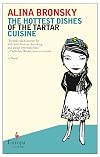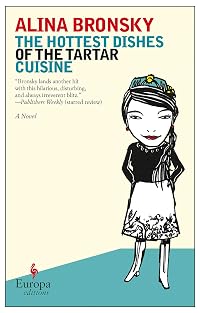
The Hottest Dishes of the Tartar Cuisine
by Alina Bronsky
On This Page
Description
Rosa's schemes to abort her daughter Sulfia's fetus after learning of the pregnancy, take her granddaughter Aminat after the baby's birth, and move the family out of the Soviet Union eventually lead to tragedy.Tags
Recommendations




















Member Reviews
Rosa knows everything. She knows that her daughter is stupid and ugly and only has a husband thanks to her. She knows that her granddaughter is smart and pretty, thanks to her care. And she knows that without her, her family would be nothing. It′s hard being the only intelligent, beautiful person around, but Rosa bears the burden.
One day her daughter, Sulfia, tells her that she dreamt about a man and is now pregnant. Rosa believes her immediately, for what man would be attracted to her ugly, dim-witted daughter? But for as much as she derides her daughter, Rosa loves her granddaughter and takes over raising her. Aminat is not as easily cowed as her mother, however, and the three are entwined in a destructive, subversive embrace.
Rosa show more is one of the most detestable characters I′ve encountered in literature. She is self-aggrandizing, delusional, and cruel. She has perfected the use of emotional abuse to inflict pain while professing love. Yet despite this, the book is funny at times, and I found myself admiring Rosa′s spirit, almost, even as I deplored her actions. Like Baba Dunja′s Last Love, Bronsky′s writing is crisp and acerbic with a strong female protagonist. But whereas Baba Dunja′s love for her granddaughter is self-effacing and supportive, Rosa′s is greedy and domineering. Baba Dunja sacrifices herself for others; Rosa sacrifices others for herself. I don't know how to rate Hottest Dishes, because it is well-written, but repelling. show less
One day her daughter, Sulfia, tells her that she dreamt about a man and is now pregnant. Rosa believes her immediately, for what man would be attracted to her ugly, dim-witted daughter? But for as much as she derides her daughter, Rosa loves her granddaughter and takes over raising her. Aminat is not as easily cowed as her mother, however, and the three are entwined in a destructive, subversive embrace.
Rosa show more is one of the most detestable characters I′ve encountered in literature. She is self-aggrandizing, delusional, and cruel. She has perfected the use of emotional abuse to inflict pain while professing love. Yet despite this, the book is funny at times, and I found myself admiring Rosa′s spirit, almost, even as I deplored her actions. Like Baba Dunja′s Last Love, Bronsky′s writing is crisp and acerbic with a strong female protagonist. But whereas Baba Dunja′s love for her granddaughter is self-effacing and supportive, Rosa′s is greedy and domineering. Baba Dunja sacrifices herself for others; Rosa sacrifices others for herself. I don't know how to rate Hottest Dishes, because it is well-written, but repelling. show less
Whew! Is there a narrator of a book out there anywhere who is more savage, more self-satisfied, and more manipulative than Rosa Achmetowna, the narrator and main character of Hottest Dishes of the Tartar Cuisine? What a story! I read straight through and I feel like I’ve just spent four hours in hand-to-hand combat.
This book is mean and funny and horrifying and I love it. I've met a Rosa. Shit, I've talked politics with her and defended western bread and explained why I can't marry her grandson. I'm so glad to see her humanized but not excused. Definitely a fresh, unusual viewpoint, a great way to look into second world life without succumbing to the drearies.
I flew to the Soviet Union. On the plane (Aeroflot) the seat belt didn't work. I told the stewardess. She shrugged. There was a fly buzzing around in the plane. The airport we landed at looked like an army base but it's just that, as a Westerner, I expected airports to look fancy. The Soviet Union was no frills.
Rosalinda is a no frills soviet mother. If she seems harsh at times, it's because life is harsh if no attempt is made to dress it up. If she's cruel, it's because life is cruel. Why else would her daughter be born ugly and stupid?
Some readers would be quick to judge Rose, but she is our narrator and we can't continue without her. You may think she's incapable of self-reflection but when the granddaughter she worships suggests show more she's evil, she doesn't dismiss the thought out of hand. She asks her husband if it might be true. When he can no longer avoid answering he says "Of course not!". The next day he leaves her.
This isn't a story about good and evil. Rose believes in God, but the God she believes in is like an uncaring soviet bureaucrat. At one point she abandons Him as requiring too much of her.
We read this novel because we like seeing the world through Rose's eyes. It's new and unfamiliar. Plain old greed or cruelty or desperation would be boring. This book has taken me somewhere I've never been before. And how many of you have been to the Soviet Union? show less
Rosalinda is a no frills soviet mother. If she seems harsh at times, it's because life is harsh if no attempt is made to dress it up. If she's cruel, it's because life is cruel. Why else would her daughter be born ugly and stupid?
Some readers would be quick to judge Rose, but she is our narrator and we can't continue without her. You may think she's incapable of self-reflection but when the granddaughter she worships suggests show more she's evil, she doesn't dismiss the thought out of hand. She asks her husband if it might be true. When he can no longer avoid answering he says "Of course not!". The next day he leaves her.
This isn't a story about good and evil. Rose believes in God, but the God she believes in is like an uncaring soviet bureaucrat. At one point she abandons Him as requiring too much of her.
We read this novel because we like seeing the world through Rose's eyes. It's new and unfamiliar. Plain old greed or cruelty or desperation would be boring. This book has taken me somewhere I've never been before. And how many of you have been to the Soviet Union? show less
Published in English, as The Hottest Dishes of the Tartar Cuisine
These days, most horrific parenting tales are told from the view of the victim. Just imagine the terrible things those poor kids have had to suffer! As soon as anyone even tries to give the parent's view a chance, people's minds just explode ... especially after reading a certain type of articles, in The Wall Street Journal.
Rosalinda Achmetovna is one such tyrannical mother, though obviously not from where she stands. After all when one's daughter gets impregnated by the tried and true method of "dreaming", she doesn't just idly stand by.
Rosa forces her daughter to go through several highly dangerous abortion methods, but 9 months later she still finds herself a grandmother of the "surprisingly" pretty Aminat. Our heroine, quickly gets over her disillusion, keen on raising her granddaughter the right way. You'd never believe how easy it is to bribe people to let them abduct a child. And when that fails, she can always resort to emotional blackmail.
Although there is no doubt in my mind that Rosa is the mother-in-law from Hell, I couldn't help but occasionally sympathize with her. Yeees, I would immediate take that back on the next page, where she would once again resort to another egregious method of child-rearing (eg: comparing Aminat to an animal) ... but at least her initial instincts were not entirely misplaced.
Score: 4/5 stars
A surprisingly easy and addictive read, in spite of Rosa's numerous horrifying schemes. And in the end, I couldn't help but admire the woman's ambition and resilience.
If you're the type to get horrified at the prospect of the hard life in communism, don't bother with this book. However if you can treat it as the train wreck that it is meant to showcase, by all means give it a chance. show less
These days, most horrific parenting tales are told from the view of the victim. Just imagine the terrible things those poor kids have had to suffer! As soon as anyone even tries to give the parent's view a chance, people's minds just explode ... especially after reading a certain type of articles, in The Wall Street Journal.
Rosalinda Achmetovna is one such tyrannical mother, though obviously not from where she stands. After all when one's daughter gets impregnated by the tried and true method of "dreaming", she doesn't just idly stand by.
show more
I knew that such cases existed. A virgin would have a dream, and nine months later she'd give birth to a child. Or worse: my cousin
Rafaella had allegedly found her only daughter amongst the leaves of an unknown exotic house plant, whose seed she had gotten from somewhere in the south.
Rosa forces her daughter to go through several highly dangerous abortion methods, but 9 months later she still finds herself a grandmother of the "surprisingly" pretty Aminat. Our heroine, quickly gets over her disillusion, keen on raising her granddaughter the right way. You'd never believe how easy it is to bribe people to let them abduct a child. And when that fails, she can always resort to emotional blackmail.
Although there is no doubt in my mind that Rosa is the mother-in-law from Hell, I couldn't help but occasionally sympathize with her. Yeees, I would immediate take that back on the next page, where she would once again resort to another egregious method of child-rearing (eg: comparing Aminat to an animal) ... but at least her initial instincts were not entirely misplaced.
Score: 4/5 stars
A surprisingly easy and addictive read, in spite of Rosa's numerous horrifying schemes. And in the end, I couldn't help but admire the woman's ambition and resilience.
If you're the type to get horrified at the prospect of the hard life in communism, don't bother with this book. However if you can treat it as the train wreck that it is meant to showcase, by all means give it a chance. show less
Fantastic book from the first sparkling paragraph to the moving ending. The narrator is a complete original, a spunky tartar grandmother, one part monster and one part saint, that I find hard to describe. So have to just recommend that everyone read the book for themselves.
I also find myself having a difficult time doing justice to the story. It begins in 1978 in a Russian city with the (soon-to-be) grandmother discovering that her teenage daughter is pregnant. Despite her best efforts to induce a home-remedy abortion, a daughter is born to her. The story centers around these three generations of women with a variety of men serving primarily as a backdrop, mostly husbands and lovers, as they navigate Soviet culture and eventually show more emigrate to Germany.
History and the passage of time are lightly depicted in a book that covers 1978 to 2008, with the most interest being on the development of the granddaughter and her relationship with the two women that care for her and often trade or steal her back and forth. show less
I also find myself having a difficult time doing justice to the story. It begins in 1978 in a Russian city with the (soon-to-be) grandmother discovering that her teenage daughter is pregnant. Despite her best efforts to induce a home-remedy abortion, a daughter is born to her. The story centers around these three generations of women with a variety of men serving primarily as a backdrop, mostly husbands and lovers, as they navigate Soviet culture and eventually show more emigrate to Germany.
History and the passage of time are lightly depicted in a book that covers 1978 to 2008, with the most interest being on the development of the granddaughter and her relationship with the two women that care for her and often trade or steal her back and forth. show less
This is Alina Bronsky's second novel, following the very successful Scherbenpark. The narrator is Rosalinda, a Russian lady who has become a grandmother very much against her wishes. Once she has seen her new granddaughter, Animat, she becomes possessed with the determination to do everything in her power to help the child (and keep control of her), to the detriment of her daughter Sulfia if necessary. Rosa is used to getting what she wants: armed with the strong conviction that she is always right, she deploys all the techniques at her disposal in the course of her campaign: bribery, physical coercion, deception, blackmail, psychological warfare, the giving and withdrawing of sexual favours, a fraudulent claim to knowing the secrets of show more Tartar folklore, even prayer (although she is cautious with this last: she's learnt that God has a tendency to overdo things). The unfortunate Sulfia is pushed into three marriages, with increasingly disastrous results, but Rosa does manage to get the family out of the chaos of post-Soviet Russia into Germany. And eventually, despite her own best efforts to mess things up, many things do work out for the best, although not at all in the way she intended.
This is a bit of a one-joke book: much of the point relies on Rosa's conviction that she is always acting for the best, whilst inadvertently allowing the reader to see the damage she is doing by constantly seeking to retain control of her daughter's and granddaughter's life. And that can get a bit wearing after a while. But it's also clearly a book about emigration, and about how people who live in hard times have to develop sharp elbows, and how much of a luxury it is to be able to retain liberal moral values. Rosa — like Frau Brücker in Die Entdeckung der Currywurst — is someone who has simply decided that in the present circumstances, conventional moral standards don't apply. Unlike Frau Brücker, she has innocent victims around her who get hurt, however. They are both caricatures, of course, but the point of caricatures is that they have recognisable characteristics. There's a lot in both of them that reminds me of people I've met: relatives who lived through the last war, people who have emigrated from countries in a chaotic state.
BTW: just to be clear, this isn't a book about cooking. The title is yet another fraudulent stratagem out of Rosa's arsenal. She's been brought up in the monoculture of Stalin's Soviet Union, and knows next to nothing about the culture of her Tartar ancestors. But she discovers later in life that there's a market for ethnic folklore... show less
This is a bit of a one-joke book: much of the point relies on Rosa's conviction that she is always acting for the best, whilst inadvertently allowing the reader to see the damage she is doing by constantly seeking to retain control of her daughter's and granddaughter's life. And that can get a bit wearing after a while. But it's also clearly a book about emigration, and about how people who live in hard times have to develop sharp elbows, and how much of a luxury it is to be able to retain liberal moral values. Rosa — like Frau Brücker in Die Entdeckung der Currywurst — is someone who has simply decided that in the present circumstances, conventional moral standards don't apply. Unlike Frau Brücker, she has innocent victims around her who get hurt, however. They are both caricatures, of course, but the point of caricatures is that they have recognisable characteristics. There's a lot in both of them that reminds me of people I've met: relatives who lived through the last war, people who have emigrated from countries in a chaotic state.
BTW: just to be clear, this isn't a book about cooking. The title is yet another fraudulent stratagem out of Rosa's arsenal. She's been brought up in the monoculture of Stalin's Soviet Union, and knows next to nothing about the culture of her Tartar ancestors. But she discovers later in life that there's a market for ethnic folklore... show less
Members
- Recently Added By
Lists

Unreliable Narrators
170 works; 43 members

Europa, Europa!
13 works; 3 members

Mothers and Daughters
114 works; 11 members

Books Read in 2018
4,360 works; 110 members

Translingualism
191 works; 4 members

Llibres que he llegit el 2024
77 works; 1 member
Author Information

17 Works 1,275 Members
Some Editions
Awards and Honors
Awards
Distinctions
Notable Lists
Common Knowledge
- Canonical title
- The Hottest Dishes of the Tartar Cuisine
- Original title
- Die schärfsten Gerichte der tatarischen Küche
- Original publication date
- 2010; 2011 (English translation) (English translation)
- People/Characters
- Rosalinda Achmetowna; Sulfia; Aminat
- Epigraph
- "As in every language, there is no shortage of extremely crude expressions in Tatar. Understanding these vulgarities helps one read and manage a variety of situations. The following words, then, are not intended to be used bu... (show all)t simply to aid the understanding of specific situations."-From Word for Word (Travel and Knowhow Editions), chapter "Insults and Oaths in Tatar".
- Dedication
- For Stephan
- First words
- As my daughter Sulfia was explaining that she was pregnant but that she didn't know by whom, I paid extra attention to my posture.
- Last words*
- (Click to show. Warning: May contain spoilers.)Liever ontdeed ik metalen werkbladen van aangekoekte etensresten en stuurde ik God zwijgend een bedankje, uit beleefdheid, zodat hij zich niet helemaal overbodig voelde.
- Original language
- German
*Some information comes from Common Knowledge in other languages. Click "Edit" for more information.
Classifications
Statistics
- Members
- 400
- Popularity
- 77,839
- Reviews
- 31
- Rating
- (3.71)
- Languages
- 7 — Catalan, Dutch, English, French, German, Italian, Spanish
- Media
- Paper, Audiobook, Ebook
- ISBNs
- 19
- ASINs
- 11