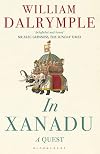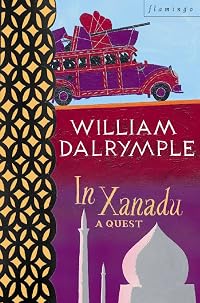
In Xanadu: A Quest
by William Dalrymple
On This Page
Description
Here is William Dalrymple's highly praised and greatly entertaining account of his 1986 trip made while a student at Cambridge, which retraced Marco Polo's route across land from The Church of the Holy Sepulchre in Jerusalem to Xanadu. With him, he took a phial of Holy Oil, 600 pounds and Laura until Lahore, and Louisa from there to Xanadu. Taken on a multitude of types of transport and lasting four months, the journey takes him across Israel, Syria, Turkey, Iran, Pakistan and finally China.Tags
Recommendations








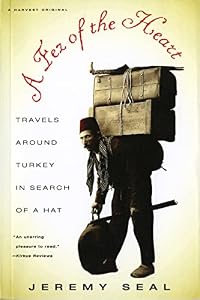
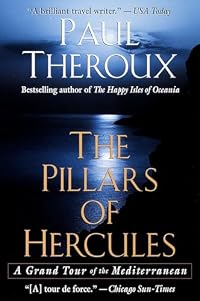


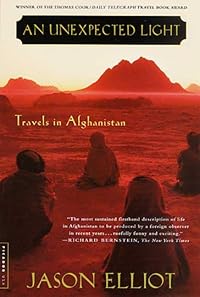
Member Recommendations

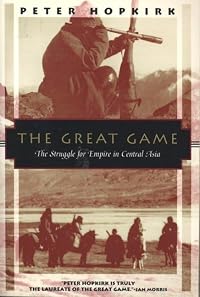
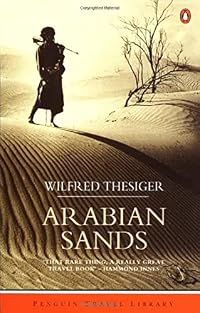
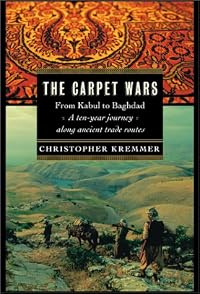
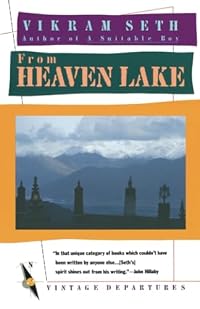
nandadevi Dalrymple got through to China in 1987 where Severin could not in 1961. Both wrote (and travelled) with the energy (and flaws) of youth. Both improved considerably as authors and travellers later in life.
Member Reviews
Turkish have predominantly homosexual tendencies, the people of Hunza were traditional robbers and slave traders and still supposed to practice infanticide, Afghans are fearful and belligerent with their large bodies, Mongols are ugly, and so on. There is an insensitive remark after every few pages, which is supposedly meant to embellish the narrative by conveying raw emotion. Funny, innit? But interestingly, this serves the purpose of making this travelogue a page-turner. I won't say I loved it, but I ended up giving it an extra star because Dalrymple, in his early 20s, does not make an attempt to be politically correct and comes out as a coming-of-age scholar. This was indeed an adventurous quest and portrayed as such. More show more interestingly, Dalrymple is equally direct in describing his own physical and mental state as the two brave and daring women who accompanied him in their own parts of the journey.
Amid these somewhat crass, uninformed, and callous descriptions of people and cultures, there are vivid images of the places he visits; and he is best when describing architecture, and geographies. His keen observation brings the places on the rough trail of Marco Polo to life. Most of the time, he is successful in depicting these places as not just settings but characters in their own right, influencing the journey and the experiences of the travelers.
I am an erstwhile fan, and this, along with the City of Djinns, was waiting on my bookshelves for years. Finally, I have gotten through one and will someday move to the next. show less
Amid these somewhat crass, uninformed, and callous descriptions of people and cultures, there are vivid images of the places he visits; and he is best when describing architecture, and geographies. His keen observation brings the places on the rough trail of Marco Polo to life. Most of the time, he is successful in depicting these places as not just settings but characters in their own right, influencing the journey and the experiences of the travelers.
I am an erstwhile fan, and this, along with the City of Djinns, was waiting on my bookshelves for years. Finally, I have gotten through one and will someday move to the next. show less
Right off the bat I have to say I love an author who uses the word "churlish." I could tell In Xanadu was going to be a crazy ride when he apologizes in his dedication (who does that?). William Dalrymple takes us on a journey from Lebanon to Inner Mongolia, following the historic path of Marco Polo (Travels). Dalrymple's ultimate goal is to reach the famed palace of Xanadu, of Coleridge's "Kubla Khan" fame. For the first half of his expedition he is accompanied by savvy traveler, Laura. The extraordinary thing is he met her at a dinner party just a few weeks before his departure. She just invited herself along because that's the type of person she is. From the way Dalrymple describes her, he sounds a little afraid of her. The second show more half of his journey is with newly ex-girlfriend, Laura. While not as fierce as Laura, Louisa has endearing qualities all her own. I don't think I will spoil it for anyone when I say they do make it to Xanadu, despite many mishaps along the way. show less
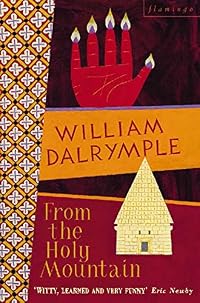
This was Dalrymple’s first book, describing his journey “in the footsteps of Marco Polo” from Jerusalem to the site of Kublai Khan’s summer capital in Inner Mongolia, made during the Long Vacation of 1986, whilst Dalrymple was still an undergraduate in Cambridge. The journey was prompted largely by hearing of the opening of the Karakoram Highway and realising that it might now be possible for foreigners to travel overland from Pakistan to Sinkiang. And I think that's the clue to a slight weakness in the book: unlike his strong interaction with John Moschos in From the Holy Mountain, Dalrymple doesn't display any particular affection for the alleged source text. If anything, he makes it clear that he's rather bored with Polo, show more whose book he characterises as a 13th century business travel handbook to Central Asia.
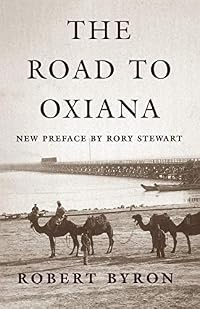
What the book is really about is the process of travel, as experienced in a succession of accidents by a slightly naive young man bumbling across Asia (accompanied by a comically forceful young woman as far as Lahore, and a different, comically feeble one thereafter: neither of them appears to have brought a dulcimer along). This is always interesting and entertaining - Dalrymple is definitely a good writer, even in his early twenties, and the journey itself is a bold and enterprising one - but there's probably a bit too much of the Robert Byrons about it. Albeit without Byron’s aggressive nastiness - when Dalrymple makes fun of the locals, he always makes sure that he makes himself look even more foolish than they. show less
What the book is really about is the process of travel, as experienced in a succession of accidents by a slightly naive young man bumbling across Asia (accompanied by a comically forceful young woman as far as Lahore, and a different, comically feeble one thereafter: neither of them appears to have brought a dulcimer along). This is always interesting and entertaining - Dalrymple is definitely a good writer, even in his early twenties, and the journey itself is a bold and enterprising one - but there's probably a bit too much of the Robert Byrons about it. Albeit without Byron’s aggressive nastiness - when Dalrymple makes fun of the locals, he always makes sure that he makes himself look even more foolish than they. show less
A Dalrymple book does not disappoint. Especially not his first publication, at the age of 22. To someone who loves travel, writing and adventure, Dalrymple's life on the road seems like out of a fairy tale. For two college students to be able to set out on a journey from England to Jerusalem, follow the Silk Route all the way up to China, on a budget of merely 700 pounds, seems to me to be a mixture of fond hope and absolute madness. But it works. This is more than just the tale of some hippies who want to backpack around the subcontinent. William and his companion (first Laura, then Louisa) are serious students of history, whose travel Bibles are the Travels of Marco Polo and other (more obscure) works about travel in Asia rather than show more Lonely Planet guides. Though William has visited the subcontinent before, he learns valuable lessons in cross-border travel (namely, how to go undetected while crossing borders illegally), bribe-giving and favour-taking, and cultural norms. Nor does he disguise his complete lack of appreciation of certain places. He is honest about his crankiness at hindrances such as boring, lifeless towns, cross-border tactics and the people he has to trust with them, miles and miles of never ending desert, lack of colour, food and sleep. His relief when he leaves the Afghan landscape to enter into Pakistan is palpable, and he does not hold back words. He is glad of the noise, colour and relative freedom the subcontinent brings him, after days of dreariness and having to watch his back. All that, however, does not stop him from admiring the architectural wonders he finds in Jerusalem, Turkey, Syria, etc. Towards the end of his journey, the pages are turned faster, only because he is being hounded by the police for entering into forbidden areas of China illegally. The book, I thought, ends too soon, but the pace fits the events and the stress of rushing the last few days. This book displays the author's lack of maturity when it comes to describing certain things or dismissing certain others, a tendency he has refined in his later, more researched works. But what comes through in all of his works, as I see it, is an unapologetic honesty. Never mind what he says in irritability of dry, desert-like landscape. One of the most outstanding observations comes while he is in Jerusalem, and only he has the guts to make it: "The Holy City has had more atrocities committed in it, more consistently, than any other town in the world. Sacred to three religions, the city has witnessed the worst intolerance and self-righteousness of all of them." show less
Overall I enjoyed this book, especially the context he brings to each stop on his journey from ancient texts that I will never get around to reading. The journey itself is quite an accomplishment in logistics and determination in the face of bureaucracy and in the case of Iran, potential imprisonment. There was a little too much focus on the discomforts and bureaucracy at times which felt repetitive after the 10th stop on the journey. Some of it is hilarious but I preferred his descriptions of the places and their histories. Especially with the war in Syria, the chapters on Aleppo and Armenia were wonderful to read and gain more context for the history of those places.
An entertaining account of 1.5 pairs of sarcastic British college students retracing Marco Polo's route from Jerusalem to the ruins of Xanadu. It is definitely a story of the type, intrepid white people explore the primitive ways of the rest of mankind, and they do fairly frequently seem to be idiots themselves, but I enjoyed all of it.
A very interesting travel book, describing a daring journey through Israel, Cyprus, Syria, Turkey, Iran, Pakistan, China and other countries I've doubtless forgotten. Dalrymple writes very well, it's a pleasure to journey with him.
Members
- Recently Added By
Lists

Best of Travel Narratives
142 works; 28 members
Adventure Travel & Exploration In Asia
31 works; 8 members

Mustich's 1000 Books to Read Before You Die: A Life Changing List
1,001 works; 18 members
Author Information

37+ Works 12,607 Members
William Dalrymple wrote the highly acclaimed British best-seller In Xanadu when he was twenty-two. It won the 1990 Yorkshire Post Best First Work Award and a Scottish Arts Council Spring Book Award; it was also shortlisted for the John Llewelyn Rhys Memorial Prize. His second book, City of Djinns, won the 1994 Thomas Cook Travel Book Award and the show more Sunday Times Young British Writer of the Year Award. From the Holy Mountain was awarded the Scottish Arts Council Autumn Book Award for 1997; it was also shortlisted for the 1998 Thomas Cook Award, the John Lewelyn Rhys Memorial Prize, and the Duff Cooper Prize. A collection of his essays on India, The Age of Kali, was published in 1998. Dalrymple is a fellow of the Royal Society of Literature and of the Royal Asiatic Society and in 2002 was awarded the Mungo Park Medal by the Royal Scottish Geographic Society for his "outstanding contribution to travel literature." He is married to the artist Olivia Fraser, and they have three children. They now divide their time between London and Delhi show less
Awards and Honors
Series
Belongs to Publisher Series
Common Knowledge
- Canonical title
- In Xanadu: A Quest
- Original publication date
- 1989
- People/Characters
- William Dalrymple; Louisa; Laura; Marco Polo
- Important places
- Silk Road
- First words
- It was still dark when I left Sheik Jarrah.
- Last words
- (Click to show. Warning: May contain spoilers.)I got out a sharp pencil, opened a blank page and began to scribble.
- Blurbers
- Fermor, Patrick Leigh; Maitland, Alexander; Crewe, Quentin; Billington, Rachel; Guinness, Alec; Read, Piers Paul (show all 11); Glazebrook, Philip; Franks, Alan; Murphy, Dervla; Sethi, Sunil; Thubron, Colin
Classifications
Statistics
- Members
- 974
- Popularity
- 26,873
- Reviews
- 19
- Rating
- (3.85)
- Languages
- 7 — Dutch, English, German, Greek, Italian, Spanish, Swedish
- Media
- Paper, Audiobook, Ebook
- ISBNs
- 21
- ASINs
- 11