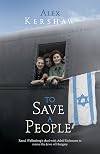
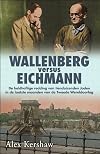
The Envoy: The Epic Rescue of the Last Jews of Europe in the Desperate Closing Months of World War II
by Alex Kershaw
On This Page
Description
The epic and heroic story of how Raoul Wallenberg out-dueled Adolph Eichmann and saved more than 100,000 Jews in Budapest from the Nazi death camps.Tags
Recommendations
















Member Reviews
The back cover proclaims that the hero of this book, and of real life events, saved more people that Schindler. By the time you have finished the book you realise that this is an understatement. Raoul Wallenberg was a Swedish diplomat who, under his own steam, took to Hungary near the end of WWII to do something to stop or slow the massacring of the Jewish people. Unable to bear witness any longer to such death under the eyes of an apathetic international community, he negotiated funds from his government and an 'anything goes' game plan to head to Budapest to beg, steal, borrow or bribe his way into getting Jews released.
His plan was as follows: create a pass with coats of arms, stamps and signatures galore, to which the gestapo would show more bow down to in their need to obey officialdom. The pass gave the holder of it residency and therefore protection by Sweden, who were neutral in the war. Distribute these passes to any Jewish person who had any tie to Sweden whatsoever (and later, just any Jewish person). These new Swedish citizens did not fall under Germany's criteria for Jews who could be deported, and so were safe. Wallenberg was to open up 'safe houses' where they lived, and assist in food and transportation out of Hungary and away from the Reich's rule. Wallenberg cultivated official relations with senior gestapo leaders, in his meetings he advocated for the protection of 'his people' (the new Swedes), and in doing so risked death and worse many times.
He would show up where people were being rounded up, and call out some common Jewish names as if he had specific people in mind. Those who came forward were declared Swedish citizens in a hastily prepared document and in some cases were pulled from the trains just in time. He would have his colleagues secret food to the doomed he was unable to help, and in general showed compassion, resourcefulness and a willingness to break laws and rules in a time when the allies were hamstrung by following them.
The last section of the book deals with Wallenberg's fate. He was not received well by the Soviet liberators and the direct dealings he had with the Germans were to come back to haunt him. ****spoilers****
Wallenberg was taken prisoner accused of being a German collaborator. He was never officially charged and his fate, beyond that of being a Russian prisoner of war, remains unknown. The Soviets simply could not see why someone would take that much risk for personal gain that was limited to the satisfaction of helping those in dire need. The Swedish government was paralysed by its neutrality and refused to fight for his release. What a terrible destiny for such a hero. Another sad book in which the actions of a kind and brave man go unrewarded. show less
His plan was as follows: create a pass with coats of arms, stamps and signatures galore, to which the gestapo would show more bow down to in their need to obey officialdom. The pass gave the holder of it residency and therefore protection by Sweden, who were neutral in the war. Distribute these passes to any Jewish person who had any tie to Sweden whatsoever (and later, just any Jewish person). These new Swedish citizens did not fall under Germany's criteria for Jews who could be deported, and so were safe. Wallenberg was to open up 'safe houses' where they lived, and assist in food and transportation out of Hungary and away from the Reich's rule. Wallenberg cultivated official relations with senior gestapo leaders, in his meetings he advocated for the protection of 'his people' (the new Swedes), and in doing so risked death and worse many times.
He would show up where people were being rounded up, and call out some common Jewish names as if he had specific people in mind. Those who came forward were declared Swedish citizens in a hastily prepared document and in some cases were pulled from the trains just in time. He would have his colleagues secret food to the doomed he was unable to help, and in general showed compassion, resourcefulness and a willingness to break laws and rules in a time when the allies were hamstrung by following them.
The last section of the book deals with Wallenberg's fate. He was not received well by the Soviet liberators and the direct dealings he had with the Germans were to come back to haunt him. ****spoilers****
Wallenberg was taken prisoner accused of being a German collaborator. He was never officially charged and his fate, beyond that of being a Russian prisoner of war, remains unknown. The Soviets simply could not see why someone would take that much risk for personal gain that was limited to the satisfaction of helping those in dire need. The Swedish government was paralysed by its neutrality and refused to fight for his release. What a terrible destiny for such a hero. Another sad book in which the actions of a kind and brave man go unrewarded. show less
I have had this book for a long time. I thought it was a novel. I was surprised. It is history and what a read! I have heard of Raoul Wallenberg but more as an afterthought. He was no afterthought. He was brave and willing to risk his life to save Hungarian Jews towards the end of WWII. THE ENVOY tells the story of what he and other diplomats from neutral countries did to help save as many people as they could. This book gives all the sides from the Nazi side to the Jewish side to the Hungarian Arrow Cross side to the Soviet side.
I was sickened by Eichmann and his words and actions. I felt sorrow for those who could not be saved. I also felt hope for those who were saved and survived the war. I felt anger for the Wallenberg family and show more their not being able to get the truth from the Soviets and for the lack of compassion shown by the Swedish diplomatic corps. Raoul was a good man who deserves his story told and his family deserves to know what really happened to him. show less
I was sickened by Eichmann and his words and actions. I felt sorrow for those who could not be saved. I also felt hope for those who were saved and survived the war. I felt anger for the Wallenberg family and show more their not being able to get the truth from the Soviets and for the lack of compassion shown by the Swedish diplomatic corps. Raoul was a good man who deserves his story told and his family deserves to know what really happened to him. show less
This is not a book that will be on Iranian President Mahmoud Ahmadinejad's favorites list, nor any of the other Holocaust deniers, because it goes into great detail about the rounding up of Jews in Europe toward the end of WW II.
There are many books about Nazi war crimes and the Holocaust, but this one centers to a large part on the heroic efforts of Sweden's Raoul Wallenberg. A wealthy Swede, he had himself appointed as a diplomat to Hungary. Working in Budapest, he became the "angel of mercy", saving, according the Guiness Book of Records, more Jews from the death camps than any other individual. Wallenberg defied nazi officials, giving diplomatic protection to thousands of Jews, risking his life in the process. He ultimatly was show more arrested by the invading Soviets and apparentlhy died in obscurity in a soviet prison. Wallenberg was subsequently honored by our Country by being named an Honorary Citizen of the United States, an honor he shared only with Winston Churchill. For all his heroism, Wallenberg's story is not well known, making this book a valuable addition to the stories of WWII. show less
There are many books about Nazi war crimes and the Holocaust, but this one centers to a large part on the heroic efforts of Sweden's Raoul Wallenberg. A wealthy Swede, he had himself appointed as a diplomat to Hungary. Working in Budapest, he became the "angel of mercy", saving, according the Guiness Book of Records, more Jews from the death camps than any other individual. Wallenberg defied nazi officials, giving diplomatic protection to thousands of Jews, risking his life in the process. He ultimatly was show more arrested by the invading Soviets and apparentlhy died in obscurity in a soviet prison. Wallenberg was subsequently honored by our Country by being named an Honorary Citizen of the United States, an honor he shared only with Winston Churchill. For all his heroism, Wallenberg's story is not well known, making this book a valuable addition to the stories of WWII. show less
The Envoy: The Epic Rescue of the Last Jews of Europe in the Desperate Closing Months of World War II by Alex Kershaw is a non-fiction book telling the story of Swedish diplomat of Raoul Wallenberg. Mr. Wallenberg is credited with saving thousands of Hungarian Jews by granting them visas and exiting the Reich.
The Envoy: The Epic Rescue of the Last Jews of Europe in the Desperate Closing Months of World War II by Alex Kershaw takes place around 1944, when the Germans brought in Adolf Eichmann to begin orchestrating the murder of Hungarian Jews. The Jews in Hungry lived in relative safety until then, but the writing was on the wall.
Mr. Wallenberg could not stand idly by show more watching one of the greatest crimes of the 20th Century taking place, and took it upon himself to provide Jews with Schutzpasses, documents which show that the bearer is a Swedish citizen and hence should not be transferred to a concentration camp. Trying to go against the German Reich was not a safe endeavor at the time, even for a diplomat.
The book follows Raoul Wallenberg and Eichmann after World War II ended. The story of the capture of Eichmann is well documented in many other sources and hence only told briefly in the book. Mr. Wallenberg was jailed by the Russians, who thought he was a German spy since he possessed the contact information for Eichmann. According to the Russians he died in 1947 of a heart attack, a statement Mr. Wallenberg’s family challenges.
The book also profiles several persons Mr. Wallenberg saved, the efforts to kill the Jews and the courageous efforts it took to save them.
For more reviews and bookish thoughts please visit: http://www.ManOfLaBook.com show less
The Envoy: The Epic Rescue of the Last Jews of Europe in the Desperate Closing Months of World War II by Alex Kershaw takes place around 1944, when the Germans brought in Adolf Eichmann to begin orchestrating the murder of Hungarian Jews. The Jews in Hungry lived in relative safety until then, but the writing was on the wall.
Mr. Wallenberg could not stand idly by show more watching one of the greatest crimes of the 20th Century taking place, and took it upon himself to provide Jews with Schutzpasses, documents which show that the bearer is a Swedish citizen and hence should not be transferred to a concentration camp. Trying to go against the German Reich was not a safe endeavor at the time, even for a diplomat.
The book follows Raoul Wallenberg and Eichmann after World War II ended. The story of the capture of Eichmann is well documented in many other sources and hence only told briefly in the book. Mr. Wallenberg was jailed by the Russians, who thought he was a German spy since he possessed the contact information for Eichmann. According to the Russians he died in 1947 of a heart attack, a statement Mr. Wallenberg’s family challenges.
The book also profiles several persons Mr. Wallenberg saved, the efforts to kill the Jews and the courageous efforts it took to save them.
For more reviews and bookish thoughts please visit: http://www.ManOfLaBook.com show less
סיפור מרתק. במיוחד עבורי שעל השנה הראשונה לחיי אפילו מהורי לא יכולתי לשמוע כי הם לא היו אתי והם גם לא היו בבודפשט. הסיפור מרתק אבל הכתיבה גרועה, סנסציונית, נצלנית, רשלנית, אין בה שום מחקר מקורי כי אם איסוף ממאות ספרים אחרים, והטקסט מלא שגיאות.
The heroic story of Raoul Wallenberg, who is credited with saving the lives of over 100,000 Jews in occupied Hungary during WW2.
Ratings
Members
- Recently Added By
Lists

Books About World War II
102 works; 29 members
Author Information

17+ Works 4,574 Members
Alex Kershaw is the New York Times bestselling author of several books on World War II, including The Longest Winter and The Bedford Boys. He lives in Williamstown, Massachusetts.
Common Knowledge
- Original publication date
- 2010
- People/Characters*
- Raoul Wallenberg
- Dedication
- For my sisters
- First words
- It was a snowy Tuesday as the Mercedes staff cars pulled in, one after the other, wheels crunching the gravel on the driveway that led past a circular flower bed and to the entrance of a large, imposing villa at 56-58 Am Gros... (show all)sen Wannsee on the outskirts of Berlin.
- Last words
- (Click to show. Warning: May contain spoilers.)"There's not one day I don't spend with him," she says. "He is with me in the books, papers, photographs, and so on that fill this room. He is with me all the time."
*Some information comes from Common Knowledge in other languages. Click "Edit" for more information.
Classifications
Statistics
- Members
- 264
- Popularity
- 122,917
- Reviews
- 6
- Rating
- (4.06)
- Languages
- 5 — Dutch, English, French, Polish, Swedish
- Media
- Paper, Audiobook, Ebook
- ISBNs
- 16
- ASINs
- 8