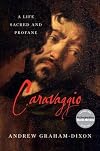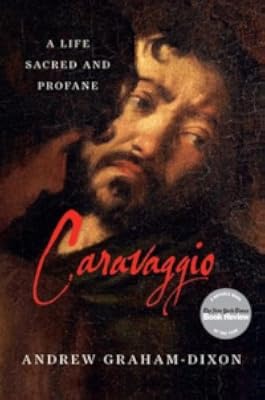
Caravaggio: A Life Sacred and Profane
by Andrew Graham-Dixon
On This Page
Description
A British art critic and historian describes the painter's artistic achievements and volatile life during the Counter-Reformation in Italy which included public brawls, murder, sexual escapades, and imprisonment in Malta.Tags
Recommendations











Member Recommendations
Member Reviews
Caravaggio was a rulebreaker, a hedonist, a freak who courted fame and status but always managed to fuck it up through some violent outburst. His dark, intense works captured my eye when I first went to Italy back in 1995. Who knows what really drove him from obscure childhood to artistic genius. There are few words that can be directly attributed to the man himself, but what the book reveals is that he was a keen observer of people and the lives of the poor in particular. It is nicely written with enough detail on the historical period without over-speculating on what influenced Caravaggio, really enjoyed it.
I know it's a cliche, but facts about this artist's life are so few and far between he is very much like his own paintings: emerging briefly, every now and then, from the dark out into daylight.
Details of his early life are particularly sparse - which made (to me at least) the first hundred or so pages of this biography hard going. There's plenty about Milan and Rome, folk art, archbishops and cardinals, but nothing substantial about the man himself. The result is peculiar: like a portrait painting without the portrait, all setting but no face. Once you get beyond that though, Michelangelo Merisi da Caravaggio does begin to emerge - and what a man he is! For a start, I'd forgotten just how far ahead of its time some of his work show more really was: painted in the seventeenth century, St John The Baptist say, or David With The Head Of Goliath, could have been done in the twentieth.
I was amazed, too, by his extraordinary life. He strode about the seedier parts of town dressed in a cloak and armed with a sword; he killed an opponent in a duel (although Graham-Dixon argues convincingly that this was accidental) and may have earned money as a pimp. The most astonishing image of all though (as unforgettable as any of his pictures) is that of the great-painter-as-fugitive on the run in fear of his life: fleeing from city to city - and, everywhere he stopped, painting a masterpiece.
I'm glad I didn't lose patience during those first hundred pages because this is as enthralling a biography (of Caravaggio or anyone else for that matter) as I've ever read. show less
Details of his early life are particularly sparse - which made (to me at least) the first hundred or so pages of this biography hard going. There's plenty about Milan and Rome, folk art, archbishops and cardinals, but nothing substantial about the man himself. The result is peculiar: like a portrait painting without the portrait, all setting but no face. Once you get beyond that though, Michelangelo Merisi da Caravaggio does begin to emerge - and what a man he is! For a start, I'd forgotten just how far ahead of its time some of his work show more really was: painted in the seventeenth century, St John The Baptist say, or David With The Head Of Goliath, could have been done in the twentieth.
I was amazed, too, by his extraordinary life. He strode about the seedier parts of town dressed in a cloak and armed with a sword; he killed an opponent in a duel (although Graham-Dixon argues convincingly that this was accidental) and may have earned money as a pimp. The most astonishing image of all though (as unforgettable as any of his pictures) is that of the great-painter-as-fugitive on the run in fear of his life: fleeing from city to city - and, everywhere he stopped, painting a masterpiece.
I'm glad I didn't lose patience during those first hundred pages because this is as enthralling a biography (of Caravaggio or anyone else for that matter) as I've ever read. show less
A highly enjoyable biography about Michelangelo Merisi called Caravaggio who lived in an age where painters. writers and composers were of the same social class as prostitutes and servants. It also looks like that he owed the start of his career more to a cardinal's interest in him as a boy toy than his art. Andrew Graham-Dixon makes a good case that Caravaggio's violent life was partly due to his involvement in prostitution and acting as a pimp, dueling with competitors in the streets of Rome.
His cinematic, dramatic art is mirrored in his equally dramatic and violent short life whose scenes merited their own Caravaggio paintings. How would he depict his imprisonment in a cell of the Knights of Malta? Or mortally wounding his opponent show more in the groin in Rome? Graham-Dixon brings both the stories and discussions of his paintings to the table. Recommended. show less
His cinematic, dramatic art is mirrored in his equally dramatic and violent short life whose scenes merited their own Caravaggio paintings. How would he depict his imprisonment in a cell of the Knights of Malta? Or mortally wounding his opponent show more in the groin in Rome? Graham-Dixon brings both the stories and discussions of his paintings to the table. Recommended. show less
Mr. Graham-Dixon wrote a very good bio on this powerful artist. Caravaggio had a very volatable personality, to say. His work was and is so powerful that it grabs the viewer. caravaggio was known to grab, hit people. He was the bad boy of his era. What I found interesting was learning of his partons. This book is also an excellent read of the social and intellectual history.
Biography as a sort of detective work, piecing together hints and scraps from 400 years' distance of one of the most unconventional and influential of the Italian Old Masters. He gives a convincing account of a man who lived on the edge of decent society while yearning for accolades from the aristocracy. Some of the guesswork needed is frustrating, and the reader has to spend a considerable amount of time straining to see the details described in the little reproductions of all the paintings, but I thought it was worth the effort to stick with this.
This is my first book from Audible and while I thoroughly enjoyed listening to it - Mr. Ballerini has a magical voice - I think perhaps art books are best left to the coffee table. I missed the ability to see the paintings so vividly described as I was hearing those words. This is no fault of the author's or the narrator's at all; I think it's a failure of decision making. Mine to take an audiobook of such a topic and whomever decided to make an audiobook of this work. For I think that the experience of truly appreciating all that is an artist such as Caravaggio is lessened by not seeing what he created.
That being written I must say that I found the audiobook to be very interesting if a little one dimensional. There is not much left to show more history about Caravaggio and I'm not sure that anything earth shattering was presented here. It's also been a very long time since I was studying art history and I must admit my passion was for artists of a slightly earlier period in history. But Caravaggio left a legacy that cannot be ignored in the greater post-Renaissance art world and Mr. Graham-Dixon's book helps to elucidate some of the more hidden aspects of his life - although much of what he has given is conjecture as much must be given the dearth of research material left to history.
It was a delight, though to sit and trim beans while listening to that musical, magical voice of Mr. Ballerini and he took me through the ups and mostly downs of the life of this powerful artist. show less
That being written I must say that I found the audiobook to be very interesting if a little one dimensional. There is not much left to show more history about Caravaggio and I'm not sure that anything earth shattering was presented here. It's also been a very long time since I was studying art history and I must admit my passion was for artists of a slightly earlier period in history. But Caravaggio left a legacy that cannot be ignored in the greater post-Renaissance art world and Mr. Graham-Dixon's book helps to elucidate some of the more hidden aspects of his life - although much of what he has given is conjecture as much must be given the dearth of research material left to history.
It was a delight, though to sit and trim beans while listening to that musical, magical voice of Mr. Ballerini and he took me through the ups and mostly downs of the life of this powerful artist. show less
A very enjoyable read. I knew nothing about Caravaggio and nearly nothing about art in the early seventeenth century and I think I learned a ton about both from this book. There are many color plates of the art, unfortunately sometimes they are so dark I couldn't make out the details discussed in the text. There was enough for me to get the idea, though.
Members
- Recently Added By
Author Information

30 Works 2,298 Members
Andrew Graham-Dixon is the author of Howard Hodgkin, Paper Museum, and Renaissance. He was chief art critic at the Independent for twelve years and has won numerous awards for journalism, art criticism, and broadcasting. He lives in London, England.
Awards and Honors
Common Knowledge
- Original title
- Caravaggio: A Life Sacred and Profane
- Original publication date
- 2011
- People/Characters
- Michelangelo Merisi da Caravaggio (Michele Angelo Merigi da Caravaggio or Amerighi da Caravaggio); Caravaggio; Paul V, Pope
- Important places
- Italy; Europe; Rome; Sicily; Malta; Naples
- Dedication
- To the memory of my mother, Sue, who first awoke
my love of reading, writing and looking at art - First words
- Caravaggio's art is made from darkness and light.
Classifications
Statistics
- Members
- 666
- Popularity
- 43,440
- Reviews
- 17
- Rating
- (4.19)
- Languages
- 5 — Dutch, English, Italian, Spanish, Turkish
- Media
- Paper, Audiobook, Ebook
- ISBNs
- 14
- ASINs
- 7