On This Page
Description
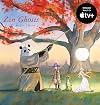
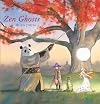
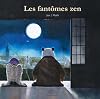
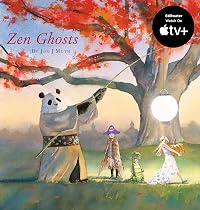
On Halloween night, Stillwater the giant panda tells Karl, Addy, and Michael a spooky and unusual story. Based on a Zen koan.Tags
Recommendations




Member Reviews
In this beautiful picture book, Stillwater the panda tells a typical Chinese ghost story. In terms of British folklore, we might call the appearance of the missing young woman a changeling or "stock"... an ailing, not-quite-human replacement for a vanished daughter... but in Chinese folklore, it's a ghost story. This is a lovely tale, that unlike the other Stillwater tales, does not undertake to teach us how to live; but like the rest, it causes us to ponder a bit about the nature of life. And in this case, about identity. Was one of the women more "real" than the other, and if so, which one?
Stillwater - the wise and gentle Panda whose zen teachings were first to be seen in Zen Shorts and Zen Ties - returns in this third picture-book adventure, inviting Addy, Michael and Karl to a storytelling session at his house, after they finish their Halloween trick-or-treating. Here, in another guise, he unfolds a deliciously creepy, but also thought-provoking ghost story, concerning a young woman named Senjo, and the incredible dual life she leads, in two places at once.
Using a well-known Zen koan - a type of paradoxical question meant to provoke a searching introspection that can prove illuminating, in and of itself - that he heard from a number of sources, Jon J. Muth crafts a lovely, contemplative Halloween book in Zen Ghosts, one show more that continues the education in Zen principles that was begun in the earlier Stillwater books, but also celebrates the spirit of the season. The tale of Senjo and Ochu, and the question of how it is possible to be in two places at once, and to be two people at once, is particularly apropos at Halloween, given the custom of putting on masks and costumes, and assuming (however temporarily) other identities, and the belief about borders between worlds (temporal and spiritual) opening at this time. The artwork here is just as strikingly beautiful as in the other Stillwater books, adding to the enjoyment of this excellent title! Recommended to anyone looking for Halloween titles that are a little different, and stand out from the usual ghostly and witchy fare available. show less
Using a well-known Zen koan - a type of paradoxical question meant to provoke a searching introspection that can prove illuminating, in and of itself - that he heard from a number of sources, Jon J. Muth crafts a lovely, contemplative Halloween book in Zen Ghosts, one show more that continues the education in Zen principles that was begun in the earlier Stillwater books, but also celebrates the spirit of the season. The tale of Senjo and Ochu, and the question of how it is possible to be in two places at once, and to be two people at once, is particularly apropos at Halloween, given the custom of putting on masks and costumes, and assuming (however temporarily) other identities, and the belief about borders between worlds (temporal and spiritual) opening at this time. The artwork here is just as strikingly beautiful as in the other Stillwater books, adding to the enjoyment of this excellent title! Recommended to anyone looking for Halloween titles that are a little different, and stand out from the usual ghostly and witchy fare available. show less
Halloween is my favorite time of year and I love that it's the backdrop for this edition of Jon J Muth's Zen Stories, Zen Ghosts. The illustrations in this book are the most detailed I've ever seen. One two page spread has a dozen kids trick-or-treating in their neighborhood in the best costumes (my favorite is Micheal in his owl-pirate costume). The best part of this story is the tale, Senjo and Her Soul Are Separated. It left Addy, Micheal, Karl, and myself wondering if there were two different Senjos and two Stillwaters or if our favorite panda was also separated from his soul. Unlike the other two Zen nooks I've read, this book is lacking a life lesson for the children to learn. However, it's not worse off for it. In fact, it might show more actually be my favorite of the four because I didn't look for an overall meaning to take away from reading it. It was simply a great ghost story. show less
Initially I was a little confused about the character because the book jumps right in (but there are two similar books before this one, which could help explain). But, a giant talking panda monk tells 3 kids a story on Halloween. This story is actually based off of a real koan told by Chinese Buddhist Monks. Koans are questions that the reader must answer for himself, and this story the panda tells poses the question if there are more than one part to a person. More generally, the book could raise the question- do I act differently when I am around different people? While the story line seems choppy, if the reader is able to pick up on these questions, then the book becomes more fulfilling.
Beautiful imagery both in the storyline and the book itself. The question within a story within a story is something that can be found across many ideologies. The Zen Ghosts book is part of a Zen series by the same author featuring Stillwater the Panda. This is a nice way to tie in the Halloween theme, tell a fabulous ghost story, and teach a lesson.
In Jon Muth's Zen Ghosts, Stillwater, a giant panda with a Zen view of the world, goes trick or treating with three siblings and tells them a haunting ghost story about a woman whose soul is separated into two parallel lives, one of love and one of love lost. The atmospheric and luminous water colors complement the Halloween story beautifully. Meanwhile, the ghost story is told with a spare traditional Chinese brush painting style; while these illustrations are not as fully realized as the rest of the story, they are still effective.
This is a story that readers of all ages can enjoy. I loved the artwork and the Zen koan. My 9 year old daughter loved the "mysteriousness" of the story. My 6 year old was entertained by the clever artwork show more (for example, the smallest child's monster costume's expressions changed with each scene), but did not like the ghost story because she didn't understand it. show less
This is a story that readers of all ages can enjoy. I loved the artwork and the Zen koan. My 9 year old daughter loved the "mysteriousness" of the story. My 6 year old was entertained by the clever artwork show more (for example, the smallest child's monster costume's expressions changed with each scene), but did not like the ghost story because she didn't understand it. show less
I have been a fan of Jon Muth from his earlier comics days with his work on “Meltdown: Wolverine and Havoc” and the epic “Moonshadow” series. Fantasy writer Micheal Moorcock said of Moonshadow
”This is an outstanding graphic tale, told at a level of literary and visual sophistication which introduced new standards and aspirations to the genre”
Recently his storybook fiction has been equally stirring and eminently life-changing for me as both a former after-school librarian and a massive fan of zen tales and watercolors. Rarely does the poignancy of a koan combine with an emotional exploration as well as it does in Muth’s books.
His newest book, “Zen Ghosts” follows the haiku speaking panda Stillwater and his young show more friends through an American Halloween. In a fashion similar to his earlier books “Zen Shorts” and “Zen Ties”, Muth ties together Asian and Buddhist thought in a framework that is easily identifiable by children while engaging to adults with little or no interest in Asian philosophy or culture ( or like me, has a massive interest in both). A wicker basket to be enjoyed for its utility or for the surprises held inside.
In “Zen Ghosts”, Halloween serves as the backdrop to the Wu-men koan “Senjo and her soul are separated. Which is the true soul?” which was based upon the T’ang period ghost tale where the young girl Senjo appears as sick and lifeless to her parents after they refuse her wedding to the man she loves. The spirit of Senjo manifests into another form and runs off with her lover while her former self remains sick and listless in the house of her parents. Eventually, Senjo is reunited with her other self as her familial ties draw her back to her father’s household. show less
”This is an outstanding graphic tale, told at a level of literary and visual sophistication which introduced new standards and aspirations to the genre”
Recently his storybook fiction has been equally stirring and eminently life-changing for me as both a former after-school librarian and a massive fan of zen tales and watercolors. Rarely does the poignancy of a koan combine with an emotional exploration as well as it does in Muth’s books.
His newest book, “Zen Ghosts” follows the haiku speaking panda Stillwater and his young show more friends through an American Halloween. In a fashion similar to his earlier books “Zen Shorts” and “Zen Ties”, Muth ties together Asian and Buddhist thought in a framework that is easily identifiable by children while engaging to adults with little or no interest in Asian philosophy or culture ( or like me, has a massive interest in both). A wicker basket to be enjoyed for its utility or for the surprises held inside.
In “Zen Ghosts”, Halloween serves as the backdrop to the Wu-men koan “Senjo and her soul are separated. Which is the true soul?” which was based upon the T’ang period ghost tale where the young girl Senjo appears as sick and lifeless to her parents after they refuse her wedding to the man she loves. The spirit of Senjo manifests into another form and runs off with her lover while her former self remains sick and listless in the house of her parents. Eventually, Senjo is reunited with her other self as her familial ties draw her back to her father’s household. show less
Members
- Recently Added By
Author Information

51+ Works 13,775 Members
Jon J. Muth is a children's author and illustrator. His books have received numerous awards and critical acclaim. Stone Soup, a familiar tale set in China won a National Parenting Book Award. Books he has illustrated include Come On, Rain!, which won the Gold Medal from the Society of Illustrators in 1999, Gershon's Monster, and No Dogs Allowed. show more Zen Shorts is a New York Times Bestseller, a Quill Award nominee, and was awarded the 2006 Caldecott Honor. Zen Ghosts was published in September 2010 by Scholastic Press. His title, Hi, Koo!, is a New York Times Bestseller for 2014 and was published by Scholastic Press, as well. (Bowker Author Biography) show less
Awards and Honors
Series

Common Knowledge
- Original publication date
- 2010
- Dedication
- FOR JOHN DAIDO LOORI, ROSHI
(1931-2009)
Zen Teacher and Abbot of Zen Mountain Monastery
. . . thank you. - First words
- "MICHAEL! There's a ghost outside!" said Karl.
- Last words
- (Click to show. Warning: May contain spoilers.)And if you have, the answer becomes your own.
Classifications
Statistics
- Members
- 476
- Popularity
- 63,558
- Reviews
- 22
- Rating
- (4.14)
- Languages
- English, French
- Media
- Paper, Audiobook, Ebook
- ISBNs
- 16
- ASINs
- 4