On This Page
Description
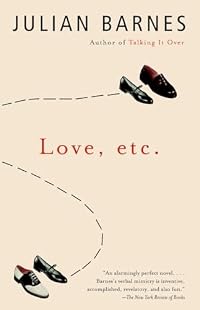
Fiction. Literature. Humor (Fiction.) HTML:Twice shortlisted for the Booker Prize, Julian Barnes continues to reinvigorate the novel with his pyrotechnic verbal skill and playful manipulation of plot and character. In Love, etc. he uses all the surprising, sophisticated ingredients of a delightful farce to create a tragicomedy of human frailties and needs.After spending a decade in America as a successful businessman, Stuart returns to London and decides to look up his ex-wife Gillian. show more Their relationship had ended years before when Stuart’s witty, feckless, former best friend Oliver stole her away. But now Stuart finds that the intervening years have left Oliver’s artistic ambitions in ruins and his relationship with Gillian on less than solid footing. When Stuart begins to suspect that he may be able to undo the results of their betrayal, he resolves to act. Written as an intimate series of crosscutting monologues that allow each character to whisper their secrets and interpretations directly... show less
Tags
Recommendations













Member Reviews
All I could think when I was reading Love Etc. by Julian Barnes was the Rashomon effect. Here we have three friends, Oliver, Stuart, and Gillian, in a classic love triangle. But Barnes gives the love triangle a postmodern, playful twist where each character speaks to us, the reader, with face-to-face candor, as if we were some therapist in an office listening to their contradictory interpretations, feelings, and thoughts of the same events. This books is less about narrative and more about character and voice. That said, Barnes has an amazing ear for voice. Reading the book, hearing these characters speak their thoughts, I knew them. It's an intimate connection with characters that I don't think I've ever had with other books I've show more read.
This book is a continuation of another book by Barnes, Talking it Over, where we are first introduced to the trio. In Love Etc. the devastation wrought in the first book is summarized for us: Stuart lost Gillian to his best friend Oliver. In the present day of Love Etc., Stuart is back in the picture just as Gillian and Oliver are experiencing strains in their marriage.
The two friends have all but flipped in terms of their fortunes. Oliver is down in the dumps, depressed, unemployed. He makes up for this with feckless witticisms, last ditch efforts to maintain some dignity. Of the three characters, Oliver talks a lot, goes off on tangents. He wears his bruises on his sleeve. Meanwhile straight-man Stuart has morphed himself into a successful entrepreneur. He owns a chain of organic, green grocery stores in the States. Where he was once considered plain, awkward, he is reborn confident and wealthy. Stuart still pines for Gillian though—that's the crux of all this, and he tries to woo her back with a vengeance.
Gillian is the most interesting character for me. She is the object of desire for these two men, whether she wants to be or not. She works in art restoration and seems to be the one who holds their world together. She seems like the only grownup in the room, frankly. She is self-aware of her actions and what her actions have wrought. She confesses early in the book: "The point is you can love two people, one after the other, one interrupting the other, like I did. You can love them in different ways. And it doesn't mean one love is true and the other is false. That's what I wish I could have convinced Stuart. I loved each of them truly... Being in love makes you liable to fall in love. Isn't that a terrible paradox? Isn't that a terrible truth?"
The title is telling. I read somewhere that this is an echo of Oliver's observation in the earlier book when he says: "The world divides into two categories: those who believe that the purpose, the function, the bass pedal and principal melody of life is love, and that everything else—everything else—is merely an etc.; and those, those unhappy many, who believe primarily in the etc. of life, for whom love, however agreeable, is but a passing flurry of youth, the pattering prelude to nappy-duty, but not something as solid, steadfast and reliable as, say, home decoration.''
The big event of the novel takes place in the last twenty pages or so. Stuart forces himself on Gillian. They have passionate sex. She is raped. It's hard to say with certainty what has happened, and it changes depending on who's describing the event. This heightens the tensions, which Barnes never really resolves for us. There is so saving objectivity. He just leaves it hanging.
By the end, I was left wondering what the hell just happened. I didn't trust the characters' accounts anymore. But wasn't that the point all along? The apt ending to a story of mutual betrayal and love lost and regained? (I have to check and see if Barnes has a third novel that follows up this one.)
Love, Etc. is filled with deep insights into love, relationships, and life. Barnes's writing is breathtaking sometimes. It punches you in the gut. This book could have devolved into soap opera hysterics, but it never does. Instead it is a cacophony of pain and bitterness and joy and passion that is intense, cunning, and delightful.
Stand-out quote:
This book is a continuation of another book by Barnes, Talking it Over, where we are first introduced to the trio. In Love Etc. the devastation wrought in the first book is summarized for us: Stuart lost Gillian to his best friend Oliver. In the present day of Love Etc., Stuart is back in the picture just as Gillian and Oliver are experiencing strains in their marriage.
The two friends have all but flipped in terms of their fortunes. Oliver is down in the dumps, depressed, unemployed. He makes up for this with feckless witticisms, last ditch efforts to maintain some dignity. Of the three characters, Oliver talks a lot, goes off on tangents. He wears his bruises on his sleeve. Meanwhile straight-man Stuart has morphed himself into a successful entrepreneur. He owns a chain of organic, green grocery stores in the States. Where he was once considered plain, awkward, he is reborn confident and wealthy. Stuart still pines for Gillian though—that's the crux of all this, and he tries to woo her back with a vengeance.
Gillian is the most interesting character for me. She is the object of desire for these two men, whether she wants to be or not. She works in art restoration and seems to be the one who holds their world together. She seems like the only grownup in the room, frankly. She is self-aware of her actions and what her actions have wrought. She confesses early in the book: "The point is you can love two people, one after the other, one interrupting the other, like I did. You can love them in different ways. And it doesn't mean one love is true and the other is false. That's what I wish I could have convinced Stuart. I loved each of them truly... Being in love makes you liable to fall in love. Isn't that a terrible paradox? Isn't that a terrible truth?"
The title is telling. I read somewhere that this is an echo of Oliver's observation in the earlier book when he says: "The world divides into two categories: those who believe that the purpose, the function, the bass pedal and principal melody of life is love, and that everything else—everything else—is merely an etc.; and those, those unhappy many, who believe primarily in the etc. of life, for whom love, however agreeable, is but a passing flurry of youth, the pattering prelude to nappy-duty, but not something as solid, steadfast and reliable as, say, home decoration.''
The big event of the novel takes place in the last twenty pages or so. Stuart forces himself on Gillian. They have passionate sex. She is raped. It's hard to say with certainty what has happened, and it changes depending on who's describing the event. This heightens the tensions, which Barnes never really resolves for us. There is so saving objectivity. He just leaves it hanging.
By the end, I was left wondering what the hell just happened. I didn't trust the characters' accounts anymore. But wasn't that the point all along? The apt ending to a story of mutual betrayal and love lost and regained? (I have to check and see if Barnes has a third novel that follows up this one.)
Love, Etc. is filled with deep insights into love, relationships, and life. Barnes's writing is breathtaking sometimes. It punches you in the gut. This book could have devolved into soap opera hysterics, but it never does. Instead it is a cacophony of pain and bitterness and joy and passion that is intense, cunning, and delightful.
Stand-out quote:
"Beforehand you think: when I grow up I'll love someone, and I hope it goes right, but if it goes wrong I'll love another person, and if that goes wrong I'll love another person. Always assuming that you can find these people in the first place and that they'll let you love them. What you expect is that love or the ability to love is always there—life—are like that. You can't make yourself love someone, and you can't, in my experience, make yourself stop loving someone. In fact, if you want to divide people up in the matter of love, I'd suggest doing it this way: some people are fortunate, or unfortunate, enough to love several people, either one after the other, or overlapping; while other people are fortunate, or unfortunate,enough to be able to love only once in their life. The love once, and whatever happens, it doesn't go away. Some people only do it once. I've come to realize that I'm one of these. " - Stuartshow less
Interspersed narratives by 3 main characters: Gillian, her first husband Stuart, her second husband Oliver, demonstrate how different interpretations arise from the 'same' instances. Sequel to 'Talking It Over', better than the prequel. Highlights the difference between falling in love and loving, between needing love and needing to be safe, and how it's debatable if any of it is truthful, or if it matters that it's truthful. Character of the Lothario Ollie divides world into those who think anything important falls into the 'Love,' section or the 'etc.' section. Better insight into characters than first book.
Very well written, with a toe-curlingly pendantic main character, Stuart, who indirectly seeks revenge through being "nice". The book has some of the most depressing and yet in some way true insights about relationships that I have read in a long time.
There's no doubt in my mind that Julian Barnes is a clever person. His characters sometimes reflect that cleverness, but they're not always appealing to me - perhaps because I am not that intellectual type myself. This book was quite enjoyable to read. The story was interesting, the characters were varied and reasonably true to life, I imagine, although I didn't personally relate to any of them. For me, the book was largely dealing at the head-level with gut-level issues. People spoke about their feelings in a rather detached way, leaving me the reader feeling a little too distant from it all.
The book explores a love triangle from each person's point of view as well as from the viewpoint of some auxiliary people. Full of interesting observations and analogies, often humorous, but in the end the reader realizes none of the narratives are necessarily believable.
After being captivated by the film, The Sense of an Ending, I enthusiastically got my hands on as many Julian Barnes books as possible and then randomly picked one to be my print print introduction to him. The only reason I made it to the end was to see if the same person who created that magnificent piece of art was going to ever live up to that promise in this book.
Not. I'm hoping this was a fluke and not indicative of all his work.
Love triangle between girl and two best friends goes nowhere. A few parenthetical characters thrown in. Ah, but let's assume this is one of those post-modern books where its not about The Plot.
The writing is high brow, one of the three being some sort of rambling intellectual who could easily be found show more guilty of mansplaining virtually every chapter. But it lacks heart. I never felt empathy for anyone as they were all cold and distant in their own way.
I'll try two more of his but after this one I wonder if it can get much worse. show less
Not. I'm hoping this was a fluke and not indicative of all his work.
Love triangle between girl and two best friends goes nowhere. A few parenthetical characters thrown in. Ah, but let's assume this is one of those post-modern books where its not about The Plot.
The writing is high brow, one of the three being some sort of rambling intellectual who could easily be found show more guilty of mansplaining virtually every chapter. But it lacks heart. I never felt empathy for anyone as they were all cold and distant in their own way.
I'll try two more of his but after this one I wonder if it can get much worse. show less
Stick with this one, it may seem a bit weird at first; as if you are dropping in on a conversation among strangers. At first you can't figure out what's happening, or who is who. But eventually it sorts itself out and you discover some very fine dialogue on the the issues of life and relationships. Barnes has a fine ear for the spoken word. I applaud him for trying a different technique to tell a story.
Members
- Recently Added By
Lists

Books Read in 2018
4,360 works; 110 members
Author Information

89+ Works 42,985 Members
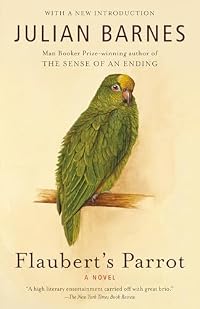
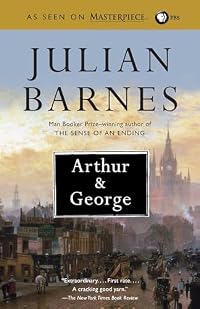
Julian Barnes was born in Leicester, England, on January 19, 1946. He received a degree in modern languages from Magdalen College, Oxford University in 1968. He has held jobs as a lexicographer for the Oxford English Dictionary, a reviewer and literary editor for the New Statesmen and the New Review, and a television critic. He has written show more numerous works of fiction including Arthur and George, Pulse: Stories, The Noise of Time, and England, England. He received the Somerset Maugham Award in 1980 for Metroland, the Geoffrey Faber Memorial Prize in 1985 and a Prix Medicis in 1986 for Flaubert's Parrot, and the Man Booker Prize in 2011 for The Sense of an Ending. He also writes non-fiction works including Letters from London, The Pedant in the Kitchen, and Nothing to Be Frightened Of. He received the Shakespeare Prize by the FVS Foundation in 1993, the Austrian State Prize for European Literature in 2004, and the David Cohen Prize for Literature in 2011. He writes detective novels under the pseudonym Dan Kavanaugh. His works under this name include Duffy, Fiddle City, Putting the Boot In, and Going to the Dogs. (Bowker Author Biography) show less
Some Editions
Awards and Honors
Awards
Series

Belongs to Publisher Series
Gallimard, Folio (2632)
Common Knowledge
- Canonical title*
- Dix ans après
- Original title
- Love, etc.
- Original publication date
- 2000
- People/Characters
- Gillian; Stuart Hughes; Oliver Russell
- First words
- Hello! We've met before. Stuart. Stuart Hughes.
- Quotations*
- 1. Quando è stato chiesto a Ciu-En-lai quali fossero stati a suo giudizio gli effetti della Rivoluzione francese sulla storia del mondo, lui ha risposto: – È troppo presto per dirlo.
2. … se tu continui a vivere con una persona, lentamente perdi il potere di renderla felice, mentre conservi intatta la facoltà di affliggerla. E viceversa, beninteso. - Original language*
- English
- Disambiguation notice
- Talking it over is translated in French by Love etc.
Love etc is translated in French by Dix ans après.
*Some information comes from Common Knowledge in other languages. Click "Edit" for more information.
Classifications
Statistics
- Members
- 1,052
- Popularity
- 24,344
- Reviews
- 20
- Rating
- (3.50)
- Languages
- 14 — Catalan, Czech, Dutch, English, French, German, Hungarian, Italian, Portuguese, Serbian, Croatian, Slovenian, Spanish, Swedish
- Media
- Paper, Audiobook, Ebook
- ISBNs
- 52
- UPCs
- 1
- ASINs
- 9