On This Page
Description
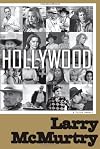
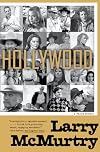
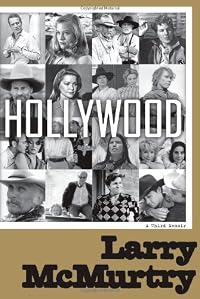
In the third installment in a trilogy of memoirs, the screenwriter shares anecdotes about his time in Hollywood, from holding hands with Cybill Shepherd to watching Jennifer Garner's audition tape.Tags
Recommendations








Member Reviews
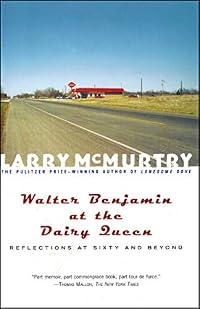
Larry McMurtry has written more memoirs than most people have written letters home. I have just finished reading "Hollywood" (2010), the third of his literary memoirs, but he has written at least two other books, "Paradise" and "Walter Benjamin at the Dairy Queen," that might be termed memoirs, as well. As sketchy as these books are, the 77-year-old writer may still have a few more memoirs left to write.
In "Hollywood," his recollections of his many years as a scriptwriter, McMurtry makes the surprising, at least to me, comment that he works "harder at screenwriting than I do at fiction -- fiction comes to me easily, and scripts don't. I have to work at them; they're a craft I've only partly mastered -- the character part." Much of show more McMurtry's fiction, like his memoirs, has an easy-going style, as if it were just poured onto a page. Even so, I would have thought any serious novel would be more difficult to write than any screenplay. True, scripts are often written by committee, with the director getting the final say about what actually goes into the movie, which must be frustrating for any scriptwriter. But this doesn't appear to be what McMurtry is talking about.
Elsewhere in the book he recalls that after a heart attack in the 1990s, "I could write fiction, which doesn't really require a clear mind: it's a semivisceral experience ... No one can write screenplays in this trancelike state." Fiction doesn't require a clear mind? That seems revealing. I would love to hear other novelists comment on this observation.
McMurtry says he's grateful to Hollywood because "it's essentially financed my fiction, my rare book business, and, to a huge degree, my adult life." Besides, he confesses, he just loves Hollywood and numbers actress Diane Keaton among his best friends. He hates movie sets, however, and makes a point to avoid them. Speaking of directors, he writes, "the kindest thing an author can do is stay out of the way and not slow them down."
Another surprising thing in McMurtry's memoir is that he believes "Loop Group" a much better novel than "Lonesome Dove." I've read his Hollywood novel "Loop Group," and I enjoyed it, but it seemed slight to me, again as if it were written on the run, while I consider "Lonesome Dove" a masterpiece of western fiction. Most readers and not a few critics seem to feel the same way. It did win the Pulitzer Prize in 1985, while "Loop Group" went largely ignored. McMurtry could be right, however. I would love to read both of those novels again. show less
In "Hollywood," his recollections of his many years as a scriptwriter, McMurtry makes the surprising, at least to me, comment that he works "harder at screenwriting than I do at fiction -- fiction comes to me easily, and scripts don't. I have to work at them; they're a craft I've only partly mastered -- the character part." Much of show more McMurtry's fiction, like his memoirs, has an easy-going style, as if it were just poured onto a page. Even so, I would have thought any serious novel would be more difficult to write than any screenplay. True, scripts are often written by committee, with the director getting the final say about what actually goes into the movie, which must be frustrating for any scriptwriter. But this doesn't appear to be what McMurtry is talking about.
Elsewhere in the book he recalls that after a heart attack in the 1990s, "I could write fiction, which doesn't really require a clear mind: it's a semivisceral experience ... No one can write screenplays in this trancelike state." Fiction doesn't require a clear mind? That seems revealing. I would love to hear other novelists comment on this observation.
McMurtry says he's grateful to Hollywood because "it's essentially financed my fiction, my rare book business, and, to a huge degree, my adult life." Besides, he confesses, he just loves Hollywood and numbers actress Diane Keaton among his best friends. He hates movie sets, however, and makes a point to avoid them. Speaking of directors, he writes, "the kindest thing an author can do is stay out of the way and not slow them down."
Another surprising thing in McMurtry's memoir is that he believes "Loop Group" a much better novel than "Lonesome Dove." I've read his Hollywood novel "Loop Group," and I enjoyed it, but it seemed slight to me, again as if it were written on the run, while I consider "Lonesome Dove" a masterpiece of western fiction. Most readers and not a few critics seem to feel the same way. It did win the Pulitzer Prize in 1985, while "Loop Group" went largely ignored. McMurtry could be right, however. I would love to read both of those novels again. show less
This is not so much a memoir as it is anecdotes from McMurtry's movie experiences. They do not move smoothly from one story to another but jump around as thoughts do, and often result in something of a tangle. Still interesting reading and at 146 pages with some "chapters" being a page or even less, it can be read in an evening or two.
The third of McMurtry's memoirs talks about his experience as a screenwriter and as the author of filmed books. No Nathanael West, McMurtry's experiences have been mostly good, leading to an Oscar for his screenplay for Brokeback Mountain. Generally he seems to have faced things with a pretty matter-of-fact attitude, knowing that most screenplays don't get filmed, and knowing that the author's role is a limited one. One chapter, about short chapters, made me laugh out loud.
Once again, this book delivered. This is an insider's look into screenwriting by someone who is very successful. It doesn't tell you how to break into the business, but how McMurtry did it. He refers to many actors, directors and other Hollywood somebodies that I recognized, which was pretty fun. He and Diane Keaton are...what? He says he loves her, so does he love her? He is too much of a gentleman to reveal anything. As a collection, the three books in this short series are excellent for not only the information they present, but for insight into this prolific and beloved author's life and mind. I really enjoyed them all.
I had to chuckle very often during the reading. It's an autobiography where he tells his life as a scriptwriter. It's more a kind of byline which brought him some necessary money to do his writing and especially bookselling. He tells with whom he was writing, about producer and the film industry, about sripts which lay around for years until the were used for a film or never had got a green light to be produced and about how fast he was/is writing his own novels.
I had to chuckle very often during the reading. It's an autobiography where he tells his life as a scriptwriter. It's more a kind of byline which brought him some necessary money to do his writing and especially bookselling. He tells with whom he was writing, about producer and show more the film industry, about sripts which lay around for years until the were used for a film or never had got a green light to be produced and about how fast he was/is writing his own novels. show less
I had to chuckle very often during the reading. It's an autobiography where he tells his life as a scriptwriter. It's more a kind of byline which brought him some necessary money to do his writing and especially bookselling. He tells with whom he was writing, about producer and show more the film industry, about sripts which lay around for years until the were used for a film or never had got a green light to be produced and about how fast he was/is writing his own novels. show less
Umm, yeah, it was a quick read. Not a whole lot of interest here; I found myself most intrigued by a brief reminiscence on the bookstores that used to exist in Hollywood/L.A., which maybe just shows where my interests lie. My least favorite of his three mini-memoirs (I would point readers to Books first and A Literary Life next).
It reads like a list of names to drop. I enjoyed it. Especially the part about "Raise the Titanic!".
Members
- Recently Added By
Author Information

97+ Works 43,129 Members
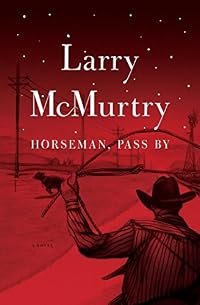
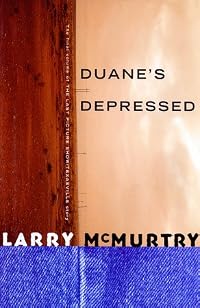
Larry McMurtry, winner of the Pulitzer Prize for Fiction, among other awards, is the author of twenty-four novels, two collections of essays, two memoirs, more than thirty screenplays, & an anthology of modern Western fiction. He lives in Archer City, Texas. (Publisher Provided) Novelist Larry McMurtry was born June 3, 1936 in Wichita Falls, show more Texas. He received a B.A. from North Texas State University in 1958, an M.A. from Rice University in 1960, and attended Stanford University. He married Josephine Ballard in 1959, divorced in 1966, and had one son, folksinger James McMurtry. Until the age of 22, McMurtry worked on his father's cattle ranch. When he was 25, he published his first novel, "Horseman, Pass By" (1961), which was turned into the Academy Award-winning movie Hud in 1962. "The Last Picture Show" (1966) was made into a screenplay with Peter Bogdanovich, and the 1971 movie was nominated for eight Oscars, including one for best screenplay adaptation. "Terms of Endearment" (1975) received little attention until the movie version won five Oscars, including Best Picture, in 1983. McMurtry's novel "Lonesome Dove" (1985) won the Pulitzer Prize in 1986 and the Spur Award and was followed by two popular TV miniseries. The other titles in the Lonesome Dove Series are "Streets of Laredo" (1993), "Dead Man's Walk" (1995), and "Comanche Moon" (1997). The other books in his Last Picture Show Trilogy are "Texasville" (1987) and "Duane's Depressed" (1999). McMurtry suffered a heart attack in 1991 and had quadruple-bypass surgery. Following that, he suffered from severe depression and it was during this time he wrote "Streets of Laredo," a dark sequel to "Lonesome Dove." His companion Diana Ossana, helping to pull him out of his depression, collaborated with him on "Pretty Boy Floyd" (1994) and "Zeke and Ned" (1997). He co-won the Best Screenplay Golden Globe and the Academy Award for Best Adapted Screenplay for Brokeback Mountain in 2006. He made The New York Times Best Seller List with his title's Custer and The Last Kind Words Saloon. McMurtry is considered one of the country's leading antiquarian book dealers. (Bowker Author Biography) show less
Series

Classifications
- Genres
- Biography & Memoir, Fiction and Literature
- DDC/MDS
- 808.2 — Literature & rhetoric Literature, rhetoric & criticism Rhetoric and collections of literary texts from more than two literatures Rhetoric of drama
- LCC
- PN1993.5 .U6 .M3255 — Language and Literature Literature (General) Literature (General) Drama Motion pictures
- BISAC
Statistics
- Members
- 115
- Popularity
- 281,644
- Reviews
- 7
- Rating
- (3.23)
- Languages
- English
- Media
- Paper, Audiobook, Ebook
- ISBNs
- 6
- ASINs
- 3