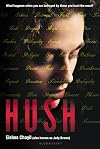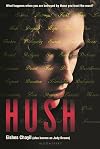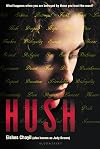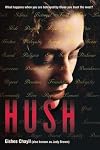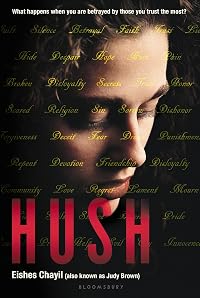
Hush
by Eishes Chayil
On This Page
Description
Inside the closed community of Borough Park, where most Chassidim live, the rules of life are very clear, determined by an ancient script written thousands of years before down to the last detail—and abuse has never been a part of it. But when thirteen-year-old Gittel learns of the abuse her best friend has suffered at the hands of her own family member, the adults in her community try to persuade Gittel, and themselves, that nothing happened. Forced to remain silent, Gittel begins to show more question everything she was raised to believe. A richly detailed and nuanced book, one of both humor and depth, understanding and horror, this story explains a complex world that remains an echo of its past, and illuminates the conflict between yesterday's traditions and today's reality.. show less
Tags
Recommendations








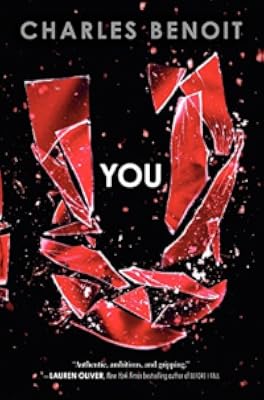
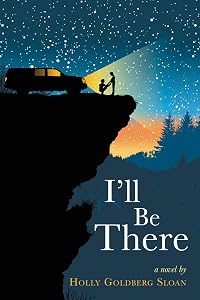
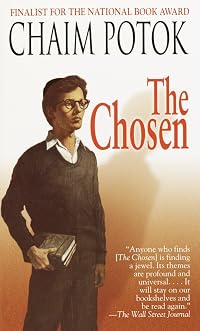



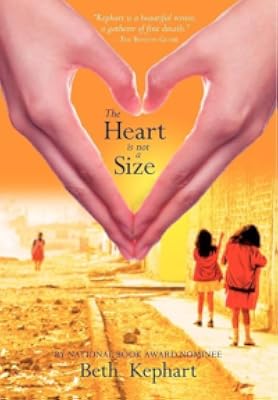




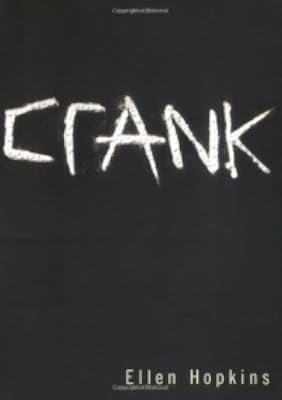
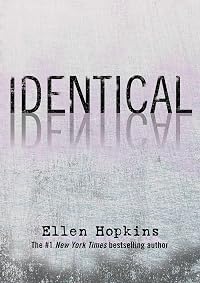

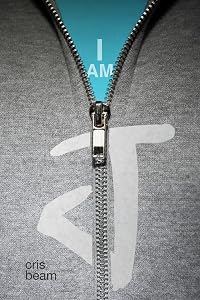
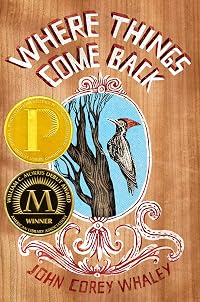



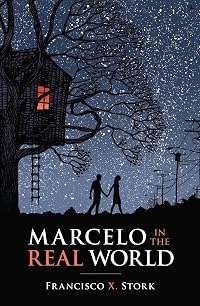
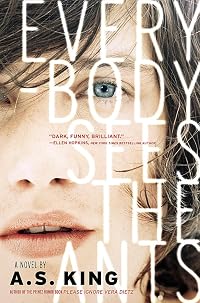
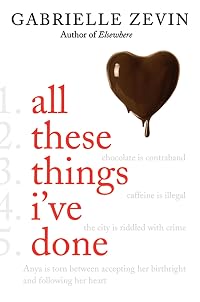
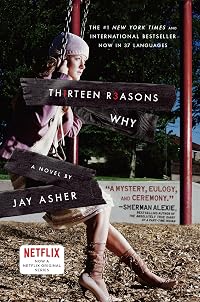
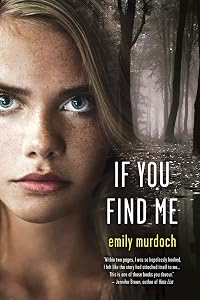
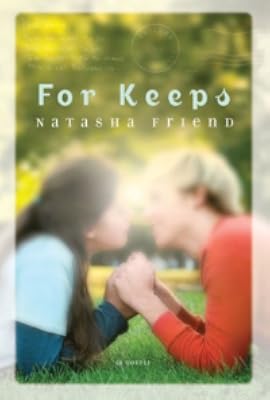
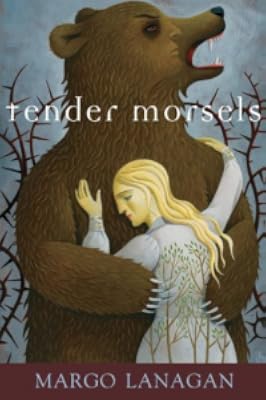
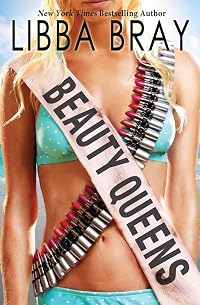

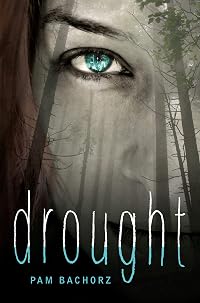

Member Recommendations

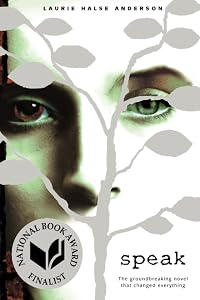
BookSpot Both books deal with girls in insular religious communities that are not all that they appear to be from the outside. Both also deal with things that it's hard to imagine can be going on like that today but they do it well.
Member Reviews
This book is an absolute masterpiece. I have never been as moved, floored and flat-out rocked by a book in my life as I was by this gem.
This book is also the pinnacle of horror, because it takes place in - and is representative of - the very real world. I have read books of horror before that I put down because of lack of realistic resonance. Never Let Me Go, by Kazuo Ishiguro is an example. The plot was so ludicrously immoral, that the very thought that a fiction like this could exist in a writer's head caused me to abandon it in disgust. With Hush, I could do no such thing. I felt responsible to face the horror while slitting my eyes and barely peeking at the words as the nightmare unfolded. I truly reacted viscerally to some of the show more haunting passages, wincing, grimacing and in a few sad parts, actually crying. It reached that deep into my soul.
The writer is insanely talented, and uses three different voices - something I haven't seen before - to tell her story from one protagonist's point of view. One voice is the grown up Gittel, another is the young Gittel, and another is the same young Gittel, but her speech patterns and thoughts follow different tracks. Her thoughts are more mature than her words. A fascinating way to impart a story. Another feature are the overly simple metaphors, which make events so much easier to grasp, instead of being forced to reread an overreaching example to fully comprehend.
The writer is either the bravest or ballsiest person on earth. Heck, perhaps both. More power to her. All praises to her. She's written a monumental book, an important book, a historic book. Bravo. show less
This book is also the pinnacle of horror, because it takes place in - and is representative of - the very real world. I have read books of horror before that I put down because of lack of realistic resonance. Never Let Me Go, by Kazuo Ishiguro is an example. The plot was so ludicrously immoral, that the very thought that a fiction like this could exist in a writer's head caused me to abandon it in disgust. With Hush, I could do no such thing. I felt responsible to face the horror while slitting my eyes and barely peeking at the words as the nightmare unfolded. I truly reacted viscerally to some of the show more haunting passages, wincing, grimacing and in a few sad parts, actually crying. It reached that deep into my soul.
The writer is insanely talented, and uses three different voices - something I haven't seen before - to tell her story from one protagonist's point of view. One voice is the grown up Gittel, another is the young Gittel, and another is the same young Gittel, but her speech patterns and thoughts follow different tracks. Her thoughts are more mature than her words. A fascinating way to impart a story. Another feature are the overly simple metaphors, which make events so much easier to grasp, instead of being forced to reread an overreaching example to fully comprehend.
The writer is either the bravest or ballsiest person on earth. Heck, perhaps both. More power to her. All praises to her. She's written a monumental book, an important book, a historic book. Bravo. show less
Judy Brown writing under the pseudonym of Eishes Chayil (which means a woman of valor) writes about her very structured, very tradition bound Chassidic community in New York and they way they covered up and ignored sexual abuse. They were good people, the chosen people. Such things couldn't happen among them, only the dirty goy would do such a thing. This is a perfect examination of the toll religious oppression takes on people who try to live in reality and is a commentary on the Dugger (Quiverfull) fiasco, the Jehova Witness scandal that recently came to light, the Catholic church cover ups, the FLDS shannagins, even the fact that Mormons take Prozac in higher numbers than other Americans. I think everywhere there's a strong show more patriarchal religion sexual abuse, the abuse of those considered to be weaker and less worthy, must be covered up, no matter which religion it is. Well worth reading to understand the desperation of victims who have nowhere to turn, no one to help them. It is also worth reading to find long term results on those who know about the abuse but must keep it silent. Brown has since left the community. show less
Hush is the story of a girl, Gittel, and the aftermath of her best friend’s death at 9 years of age. The story takes place in the Ultra-Orthodox Jewish Community…with all its emphasis on traditions dating back hundreds of years. How does one go about dealing with an all too real monster of abuse and still live within the rules and guidelines of a religion that never dreamt of the horrors around today?
Hush was a tough read for a number of reasons. I grew up around a lot of Moderate and Reformed Jews, attended a lot of Passover Seders, and learned my fair share of Yiddish. I knew the Hassidic Community was Ultra-Orthodox but never imagined how different it was then the friends I had growing up.
This book was a lesson in Hassidic life. show more It was a lesson I was at odds with many times throughout the book. I’d like to think that I am very open-minded, especially when it comes to someone’s religious beliefs…I couldn’t help but feel so sad for a group of people who are taught that love isn’t important, and that everything is done out of obligation, such as marriage. Marriage isn’t about love but about procreation.
It was also very hard to discover that sexual molestation runs rampant in the Hassidic community and that the author, using a pseudonym, was, in effect, relating her personal story. The pervasive need to keep quiet about these things for fear of being ostracized…that would be the victim and his/her family that fear being ostracized. The predator, if in a position of power is usually moved to a different position of power. Yes, just like priests in the Catholic Church were in the past.
Ultimately, this was a very powerful read and I applaud the author for getting attention on the matter. I sincerely pray that all communities, religious or otherwise, will find the strength to punish these monsters rather than do the easy thing and turn a blind eye, for the children’s sake. show less
Hush was a tough read for a number of reasons. I grew up around a lot of Moderate and Reformed Jews, attended a lot of Passover Seders, and learned my fair share of Yiddish. I knew the Hassidic Community was Ultra-Orthodox but never imagined how different it was then the friends I had growing up.
This book was a lesson in Hassidic life. show more It was a lesson I was at odds with many times throughout the book. I’d like to think that I am very open-minded, especially when it comes to someone’s religious beliefs…I couldn’t help but feel so sad for a group of people who are taught that love isn’t important, and that everything is done out of obligation, such as marriage. Marriage isn’t about love but about procreation.
It was also very hard to discover that sexual molestation runs rampant in the Hassidic community and that the author, using a pseudonym, was, in effect, relating her personal story. The pervasive need to keep quiet about these things for fear of being ostracized…that would be the victim and his/her family that fear being ostracized. The predator, if in a position of power is usually moved to a different position of power. Yes, just like priests in the Catholic Church were in the past.
Ultimately, this was a very powerful read and I applaud the author for getting attention on the matter. I sincerely pray that all communities, religious or otherwise, will find the strength to punish these monsters rather than do the easy thing and turn a blind eye, for the children’s sake. show less
This book is so powerful and beautifully written by an author with a pseudonym. Why? The reason is that the author intends to hold an entire community responsible for keeping secrets about sexual abuse. But the book is not only a good read for understanding the terrible impact of sexual abuse on young people, it gives the reader a good understanding of the orthodox community of chassidim in Borough Park, Brooklyn, New York.
I highly suggest this book to anyone who wants to learn more about this Jewish community and the difficulties as well as the joys of living in this isolated environment. The story is about a young girl who witnesses the abuse of her best friend and tells only her best friends mother who does nothing since it is her show more eldest son who is abusing his sister. Passionately told, with such skill as to provide the reader with something to think about for a long time. show less
I highly suggest this book to anyone who wants to learn more about this Jewish community and the difficulties as well as the joys of living in this isolated environment. The story is about a young girl who witnesses the abuse of her best friend and tells only her best friends mother who does nothing since it is her show more eldest son who is abusing his sister. Passionately told, with such skill as to provide the reader with something to think about for a long time. show less
Gittel’s best friend Devory hanged herself when they were ten, and now, at seventeen and on the cusp of being married to a proper Jewish boy, Gittel finds horrible guilty memories surfacing. For Gittel believes that the death was her fault: she should’ve told someone about Devory’s increasing refusal to sleep at home, the way her older brother came into her bed on the night Gittel slept over.
But in their intensely Jewish Brooklyn community, to speak of such things is to bring shame upon your family and lower your marriage prospects. But when does the price of keeping one’s reputation become too high to pay?
HUSH, Eishes Chayil’s pseudonymously written debut novel, is an astonishing look into the highs and lows of an incredibly show more insular community. It will bring you to your knees, laughing and crying, and is the type of book that you’ll want to pass around to everyone, regardless of their age.
Eishes Chayil makes you feel as if you are truly part of Gittel’s Jewish community. You have grown up surrounded by these people, raised on the prejudices and traditions and beliefs of the community. Some of them, such as being suspicious of the goyim and rejecting anything that has to do with them, may seem oddly backwards to many readers; however, HUSH is not merely a direct condemnation of the unchanging traditions that killed Devory, but a celebration also. This is a community where arranged marriages before the age of 20 are still the norm, where men and women are separated and have clearly defined domestic roles…and they like that. Instead of feeling like an outsider, we quickly begin to feel like we are part of Gittel’s world: Eishes Chayil builds up a thoroughly complete Jewish world without resorting to “as you see, reader” explanations.
Devory’s sexual abuse and subsequent suicide are at the core of this book, but the book deals less with the actual event itself than with its emotional aftermath on a bystander who is silenced by her community, unable to carry out justice for her friend. The only way to ensure a powerful emotional reaction to Devory’s and other Jewish children’s sufferings was to provide a sharp contrast to it, which is why most of the book is spent building up the community and culture. Devory’s suffering is mentioned almost like an aside, the way a naïve 10-year-old narrator would reasonably note it, and it is in fact this contrast, this appalling lack of attention paid it by the rest of the community, mirrored in the actual narration, is the best way Eishes Chayil could’ve slammed it into our faces.
And yet within this serious story is room for normal 10-year-old fun and games. The chapters alternate between 10-year-old Gittel and 17/18-year-old Gittel, the older narrator struggling with whether or not she should tell others what happened to Devory, the younger flitting in and out of typical preadolescent adventures. Certainly young Gittel’s spiritedness adds a layer of heartbreaking fun to this commitment-heavy novel, but older characters give us their fair share of laughs too. I nearly burst out laughing in the middle of a crowded hallway at the scenes involving Gittel’s impending marriage. Suffice it to say that, despite the serious topic, HUSH also gives us plenty of things to smile about, scenes that actually make the core issue of sexual abuse all the more powerful.
The last time I remember reading something this intelligently, creatively, and heartwrenchingly written was for a high school summer reading list. The contrast between the rich Jewish community and the horror of the sexual abuse problem accentuates both in the most effective way possible. Full of laughter and tears, HUSH has all the makings of a modern classic, and is the type of book that truly deserves to be talked about, awarded, and recognized for years to come. show less
But in their intensely Jewish Brooklyn community, to speak of such things is to bring shame upon your family and lower your marriage prospects. But when does the price of keeping one’s reputation become too high to pay?
HUSH, Eishes Chayil’s pseudonymously written debut novel, is an astonishing look into the highs and lows of an incredibly show more insular community. It will bring you to your knees, laughing and crying, and is the type of book that you’ll want to pass around to everyone, regardless of their age.
Eishes Chayil makes you feel as if you are truly part of Gittel’s Jewish community. You have grown up surrounded by these people, raised on the prejudices and traditions and beliefs of the community. Some of them, such as being suspicious of the goyim and rejecting anything that has to do with them, may seem oddly backwards to many readers; however, HUSH is not merely a direct condemnation of the unchanging traditions that killed Devory, but a celebration also. This is a community where arranged marriages before the age of 20 are still the norm, where men and women are separated and have clearly defined domestic roles…and they like that. Instead of feeling like an outsider, we quickly begin to feel like we are part of Gittel’s world: Eishes Chayil builds up a thoroughly complete Jewish world without resorting to “as you see, reader” explanations.
Devory’s sexual abuse and subsequent suicide are at the core of this book, but the book deals less with the actual event itself than with its emotional aftermath on a bystander who is silenced by her community, unable to carry out justice for her friend. The only way to ensure a powerful emotional reaction to Devory’s and other Jewish children’s sufferings was to provide a sharp contrast to it, which is why most of the book is spent building up the community and culture. Devory’s suffering is mentioned almost like an aside, the way a naïve 10-year-old narrator would reasonably note it, and it is in fact this contrast, this appalling lack of attention paid it by the rest of the community, mirrored in the actual narration, is the best way Eishes Chayil could’ve slammed it into our faces.
And yet within this serious story is room for normal 10-year-old fun and games. The chapters alternate between 10-year-old Gittel and 17/18-year-old Gittel, the older narrator struggling with whether or not she should tell others what happened to Devory, the younger flitting in and out of typical preadolescent adventures. Certainly young Gittel’s spiritedness adds a layer of heartbreaking fun to this commitment-heavy novel, but older characters give us their fair share of laughs too. I nearly burst out laughing in the middle of a crowded hallway at the scenes involving Gittel’s impending marriage. Suffice it to say that, despite the serious topic, HUSH also gives us plenty of things to smile about, scenes that actually make the core issue of sexual abuse all the more powerful.
The last time I remember reading something this intelligently, creatively, and heartwrenchingly written was for a high school summer reading list. The contrast between the rich Jewish community and the horror of the sexual abuse problem accentuates both in the most effective way possible. Full of laughter and tears, HUSH has all the makings of a modern classic, and is the type of book that truly deserves to be talked about, awarded, and recognized for years to come. show less
I was going to go to bed and write a review in the morning but I can't sleep because this book has affected me so much. I'm really quite disturbed and upset by this so if you're looking for something light and easy: stay away from [b:Hush|7890134|Hush|Eishes Chayil|http://photo.goodreads.com/books/1316727340s/7890134.jpg|11115634].
The first piece of advice I would give someone who's going to read this book is to stick with it. I normally find that my initial instincts are correct when reading a novel, if I struggle to get into it in the first few chapters I often never do. However, though I was immediately turned off by all the confusing Jewish terms I'd never heard of and found it difficult to connect with the story and narrator at show more first because of this, I quickly got used to it and [b:Hush|7890134|Hush|Eishes Chayil|http://photo.goodreads.com/books/1316727340s/7890134.jpg|11115634] turned into a novel I won't be forgetting any time soon.
This book is about a strict Jewish community where keeping up appearances is what matters most and what happens behind closed doors stays there unless you want to bring shame upon your family. What I didn't know at first is that [a:Eishes Chayil|3430680|Eishes Chayil|http://www.goodreads.com/images/nophoto/nophoto-F-50x66.jpg] grew up in such a community and has experienced the lifestyle first-hand, the story is actually loosely based on what she witnessed herself as a child (read the afterword). I recently keep finding these novels where the author really knows what they are talking about and it does make all the difference to the story, everything is more detailed, more easily imaginable.
The story reminded me a lot of [b:Speak|439288|Speak|Laurie Halse Anderson|http://photo.goodreads.com/books/1310121762s/439288.jpg|118521], but it was more frustrating, more upsetting even, because the protagonist and the victim wanted and tried to speak out. They told people they should have been able to trust - parents, teachers, etc. - and were told to be quiet, were accused of lying because the truth would mean scandal for the family. I was horrified by how many adults failed a nine-year-old girl, how if they'd just put the child's pain before their desire for a squeaky-clean reputation she would still have been alive. Parts of this book felt like the narrator and myself were screaming at the other characters who just put their fingers in their ears and refused to listen.
This is a sad, sad book about guilt and misunderstandings, and those things you tell yourself you don't understand but fear you understand all too well. There's a letter near the end of the book written by the protagonist to her friend who died and it's one of the saddest things I've ever read. I could cry again just thinking about it. The reason this got four stars instead of five is because there were a few parts in the middle that could have been cut out or shortened (like the beginning of Gittel and Yankel's married life) and because I wasn't keen on the beginning. But these are small matters and I highly recommend this book to anyone who isn't afraid of an emotionally challenging read. show less
"Hush" is a fictionalized narrative based on the horrific reality of child rape among Chassidim, and the cultural insistence that "such things don't happen here" and the ostracization of those who break the black-hat line of silence. Those who read the Failed Messiah blog will be sadly aware that such things happen. So for the author to write such a book, even under a pseudonym, is itself an amazing act of courage.
It is all the more remarkable, then, that this book succeeds as a work of narrative. The characters are compelling even as we react in horror to their version of reality. The depiction of a world almost but not quite like our own is vivid. The voice of a nine-year-old girl who alternates between certainty that she knows how show more everything in the world works and doubting everything she's been taught is believable. The pacing, while occasionally uneven, is pretty good.
And most importantly, the end of the book avoids the two obvious traps: it is neither overly maudlin nor neatly pat. (It does fall briefly into the third obvious trap, which is that it gets briefly meta; I'm not sure that could have been avoided.) And while parts of the denouement surprised me, they were within character. And I cried.
This is a must-read for many of the people who follow my blog. It is a powerful picture of certain segments of Chassidus and their worldview (completely aside from the subject of abuse). It is a damning indictment of the silence that has enabled rapists and abusers to get away with it. And it is a well-written book. (Obviously, given the subject matter, this may be "triggery" for some readers; I'm not qualified to provide any additional guidance on that point.) show less
It is all the more remarkable, then, that this book succeeds as a work of narrative. The characters are compelling even as we react in horror to their version of reality. The depiction of a world almost but not quite like our own is vivid. The voice of a nine-year-old girl who alternates between certainty that she knows how show more everything in the world works and doubting everything she's been taught is believable. The pacing, while occasionally uneven, is pretty good.
And most importantly, the end of the book avoids the two obvious traps: it is neither overly maudlin nor neatly pat. (It does fall briefly into the third obvious trap, which is that it gets briefly meta; I'm not sure that could have been avoided.) And while parts of the denouement surprised me, they were within character. And I cried.
This is a must-read for many of the people who follow my blog. It is a powerful picture of certain segments of Chassidus and their worldview (completely aside from the subject of abuse). It is a damning indictment of the silence that has enabled rapists and abusers to get away with it. And it is a well-written book. (Obviously, given the subject matter, this may be "triggery" for some readers; I'm not qualified to provide any additional guidance on that point.) show less
Members
- Recently Added By
Author Information
2 Works 363 Members
Awards and Honors
Awards
Distinctions
Common Knowledge
- Original publication date
- 2010
- People/Characters
- Devory Goldblatt; Gittel; Kathy Prouks; Shmuli Goldblatt; Miss Goldberg
- Dedication
- For those who sai I shouldn't, For those who said I couldn't, For those who said I wouldn't - Dare.
And for the children who suffer. - First words
- Devory? Devory?
Devroy, can you hear me? - Last words
- (Click to show. Warning: May contain spoilers.)Your best friend forever, Gittel.
Classifications
- Genres
- Teen, Fiction and Literature, Young Adult
- DDC/MDS
- 818.5 — Literature & rhetoric American literature in English American miscellaneous writings in English 20th Century
- LCC
- PZ7 .C39725 .H — Language and Literature Fiction and juvenile belles lettres Fiction and juvenile belles lettres Juvenile belles lettres
- BISAC
Statistics
- Members
- 301
- Popularity
- 106,129
- Reviews
- 27
- Rating
- (4.21)
- Languages
- English
- Media
- Paper, Ebook
- ISBNs
- 5
- ASINs
- 3