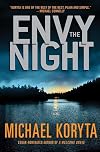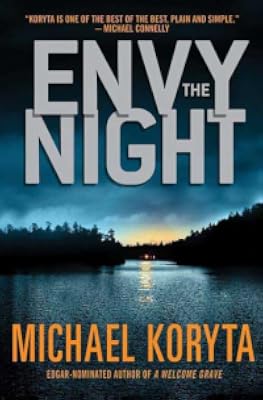
Envy the Night
by Michael Koryta
On This Page
Description
In the seven years since he learned that his US marshal father lead a double life as a contract killer-and committed suicide to avoid prosecution-Frank Temple III has mostly drifted through life. But when he learns that Devin Matteson, the man who lured his father into the killing game only to later give him up to the FBI, is returning to the isolated Wisconsin lake that was once sacred ground for their families, it's a homecoming Frank can't allow.Frank finds Matteson's old cabin occupied show more by a strange, beautiful woman and a nervous man with a gun. But when a pair of assassins arrives on their heels, he knows Matteson can't be far behind. The wise move would be to get out of town-but that doesn't feel right. After all, contract killer or not, Frank's father was at heart a teacher. And his son was an excellent student.
. show less
Tags
Recommendations




Member Reviews
Koryta has become one of my favorite authors, and this thriller may not end up being my favorite, but it's still a fantastic, page-turning novel that kept me desperate to read more. His storytelling and the wonderfully believable characters he creates stand out above many of the suspense novels I pick up--they just have such depth, each story feels more real than not, as if we're seeing into a world rather than being told a short tale of one.
Absolutely recommended.
Absolutely recommended.
Frank Temple III grew up never having to wonder if his dad loved him. His father, Frank Temple II, was supportive and present and loving. The only problem: he was also a hit man, a murderer for hire. When the FBI finally cornered Frank II, he committed suicide, leaving behind the younger Frank, conflicted and lost. Frank III was only seventeen and society had deemed his father a monster. Frank knew his father to be different, but then how do you reconcile the father with the hit man? Especially when you're seventeen?
Frank knew his father had done bad things, but he still vowed that, given the chance, he would kill the man responsible for turning in his father to the authorities, Devin Matteson. Seven years later when he receives a call show more from Ezra Ballard announcing Devin's return to Wisconsin, Frank packs up his few belongings and heads for the lake house that contains all his cherished family memories.
Koryta has done it again. Each time I pick up a new work penned by this master, I'm amazed that it's possible to outdo the last one. He somehow manages to accomplish that fete.
Koryta has veered from his usual style in Envy the Night. Not only has he created a new set of characters, but he's also changed his point of view, writing in third person limited this time instead of first. And he didn't miss a beat. I enjoyed the way the limited view changed, allowing for some insightful thoughts to be revealed from various characters. It also helped to heighten the theme of the novel, life is mostly an area of gray - very rarely is it ever as easy as black and white.
That theme comes through in EVERY character. Koryta has a gift with characterization and that gift seems to heighten with every novel. One factor I always look for in "great" characters is depth. Characters who know everything and somehow have the skills to fit every situation - they have no depth; they are simply flat characters; the superhero character has been done to death. Give me a REAL character. One who has flaws like the rest of the human race; one who has doubts and concerns and conflictions. Those are the characters you see in Koryta's novels. Frank Temple II is a prime example of this. I couldn't help but think of the character Michael Sullivan in the movie, The Road to Perdition. Many people said that the reason you liked Sullivan in the movie was because America just can't dislike Tom Hanks. But I don't think that's true. Instead I think the same dilemma came into play that does with Frank Temple II: the character had admirable qualities; he wasn't completely evil. Both characters truly loved their families, and that's admirable.
A lot of times it is easier on a reader for the character to be flat. Then you aren't faced, like Frank, with the confliction of feelings that are elicited. It's easy to completely hate or completely love a character. But Koryta doesn't let you off that easy. He evokes an array of emotion in his reader from every angle. Another prime example of this is Jerry, the crotchety old guy working for Nora Stafford. As his character is being built up, he fits every stereotype of the chauvinist pig.
Jerry constantly gives Nora a hard time, and he resents working for a woman. But, when he discovers that some out-of-towners roughed Nora up, he does an about face and a devoted friend shows up in his character. Koryta shows the reader, through Jerry, that it's easy to pass judgment superficially, but when you see inside the character, it isn't so easy to completely dislike - or love - him/her. Koryta sums up his theme with a great phrase, "consideration before conclusion."
Koryta did a bang-up job with the characters in this novel, and plot just drove the book home. This book was full of twists and turns. By this, Koryta's fourth book, I should know better than to think I can figure out the ending mid-way through. Koryta had me chasing my tail on this one; that's for sure. While I couldn't believe he'd be blatant about what the outcome was, it seemed like there was no other possibility - WRONG! And just when you think you've got the plot down, he throws another twist in the mix. I did have some sneaking suspicions about the outcome, but once the action hit full tilt, I forgot those suspicions had ever even existed. I was too caught up in the suspense to be making predictions.
Having a great plot to immerse yourself in is a treat in and of itself. But Koryta always adds that something extra special in his mastery of the English language. There are devices and phrases and descriptions threaded throughout the entire novel that just make me stop and reread. I just want to hear them over in my head because they are so effective.
Early in the novel Koryta uses alliteration. O.k., it isn't a new concept. Most anyone can come up with some alliteration, but the statement was "No punishment, no penance, no pain." Frank is thinking about Devin Matteson and how he got off scot-free by handing the feds Frank II on a platter. Can't you just hear the aggression, the spittle in the "p" sounds? The gritted teeth? The utter anger? Koryta didn't need an exclamation point - or an emoticon - on that phrase. The magic is in the words, and Koryta knows how to pick them.
And of course, a work by Koryta wouldn't be complete without some humor thrown in to lighten the mood. But what I want to know is exactly WHEN he was at my house to get the description of the furniture in Nora's dad's house? "Say this much for Dad's furniture, she thought, it looks like something you'd want to hide even at a garage sale, but it's comfortable."
This is definitely a book to be reread. I'm sure I'll pick up even more on the next pass through, and it isn't likely to lose any of the magic.
Magnificent! show less
Frank knew his father had done bad things, but he still vowed that, given the chance, he would kill the man responsible for turning in his father to the authorities, Devin Matteson. Seven years later when he receives a call show more from Ezra Ballard announcing Devin's return to Wisconsin, Frank packs up his few belongings and heads for the lake house that contains all his cherished family memories.
Koryta has done it again. Each time I pick up a new work penned by this master, I'm amazed that it's possible to outdo the last one. He somehow manages to accomplish that fete.
Koryta has veered from his usual style in Envy the Night. Not only has he created a new set of characters, but he's also changed his point of view, writing in third person limited this time instead of first. And he didn't miss a beat. I enjoyed the way the limited view changed, allowing for some insightful thoughts to be revealed from various characters. It also helped to heighten the theme of the novel, life is mostly an area of gray - very rarely is it ever as easy as black and white.
That theme comes through in EVERY character. Koryta has a gift with characterization and that gift seems to heighten with every novel. One factor I always look for in "great" characters is depth. Characters who know everything and somehow have the skills to fit every situation - they have no depth; they are simply flat characters; the superhero character has been done to death. Give me a REAL character. One who has flaws like the rest of the human race; one who has doubts and concerns and conflictions. Those are the characters you see in Koryta's novels. Frank Temple II is a prime example of this. I couldn't help but think of the character Michael Sullivan in the movie, The Road to Perdition. Many people said that the reason you liked Sullivan in the movie was because America just can't dislike Tom Hanks. But I don't think that's true. Instead I think the same dilemma came into play that does with Frank Temple II: the character had admirable qualities; he wasn't completely evil. Both characters truly loved their families, and that's admirable.
A lot of times it is easier on a reader for the character to be flat. Then you aren't faced, like Frank, with the confliction of feelings that are elicited. It's easy to completely hate or completely love a character. But Koryta doesn't let you off that easy. He evokes an array of emotion in his reader from every angle. Another prime example of this is Jerry, the crotchety old guy working for Nora Stafford. As his character is being built up, he fits every stereotype of the chauvinist pig.
Jerry constantly gives Nora a hard time, and he resents working for a woman. But, when he discovers that some out-of-towners roughed Nora up, he does an about face and a devoted friend shows up in his character. Koryta shows the reader, through Jerry, that it's easy to pass judgment superficially, but when you see inside the character, it isn't so easy to completely dislike - or love - him/her. Koryta sums up his theme with a great phrase, "consideration before conclusion."
Koryta did a bang-up job with the characters in this novel, and plot just drove the book home. This book was full of twists and turns. By this, Koryta's fourth book, I should know better than to think I can figure out the ending mid-way through. Koryta had me chasing my tail on this one; that's for sure. While I couldn't believe he'd be blatant about what the outcome was, it seemed like there was no other possibility - WRONG! And just when you think you've got the plot down, he throws another twist in the mix. I did have some sneaking suspicions about the outcome, but once the action hit full tilt, I forgot those suspicions had ever even existed. I was too caught up in the suspense to be making predictions.
Having a great plot to immerse yourself in is a treat in and of itself. But Koryta always adds that something extra special in his mastery of the English language. There are devices and phrases and descriptions threaded throughout the entire novel that just make me stop and reread. I just want to hear them over in my head because they are so effective.
Early in the novel Koryta uses alliteration. O.k., it isn't a new concept. Most anyone can come up with some alliteration, but the statement was "No punishment, no penance, no pain." Frank is thinking about Devin Matteson and how he got off scot-free by handing the feds Frank II on a platter. Can't you just hear the aggression, the spittle in the "p" sounds? The gritted teeth? The utter anger? Koryta didn't need an exclamation point - or an emoticon - on that phrase. The magic is in the words, and Koryta knows how to pick them.
And of course, a work by Koryta wouldn't be complete without some humor thrown in to lighten the mood. But what I want to know is exactly WHEN he was at my house to get the description of the furniture in Nora's dad's house? "Say this much for Dad's furniture, she thought, it looks like something you'd want to hide even at a garage sale, but it's comfortable."
This is definitely a book to be reread. I'm sure I'll pick up even more on the next pass through, and it isn't likely to lose any of the magic.
Magnificent! show less
I have read almost all of Michael Koyrta's books but I understand that this was his first standalone. One thing that I really like about this author is that he keeps the descriptions short but understandable. I hate reading about the color of the drapes, the rugs, and the walls in every room of the house that some writers seem to think is essential to the story. I really liked the main character and how he handled having to come to grips with the realization that what he had always thought about his father was far from the truth. As The story unfolds with this situation and comes to a suspenseful conclusion about Frank, his family, and his father's legacy of death. A really good story by a really excellent author.
Let me start by saying that I like Michael Koryta. I read The Ridge in 2014 and I remember finding it gripping at the time, so I went into this one expecting a fast-paced, intriguing thriller. I wanted something that would keep me on the edge of my seat, and while the book started with a promising setup, it faltered by the end.
As I neared the final hundred pages, I found myself just pushing through to the ending, hoping for a twist that never came. The ending meandered along, and by the time I hit the final chapter, I was more than ready to be done with it.
The pacing was the real issue here. The slow parts didn't build suspense - the just dragged the story down. Excessive backstories and details that didn't amount to much overshadowed show more any excitement and urgency, leading to a story that ultimately just spun its wheels a whole lot.
Oh, and can we talk about the meaningless title? What on Earth does "Envy the Night" even mean in the context of this story?
Ultimately, I kept reading because Michael Koryta's writing is competent and engaging. And I trusted him to deliver a good story. The ending tied everything up nicely, but man, it took its sweet time getting there. show less
As I neared the final hundred pages, I found myself just pushing through to the ending, hoping for a twist that never came. The ending meandered along, and by the time I hit the final chapter, I was more than ready to be done with it.
The pacing was the real issue here. The slow parts didn't build suspense - the just dragged the story down. Excessive backstories and details that didn't amount to much overshadowed show more any excitement and urgency, leading to a story that ultimately just spun its wheels a whole lot.
Oh, and can we talk about the meaningless title? What on Earth does "Envy the Night" even mean in the context of this story?
Ultimately, I kept reading because Michael Koryta's writing is competent and engaging. And I trusted him to deliver a good story. The ending tied everything up nicely, but man, it took its sweet time getting there. show less
This is a nearly perfect mystery novel. Well developed, sympathetic and interesting characters, a fascinating backstory, a budding romance, a thrilling plot. It doesn't get much better than this. Some parts dragged just a bit for me, so if I could I'd give it 4.5 stars, but I thought I'd be generous. All Koryta's books have been really good, but I think this may be his best.
Gosh this man can write well and not only that, each book he writes is unique. There is nothing derivative here. In 'Envy The Night' he describes a young man whose father has died by his own hand. The younger man is on a mission to avenge his father and to bring closure to himself.
Many deaths occur on the way until he finally finds peace.
A brilliant read with a cast of characters you can really empathise with,or in the case of the many crooks and killers,hate.
Many deaths occur on the way until he finally finds peace.
A brilliant read with a cast of characters you can really empathise with,or in the case of the many crooks and killers,hate.
1/2/23 is apparently my second run through this book. I liked it even less this time, some years later. In fact, I skipped over the "exciting" ending part because I just wanted it over. The plot is disjointed and the characters are funky. Koryta can do better.
Members
- Recently Added By
Author Information

30+ Works 6,808 Members
While still in high school, Michael Koryta worked as a newspaper reporter and for a private investigator. His first book, Tonight I Said Goodbye, was published when he was twenty-one years old and an undergraduate at Indiana University. It won the Great Lakes Book Award for best mystery. Envy the Night won the 2008 Los Angeles Times Book Prize for show more best mystery/thriller. He is the author of the Lincoln Perry series and teaches at the Indiana University School of Journalism. Koryta's book Those Who Wish Me Dead made the Nwe York Time bestseller list in 2014. (Bowker Author Biography) show less
Some Editions
Awards and Honors
Awards
Series
Belongs to Publisher Series
Work Relationships
Common Knowledge
- Canonical title
- Envy the Night
- Original publication date
- 2008-08-05
- People/Characters
- Frank Temple III
- Epigraph
- I envy the night for its absence of light.
Dax Riggs "Ancient Man" - Dedication
- For Dennis Lehane, who remembered the elevator
- First words
- Frank Temple III walked out of the county jail at ten in the morning with a headache, a citation for public intox, and a notion that it was time to leave town.
- Last words
- (Click to show. Warning: May contain spoilers.)It was a start.
- Blurbers
- Connelly, Michael; Pelecanos, George; Ridley Pearson
Classifications
Statistics
- Members
- 293
- Popularity
- 110,268
- Reviews
- 12
- Rating
- (3.77)
- Languages
- Dutch, English, French, German
- Media
- Paper, Audiobook, Ebook
- ISBNs
- 21
- ASINs
- 7