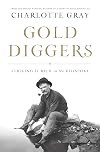
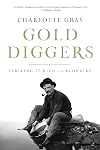
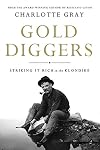
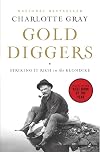
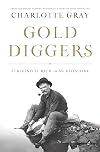
Gold Diggers: Striking it Rich in the Klondike
by Charlotte Gray
On This Page
Description
Chronicles the Klondike gold rush by following the adventures of six individuals whose lives were impacted by "Klondike fever," including a miner, a business woman, a British journalist, a member of the Canadian Mounties, and writer Jack London.Tags
Recommendations
















Member Reviews
Via a review in my local newspaper, the non-fiction book, Gold Diggers: Striking it Rich in the Klondike caught my attention. I had never read a book about the Klondike Gold Rush, and through this book I learned so much.
Despite being a non-fiction book- index, bibliography, sources and all –this book reads like an enthralling novel. Author Charlotte Gray draws on personal letters, diaries, books and poems written by both the well known and the lesser known people that populated the Klondike at that time in history.
So many intriguing characters populate the book, to say nothing of the varied and fascinating events that unfold in the Klondike. Among the first to make the difficult journey to the Klondike is Bill Haskell, a rough and show more tumble character seeking fortune and adventure. Father William Judge, a Jesuit priest goes about his business of attempting to save souls, as well as building a hospital for this rough and ready town and helping others in a practical manner as he is able. Initially he is as close to the areas doctor as they have available. Father Judge is anything but judgmental, and is immune to gold fever or riches. He is well loved and celebrated by his fellow Klondikers. Belinda Mulrooney is an astute, prim young businesswoman far ahead of her time, building a small empire of hotels and businesses in the Yukon town. Author Charlotte Gray tells the story of the celebrated Klondike author Jack London with the ability that only the passage of time, access to his diaries and research can bring. Likewise I got to know the stern Mountie, Sam Steele in an intimate look into letters written to his wife, as well as through his diaries and the actions of the Canadian Government at the time.
The stories of each of the main characters are both separate and interwoven along together with many other lesser characters that make up the Klondike. Charlotte Gray has thoroughly researched the characters and events both before and after the Gold Rush to create a wonderful, detailed overview. She touches on so many historical details and physical details of the area that I feel like I have experienced the Klondike Gold Rush personally.
This non –fiction book reads like an exciting novel, and I truly hope others will be encouraged to read this lively, colourful and informative piece of Canadian history. show less
Despite being a non-fiction book- index, bibliography, sources and all –this book reads like an enthralling novel. Author Charlotte Gray draws on personal letters, diaries, books and poems written by both the well known and the lesser known people that populated the Klondike at that time in history.
So many intriguing characters populate the book, to say nothing of the varied and fascinating events that unfold in the Klondike. Among the first to make the difficult journey to the Klondike is Bill Haskell, a rough and show more tumble character seeking fortune and adventure. Father William Judge, a Jesuit priest goes about his business of attempting to save souls, as well as building a hospital for this rough and ready town and helping others in a practical manner as he is able. Initially he is as close to the areas doctor as they have available. Father Judge is anything but judgmental, and is immune to gold fever or riches. He is well loved and celebrated by his fellow Klondikers. Belinda Mulrooney is an astute, prim young businesswoman far ahead of her time, building a small empire of hotels and businesses in the Yukon town. Author Charlotte Gray tells the story of the celebrated Klondike author Jack London with the ability that only the passage of time, access to his diaries and research can bring. Likewise I got to know the stern Mountie, Sam Steele in an intimate look into letters written to his wife, as well as through his diaries and the actions of the Canadian Government at the time.
The stories of each of the main characters are both separate and interwoven along together with many other lesser characters that make up the Klondike. Charlotte Gray has thoroughly researched the characters and events both before and after the Gold Rush to create a wonderful, detailed overview. She touches on so many historical details and physical details of the area that I feel like I have experienced the Klondike Gold Rush personally.
This non –fiction book reads like an exciting novel, and I truly hope others will be encouraged to read this lively, colourful and informative piece of Canadian history. show less
Historian Charlotte Gray uses the stories of six different people to tell the overriding story of the Klondike gold rush. I liked especially that she told the story of Belinda Mulrooney; it’s easy to think of the gold rush as being a male preserve, but here was a successful businesswoman running hotels and other ventures in a flourishing Dawson City. I did appreciate the inclusion of the Han people, although now I want to read a book focused specifically on them. I would recommend this book if you’re interested in Canadian history and want a little more than the usual names.
This awesome book is not about this kind of gold digging (Nathaniel wondered?) Though, Jamie Foxx and Kanye West in the Klondike in 1896 probably would have been awesome. At the very least, the gambling halls, bars and hookers would have been even more rich from their patronage!
So...not about:
but totally about:
In seriousness, though, Gray did a great job with the book. Gold Diggers covers the gold rush period from 1896 till 1899, viewed through the narratives of prospector William Haskell, business woman Belinda Mulrooney, Jesuit missionary Father William Judge, author Jack London, journalist Flora Shaw of the London Times, and Superintendent Sam Steele of the North West Mounted Police. Reflecting the demographics of the gold rush, show more four of the characters are American; one is British, and one Canadian.
From the Globe and Mail:
There are, of course, scores of books about particular aspects of the Klondike Gold Rush, but perhaps only three authors can be said to have written thoughtful and truly enlightening narratives of the whole gaudy affair.
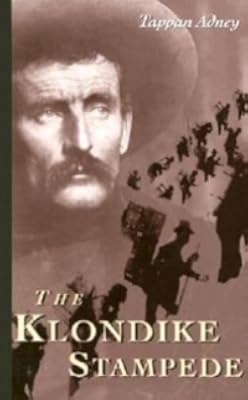
Tappan Adney, the famed canoeist, joined the rush on behalf of Harper’s Weekly, out-reporting all the more famous journalists and producing The Klondike Stampede in 1900, when the ashes of the event were still warm.
Fifty-one years later came The Big Pan-Out, which added an understanding of economics to the story. Strangely, it has never been reprinted, and its author, Kathryn Winslow, seemed to have published almost nothing else (but is remembered as the patron of American novelist Henry Miller).
And of course there is Pierre Berton’s Klondike (1958). Charlotte Gray, who has steadily become Canada’s most important and certainly most careful and most readable producer of popular narrative history, notes that her famed predecessor “reverberated with [...] exuberance and sweaty machismo.”
She, herself, does not, thank [Darwin] (or God or FSM or whomever you would like to thank, here).
In Gold Diggers: Striking It Rich in the Klondike, Gray sets out to revivify “the experience of a few characters in this large historical drama [and] to jigsaw together real stories to illuminate, over a century later, life in Dawson City” when it was booming with a deafening report. All but one of the handful of individuals she has chosen are already quite familiar, but they will never appear quite the same again once the readers have seen how she has made use of them.
Rev. William Judge, S.J., the so-called Saint of Dawson, was “a strange character – ascetic, deeply religious, guileless, but not naive. Those who met him recognized the quality of the man.” He had no interest whatever in gold and, being in his late 40s, “was twice the age of most men there,” such as Jack London, 21. London spent a year in the Yukon soaking up material for future short stories but left with a mere in $4.50 in gold and only one tooth in his young head, having lost the others to scurvy. Then there is the heroic yet vaguely Gilbert-and-Sullivan-ish character of Samuel Steele of the North-West Mounted Police, a well-meaning martinet not completely untouched by the rampant corruption that Gray unravels so well.
Gray is one of those [great] authors who writes with equally sympathetic understanding of both men and women, free of judgmental assumptions or home-team boosterism. As a result, Steele comes across as the other half of his fellow imperialist tub-thumper Flora Shaw, special correspondent of The Times of London. A female colleague described Shaw as being “as clever as they make them, capable of any immense amount of work, as hard as nails and talking like a Times leader all the time.” When supping with a group of Mounties and three Tlingit prisoners soon to be hanged, Shaw “behaved as graciously as if she was joining her friend the Duchess of Devonshire for dinner.” (Gray goes on to mention that Shaw was active in the anti-women’s-suffrage movement, a fact that could use some elaboration.)
The two Dawsonites who seem closest to Gray’s heart are Belinda Mulrooney and Bill Haskell. The former lived until 1967, nine years longer than even Robert W. Service, the last and least of Gray’s picks. She was a working-class Irishwoman who “could handle any amount of deprivation as long as she was making money.” And she made a huge pile of it, as a hotelier and deal-maker, only to fall prey to a professional con man posing as a French count. As for Haskell, he was one of the Yukon veterans who, on hearing of the big strike on the Klondike River, lit out from the community of Fortymile, the proto-Dawson some distance downstream, near the Alaska border. He was a working stiff and one of what Gray calls the “obsessive, reckless individuals” drawn to such commotions. Soon after leaving Dawson, heartbroken by the death of his mining buddy and business partner, he published a vivid but now obscure memoir and then disappeared completely from the historical record.
A deep researcher and skilled explainer, Gray is also shrewd, calm and confident in the way she creates her book’s complex architecture. She is likewise an engaging stylist. Describing one of the catastrophic fires to which Dawson, a place made of canvas and green lumber, was prone, she writes: “People rushed out of the dance halls and bars as the roar of the flames competed with the fiddles and laughter.”
And she keeps her subtext subtle. Like Berton, she compares charmingly chaotic Dawson, held in check by cops and soldiers, with wide-open Skagway on the U.S. side, ruled by crooks and murderers. But she allows readers to discover for themselves the important underlying paradox. It is this: Exotic colonies, though authoritarian by nature, are also often the freest of places, as they’re so remote from the seats of centralized power. Hannah Arendt, the great political philosopher, once suggested that the best form of government is the temporary kind that pops up organically immediately after the revolution and dies as soon as a new constitution gets written. For one noisy moment in 1898, Dawson must have been such a spot. show less
So...not about:
but totally about:
In seriousness, though, Gray did a great job with the book. Gold Diggers covers the gold rush period from 1896 till 1899, viewed through the narratives of prospector William Haskell, business woman Belinda Mulrooney, Jesuit missionary Father William Judge, author Jack London, journalist Flora Shaw of the London Times, and Superintendent Sam Steele of the North West Mounted Police. Reflecting the demographics of the gold rush, show more four of the characters are American; one is British, and one Canadian.
From the Globe and Mail:
There are, of course, scores of books about particular aspects of the Klondike Gold Rush, but perhaps only three authors can be said to have written thoughtful and truly enlightening narratives of the whole gaudy affair.
Tappan Adney, the famed canoeist, joined the rush on behalf of Harper’s Weekly, out-reporting all the more famous journalists and producing The Klondike Stampede in 1900, when the ashes of the event were still warm.
Fifty-one years later came The Big Pan-Out, which added an understanding of economics to the story. Strangely, it has never been reprinted, and its author, Kathryn Winslow, seemed to have published almost nothing else (but is remembered as the patron of American novelist Henry Miller).
And of course there is Pierre Berton’s Klondike (1958). Charlotte Gray, who has steadily become Canada’s most important and certainly most careful and most readable producer of popular narrative history, notes that her famed predecessor “reverberated with [...] exuberance and sweaty machismo.”
She, herself, does not, thank [Darwin] (or God or FSM or whomever you would like to thank, here).
In Gold Diggers: Striking It Rich in the Klondike, Gray sets out to revivify “the experience of a few characters in this large historical drama [and] to jigsaw together real stories to illuminate, over a century later, life in Dawson City” when it was booming with a deafening report. All but one of the handful of individuals she has chosen are already quite familiar, but they will never appear quite the same again once the readers have seen how she has made use of them.
Rev. William Judge, S.J., the so-called Saint of Dawson, was “a strange character – ascetic, deeply religious, guileless, but not naive. Those who met him recognized the quality of the man.” He had no interest whatever in gold and, being in his late 40s, “was twice the age of most men there,” such as Jack London, 21. London spent a year in the Yukon soaking up material for future short stories but left with a mere in $4.50 in gold and only one tooth in his young head, having lost the others to scurvy. Then there is the heroic yet vaguely Gilbert-and-Sullivan-ish character of Samuel Steele of the North-West Mounted Police, a well-meaning martinet not completely untouched by the rampant corruption that Gray unravels so well.
Gray is one of those [great] authors who writes with equally sympathetic understanding of both men and women, free of judgmental assumptions or home-team boosterism. As a result, Steele comes across as the other half of his fellow imperialist tub-thumper Flora Shaw, special correspondent of The Times of London. A female colleague described Shaw as being “as clever as they make them, capable of any immense amount of work, as hard as nails and talking like a Times leader all the time.” When supping with a group of Mounties and three Tlingit prisoners soon to be hanged, Shaw “behaved as graciously as if she was joining her friend the Duchess of Devonshire for dinner.” (Gray goes on to mention that Shaw was active in the anti-women’s-suffrage movement, a fact that could use some elaboration.)
The two Dawsonites who seem closest to Gray’s heart are Belinda Mulrooney and Bill Haskell. The former lived until 1967, nine years longer than even Robert W. Service, the last and least of Gray’s picks. She was a working-class Irishwoman who “could handle any amount of deprivation as long as she was making money.” And she made a huge pile of it, as a hotelier and deal-maker, only to fall prey to a professional con man posing as a French count. As for Haskell, he was one of the Yukon veterans who, on hearing of the big strike on the Klondike River, lit out from the community of Fortymile, the proto-Dawson some distance downstream, near the Alaska border. He was a working stiff and one of what Gray calls the “obsessive, reckless individuals” drawn to such commotions. Soon after leaving Dawson, heartbroken by the death of his mining buddy and business partner, he published a vivid but now obscure memoir and then disappeared completely from the historical record.
A deep researcher and skilled explainer, Gray is also shrewd, calm and confident in the way she creates her book’s complex architecture. She is likewise an engaging stylist. Describing one of the catastrophic fires to which Dawson, a place made of canvas and green lumber, was prone, she writes: “People rushed out of the dance halls and bars as the roar of the flames competed with the fiddles and laughter.”
And she keeps her subtext subtle. Like Berton, she compares charmingly chaotic Dawson, held in check by cops and soldiers, with wide-open Skagway on the U.S. side, ruled by crooks and murderers. But she allows readers to discover for themselves the important underlying paradox. It is this: Exotic colonies, though authoritarian by nature, are also often the freest of places, as they’re so remote from the seats of centralized power. Hannah Arendt, the great political philosopher, once suggested that the best form of government is the temporary kind that pops up organically immediately after the revolution and dies as soon as a new constitution gets written. For one noisy moment in 1898, Dawson must have been such a spot. show less
I very much enjoyed this interesting read about the Yukon gold rush. In it, the author weaves the stories of 6 people who sought their fortunes in very different ways in the Klondike during that time. I particularly enjoyed reading about Jack London as his novella "Call of the Wild" was a favourite childhood read. I also liked learning about Belinda Mulrooney and Flora Shaw, pioneering women who were instrumental in the development of Dawson City. All in all, Gray's book is an informative read about an integral part of Canada's history.
A good thorough history of Dawson City and the Yukon Gold rush along the Trondike river, with a special focus on several of the city's characters: the old priest, the young Irish businesswoman, Jack London, and a royal mountie. She does have an annoying habit of throwing in little lecturettes about the Indians and the socialists though (At one point she actually insists that the gold rush would have been more efficient if it was run collectively.)
Gray took most of her info from journals so it was quite interesting. Good pictures.
Members
- Recently Added By
Published Reviews
ThingScore 100
Charlotte Gray's vibrant account of the lives of six hardy Dawson City personalities gives us a new view of the North and the gold diggers who gave the place its best stories.
added by vancouverdeb
Charlotte Gray's vibrant account of the lives of six hardy Dawson City personalities gives us a new view of the North and the gold diggers who gave the place its best stories.
added by vancouverdeb
Like the Klondike’s gold-laden streams, historians have been picking over the glory days of Dawson City, Yukon, for more than a century. The gold ran out long ago. Are there any stories left worth telling?
With Gold Diggers, Canadian biographer Charlotte Gray turns her formidable attention to the gold rush of 1896. Yet Pierre Berton’s Klondike: The Last Great Gold Rush, which first appeared show more over 50 years ago, still stands as the iconic popular history of that era.
Where Pierre Berton featured a “cast of major characters” that numbered nearly 50, Gray pares her attention down to just six key figures: prospector Bill Haskell, hotel owner Belinda Mulrooney, Jesuit priest William Judge, Mountie Sam Steele, British journalist Flora Shaw, and soon-to-be famous but struggling writer Jack London.
Freed from the obligation of having to tell the encyclopedic story of Dawson City’s meteoric rise and fall, the author uses her six Klondikers to reveal many untapped veins of historical interest
Gray reveals a little-known ecclesiastical struggle over ministering to Dawson City’s sinful hordes. American and Canadian miners come into sharp conflict over which holiday—Independence Day or Victoria Day—should take precedence. She details the birth of a bitter rivalry between entrepreneur Mulrooney and mining magnate Big Alex McDonald.
And while Pierre Berton spent half a sentence on Shaw, the colonial correspondent for the Times of London, Gray provides a lengthy character sketch of this formidable woman and the surprising influence she wielded over Canadian government policy in the Klondike. The rush may be long over, but thar’s still plenty of story gold in them hills. show less
With Gold Diggers, Canadian biographer Charlotte Gray turns her formidable attention to the gold rush of 1896. Yet Pierre Berton’s Klondike: The Last Great Gold Rush, which first appeared show more over 50 years ago, still stands as the iconic popular history of that era.
Where Pierre Berton featured a “cast of major characters” that numbered nearly 50, Gray pares her attention down to just six key figures: prospector Bill Haskell, hotel owner Belinda Mulrooney, Jesuit priest William Judge, Mountie Sam Steele, British journalist Flora Shaw, and soon-to-be famous but struggling writer Jack London.
Freed from the obligation of having to tell the encyclopedic story of Dawson City’s meteoric rise and fall, the author uses her six Klondikers to reveal many untapped veins of historical interest
Gray reveals a little-known ecclesiastical struggle over ministering to Dawson City’s sinful hordes. American and Canadian miners come into sharp conflict over which holiday—Independence Day or Victoria Day—should take precedence. She details the birth of a bitter rivalry between entrepreneur Mulrooney and mining magnate Big Alex McDonald.
And while Pierre Berton spent half a sentence on Shaw, the colonial correspondent for the Times of London, Gray provides a lengthy character sketch of this formidable woman and the surprising influence she wielded over Canadian government policy in the Klondike. The rush may be long over, but thar’s still plenty of story gold in them hills. show less
added by vancouverdeb
Lists

CBC's 100 True Stories
100 works; 6 members
Author Information

11+ Works 1,284 Members
Charlotte Gray is one of Canada's best-known writers and the author of ten acclaimed bestsellers of literary non-fiction, including The Promise of Canada and The Massey Murder, winner of the Toronto Book Award and the Heritage Toronto Book Award, finalist for the RBC Taylor Prize, and a Globe and Mail and Amazon.ca top book of the year. Charlotte show more Gray is a Member of the Order of Canada, an adjunct professor at Carleton University, and a Fellow of the Royal Society of Canada. show less
Some Editions
Awards and Honors
Common Knowledge
- Canonical title
- Gold Diggers: Striking it Rich in the Klondike
- Alternate titles
- Gold Diggers
- People/Characters
- Jack London; Flora Shaw; Sam Steele; Belinda Mulrooney; William Judge; Bill Haskell
- Important places
- Dawson City, Yukon, Canada; Klondike River Valley, Yukon Territory, Canada; Canada
- Important events
- Klondike Gold Rush (1896 | 1899)
- Dedication
- For Friends in Dawson, then and now.
- First words
- The wide river swept the little boat along in its silty current.
- Last words
- (Click to show. Warning: May contain spoilers.)Although the Jesuit's memory is celebrated in the church, where pictures of his hospital hang, his gravestone sits neglected today in a grassy pocket of land beyond Dawson's ferry terminal.
- Disambiguation notice
- Gold Diggers is also on Library Thing with the title Gold Diggers: Striking it Rich in the Klondike . These books are one and the same.
Classifications
Statistics
- Members
- 115
- Popularity
- 282,819
- Reviews
- 8
- Rating
- (4.16)
- Languages
- English, French
- Media
- Paper, Audiobook, Ebook
- ISBNs
- 11
- ASINs
- 4