On This Page
Description
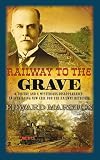
Now here's a murd'rous tale of woe, See a hero misbehave. For it shows a valiant soldier go, By railway to the grave.Yorkshire 1855. Colonel Aubrey Tarleton is a man respected by his neighbours in the small Yorkshire village of South Otterington – as much for his heroic feats in the army as for his social position. So the community is left stunned when Tarleton, deliberately, walks into the path of a speeding train. He is crushed to death on the track, but it is not his broken limbs that show more attract the attention of the train driver; rather, it is the note pinned to his chest, fluttering in the breeze: 'Whoever finds me, notify Superintendent Tallis of the Detective Department at Scotland Yard'.
The famous Railway Detective, Inspector Robert Colbeck, finds his superior officer in great distress when he arrives at the Yard the following morning. Tallis is clutching a letter from his now-deceased friend. In it, Tarleton makes it clear that he no longer wishes to live if he has to do so without his beloved wife, who has disappeared. When the news arrives that a man's body has been found on the track near Thirsk, the coincidence is too great. Was Tarleton responsible for his wife's disappearance, and was his suicide the act of a guilty man? Tallis cannot believe that to be the case and sets out for Yorkshire, accompanied by Colbeck and his trusty Sergeant Victor Leeming, determined to uncover the truth.
. show less
Tags
Recommendations














Member Reviews
Yorkshire 1855. Colonel Aubrey Tarleton takes his own life by walking along a railway track near his home directly into the path of an oncoming train. He is a good friend of Superintendent Tallis of Scotland Yard, and pinned to Tarleton's chest is a note asking that Tallis be notified of his death.
Tarleton and Tallis were army friends and Tallis refuses to believe that his friend has committed suicide, although the previous day he had received a letter from Tartleton.
Goodbye, dear friend. Though her body has not yet been found, I know in my heart that she is dead and have neither the strength nor the will to carry on without her. I go to join her in heaven.
Tallis is determined to get to the bottom of events and takes with him to show more Yorkshire his Scotland Yard team, the famous "Railway Detective" Inspector Robert Colbeck, and his assistant Sergeant Victor Leeming.
This is the third in the railway detective series that I have read by Edward Marston, a pseudonym of Keith Miles. Like the others RAILWAY TO THE GRAVE gives a strong impression of authentic historical setting. I like my historical crime fiction to not just feel like crime fiction transplanted to another time period, but to also reveal something about the period in which it has been set. Marston manages to not only write a strong police procedural, but to tell us something about society of the 1850s, industrial England in which the story is set. show less
Tarleton and Tallis were army friends and Tallis refuses to believe that his friend has committed suicide, although the previous day he had received a letter from Tartleton.
Goodbye, dear friend. Though her body has not yet been found, I know in my heart that she is dead and have neither the strength nor the will to carry on without her. I go to join her in heaven.
Tallis is determined to get to the bottom of events and takes with him to show more Yorkshire his Scotland Yard team, the famous "Railway Detective" Inspector Robert Colbeck, and his assistant Sergeant Victor Leeming.
This is the third in the railway detective series that I have read by Edward Marston, a pseudonym of Keith Miles. Like the others RAILWAY TO THE GRAVE gives a strong impression of authentic historical setting. I like my historical crime fiction to not just feel like crime fiction transplanted to another time period, but to also reveal something about the period in which it has been set. Marston manages to not only write a strong police procedural, but to tell us something about society of the 1850s, industrial England in which the story is set. show less
This is the seventh novel in the Railway Detective series set in mid 19th century Britain. Grief stricken by the disappearance of his beloved wife Miriam, Sir Aubrey Tarleton commits suicide by walking into the path of an oncoming train. Inspector Colbeck and Sergeant Leeming pursue a number of lines of enquiry, including that Sir Aubrey may have murdered his wife and committed suicide in remorse. Various locals are suspected, but the eventual solution to the mystery was rather surprising and I didn't find it wholly convincing. I increasingly like the main characters and their ongoing character traits are becoming slightly endearing, esp. Leeming's constant missing of his wife and children. I enjoyed this one more than many others, show more though the resolution of the mystery, as I say, slightly marred this feeling. show less
Another one in the series starring the Railway Detective. A Yorkshire gentleman decides to commit suicide by walking in front of a train. Not nice. Turns out he was an ex-army colleague of Colbeck's boss, and went to his death with a note for him in his pocket. So Colbeck is sent to investigate. Turns into something more complex when it is revealed that the wife disappeared a few weeks ago, and hasn't been seen since. There's then a variety of avenues, including finance, revenge and love before the true events come to light. Well written, as usual, and left me guessing about what had happened until the end.
Excellent story, well written, interesting. I began it around 12:00 am & I finished just before 4:00 am.
Superintendent Tallis receives a brutal shock upon receiving a telegram informing him that an old army friend, a Colonel whom he much respected, has committed suicide by walking head long into an oncoming train.
The suicide was brought on by the disappearance of his friend's wife and the town's belief (announced in various hate letters) that he murdered her.
Inspector Colbeck & Detective Lemming are assigned to the case and are not convinced that the Colonel murdered his wife, but are unable to prove it until her body is found.
What Inspector discovers is there is no lack of unsavory characters, nor of those who hated the Colonel, but show more none hated his wife.... so the ending came as a great surprise, one which I have never read before in all my years of reading mysteries.
Very satisfying..... show less
Superintendent Tallis receives a brutal shock upon receiving a telegram informing him that an old army friend, a Colonel whom he much respected, has committed suicide by walking head long into an oncoming train.
The suicide was brought on by the disappearance of his friend's wife and the town's belief (announced in various hate letters) that he murdered her.
Inspector Colbeck & Detective Lemming are assigned to the case and are not convinced that the Colonel murdered his wife, but are unable to prove it until her body is found.
What Inspector discovers is there is no lack of unsavory characters, nor of those who hated the Colonel, but show more none hated his wife.... so the ending came as a great surprise, one which I have never read before in all my years of reading mysteries.
Very satisfying..... show less
Seventh in the Railway Detective series, about a Victorian detective inspector specialising in railway crime in the early days of the railways. As usual with this author, enjoyable pulp fiction that I won't bother keeping but am glad to have read. In this one a retired Colonel commits suicide by walking into an oncoming train. Tarleton's wife went missing a few weeks earlier, and is presumed murdered. The case might have come to Robert Colbeck in the normal course of events anyway, but there is a personal link -- the dead man was a friend of Colbeck's superior officer, from Tallis's days as an army officer. Tallis wants his dead friend's name cleared, and the person responsible for both deaths found. Colbeck has to persuade Tallis to show more leave the investigation to him, because Tallis is far too emotionally involved to do a good job.
The series in general tends to fairly cardboard characters, and Tallis has been something of a stock stereotype in spite of being a regular character, but Marston has finally begun to flesh him out a little in this book.
I'd note that the author tries to reflect period mores and attitudes in his historical mysteries, and this does mean that some of the characters' reactions to various plot developments are not likely to sit well with much of my friends list. Colbeck himself is a broad-minded and humane man, but that simply means that he gets to clash with people who aren't, such as the local rector who has no intention of allowing a suicide to be buried in hallowed ground. show less
The series in general tends to fairly cardboard characters, and Tallis has been something of a stock stereotype in spite of being a regular character, but Marston has finally begun to flesh him out a little in this book.
I'd note that the author tries to reflect period mores and attitudes in his historical mysteries, and this does mean that some of the characters' reactions to various plot developments are not likely to sit well with much of my friends list. Colbeck himself is a broad-minded and humane man, but that simply means that he gets to clash with people who aren't, such as the local rector who has no intention of allowing a suicide to be buried in hallowed ground. show less
The wife of Colonel Aubrey Tarleton has disappeared and is feared dead. One day,soon after this the Colonel sets out and calmly walks along the railway line in the path of a fast-moving train with predictable results. Inspector Robert Colbeck is sent to investigate these unfortunate events.
As with most of this series,this is a readable and reasonably interesting story. It is also rather pedestrian and for the most part fairly predictable. If you have nothing better to do to pass a few hours you might do worse than pass them with this tale.
As with most of this series,this is a readable and reasonably interesting story. It is also rather pedestrian and for the most part fairly predictable. If you have nothing better to do to pass a few hours you might do worse than pass them with this tale.
I enjoyed the easy flow of this book, may read more by this author.
Members
- Recently Added By
Author Information

Series

Common Knowledge
- Canonical title
- Railway to the Grave
- Original publication date
- 2010
- People/Characters
- Robert Colbeck (Inspector); Edward Tallis (Superintendent); Victor Leeming (Sergeant); Madeleine Andrews; Colonel Aubrey Tarleton
- Important places
- South Otterington, Yorkshire, England, UK; Northallerton, Yorkshire, England, UK
- Dedication
- In loving memory of Raymond Allen
uncle, friend and engine driver - First words
- Colonel Aubrey Tarleton led an orderly existence. Born into a military family and subject to the dictates of a martinet father, he'd been educated at a public school that prided itself on its strict regime.
- Last words
- (Click to show. Warning: May contain spoilers.)"It's about getting married for the right reasons."
Classifications
Statistics
- Members
- 188
- Popularity
- 173,563
- Reviews
- 7
- Rating
- (3.83)
- Languages
- English
- Media
- Paper, Audiobook, Ebook
- ISBNs
- 11
- ASINs
- 3