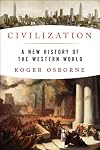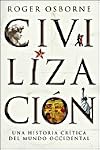
Civilization: A New History of the Western World
by Roger Osborne
On This Page
Description
Tying together the histories of empires, art, philosophy, science, and politics, this work includes the events and people in the history of the western world from the siege of Troy to the Gettysburg address.Tags
Recommendations













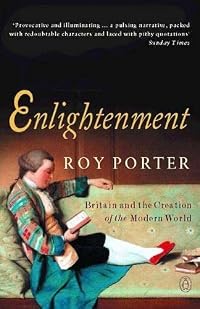
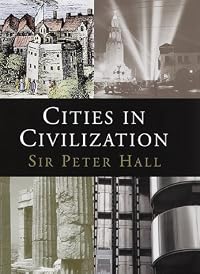
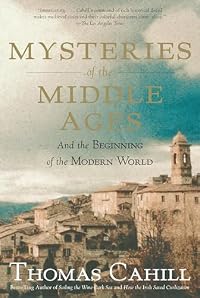
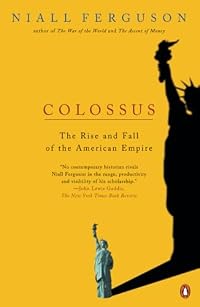





Member Reviews
On 21 September 2001 George W. Bush told Congress 'This is civilization's fight.' A month later he said 'I'm not moving on because we're in a fight for civilization itself.' European leaders described the 11 September attacks as 'a declaration of war against the entire civilized world' by a force 'dedicated to the destruction of civilization'. But what do we mean by civilization? We have a vague belief in a Western tradition of openness and freedom that has produced a good life for its citizens and a culture of enormous depth and creative power. But the history of our civilization is also filled with unspeakable brutality. For every Leonardo there is a Torquemada, for every Beethoven symphony a concentration camp, for every Chrysler show more Building a My Lai massacre. How can we come to the defence of a civilization whose benefits seem so questionable? In this ambitious and important book Roger Osborne shows that we can only understand and take comfort in our civilization by re-examining and confronting our past. The barbarity in Western history can no longer be explained away as base human brutality breaking through the restraining bonds of civilization. Instead we need to see that civilization is itself a hazardous enterprise, creating enormous challenges to humans as moral social beings - challenges that we sometimes fail. "Civilization" tells the story of the Western world from its origins to the present. Sweeping in its scope and comprehensive in its coverage, "Civilization" covers everything from the siege of Troy to the Gettysburg address, from Charlemagne to the European Union and from Aristotle to John Rawls. Filled with the voices of the past - including Herodotus, Pericles, Cicero, St Paul, Plotinus, St Augustine, Boccaccio, Machiavelli, Cervantes, Locke, Voltaire, Jefferson, Gibbon, Darwin, Marx, Weber, Roosevelt and Arendt, to name just a few - the book ends with an assessment of the present state of Western civilization in the light of its past and an indication of how it might go about the urgent task of renewing itself. At such a dangerous time in the world's history this remarkable and compelling book is required reading. show less
It's a history of Europe and of North America after it was populated by Europeans, written in order to answer the question "what is civilization?", although I'm not sure it really achieved that aim since the last sentence of the book was a longer rephrasing of the same question, but never mind.
I liked the earlier chapters... Ancient Greece and Rome, the Aztecs, the Dark Ages... actually the author has a slight obsession with the Dark Ages. There were two whole chapters which were pretty much "The Dark Ages are awesome! Everyone thinks they suck because they were given a stupid name! But they are fascinating and totally much more awesome than the Renaissance! By the way, art historians suck and are fools, the foolish show more suckers!"
Unfortunately four of the last five chapters were amazingly boring, possibly due to the fact that they covered the three periods of history which occurred entirely to torture me during history lessons in years 9-11: The Industrial Revolution, WWI and the inter-war years, WW2 and the Cold War (aka The Dullest War Ever). (As you can tell I am not much of a history student. I expect that if I had not been made to spend an entire year studying the Treaty of Versailles I would be more interested by it?) The other chapter in that section was about the American Civil War, which interested me more largely because I have never read more than a paragraph about it in one go before. So there you go.
I concluded from this book that I will never be interested by history, particularly if it is to do with politics, although I do like a bit of the old mythology/anthropology stuff. :S But at least now I have a clearer idea of the order in which certain things happened. show less
I liked the earlier chapters... Ancient Greece and Rome, the Aztecs, the Dark Ages... actually the author has a slight obsession with the Dark Ages. There were two whole chapters which were pretty much "The Dark Ages are awesome! Everyone thinks they suck because they were given a stupid name! But they are fascinating and totally much more awesome than the Renaissance! By the way, art historians suck and are fools, the foolish show more suckers!"
Unfortunately four of the last five chapters were amazingly boring, possibly due to the fact that they covered the three periods of history which occurred entirely to torture me during history lessons in years 9-11: The Industrial Revolution, WWI and the inter-war years, WW2 and the Cold War (aka The Dullest War Ever). (As you can tell I am not much of a history student. I expect that if I had not been made to spend an entire year studying the Treaty of Versailles I would be more interested by it?) The other chapter in that section was about the American Civil War, which interested me more largely because I have never read more than a paragraph about it in one go before. So there you go.
I concluded from this book that I will never be interested by history, particularly if it is to do with politics, although I do like a bit of the old mythology/anthropology stuff. :S But at least now I have a clearer idea of the order in which certain things happened. show less
Very good!
Civilization tells the story of western world from its origins to the present.
Ratings
Members
- Recently Added By
Author Information
11 Works 497 Members
Awards and Honors
Notable Lists
Common Knowledge
- Original publication date
- 2006
Classifications
Statistics
- Members
- 255
- Popularity
- 126,603
- Reviews
- 4
- Rating
- (4.20)
- Languages
- English, Estonian, Portuguese, Spanish
- Media
- Paper, Ebook
- ISBNs
- 9
- ASINs
- 1