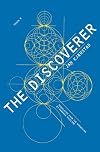
On This Page
Description
"The final novel in a trilogy of books about the Norwegian television celebrity Jonas Wergeland, The Discoverer finds Jonas released from prison, having completed his sentence for the death of his wife. He has taken a job as a secretary aboard the Voyager, a ship which is exploring the far reaches of the Sognefjord, the longest fjord in the world. On the ship, Jonas works for a team of young people, including his daughter, Kristin, who are engaged in a multimedia project that is seeking to show more chart every aspect of the fjord in a new medium that merges text, image, film, and design."--Publisher. show lessTags
Recommendations























Member Reviews
Again, these books defy description.
Each one is multifaceted, complex, and rich, delving deeper and deeper into the life of Jonas, the one-time superstar of the Norwegian TV series, "Thinking Big", the genius, the magical penis, the Winner (book one, with tragedy), the Loser (book two, with hope), and book three, which I'll call the Revelation.
Not too different from "The Discoverer", I'm sure, but at least my title actually pokes at a theme that growls at me. Not a dragon, like in the second book, but a loving daughter who finally realizes who - and what - her father actually was.
And he was all of these things. Every book was accurate but they told the story of Jonas in wildly different ways.
This one is far from being dark like the show more first or especially the second. It looked to the future. It focused on forgiveness. On discovery, beauty, genius, and all the tiny interconnected pieces of a life juggled helplessly by one masterful sleight of hand. I use these descriptions purposefully - as if taken right from the book. And perhaps I should have quoted, but I'm lazy. :)
This book carries us much further from the events in the first book even though it sheds a lot more light on why and how and especially what drove Jonas to do what he did. No spoilers. But learning this one piece of knowledge is a LONG trek and should be experienced by the reader alone.
It's a transformative book.
I admit it cut me. But alone, I don't think it would have cut me unless I had experienced the first two books. I feel like I know Jonas better than I know myself. It's THAT kind of book.
Do I recommend the trilogy?
Yes. But be aware that it might be a monumental undertaking. :) show less
Each one is multifaceted, complex, and rich, delving deeper and deeper into the life of Jonas, the one-time superstar of the Norwegian TV series, "Thinking Big", the genius, the magical penis, the Winner (book one, with tragedy), the Loser (book two, with hope), and book three, which I'll call the Revelation.
Not too different from "The Discoverer", I'm sure, but at least my title actually pokes at a theme that growls at me. Not a dragon, like in the second book, but a loving daughter who finally realizes who - and what - her father actually was.
And he was all of these things. Every book was accurate but they told the story of Jonas in wildly different ways.
This one is far from being dark like the show more first or especially the second. It looked to the future. It focused on forgiveness. On discovery, beauty, genius, and all the tiny interconnected pieces of a life juggled helplessly by one masterful sleight of hand. I use these descriptions purposefully - as if taken right from the book. And perhaps I should have quoted, but I'm lazy. :)
This book carries us much further from the events in the first book even though it sheds a lot more light on why and how and especially what drove Jonas to do what he did. No spoilers. But learning this one piece of knowledge is a LONG trek and should be experienced by the reader alone.
It's a transformative book.
I admit it cut me. But alone, I don't think it would have cut me unless I had experienced the first two books. I feel like I know Jonas better than I know myself. It's THAT kind of book.
Do I recommend the trilogy?
Yes. But be aware that it might be a monumental undertaking. :) show less
Jan Kjaerstad's The Discoverer is full of rich detail that pulls you into the story again and again. The storytelling uses a stream of consciousness style, but remains true to the plot, which offers the truth behind the death of Jonas’s wife. Kjaerstad reminds you, with amazing accuracy, what it’s like to be a child. Jonas is a real person, not a hero or a villain, and his sense of wonder and quiet actions rule his entire life and leads him to not only fulfill many lifelong goals but also to experience hardships that he must account for. Kjaerstad describes various stages of manhood and adulthood that began to take root in me. There is no beauty of language lost in translation. A serious and encapsulating read. I only wish I had show more read the first two books in the series first, although it was not necessary to understand the storyline. show less
Maybe this whole 3 volumes, 1200 pages is a case of beware of low-flying sperm. I won’t deny having my suspicion that many years from now I may think I failed a basic IQ test.
But it’s now and I don’t think that. So this is how to start. Go here and listen to this: http://www.youtube.com/watch?v=nECoA-uVGfw
The reason we are starting here is that young boy Jonas thinks if there is one thing to take to the extra-terrestrial Vegans to make them think well of human-kind it is this. Jim Reeves singing ‘I love you because’. And here on youtube we have no less than Jim Reeves singing ‘I love you because’ in Oslo on TV there in 1964. Perfect. Listen to it twice. The first time you won’t take it seriously, but you should. It is show more what this book is about.
Not to mention, while you are listening I have a moment to figure out where to go next. Which, now that I think about it, is near the end.
A couple of times lately I’ve read books that have hurt me. You look at the words on the page and you know you don’t want to read them. I’m in Adelaide at the moment and the other day I was with a friend whose husband is in gaol. She’s in Australia looking after their four young children. He’s in the Californian desert doing six years. It isn’t often you listen to somebody’s problems and find that they are from some other world altogether. Only to discover, upon a little contemplation, that in some ways they aren’t any different from your own. What’s she to do with this husband who is doing something that happens to people in gaol where they lose their sense of what is important on the outside and become alienated from their loved ones. I’m watching that happen to somebody at the moment – it doesn’t, after all, have to be a physical gaol. But what can you do about it? You can only wait, heartbroken, and hope they come to their senses.
This is only part of her problem. The other part is that she has been waiting for him in every sense for three years and she can’t do that anymore. She has decided she has to have sex. And this part of her problem really isn’t any easier than the other. Can she do that? And have it just be sex? And still be waiting for this high-flying corporate husband who has joined a prison gang and sports a stab wound, a black eye and an illegal tattoo at the moment? How do you do this at all, let alone with 4 little kids? She’s asking the questions and I’m thinking can I use my ask-the-audience card?
A couple of days later I am having dinner with a friend. The issue has been lying in the air for way too long as to whether we might have sex and finally we take it off the agenda. The simple fact is that we are each waiting for somebody.
It is another day or two later that I read this excruciatingly painful passage.
p. 374
Where does it come from, this sense that it is right to wait? From the most important relationship of his childhood, from Karen Mohr. Karen, who is alone, but who might not have been. When the young Jonas asks her why she did not take up the invitation to share life with a famous painter she says:
p. 88
So he has this inspiration of a woman in his childhood life and then too he has the astonishing Mr Dehli. Lucky, lucky boy.
p. 216
I was so envious of Jonas, as I read about this perfect teacher. I hated every second of school and I’m sitting here thinking why couldn’t I have had a teacher like that? But maybe I did and never realised. Looking back to what I wrote in my thoughts on The Naked Ape
So, maybe I had a Mr Dehli sometime and I simply wasn’t worthy. Maybe. I do have half an idea it is really only possible to learn in a good way when it is too late. Or maybe school is just a completely crap way of educating people.
As for the other supremely important relationship of his childhood, that with Bo Wang Lee, well, best you read for yourself. It is lovely.
So there Jonas is, right from the time he is a small boy, wanting life not to be flat and finding these people, Karen and Bo and Mr Dehli who most definitely also believe that life is not flat. Eventually he decides to make that his life’s work. He decides to reorganise the Dewey classification system into something that has depth. Way to go, Jonas.
Are there not two types of people in the world? The ones who are filers and the ones who aren’t? Me, I’ve always spent my life surrounded by piles of paper feet deep, into which I can dive and find anything at a second’s notice. The moment I think about filing anything, I’m lost. A million times in my life, however, I’ve wanted to file things and how to do it is an insoluble problem. I have thousands of balls of yarn and not a clue how to organise them. By brand? Type? Season? Gauge? Colour? It does my head in. I have a large collection of antique costume jewellery. Do I sort it by what it is: earring here, bracelet there? The colour? The composition? When I might wear it? Where I might wear it? Whether I would ever wear it? Mistakes over there? Period? Right now I’m writing recipes on Goodreads and it’s happening again. How do I categorise them? According to ingredient, type of course, season, what sort of impact it has on the eater, how it is cooked, cultural origin? I can’t do it with something as simple as food and Jonas tries to categorise the whole world as deep as he can. Brilliant.
I was lying in bed last night, contemplating how lucky I was to have been brought up in a family who didn’t think life was a flat thing. My father is dying and it would be such a pity, such unlike his life, if his death is going to be flat. I hope not. Just a week ago I was all but irritated with him as he was telling me about how he had been proposing to my mother’s - his wife’s - sister who has been a nun for merely 50 years. Last night I was thinking that yes, this is his way of making sure life even now, even completely incapacitated and not able to read or write, of making sure that life is not flat. I should have been more gracious than I was about the idea. A bigamist who turned a devoted nun away from the Church. Certainly not flat, that idea, that ambition.
And then later this morning, he dies. Never a flat life, not for one moment.
How to classify things. Of course, most recently, these thoughts here. I have no idea how to lay them out. Not the foggiest.
I could talk about this book forever. What I would like to do, while I still have some close sense of it is to post this now, not being sure when I will get to more of it…Sorry. The book/trilogy is worthy of much more. show less
But it’s now and I don’t think that. So this is how to start. Go here and listen to this: http://www.youtube.com/watch?v=nECoA-uVGfw
The reason we are starting here is that young boy Jonas thinks if there is one thing to take to the extra-terrestrial Vegans to make them think well of human-kind it is this. Jim Reeves singing ‘I love you because’. And here on youtube we have no less than Jim Reeves singing ‘I love you because’ in Oslo on TV there in 1964. Perfect. Listen to it twice. The first time you won’t take it seriously, but you should. It is show more what this book is about.
Not to mention, while you are listening I have a moment to figure out where to go next. Which, now that I think about it, is near the end.
A couple of times lately I’ve read books that have hurt me. You look at the words on the page and you know you don’t want to read them. I’m in Adelaide at the moment and the other day I was with a friend whose husband is in gaol. She’s in Australia looking after their four young children. He’s in the Californian desert doing six years. It isn’t often you listen to somebody’s problems and find that they are from some other world altogether. Only to discover, upon a little contemplation, that in some ways they aren’t any different from your own. What’s she to do with this husband who is doing something that happens to people in gaol where they lose their sense of what is important on the outside and become alienated from their loved ones. I’m watching that happen to somebody at the moment – it doesn’t, after all, have to be a physical gaol. But what can you do about it? You can only wait, heartbroken, and hope they come to their senses.
This is only part of her problem. The other part is that she has been waiting for him in every sense for three years and she can’t do that anymore. She has decided she has to have sex. And this part of her problem really isn’t any easier than the other. Can she do that? And have it just be sex? And still be waiting for this high-flying corporate husband who has joined a prison gang and sports a stab wound, a black eye and an illegal tattoo at the moment? How do you do this at all, let alone with 4 little kids? She’s asking the questions and I’m thinking can I use my ask-the-audience card?
A couple of days later I am having dinner with a friend. The issue has been lying in the air for way too long as to whether we might have sex and finally we take it off the agenda. The simple fact is that we are each waiting for somebody.
It is another day or two later that I read this excruciatingly painful passage.
p. 374
And so he hesitated. And so he refrained from pulling up her skirt and throwing himself on top of her, even when he felt the gentle press of her hands on his back, like an invitation. He tried to excuse himself to her; he wasn’t ready, he said, whispered breathlessly….Still, though, he was afraid – afraid of this lust, afraid that one day, instead of life, a desire to do the right thing, he would make do with a sex life. It was always there, just under the surface….
Later Jonas would contemplate the choice he had made in this and in similar situations. Because what if sex was life? And what if the life in which he might attain the ‘lofty goals’ toward which he strove was the life of the nether regions?
Where does it come from, this sense that it is right to wait? From the most important relationship of his childhood, from Karen Mohr. Karen, who is alone, but who might not have been. When the young Jonas asks her why she did not take up the invitation to share life with a famous painter she says:
p. 88
‘I did not deem him…worthy,’ she said. That word ‘worthy’ was to become a catchword in Jonas’s life.
‘Did you ever find someone who was worthy?’ he asked, doing his best to pronounce the word with the same gravity as Karen Mohr, stretching the vowels, and rolling the ‘r’.
‘No, I never did.’ And then, anticipating Jonas’s next question. ‘But I have never reproached myself’.
Jonas could not know that many times in the future his eyes would fill with tears at the memory of her face as she spoke of this. She had provided him with a mainstay, one that would stand within him forever; she taught him something about the uncompromising nature of love….Karen Mohr had received an offer from a man admired by half the world, but had not deemed him worthy. Love is no mere bagatelle, that’s for sure, was Jonas’s first thought.
So he has this inspiration of a woman in his childhood life and then too he has the astonishing Mr Dehli. Lucky, lucky boy.
p. 216
Mr Dehli was an expert climber; he would venture out onto the thinnest branches of a line of reasoning, then with a sudden swoop come swinging back to the trunk, possibly on a creeper. This, for Jonas, was more thrilling than the trapeze artists at the circus. Frequently he would sit at his desk, following – heart in mouth, almost – their master’s exposition of a complex topic, with one thought leading to another as he scrawled key words and phrases on the board. And just when Jonas was sure that their poor teacher had lost his way completely, when Mr Dehli, with his hair covered in chalk dust and his bow tie woefully askew, was stammering ‘and…and…and…’, suddenly it would come, that blessed ‘but…’, and a sight of relief would run through the classroom, to be followed by the master’s closing triple-somersault of an argument, which he delivered while circling some of the key words and drawing a couple of connecting lines that made Jonas gasp with surprised understanding.
I was so envious of Jonas, as I read about this perfect teacher. I hated every second of school and I’m sitting here thinking why couldn’t I have had a teacher like that? But maybe I did and never realised. Looking back to what I wrote in my thoughts on The Naked Ape
I spent a year in Marbury, a non-authoritarian school modelled on Summerhill. It was all too weird for words. Next time you wonder why I don't know what continent Spain is in, or why places that are further away have times that are closer or...keep in mind that my geography text book for the year was The Naked Ape.
Well, I say it was that sort of school like it's to blame for my appalling ignorance of geography. If only I'd chosen a normal school instead. But truth be told, the next year I did choose an ordinary school - Methodist Ladies College - and blow me down if the maths teacher didn't turn out to be a girl who made us do things like write poetry. 'Your maths assignment for today is to write a poem in the style of Jabberwocky' It's moot whether my maths is worse than my geography.
Sigh. I wouldn't mind so much if my poetry was any good.
So, maybe I had a Mr Dehli sometime and I simply wasn’t worthy. Maybe. I do have half an idea it is really only possible to learn in a good way when it is too late. Or maybe school is just a completely crap way of educating people.
As for the other supremely important relationship of his childhood, that with Bo Wang Lee, well, best you read for yourself. It is lovely.
So there Jonas is, right from the time he is a small boy, wanting life not to be flat and finding these people, Karen and Bo and Mr Dehli who most definitely also believe that life is not flat. Eventually he decides to make that his life’s work. He decides to reorganise the Dewey classification system into something that has depth. Way to go, Jonas.
Are there not two types of people in the world? The ones who are filers and the ones who aren’t? Me, I’ve always spent my life surrounded by piles of paper feet deep, into which I can dive and find anything at a second’s notice. The moment I think about filing anything, I’m lost. A million times in my life, however, I’ve wanted to file things and how to do it is an insoluble problem. I have thousands of balls of yarn and not a clue how to organise them. By brand? Type? Season? Gauge? Colour? It does my head in. I have a large collection of antique costume jewellery. Do I sort it by what it is: earring here, bracelet there? The colour? The composition? When I might wear it? Where I might wear it? Whether I would ever wear it? Mistakes over there? Period? Right now I’m writing recipes on Goodreads and it’s happening again. How do I categorise them? According to ingredient, type of course, season, what sort of impact it has on the eater, how it is cooked, cultural origin? I can’t do it with something as simple as food and Jonas tries to categorise the whole world as deep as he can. Brilliant.
I was lying in bed last night, contemplating how lucky I was to have been brought up in a family who didn’t think life was a flat thing. My father is dying and it would be such a pity, such unlike his life, if his death is going to be flat. I hope not. Just a week ago I was all but irritated with him as he was telling me about how he had been proposing to my mother’s - his wife’s - sister who has been a nun for merely 50 years. Last night I was thinking that yes, this is his way of making sure life even now, even completely incapacitated and not able to read or write, of making sure that life is not flat. I should have been more gracious than I was about the idea. A bigamist who turned a devoted nun away from the Church. Certainly not flat, that idea, that ambition.
And then later this morning, he dies. Never a flat life, not for one moment.
How to classify things. Of course, most recently, these thoughts here. I have no idea how to lay them out. Not the foggiest.
I could talk about this book forever. What I would like to do, while I still have some close sense of it is to post this now, not being sure when I will get to more of it…Sorry. The book/trilogy is worthy of much more. show less
Maybe this whole 3 volumes, 1200 pages is a case of beware of low-flying sperm. I won’t deny having my suspicion that many years from now I may think I failed a basic IQ test.
But it’s now and I don’t think that. So this is how to start. Go here and listen to this: http://www.youtube.com/watch?v=nECoA-uVGfw
The reason we are starting here is that young boy Jonas thinks if there is one thing to take to the extra-terrestrial Vegans to make them think well of human-kind it is this. Jim Reeves singing ‘I love you because’. And here on youtube we have no less than Jim Reeves singing ‘I love you because’ in Oslo on TV there in 1964. Perfect. Listen to it twice. The first time you won’t take it seriously, but you should. It is show more what this book is about.
Not to mention, while you are listening I have a moment to figure out where to go next. Which, now that I think about it, is near the end.
A couple of times lately I’ve read books that have hurt me. You look at the words on the page and you know you don’t want to read them. I’m in Adelaide at the moment and the other day I was with a friend whose husband is in gaol. She’s in Australia looking after their four young children. He’s in the Californian desert doing six years. It isn’t often you listen to somebody’s problems and find that they are from some other world altogether. Only to discover, upon a little contemplation, that in some ways they aren’t any different from your own. What’s she to do with this husband who is doing something that happens to people in gaol where they lose their sense of what is important on the outside and become alienated from their loved ones. I’m watching that happen to somebody at the moment – it doesn’t, after all, have to be a physical gaol. But what can you do about it? You can only wait, heartbroken, and hope they come to their senses.
This is only part of her problem. The other part is that she has been waiting for him in every sense for three years and she can’t do that anymore. She has decided she has to have sex. And this part of her problem really isn’t any easier than the other. Can she do that? And have it just be sex? And still be waiting for this high-flying corporate husband who has joined a prison gang and sports a stab wound, a black eye and an illegal tattoo at the moment? How do you do this at all, let alone with 4 little kids? She’s asking the questions and I’m thinking can I use my ask-the-audience card?
A couple of days later I am having dinner with a friend. The issue has been lying in the air for way too long as to whether we might have sex and finally we take it off the agenda. The simple fact is that we are each waiting for somebody.
It is another day or two later that I read this excruciatingly painful passage.
p. 374
Where does it come from, this sense that it is right to wait? From the most important relationship of his childhood, from Karen Mohr. Karen, who is alone, but who might not have been. When the young Jonas asks her why she did not take up the invitation to share life with a famous painter she says:
p. 88
So he has this inspiration of a woman in his childhood life and then too he has the astonishing Mr Dehli. Lucky, lucky boy.
p. 216
I was so envious of Jonas, as I read about this perfect teacher. I hated every second of school and I’m sitting here thinking why couldn’t I have had a teacher like that? But maybe I did and never realised. Looking back to what I wrote in my thoughts on The Naked Ape
So, maybe I had a Mr Dehli sometime and I simply wasn’t worthy. Maybe. I do have half an idea it is really only possible to learn in a good way when it is too late. Or maybe school is just a completely crap way of educating people.
As for the other supremely important relationship of his childhood, that with Bo Wang Lee, well, best you read for yourself. It is lovely.
So there Jonas is, right from the time he is a small boy, wanting life not to be flat and finding these people, Karen and Bo and Mr Dehli who most definitely also believe that life is not flat. Eventually he decides to make that his life’s work. He decides to reorganise the Dewey classification system into something that has depth. Way to go, Jonas.
Are there not two types of people in the world? The ones who are filers and the ones who aren’t? Me, I’ve always spent my life surrounded by piles of paper feet deep, into which I can dive and find anything at a second’s notice. The moment I think about filing anything, I’m lost. A million times in my life, however, I’ve wanted to file things and how to do it is an insoluble problem. I have thousands of balls of yarn and not a clue how to organise them. By brand? Type? Season? Gauge? Colour? It does my head in. I have a large collection of antique costume jewellery. Do I sort it by what it is: earring here, bracelet there? The colour? The composition? When I might wear it? Where I might wear it? Whether I would ever wear it? Mistakes over there? Period? Right now I’m writing recipes on Goodreads and it’s happening again. How do I categorise them? According to ingredient, type of course, season, what sort of impact it has on the eater, how it is cooked, cultural origin? I can’t do it with something as simple as food and Jonas tries to categorise the whole world as deep as he can. Brilliant.
I was lying in bed last night, contemplating how lucky I was to have been brought up in a family who didn’t think life was a flat thing. My father is dying and it would be such a pity, such unlike his life, if his death is going to be flat. I hope not. Just a week ago I was all but irritated with him as he was telling me about how he had been proposing to my mother’s - his wife’s - sister who has been a nun for merely 50 years. Last night I was thinking that yes, this is his way of making sure life even now, even completely incapacitated and not able to read or write, of making sure that life is not flat. I should have been more gracious than I was about the idea. A bigamist who turned a devoted nun away from the Church. Certainly not flat, that idea, that ambition.
And then later this morning, he dies. Never a flat life, not for one moment.
How to classify things. Of course, most recently, these thoughts here. I have no idea how to lay them out. Not the foggiest.
I could talk about this book forever. What I would like to do, while I still have some close sense of it is to post this now, not being sure when I will get to more of it…Sorry. The book/trilogy is worthy of much more. show less
But it’s now and I don’t think that. So this is how to start. Go here and listen to this: http://www.youtube.com/watch?v=nECoA-uVGfw
The reason we are starting here is that young boy Jonas thinks if there is one thing to take to the extra-terrestrial Vegans to make them think well of human-kind it is this. Jim Reeves singing ‘I love you because’. And here on youtube we have no less than Jim Reeves singing ‘I love you because’ in Oslo on TV there in 1964. Perfect. Listen to it twice. The first time you won’t take it seriously, but you should. It is show more what this book is about.
Not to mention, while you are listening I have a moment to figure out where to go next. Which, now that I think about it, is near the end.
A couple of times lately I’ve read books that have hurt me. You look at the words on the page and you know you don’t want to read them. I’m in Adelaide at the moment and the other day I was with a friend whose husband is in gaol. She’s in Australia looking after their four young children. He’s in the Californian desert doing six years. It isn’t often you listen to somebody’s problems and find that they are from some other world altogether. Only to discover, upon a little contemplation, that in some ways they aren’t any different from your own. What’s she to do with this husband who is doing something that happens to people in gaol where they lose their sense of what is important on the outside and become alienated from their loved ones. I’m watching that happen to somebody at the moment – it doesn’t, after all, have to be a physical gaol. But what can you do about it? You can only wait, heartbroken, and hope they come to their senses.
This is only part of her problem. The other part is that she has been waiting for him in every sense for three years and she can’t do that anymore. She has decided she has to have sex. And this part of her problem really isn’t any easier than the other. Can she do that? And have it just be sex? And still be waiting for this high-flying corporate husband who has joined a prison gang and sports a stab wound, a black eye and an illegal tattoo at the moment? How do you do this at all, let alone with 4 little kids? She’s asking the questions and I’m thinking can I use my ask-the-audience card?
A couple of days later I am having dinner with a friend. The issue has been lying in the air for way too long as to whether we might have sex and finally we take it off the agenda. The simple fact is that we are each waiting for somebody.
It is another day or two later that I read this excruciatingly painful passage.
p. 374
And so he hesitated. And so he refrained from pulling up her skirt and throwing himself on top of her, even when he felt the gentle press of her hands on his back, like an invitation. He tried to excuse himself to her; he wasn’t ready, he said, whispered breathlessly….Still, though, he was afraid – afraid of this lust, afraid that one day, instead of life, a desire to do the right thing, he would make do with a sex life. It was always there, just under the surface….
Later Jonas would contemplate the choice he had made in this and in similar situations. Because what if sex was life? And what if the life in which he might attain the ‘lofty goals’ toward which he strove was the life of the nether regions?
Where does it come from, this sense that it is right to wait? From the most important relationship of his childhood, from Karen Mohr. Karen, who is alone, but who might not have been. When the young Jonas asks her why she did not take up the invitation to share life with a famous painter she says:
p. 88
‘I did not deem him…worthy,’ she said. That word ‘worthy’ was to become a catchword in Jonas’s life.
‘Did you ever find someone who was worthy?’ he asked, doing his best to pronounce the word with the same gravity as Karen Mohr, stretching the vowels, and rolling the ‘r’.
‘No, I never did.’ And then, anticipating Jonas’s next question. ‘But I have never reproached myself’.
Jonas could not know that many times in the future his eyes would fill with tears at the memory of her face as she spoke of this. She had provided him with a mainstay, one that would stand within him forever; she taught him something about the uncompromising nature of love….Karen Mohr had received an offer from a man admired by half the world, but had not deemed him worthy. Love is no mere bagatelle, that’s for sure, was Jonas’s first thought.
So he has this inspiration of a woman in his childhood life and then too he has the astonishing Mr Dehli. Lucky, lucky boy.
p. 216
Mr Dehli was an expert climber; he would venture out onto the thinnest branches of a line of reasoning, then with a sudden swoop come swinging back to the trunk, possibly on a creeper. This, for Jonas, was more thrilling than the trapeze artists at the circus. Frequently he would sit at his desk, following – heart in mouth, almost – their master’s exposition of a complex topic, with one thought leading to another as he scrawled key words and phrases on the board. And just when Jonas was sure that their poor teacher had lost his way completely, when Mr Dehli, with his hair covered in chalk dust and his bow tie woefully askew, was stammering ‘and…and…and…’, suddenly it would come, that blessed ‘but…’, and a sight of relief would run through the classroom, to be followed by the master’s closing triple-somersault of an argument, which he delivered while circling some of the key words and drawing a couple of connecting lines that made Jonas gasp with surprised understanding.
I was so envious of Jonas, as I read about this perfect teacher. I hated every second of school and I’m sitting here thinking why couldn’t I have had a teacher like that? But maybe I did and never realised. Looking back to what I wrote in my thoughts on The Naked Ape
I spent a year in Marbury, a non-authoritarian school modelled on Summerhill. It was all too weird for words. Next time you wonder why I don't know what continent Spain is in, or why places that are further away have times that are closer or...keep in mind that my geography text book for the year was The Naked Ape.
Well, I say it was that sort of school like it's to blame for my appalling ignorance of geography. If only I'd chosen a normal school instead. But truth be told, the next year I did choose an ordinary school - Methodist Ladies College - and blow me down if the maths teacher didn't turn out to be a girl who made us do things like write poetry. 'Your maths assignment for today is to write a poem in the style of Jabberwocky' It's moot whether my maths is worse than my geography.
Sigh. I wouldn't mind so much if my poetry was any good.
So, maybe I had a Mr Dehli sometime and I simply wasn’t worthy. Maybe. I do have half an idea it is really only possible to learn in a good way when it is too late. Or maybe school is just a completely crap way of educating people.
As for the other supremely important relationship of his childhood, that with Bo Wang Lee, well, best you read for yourself. It is lovely.
So there Jonas is, right from the time he is a small boy, wanting life not to be flat and finding these people, Karen and Bo and Mr Dehli who most definitely also believe that life is not flat. Eventually he decides to make that his life’s work. He decides to reorganise the Dewey classification system into something that has depth. Way to go, Jonas.
Are there not two types of people in the world? The ones who are filers and the ones who aren’t? Me, I’ve always spent my life surrounded by piles of paper feet deep, into which I can dive and find anything at a second’s notice. The moment I think about filing anything, I’m lost. A million times in my life, however, I’ve wanted to file things and how to do it is an insoluble problem. I have thousands of balls of yarn and not a clue how to organise them. By brand? Type? Season? Gauge? Colour? It does my head in. I have a large collection of antique costume jewellery. Do I sort it by what it is: earring here, bracelet there? The colour? The composition? When I might wear it? Where I might wear it? Whether I would ever wear it? Mistakes over there? Period? Right now I’m writing recipes on Goodreads and it’s happening again. How do I categorise them? According to ingredient, type of course, season, what sort of impact it has on the eater, how it is cooked, cultural origin? I can’t do it with something as simple as food and Jonas tries to categorise the whole world as deep as he can. Brilliant.
I was lying in bed last night, contemplating how lucky I was to have been brought up in a family who didn’t think life was a flat thing. My father is dying and it would be such a pity, such unlike his life, if his death is going to be flat. I hope not. Just a week ago I was all but irritated with him as he was telling me about how he had been proposing to my mother’s - his wife’s - sister who has been a nun for merely 50 years. Last night I was thinking that yes, this is his way of making sure life even now, even completely incapacitated and not able to read or write, of making sure that life is not flat. I should have been more gracious than I was about the idea. A bigamist who turned a devoted nun away from the Church. Certainly not flat, that idea, that ambition.
And then later this morning, he dies. Never a flat life, not for one moment.
How to classify things. Of course, most recently, these thoughts here. I have no idea how to lay them out. Not the foggiest.
I could talk about this book forever. What I would like to do, while I still have some close sense of it is to post this now, not being sure when I will get to more of it…Sorry. The book/trilogy is worthy of much more. show less
The Discoverer- Jan Kjærstad (Open Letter Press)
Reviewed by: Jennifer Marquart
The Discoverer is the third and final novel in Jan Kjærstad “Jonas Wergeland Trilogy” and once again probes the events surrounding and leading up to the murder of Norwegian television star Jonas Wergeland’s wife Margrete, through a dense interweaving of memories. Unlike the preceding volumes, The Discoverer has taken on a form, which has more resemblance to a plot, than previously seen. However, this novel is not by any means a straight shot from point A to B. We are drawn into a world of ebbing dreams and memories, functioning within the isolationism of Norwegian history—presented through the narration of Jonas’ daughter Kristin, and for the first show more time, Jonas himself
Jonas has recently been released from prison and is now working for Kristin aboard the Voyager
-- charting one of Norway’s largest fjords. Both father and daughter are working on manuscripts separately, however they often alternate and overlap in a rhythmic dialogue, which continuously asks, “Why did he do it?” “Why did she do it?” As the Voyager winds through the fjords of the present, the reader is set on course through the winding past of Jonas Wergeland. While these events give a sense of grounding, the story is told through a surreal, funny, but also sobering stream of consciousness.
What follows is a metafiction of brutal honesty and melancholic truths, drawing the reader into the self, to examine the ways in which self-identification and the identity given to us by others are related. As Jonas recounts:
"Many years later, when I met her again and we started living together, I would wake up in the middle of the night to find that she had switched on the light above the bed and was lying there considering me, as if trying to uncover a secret: “Who are you?” she would whisper then. On more than one night I was woken in this way. It was as if she were studying me, thought she could discover more about me when I was asleep than when I was awake. “You look about seven years old,” she told me. “I am seven years old,” I said."
Only after peeling back the layers are we are left with one last, resonating question: is it really possible to know ourselves, let alone someone else?
The Discoverer is a profound novel, which delves the deepest aspects of existence. It is an insightful conclusion to the The Seducer and The Conqueror, while possessing the strength to be read separately. Barbara Haveland’s stunning translation has brought a truly moving and essential piece of literature to the English language. show less
Reviewed by: Jennifer Marquart
The Discoverer is the third and final novel in Jan Kjærstad “Jonas Wergeland Trilogy” and once again probes the events surrounding and leading up to the murder of Norwegian television star Jonas Wergeland’s wife Margrete, through a dense interweaving of memories. Unlike the preceding volumes, The Discoverer has taken on a form, which has more resemblance to a plot, than previously seen. However, this novel is not by any means a straight shot from point A to B. We are drawn into a world of ebbing dreams and memories, functioning within the isolationism of Norwegian history—presented through the narration of Jonas’ daughter Kristin, and for the first show more time, Jonas himself
Jonas has recently been released from prison and is now working for Kristin aboard the Voyager
-- charting one of Norway’s largest fjords. Both father and daughter are working on manuscripts separately, however they often alternate and overlap in a rhythmic dialogue, which continuously asks, “Why did he do it?” “Why did she do it?” As the Voyager winds through the fjords of the present, the reader is set on course through the winding past of Jonas Wergeland. While these events give a sense of grounding, the story is told through a surreal, funny, but also sobering stream of consciousness.
What follows is a metafiction of brutal honesty and melancholic truths, drawing the reader into the self, to examine the ways in which self-identification and the identity given to us by others are related. As Jonas recounts:
"Many years later, when I met her again and we started living together, I would wake up in the middle of the night to find that she had switched on the light above the bed and was lying there considering me, as if trying to uncover a secret: “Who are you?” she would whisper then. On more than one night I was woken in this way. It was as if she were studying me, thought she could discover more about me when I was asleep than when I was awake. “You look about seven years old,” she told me. “I am seven years old,” I said."
Only after peeling back the layers are we are left with one last, resonating question: is it really possible to know ourselves, let alone someone else?
The Discoverer is a profound novel, which delves the deepest aspects of existence. It is an insightful conclusion to the The Seducer and The Conqueror, while possessing the strength to be read separately. Barbara Haveland’s stunning translation has brought a truly moving and essential piece of literature to the English language. show less
 This review was written for LibraryThing Early Reviewers.
I loved The Discoverer by Jan Kjaerstad. The plotline is multi-directional, just as Jonas Hanson is. This suits him even more once you learn that his dream is to think multiple thoughts at the same time, and to live multiple lives all at once. His greatest desire is to save a life. He is disappointed when he does because he feels the event to be anticlimactic. What he doesn’t realize is that the life he was destined to save is his own.
Jonas Hanson’s thoughts and actions are beautiful. He not only takes the blame for his wife’s suicide, but actually takes the pains to make it appear that he killed her. It is not to save her reputation, but because he felt that his treatment of her during her life, though he never held the gun, show more killed her just as surely as if he had shot her.
I love Kjaerstad’s writing, and am inspired to read his other books. He built three dimensional characters whose lives were interesting and important. Often I find the back and forth between stories and time periods confusing, but somehow it always makes sense when Kjaerstad does it. He begins one story, which reminds him of another story, which makes him want to express a certain philosophy, which brings him back to the second story, and finally the first story he started makes sense.
Thanks to this wonderful publisher for bringing us translated editions of non-english books. show less
Jonas Hanson’s thoughts and actions are beautiful. He not only takes the blame for his wife’s suicide, but actually takes the pains to make it appear that he killed her. It is not to save her reputation, but because he felt that his treatment of her during her life, though he never held the gun, show more killed her just as surely as if he had shot her.
I love Kjaerstad’s writing, and am inspired to read his other books. He built three dimensional characters whose lives were interesting and important. Often I find the back and forth between stories and time periods confusing, but somehow it always makes sense when Kjaerstad does it. He begins one story, which reminds him of another story, which makes him want to express a certain philosophy, which brings him back to the second story, and finally the first story he started makes sense.
Thanks to this wonderful publisher for bringing us translated editions of non-english books. show less
This review was written for LibraryThing Early Reviewers.This is a superb book, written and disorganized as if you are privy to the constant dialogue in Jonas's mind, the neverending discourse all of us cursed or blessed with language have reeling in our brains. Only Jonas's thoughts are more interesting than most people's. I suspect. Utterly fascinating, engrossing, dense, vivid, superb.
Members
- Recently Added By
Author Information

30+ Works 1,539 Members
Awards and Honors
Series

Work Relationships
Is contained in
Common Knowledge
- Canonical title
- The Discoverer
- Original title
- Oppdageren
- Original publication date
- 1999; 2009 (English translation) (English translation)
- People/Characters*
- Jonas Wergeland
- Important places*
- Sognefjord
*Some information comes from Common Knowledge in other languages. Click "Edit" for more information.
Classifications
- Genres
- Fiction and Literature, General Fiction
- DDC/MDS
- 839.823 — Literature & rhetoric German & related literatures Other Germanic literatures Danish and Norwegian literatures Norwegian literature Norwegian Bokmål fiction
- LCC
- PT8951.21 .J3 .O67 — Language and Literature German, Dutch and Scandinavian literatures Norwegian literature Individual authors or works 1961-2000
- BISAC
Statistics
- Members
- 254
- Popularity
- 127,117
- Reviews
- 13
- Rating
- (4.17)
- Languages
- 7 — Danish, Dutch, English, German, Norwegian (Bokmål), Norwegian, Swedish
- Media
- Paper, Ebook
- ISBNs
- 21
- ASINs
- 2