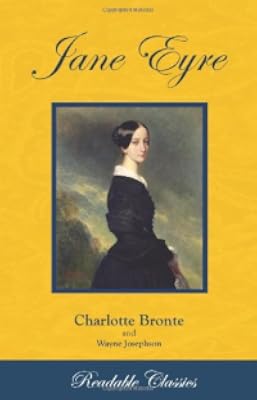
Jane Eyre (Abridged - Readable Classics)
by Charlotte Brontë, Wayne Josephson (Editor)
On This Page
Description
Readable Classics gently edits the great works of literature, retaining the original authors' voices, to provide study aids for students and make the classics more accessible to the modern reader. Jane Eyre, a novel of stunning power, romance and suspense, was an instant bestseller in 1847. It follows the spellbinding journey of a poor orphan girl who overcomes cruelty, loneliness, starvation and heartbreak on her quest for independence. Her passionate romance with rich, brooding Mr. show more Rochester, and her discovery of his devastating secret, forces her to choose between love and self-respect. Jane Eyre is the story of every woman who struggles for equality and dignity in a society that wants to deny her that right--as true in Victorian England as it is today. show lessTags
Recommendations



Member Reviews
This is edition of Jane Eyre is an abridgement in the Readable Classics series of books. The plot remains the same. The reader follows the story of an orphan girl from childhood in her aunt's home, through boarding school, and into adulthood as governess to the ward of a wealthy man with a mystery.
The blurb about the series on the back of the book made me a wee bit nervous: "Readable Classics gently edits the works of great literature...making them more enjoyable and less frustrating to modern readers." I didn't like the insinuation that the original novel was "frustrating" or unenjoyable. In general, I'm unsure how I feel about abridgements meant for adults. I can see children's editions like the Great Illustrated Classics or show more adaptations like graphic novel versions, but I don't really see the point of them for adults. Even for older students, I don't understand how one can study a piece of literature without considering the author's language and original style.
That being said, I wasn't actually turned off by the editing once I started reading. It wasn't as distracting as I anticipated and really just updates Bronte's Victorian style for a modern audience. As far as recommendations, I would certainly still suggest a go at the original (it's really not that difficult a read). But if someone wanted a condensed version this would be a good one to pick up. show less
The blurb about the series on the back of the book made me a wee bit nervous: "Readable Classics gently edits the works of great literature...making them more enjoyable and less frustrating to modern readers." I didn't like the insinuation that the original novel was "frustrating" or unenjoyable. In general, I'm unsure how I feel about abridgements meant for adults. I can see children's editions like the Great Illustrated Classics or show more adaptations like graphic novel versions, but I don't really see the point of them for adults. Even for older students, I don't understand how one can study a piece of literature without considering the author's language and original style.
That being said, I wasn't actually turned off by the editing once I started reading. It wasn't as distracting as I anticipated and really just updates Bronte's Victorian style for a modern audience. As far as recommendations, I would certainly still suggest a go at the original (it's really not that difficult a read). But if someone wanted a condensed version this would be a good one to pick up. show less
Returning to a novel years later often brings about startling revelations, not only about the work in question, but our own evolution and perspectives.
Returning to Charlotte Bronte’s much-loved Jane Eyre is no exception. This recent reading is my fourth or fifth (memory fails). I first read Jane Eyre as a young girl at boarding school (Havergal), and I remember being swept away in the comparative study of the Bronte sisters. Perhaps it was because the melodramatic romance appealed to a young girl’s impressionable (little say hormonal) ideals of love and relationships. I suppose that response was no different than today’s young girls swooning over the pages of the Twilight saga.
However, at the age of 55, ears all dry, with a show more modicum of cynicism and experience clearing my vision, I found myself sorely disappointed with Jane Eyre. This comes as an enormous surprise to me. I adore 19th century writing for the most part.
So why this time disenchanted with this epic love story? I suppose I found the religious undertone unpalatable. That Charlotte Bronte should have written with such evangelic fervour shouldn’t startle; she was the daughter of an Irish Anglican clergyman. And given much of the foundation of Jane Eyre is likely autobiographical (raised by a disinterested aunt, attended an indigent girl’s school), Charlotte Bronte likely clung to Christian tenants as solace and anchor.
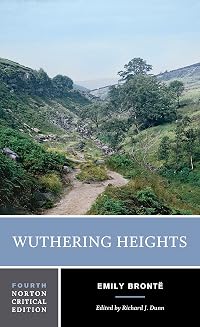
Then there was the question of author intrusion and lack of subtlety. Where Charlotte’s sister, Emily Bronte, demonstrates a more subtle hand in Wuthering Heights, and generally allows her characters to tell the story, Charlotte prefers an iron frying pan over the head, not just once, but continually so that she not only hits her readers with the obvious, but bludgeons them.
In style of prose once again Charlotte resorts to a heavy hand, indulging in pontificating asides and convoluted phraseology, so that she uses the medium of her novel more as a vehicle to voice her own opinions and prejudices, than as a literary medium. Certainly that penchant for soapbox isn’t unique to Charlotte Bronte. Many writers of the 19th century (and even today) deliver warnings and spotlights on the state of society through their prose. There is a difference, however, between illuminating an aspect of society, and preaching.
So, would I recommend you read Jane Eyre? Absolutely. Go now, purchase a copy, whether in print or digital format, and consume every word. Why? Because you should. Because in reading Jane Eyre you discover another element in the genesis of modern romantic writing, a lens on 19th century English life, and a fascinating discovery of the author herself. show less
Returning to Charlotte Bronte’s much-loved Jane Eyre is no exception. This recent reading is my fourth or fifth (memory fails). I first read Jane Eyre as a young girl at boarding school (Havergal), and I remember being swept away in the comparative study of the Bronte sisters. Perhaps it was because the melodramatic romance appealed to a young girl’s impressionable (little say hormonal) ideals of love and relationships. I suppose that response was no different than today’s young girls swooning over the pages of the Twilight saga.
However, at the age of 55, ears all dry, with a show more modicum of cynicism and experience clearing my vision, I found myself sorely disappointed with Jane Eyre. This comes as an enormous surprise to me. I adore 19th century writing for the most part.
So why this time disenchanted with this epic love story? I suppose I found the religious undertone unpalatable. That Charlotte Bronte should have written with such evangelic fervour shouldn’t startle; she was the daughter of an Irish Anglican clergyman. And given much of the foundation of Jane Eyre is likely autobiographical (raised by a disinterested aunt, attended an indigent girl’s school), Charlotte Bronte likely clung to Christian tenants as solace and anchor.
Then there was the question of author intrusion and lack of subtlety. Where Charlotte’s sister, Emily Bronte, demonstrates a more subtle hand in Wuthering Heights, and generally allows her characters to tell the story, Charlotte prefers an iron frying pan over the head, not just once, but continually so that she not only hits her readers with the obvious, but bludgeons them.
In style of prose once again Charlotte resorts to a heavy hand, indulging in pontificating asides and convoluted phraseology, so that she uses the medium of her novel more as a vehicle to voice her own opinions and prejudices, than as a literary medium. Certainly that penchant for soapbox isn’t unique to Charlotte Bronte. Many writers of the 19th century (and even today) deliver warnings and spotlights on the state of society through their prose. There is a difference, however, between illuminating an aspect of society, and preaching.
So, would I recommend you read Jane Eyre? Absolutely. Go now, purchase a copy, whether in print or digital format, and consume every word. Why? Because you should. Because in reading Jane Eyre you discover another element in the genesis of modern romantic writing, a lens on 19th century English life, and a fascinating discovery of the author herself. show less
“Readable Classics gently edits the great works of literature, retaining their essence and spirit, and making them more enjoyable and less frustrating to the modern reader.”
Reader, I was not optimistic about the consequences of a ‘gentle’ editing. However, I was pleasantly surprised. Rather than a condensation, the result is what would happen if Ms. Bronte were to bring her manuscript to a editor today. Surprisingly, this has not made the work seem anachronistic.
I remain uneasy about this sort of posthumous editing, but I enjoyed reading the book. And, of course, it will make the novel more accessible to students. More important, it remains a great ‘readable’ novel.
I don’t like the “Readable Classic” moniker, since show more it implies that the original book was not readable. But then again, perhaps now I’ll finally finish Moby Dick, which is available in this series.
Judge for yourself at http://www.readableclassics.com , where chapters are available for reading. show less
Reader, I was not optimistic about the consequences of a ‘gentle’ editing. However, I was pleasantly surprised. Rather than a condensation, the result is what would happen if Ms. Bronte were to bring her manuscript to a editor today. Surprisingly, this has not made the work seem anachronistic.
I remain uneasy about this sort of posthumous editing, but I enjoyed reading the book. And, of course, it will make the novel more accessible to students. More important, it remains a great ‘readable’ novel.
I don’t like the “Readable Classic” moniker, since show more it implies that the original book was not readable. But then again, perhaps now I’ll finally finish Moby Dick, which is available in this series.
Judge for yourself at http://www.readableclassics.com , where chapters are available for reading. show less
Mrs. Reed tells the young Jane Eyre to “be seated somewhere; and until you can speak pleasantly, remain silent” (1). Jane is often positioned outside of events because she is not connected to anyone, which allows her to observe her surroundings with a “spiritual eye.” As a governess, she is a surrogate mother to Adele, and, to Mrs. Reed, she is a beggar not fit to live with her children. The narrator relays conversations and events that Jane was not a part of but that she witnessed from a distance, which the narrator, the older Jane, is able to recollect in her autobiography.
Jane’s feelings about the paintings she shows Mr. Rochester parallel her position in life as a spectator, an outsider, someone who does not belong. Before show more the narrator shares her paintings with readers, she assures them “that they are nothing wonderful” (142). Here she evokes humility topoi, stating that her artwork is, perhaps, substantial considering it is done by a woman. The narrator remembers the images she envisions to be superior to her actual renderings of them, “before I attempted to embody them, they were striking; but my hand would not second my fancy” (142). Her paintings seem to be only shadows of what she conceives because the physical does not have the power to embody the imagination. Jane cannot physically embody what she imagines because of the distance between her thoughts and her body.
At Gateshead, Jane peruses volumes of books filled with pictures because they evoke a feeling of freedom within her. Her imagination, her freedom to think cannot seem to find a place in the outside world. The pictures she beholds tell stories of the artists’ feelings. She is intrigued by these tales even if she cannot fully understand their meaning or the sentiments behind them, “I cannot tell what sentiment haunted the quiet, solitary church-yard, with its inscribed headstone, its gate, its two trees, its low horizon, girdled by a broken wall, and its newly risen crescent attesting the hour of eventide” (3). Jane doesn’t know exactly what the artists feel, but she senses the pictures in the books she reads to be manifestations of inner thoughts and feelings.
As a child, Jane feels contentment in reading, “I was then happy; happy at least in my way” (3). Jane is happy when she can be absorbed in her thoughts and forget about the world outside of herself. Mr. Rochester asks her if she was happy when she painted her pictures, to which she responds “to paint them, in short, was to enjoy the keenest pleasures I have ever known” (143). She finds pleasure in painting, but she is disappointed with the result of her labors. “I was tormented by the contrast between my idea and my handiwork: in each case I had imagined something which I was quite powerless to realize” (143). Jane can render a “shadow” of her thoughts, but she does not know how to convey her feelings to the outside world. Her “drawings are, for a school-girl, peculiar,” as Rochester says, but they are void of feeling. Jane may have a visual eye and may be a keen observer, but she cannot connect her thoughts and feelings, to embody them. show less
Jane’s feelings about the paintings she shows Mr. Rochester parallel her position in life as a spectator, an outsider, someone who does not belong. Before show more the narrator shares her paintings with readers, she assures them “that they are nothing wonderful” (142). Here she evokes humility topoi, stating that her artwork is, perhaps, substantial considering it is done by a woman. The narrator remembers the images she envisions to be superior to her actual renderings of them, “before I attempted to embody them, they were striking; but my hand would not second my fancy” (142). Her paintings seem to be only shadows of what she conceives because the physical does not have the power to embody the imagination. Jane cannot physically embody what she imagines because of the distance between her thoughts and her body.
At Gateshead, Jane peruses volumes of books filled with pictures because they evoke a feeling of freedom within her. Her imagination, her freedom to think cannot seem to find a place in the outside world. The pictures she beholds tell stories of the artists’ feelings. She is intrigued by these tales even if she cannot fully understand their meaning or the sentiments behind them, “I cannot tell what sentiment haunted the quiet, solitary church-yard, with its inscribed headstone, its gate, its two trees, its low horizon, girdled by a broken wall, and its newly risen crescent attesting the hour of eventide” (3). Jane doesn’t know exactly what the artists feel, but she senses the pictures in the books she reads to be manifestations of inner thoughts and feelings.
As a child, Jane feels contentment in reading, “I was then happy; happy at least in my way” (3). Jane is happy when she can be absorbed in her thoughts and forget about the world outside of herself. Mr. Rochester asks her if she was happy when she painted her pictures, to which she responds “to paint them, in short, was to enjoy the keenest pleasures I have ever known” (143). She finds pleasure in painting, but she is disappointed with the result of her labors. “I was tormented by the contrast between my idea and my handiwork: in each case I had imagined something which I was quite powerless to realize” (143). Jane can render a “shadow” of her thoughts, but she does not know how to convey her feelings to the outside world. Her “drawings are, for a school-girl, peculiar,” as Rochester says, but they are void of feeling. Jane may have a visual eye and may be a keen observer, but she cannot connect her thoughts and feelings, to embody them. show less
Synopsis: We first fine Jane Eyre as a ten year old little girl living with her wicked aunt Mrs. Reed and her three snotty nosed little children: Georgiana, Eliza, and John. Sadly, the Reed family is the only family that Jane has left in the world. Her parents were killed and her uncle Reed took her in as an infant despite Mrs. Reed’s protests. On her uncle’s death bed he begs his wife to promise to look after Jane and treat her as if she was one of her own. Unfortunately, Mrs. Reed was not able to live up to her dying husbands wishes. Jane is told repeatedly that she is an evil, spiteful little girl who is going to hell and is brutally punished by Mrs. Reed daily.
One day Mrs. Reed decides she has had enough and can no longer look show more after Jane. So she sends her off to the Lowood boarding school for girls. The environment at the Lowood school is very strange to Jane and she has a bit of a rough time with it at first until she meets a compassionate teacher and a kind friend who both look after her and show her the first kindness she has ever felt. We are soon transported eight years later and Jane is now an eighteen year old girl working as a teacher at the Lowood school. She soon realizes that she can’t stay there forever and needs to move on in her life.
So she puts an ad in the local paper advertising for a position as a governess. She only receives one reply from a Mrs. Fairfax of Thornfield Hall. Jane is unaware at how much Thornfield Hall will change her life forever. For one thing she doesn’t know that Mrs. Fairfax is merely the housekeeper and that the real owner is Mr. Edward Rochester; a wealthy bachelor who takes an interest in Jane’s simplicity and unique aspect of life. We soon discover that Mr. Rochester has a dark side and seems to be keeping many secrets. Jane is the only one who can go toe to toe with Mr. Rochester and she seems to be the only one who understands him.
Review: I must admit I was a bit of a skeptic. I didn’t know whether I would like Jane Eyre, let alone be able to finish the almost 700 page novel. I tend to find classic literature to be a bit dry and I’m sorry to say a major snooze fest with the exception of Jane Austin’s Pride & Prejudice, which is one of my favorite books of all time and my second favorite movie, which follows Elizabeth the Golden Age. However, I must be acquiring a taste for the classics because I was in complete awe of Jane Eyre! I loved, loved, loved it!
The reason I buckled down and read this book is because I saw the movie trailer for Jane Eyre and I knew I had to see it, but I couldn’t watch the movie until I read the book because that is just how I am. At first I found the book a bit difficult to read due to the old English style of writing but I found it got easier once I picked up the dictionary and looked up some of the words I was having difficulty comprehending. I think what I loved most about this book was the mystery behind it! I wanted to know what Mr. Rochester’s secret was. I went back and forth from one idea to another, which kept me interested. I have to share with you my two favorite quotes in this book:
1. "Do you think, because I am poor, obscure, plain, and little, I am soulless and heartless? You think wrong! — I have as much soul as you — and full as much heart! And if God had gifted me with some beauty and much wealth, I should have made it as hard for you to leave me, as it is now for me to leave you."
2. "I am no bird; and no net ensnares me; I am a free human being with an independent will."
- Charlotte Bronte, Jane Eyre
I highly recommend Jane Eyre! It’s full of mystery, tragedy, love and vulnerability. At times I couldn’t put it down. I just hope in reading the book I didn’t spoil the movie because I tend to find that movies don’t usually live up to the book.
For more of my reviews visit my Historical Fiction site: http://allthingshistoricalfiction.blogspot.com show less
One day Mrs. Reed decides she has had enough and can no longer look show more after Jane. So she sends her off to the Lowood boarding school for girls. The environment at the Lowood school is very strange to Jane and she has a bit of a rough time with it at first until she meets a compassionate teacher and a kind friend who both look after her and show her the first kindness she has ever felt. We are soon transported eight years later and Jane is now an eighteen year old girl working as a teacher at the Lowood school. She soon realizes that she can’t stay there forever and needs to move on in her life.
So she puts an ad in the local paper advertising for a position as a governess. She only receives one reply from a Mrs. Fairfax of Thornfield Hall. Jane is unaware at how much Thornfield Hall will change her life forever. For one thing she doesn’t know that Mrs. Fairfax is merely the housekeeper and that the real owner is Mr. Edward Rochester; a wealthy bachelor who takes an interest in Jane’s simplicity and unique aspect of life. We soon discover that Mr. Rochester has a dark side and seems to be keeping many secrets. Jane is the only one who can go toe to toe with Mr. Rochester and she seems to be the only one who understands him.
Review: I must admit I was a bit of a skeptic. I didn’t know whether I would like Jane Eyre, let alone be able to finish the almost 700 page novel. I tend to find classic literature to be a bit dry and I’m sorry to say a major snooze fest with the exception of Jane Austin’s Pride & Prejudice, which is one of my favorite books of all time and my second favorite movie, which follows Elizabeth the Golden Age. However, I must be acquiring a taste for the classics because I was in complete awe of Jane Eyre! I loved, loved, loved it!
The reason I buckled down and read this book is because I saw the movie trailer for Jane Eyre and I knew I had to see it, but I couldn’t watch the movie until I read the book because that is just how I am. At first I found the book a bit difficult to read due to the old English style of writing but I found it got easier once I picked up the dictionary and looked up some of the words I was having difficulty comprehending. I think what I loved most about this book was the mystery behind it! I wanted to know what Mr. Rochester’s secret was. I went back and forth from one idea to another, which kept me interested. I have to share with you my two favorite quotes in this book:
1. "Do you think, because I am poor, obscure, plain, and little, I am soulless and heartless? You think wrong! — I have as much soul as you — and full as much heart! And if God had gifted me with some beauty and much wealth, I should have made it as hard for you to leave me, as it is now for me to leave you."
2. "I am no bird; and no net ensnares me; I am a free human being with an independent will."
- Charlotte Bronte, Jane Eyre
I highly recommend Jane Eyre! It’s full of mystery, tragedy, love and vulnerability. At times I couldn’t put it down. I just hope in reading the book I didn’t spoil the movie because I tend to find that movies don’t usually live up to the book.
For more of my reviews visit my Historical Fiction site: http://allthingshistoricalfiction.blogspot.com show less
I won this book as a Member Giveaway, and I wasn't really sure if it was right for me. I don't have a problem with nineteenth century literature, In fact, I love Dostoevsky and Dickens. However, I wasn't sure if Victorian era romance was right for me.
I'm still not sure if it is right for me, but this novel is so much more than simple romance. Jane Eyre tackles the relations between social and economic classes in nineteenth century England as well as the role of women in Victorian society. All of this is wrapped around the ideas that one must be true to themselves and be true to God. It is very well done and very enjoyable and was much better than I expected.
I'm still not sure if it is right for me, but this novel is so much more than simple romance. Jane Eyre tackles the relations between social and economic classes in nineteenth century England as well as the role of women in Victorian society. All of this is wrapped around the ideas that one must be true to themselves and be true to God. It is very well done and very enjoyable and was much better than I expected.
Victorian classics are not my thing, as I am impatient with prolonged amorous or sexual tension with no gratification. Though the ending was predictable, the details surrounding it were not. I enjoyed the story very much (though sometimes the details of scenery were a bit lengthy). The portrayal of a strong female character was totally welcome, but especially given the time frame in which it was written.
Members
- Recently Added By
Author Information

354+ Works 97,955 Members
Charlotte Bronte, the third of six children, was born April 21, 1816, to the Reverend Patrick Bronte and Maria Branwell Bronte in Yorkshire, England. Along with her sisters, Emily and Anne, she produced some of the most impressive writings of the 19th century. The Brontes lived in a time when women used pseudonyms to conceal their female identity, show more hence Bronte's pseudonym, Currer Bell. Charlotte Bronte was only five when her mother died of cancer. In 1824, she and three of her sisters attended the Clergy Daughter's School in Cowan Bridge. The inspiration for the Lowood School in the classic Jane Eyre was formed by Bronte's experiences at the Clergy Daughter's School. Her two older sisters died of consumption because of the malnutrition and harsh treatment they suffered at the school. Charlotte and Emily Bronte returned home after the tragedy. The Bronte sisters fueled each other's creativity throughout their lives. As young children, they wrote long stories together about a complex imaginary kingdom they created from a set of wooden soldiers. In 1846, Charlotte Bronte, with her sisters Emily and Anne published a thin volume titled Poems by Currer, Ellis, and Acton Bell. In the same year, Charlotte Bronte attempted to publish her novel, The Professor, but was rejected. One year later, she published Jane Eyre, which was instantly well received. Charlotte Bronte's life was touched by tragedy many times. Despite several proposals of marriage, she did not accept an offer until 1854 when she married the Reverend A. B. Nicholls. One year later, at the age of 39, she died of pneumonia while she was pregnant. Her previously rejected novel, The Professor, was published posthumously in 1857. (Bowker Author Biography) show less
Series
Belongs to Publisher Series
Work Relationships
Is an abridged version of
Common Knowledge
- Canonical title
- Jane Eyre (Abridged - Readable Classics) (Abridged - Readable Classics)
- People/Characters
- Jane Eyre; Edward Fairfax Rochester; Mrs. Fairfax; Helen Burns; Adele Varens
- Important places
- Thornfield Hall
- First words
- There was no possibility of taking a walk that day.
- Last words
- (Click to show. Warning: May contain spoilers.)"Amen; even so, come, Lord Jesus!"
- Disambiguation notice
- This is the Readable Classics abridgement of Jane Eyre. Please do not combine with the main work, or with any other abridgement.
Classifications
Statistics
- Members
- 399
- Popularity
- 77,929
- Reviews
- 15
- Rating
- (4.38)
- Languages
- English
- Media
- Paper, Ebook
- ISBNs
- 1
- ASINs
- 1