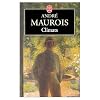
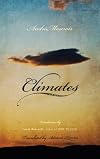
Climates
by André Maurois
On This Page
Description
A man marries a beautiful but unreliable woman against his family's wishes and then drives her away with his possessiveness and jealousy. In a reversal, when he marries again, it is he who is the loved one but does not love in return.Tags
Recommendations






























Member Reviews
Two books? Two books! TWO BOOKS IN ONE!!!
That's right ladies and gentlemen, André Maurois' 1928 novel Climates is two books in one! The story of love, marriage, and infidelity is told once in the story of Odile and Phillipe, then again in Phillipe's marriage to Isabelle. It's the same story twice. Except it's not. And oh is it painful the second time around.
Maurois has been compared to Tolstoy, and I certainly believe there are stylistic parallels. The slowly unraveling story of an unraveling marriage, Climates bears much of the psychological insight of Anna Karenina without nearly as many tangents. That said, Tolstoy surely would have found Maurois' novel vulgar with its frank (for the time) discussion of sex. And it's clear there is show more a little bit of Anna and, even more so, Natasha Rostova in the character of Odile.
Moving on from comparisons, Climates starts out fine. Odile and Phillipe are an interesting couple and the way their romance plays out feels genuine. The dynamics of their relationships, with one another and with others, are great. The plight of a desperate man, enamored with an impulsive, irresponsible young woman is felt on nearly every page.
The second half tries to tell the same story, this time between Phillipe and Isabelle. Maurois uses the same gorgeous prose to advance his story, but the story itself feels clunky here. Isabelle strikes me as a strong-willed woman, yet she is constantly at the mercy of Phillipe. His every wrong is somehow her fault. Perhaps she should've done more to foster his abuse of her—she could've at least thrown herself at his feet to beg forgiveness for his adultery... oh wait, she did that. This misogyny, though indicative of some sentiments of the time, make the second half of this novel painful. By this point, I don't care anymore for Phillipe. I don't even feel bad for Isabelle because she wants to be a doormat. And what is otherwise a gorgeously written, heartbreaking love story becomes a chore to get through (and an exercise in eye rolls).
Climates: it could've been so much more, but sometimes, less is more. show less
That's right ladies and gentlemen, André Maurois' 1928 novel Climates is two books in one! The story of love, marriage, and infidelity is told once in the story of Odile and Phillipe, then again in Phillipe's marriage to Isabelle. It's the same story twice. Except it's not. And oh is it painful the second time around.
Maurois has been compared to Tolstoy, and I certainly believe there are stylistic parallels. The slowly unraveling story of an unraveling marriage, Climates bears much of the psychological insight of Anna Karenina without nearly as many tangents. That said, Tolstoy surely would have found Maurois' novel vulgar with its frank (for the time) discussion of sex. And it's clear there is show more a little bit of Anna and, even more so, Natasha Rostova in the character of Odile.
Moving on from comparisons, Climates starts out fine. Odile and Phillipe are an interesting couple and the way their romance plays out feels genuine. The dynamics of their relationships, with one another and with others, are great. The plight of a desperate man, enamored with an impulsive, irresponsible young woman is felt on nearly every page.
The second half tries to tell the same story, this time between Phillipe and Isabelle. Maurois uses the same gorgeous prose to advance his story, but the story itself feels clunky here. Isabelle strikes me as a strong-willed woman, yet she is constantly at the mercy of Phillipe. His every wrong is somehow her fault. Perhaps she should've done more to foster his abuse of her—she could've at least thrown herself at his feet to beg forgiveness for his adultery... oh wait, she did that. This misogyny, though indicative of some sentiments of the time, make the second half of this novel painful. By this point, I don't care anymore for Phillipe. I don't even feel bad for Isabelle because she wants to be a doormat. And what is otherwise a gorgeously written, heartbreaking love story becomes a chore to get through (and an exercise in eye rolls).
Climates: it could've been so much more, but sometimes, less is more. show less
I really liked this book. In my opinion it's a book about love and jealousy.The book is structured in two parts : The first part is a letter that Philippe Marcenat writes to Isabelle, his second wife. In the letter Philippe tells the story of his first marriage with Odille : how he met her, how he felt in love with her and how in his mind she was The Queen ( the idea of a perfect woman that Philippe read when he was a child ). He married Odille and after a short period of time, Philippe finds out that she is not exactly the woman that he thought.She likes to go to parties and to flirt causing jealousy scenes. Finally she fells in love with another man. Knowing that he lost her, Philippe agrees to divorce Odille. After the divorce show more Odille, marries Francois and a few months later she kills herself, because she realized that the love Francois had for her wasn't as strong as her love for him. When Philippe finds out he is devastated.
The second part of the book is told by Isabelle, Philippe's second wife.At first things are good for them but after a while Philippe starts to feel a little bored of Isabelle's constant need to be with him. He starts going out with Solange, a married woman he meet in Morocco and soon after he kinda fells in love with her.Meanwhile Isabelle gets pregnant. After a trip back in Morocco, Solange fells in love with a writer, leaving Philippe sad and lonely. Isabelle is willing to accept all of this because of the great love she had for him. Soon after the baby is born Isabelle and Philippe decide to go to the country side where Philippe turns back into the man that he was at first and for three months Isabelle feels really happy. I really liked the scene in the forest. The ending was a bit sad, it left me with the felling that Isabelle deserved more.I liked this second part more because I understood why Philippe was acting that way and what he was looking for.
It was a good read!! show less
The second part of the book is told by Isabelle, Philippe's second wife.At first things are good for them but after a while Philippe starts to feel a little bored of Isabelle's constant need to be with him. He starts going out with Solange, a married woman he meet in Morocco and soon after he kinda fells in love with her.Meanwhile Isabelle gets pregnant. After a trip back in Morocco, Solange fells in love with a writer, leaving Philippe sad and lonely. Isabelle is willing to accept all of this because of the great love she had for him. Soon after the baby is born Isabelle and Philippe decide to go to the country side where Philippe turns back into the man that he was at first and for three months Isabelle feels really happy. I really liked the scene in the forest. The ending was a bit sad, it left me with the felling that Isabelle deserved more.I liked this second part more because I understood why Philippe was acting that way and what he was looking for.
It was a good read!! show less
Very old fashioned, dragging love story.
I really don't know what to say about this book. Really don't know. Read it if you like.
Written in french with pencil notes taken by Gram
Ratings
Members
- Recently Added By
Lists

Canon de la narrativa universal del s. XX (cicutadry)
499 works; 3 members
Author Information

301+ Works 5,157 Members
Some Editions
Awards and Honors
Series
Belongs to Publisher Series
Common Knowledge
- Canonical title
- Climates
- Original title
- Climats
- Original publication date
- 1928
- People/Characters*
- Philippe Marcenat; Odile Malet; Isabelle de Cheverny
- Epigraph*
- Toujours nous voulons l'éternel ailleurs qu'ici ; toujours nous tournons le regard de l'esprit vers autre chose que la présente situation et la présence apparence ; ou bien nous attendons de mourir comme si tout instant n'... (show all)était pas mourir et revivre. A chaque instant une vie neuve nous est offerte. Aujourd'hui, maintenant, tout de suite, c'est notre seule prise.
Alain - Dedication*
- A Simone
- Original language
- French
*Some information comes from Common Knowledge in other languages. Click "Edit" for more information.
Classifications
- Genres
- Fiction and Literature, General Fiction
- DDC/MDS
- 848.91209 — Literature & rhetoric French Literature French miscellaneous writings 1900- 1900-1999 1900-1945 Individual authors
- LCC
- PQ2625 .A95 .C4513 — Language and Literature French, Italian, Spanish and Portuguese literatures French literature Modern literature 1900-1960
- BISAC
Statistics
- Members
- 301
- Popularity
- 106,817
- Reviews
- 6
- Rating
- (3.94)
- Languages
- 12 — Catalan, Dutch, English, Estonian, French, German, Italian, Polish, Croatian, Slovak, Spanish, Turkish
- Media
- Paper, Ebook
- ISBNs
- 21
- ASINs
- 24