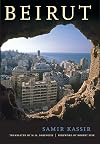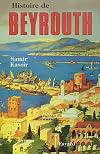
Beirut
by Samir Kassir
On This Page
Description
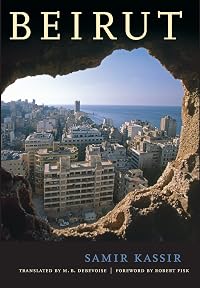
Widely praised as the definitive history of Beirut, this is the story of a city that has stood at the crossroads of Mediterranean civilization for more than four thousand years. The last major work completed by Samir Kassir before his tragic death in 2005, Beirut is a tour de force that takes the reader from the ancient to the modern world, offering a dazzling panorama of the city's Seleucid, Roman, Arab, Ottoman, and French incarnations. Kassir vividly describes Beirut's spectacular growth show more in the nineteenth and twentieth centuries, concentrating on its emergence after the Second World War as a cosmopolitan capital until its near destruction during the devastating Lebanese civil war of 1975-1990. Generously illustrated and eloquently written, Beirut illuminates contemporary issues of modernity and democracy while at the same time memorably recreating the atmosphere of one of the world's most picturesque, dynamic, and resilient cities. show lessTags
Recommendations

































Member Reviews
I'm not sure why I'm drawn to histories of cities from the former Ottoman empire, but this is the fourth one I've read in the past two or three years. All of them are heartbreaking: cosmopolitan paradises destroyed by sectarian violence. Beirut may be the most tragic because the end was so swift and so recent. This book has added poignancy in that the author was assassinated by a car bomb outside his home shortly after completing it.
The main focus is the era from the beginning of the nineteenth century to the eve of the civil war. The book traces all aspects of the city's growth and captures something of the feeling of what it must have been like to live in the city. The author does an admirable job explaining how the different regimes show more added to the character of the city and does as good a job as possible outlining the various forces that lead to the division of the city in 1975. Interestingly enough, it passes over the war itself, treating it as something of a coda to the city's life. show less
The main focus is the era from the beginning of the nineteenth century to the eve of the civil war. The book traces all aspects of the city's growth and captures something of the feeling of what it must have been like to live in the city. The author does an admirable job explaining how the different regimes show more added to the character of the city and does as good a job as possible outlining the various forces that lead to the division of the city in 1975. Interestingly enough, it passes over the war itself, treating it as something of a coda to the city's life. show less
An oddly moving narrative history which reads like Kassir's swan song or sacrificial offering. Beirut, city by the sea, consumed by fetishes of glamour, beautiful in makeup, its mercantile spine dislocated again and again by the spasmodic leanings of confessionalism and nepotism... This history gives my childhood context where there was none, and corrects many dangerous assumptions I might have made out of ignorance. Pedantic and lengthy (and gorgeously translated from the French), with a focus on the 19th and 20th Centuries, Kassir's book sweeps summarily over the Ahdath and civil war before ending on a hopeless, almost bitter note which will forever transform how I think of recent efforts to restore the city. Kassir's powerful show more author's voice is consistent, but his devotion to the various periods in the city's history isn't, resulting in a jerky trip through time. Ultimately well, well worth the effort. show less
Members
- Recently Added By
Author Information

Series
Belongs to Publisher Series
Common Knowledge
- Canonical title*
- Histoire de Beyrouth
- Original title
- Histoire de Beyrouth
- Original publication date
- 1993-05-19 (1° édition originale française ∙ Les grandes études historiques villes ∙ Fayard) (1° édition originale française ∙ Les grandes études historiques villes ∙ Fayard)
- Important places
- Beirut, Lebanon; Lebanon
- Original language*
- Français
*Some information comes from Common Knowledge in other languages. Click "Edit" for more information.
Classifications
Statistics
- Members
- 84
- Popularity
- 379,443
- Reviews
- 2
- Rating
- (5.00)
- Languages
- English, French, Italian
- Media
- Paper, Ebook
- ISBNs
- 6