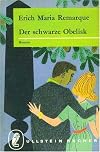
The Black Obelisk
by Erich Maria Remarque
On This Page
Description
From the author of the masterpiece All Quiet on the Western Front, The Black Obelisk is a classic novel of the troubling aftermath of World War I in Germany. A hardened young veteran from the First World War, Ludwig now works for a monument company, selling stone markers to the survivors of deceased loved ones. Though ambivalent about his job, he suspects there's more to life than earning a living off other people's misfortunes. A self-professed poet, Ludwig soon senses a growing change in show more his fatherland, a brutality brought upon it by inflation. When he falls in love with the beautiful but troubled Isabelle, Ludwig hopes he has found a soul who will offer him salvation--who will free him from his obsession to find meaning in a war-torn world. But there comes a time in every man's life when he must choose to live--despite the prevailing thread of history horrifically repeating itself. "The world has a great writer in Erich Maria Remarque. He is a craftsman of unquestionably first rank, a man who can bend language to his will. Whether he writes of men or of inanimate nature, his touch is sensitive, firm, and sure."--The New York Times Book Review show lessTags
Recommendations
































Member Reviews
Part of the re-read campaign. I had a real kick on for Remarque many years ago and bought up all of his books that I could find in the second hand book stores; except for All Quiet on the Western Front, I'm not sure that many remain in print. This story is set in the inter-war period and is told in the first person by a young WWI veteran who works for a very small company that sells gravestones of all shapes and sizes, and battles against the economic malaise of the Weimar Republic with inflation that rose to the point where the dollar was traded for millions and then billions of marks, and workers had to be paid twice a day with time off to go and spend their wages before they were completely devalued in the course of a few hours by show more the inflation.
Remarque is no sympathizer of the National Socialists, and it is easy to understand why his books were banned under the Nazis. Not too surprising with passages such as this one:
Heinrich Kroll is one of those people who never have any doubt about their own views–this makes them not only tiresome, but dangerous as well. They are the bronze core of our beloved fatherland that makes it possible to keep on starting wars again and again. They are incapable of learning; they are born with their hands at the seams of their trousers and are proud to die that way too. I don't know whether the type exists in other countries–but surely not is such numbers.
Not only is he anti-war, but he has a good eye for the appeal of the Nazis to the baser instincts, the easy solutions, and the mindless adherence. This is not really the theme of the book, however, and it comes out only sporadically and then more towards the end. Rather, Remarque focuses on an interesting collection of characters, men and women, trying to make their way in an increasingly unsettled and uncertain world, many of them finding pleasure and release when and where they can in a hedonistic approach to life.
The protagonist, whose name escapes me as it appears only once or twice in the book, makes a little extra money playing an organ at church services at the local lunatic asylum. This gives Remarque the opportunity to pit the agnostic, cynical protagonist against one of the young doctors, representing science, and the priest who represents a physically and emotionally self-satisfied piety. And our hero there meets a patient, a beautiful but throughly confused young woman who poses all sorts of metaphysical questions about the meaning of life and relationships while always mistaking her visitor for someone else. At the end of the novel, this young woman is completely cured, to the point that she has no recollection at all of her time in the hospital, nor of the hours she spent with our hero, but is transformed into the genteel, reserved, wealthy bourgeois woman that she was before, without any of the transcendent questioning that characterized her character in the hospital. Is this an allegory for the forgetfulness that Remarque sees around him in society with the exaltation of martial airs, intolerance, and all the deprivations and horrors of war? As one of the characters says:
Everything you survive becomes an adventure. It makes one sick! And the more horrible it was, the more adventurous it seems in recollection. Only the dead could really judge the war; they alone experienced it completely. show less
Remarque is no sympathizer of the National Socialists, and it is easy to understand why his books were banned under the Nazis. Not too surprising with passages such as this one:
Heinrich Kroll is one of those people who never have any doubt about their own views–this makes them not only tiresome, but dangerous as well. They are the bronze core of our beloved fatherland that makes it possible to keep on starting wars again and again. They are incapable of learning; they are born with their hands at the seams of their trousers and are proud to die that way too. I don't know whether the type exists in other countries–but surely not is such numbers.
Not only is he anti-war, but he has a good eye for the appeal of the Nazis to the baser instincts, the easy solutions, and the mindless adherence. This is not really the theme of the book, however, and it comes out only sporadically and then more towards the end. Rather, Remarque focuses on an interesting collection of characters, men and women, trying to make their way in an increasingly unsettled and uncertain world, many of them finding pleasure and release when and where they can in a hedonistic approach to life.
The protagonist, whose name escapes me as it appears only once or twice in the book, makes a little extra money playing an organ at church services at the local lunatic asylum. This gives Remarque the opportunity to pit the agnostic, cynical protagonist against one of the young doctors, representing science, and the priest who represents a physically and emotionally self-satisfied piety. And our hero there meets a patient, a beautiful but throughly confused young woman who poses all sorts of metaphysical questions about the meaning of life and relationships while always mistaking her visitor for someone else. At the end of the novel, this young woman is completely cured, to the point that she has no recollection at all of her time in the hospital, nor of the hours she spent with our hero, but is transformed into the genteel, reserved, wealthy bourgeois woman that she was before, without any of the transcendent questioning that characterized her character in the hospital. Is this an allegory for the forgetfulness that Remarque sees around him in society with the exaltation of martial airs, intolerance, and all the deprivations and horrors of war? As one of the characters says:
Everything you survive becomes an adventure. It makes one sick! And the more horrible it was, the more adventurous it seems in recollection. Only the dead could really judge the war; they alone experienced it completely. show less
Philosophical, political, satirical, and just plain funny. Engaging.
At about halfway, even though it's only 1923, I'm yelling at these people to emigrate - the Nationalists are clearly bent on tyranny already: recruiting teens, encouraging mobs, reacting poorly to the obscene rate of inflation, etc.
But ordinary people put on blinkers. We can find pockets of peace, moments of joy... enough to keep us calm, to keep us bringing children into the world, to keep us thinking of things like the 2021 United States Capitol attack as anomalous blips, to keep us from realizing that the ideologues on 'both sides' are dangerous. The author knows this and spent his career trying to help us understand that.
"[He] is one of those people who never have show more any doubt about their own views--this makes them not only tiresome but dangerous as well. They are the bronze core of our beloved fatherland that makes it possible to keep on starting wars over and over again. They are incapable of learning; they are born with their hands at the seam of their trousers and are proud to die that way too."
"For (that same man) everyone is a Communist who isn't on the extreme right."
A Catholic priest cries Anarchy! when asked to be Tolerant and considerate of others. "The Church... is the only dictatorship that has not been overthrown in two thousand years."
A friend philosophizes, "Our damnable memory is a sieve. It wants to survive. And survival is only possible through forgetfulness."
The main characters are almost incredibly sexist... but I don't think that the author is, because when we meet the women they seem pretty much like real people, not just the props that the men think they are.
Anyway, highly recommended as another classic. And kudos to the translator, [a:Denver Lindley|86827|Denver Lindley|https://s.gr-assets.com/assets/nophoto/user/u_50x66-632230dc9882b4352d753eedf9396530.png]. show less
At about halfway, even though it's only 1923, I'm yelling at these people to emigrate - the Nationalists are clearly bent on tyranny already: recruiting teens, encouraging mobs, reacting poorly to the obscene rate of inflation, etc.
But ordinary people put on blinkers. We can find pockets of peace, moments of joy... enough to keep us calm, to keep us bringing children into the world, to keep us thinking of things like the 2021 United States Capitol attack as anomalous blips, to keep us from realizing that the ideologues on 'both sides' are dangerous. The author knows this and spent his career trying to help us understand that.
"[He] is one of those people who never have show more any doubt about their own views--this makes them not only tiresome but dangerous as well. They are the bronze core of our beloved fatherland that makes it possible to keep on starting wars over and over again. They are incapable of learning; they are born with their hands at the seam of their trousers and are proud to die that way too."
"For (that same man) everyone is a Communist who isn't on the extreme right."
A Catholic priest cries Anarchy! when asked to be Tolerant and considerate of others. "The Church... is the only dictatorship that has not been overthrown in two thousand years."
A friend philosophizes, "Our damnable memory is a sieve. It wants to survive. And survival is only possible through forgetfulness."
The main characters are almost incredibly sexist... but I don't think that the author is, because when we meet the women they seem pretty much like real people, not just the props that the men think they are.
Anyway, highly recommended as another classic. And kudos to the translator, [a:Denver Lindley|86827|Denver Lindley|https://s.gr-assets.com/assets/nophoto/user/u_50x66-632230dc9882b4352d753eedf9396530.png]. show less
Erich Maria Remarque, as most people here already mentioned ,mostly famous for All Quiet on the Western Front, did not at all stop after that novel and it is a shame that by today, everything he wrote after that is more or less forgotten.
All Quiet on the Western Front, I think, is a very good novel, yet by far not the best novel he has written (which is, in my humble opinion, Spark of life). The Black Obelisk is, I think, even better.
Warning: This review might (oh well, will) contain spoilers.
The story is set in a town that is not specifically named but that can easily be determined as his birthplace: Osnabrück.
After returning from WWI, the young protagonist has to struggle with financial problems and, how could it be else, the one and show more everlasting problem: love.
Lost in a world that has grown more and more pragmatic and cynical, the young aspiring poet Ludwig has to find his way through the days. Pretty soon he realizes that it's no use confronting the aspiring Nazis face-to-face, because they only fight when they're 20 against 1. Instead, he reduces himself to subtlety and inner emigration.
What I feel is kinda sad is that - as far as I have seen - english translations usually don't show the subtitle of the book: "Story of a late youth". This, I think, explains the book very well.
Ludwig is caught between 3 women: Gerda Schneider, Isabelle/Jenny and Erna. Erna represents the childish love that he had and who leaves him at the beginning of the book, representing the impossibility of returning to the innocence of youth. Gerda instead is the opposite: a pragmatic and experienced woman who just wants to enjoy the day.
Isabelle/Jenny is a special case: they are two personalities of the schizophrenic Genevieve Thierhofen, Isabelle representing the mystical and idealistic part that Ludwig as a poet can relate to, Jenny almost being a dirty femme fatale that Ludwig cannot bear. In the end, both were not ideals, as Ludwig realizes, but symptoms of a mental disease.
The novel is heavily influenced by Remarques biography and thus has a lot of problems with women in it and also a lot of sadness but even more joy. It is just a story of an idealistic young man who has to come of age and realize, that all his ideals and beliefs are not at all valuable, but just unrealistic. What remains is the exile: Ludwig leaves the town and breaks with his local poet society, all who are still lost in their local fantasies of becoming big poets.
This novel has probably the biggest psychological insight into one character of all novels of Remarque and is sometimes a sad read, but way more often openly hilarious, just as youth is. Though on the top dealing a lot with society and the Weimar Republic, this book deals far more with the insights of a young man while set in a world that is caught in a decline of values.
Category: One of the best ever show less
All Quiet on the Western Front, I think, is a very good novel, yet by far not the best novel he has written (which is, in my humble opinion, Spark of life). The Black Obelisk is, I think, even better.
Warning: This review might (oh well, will) contain spoilers.
The story is set in a town that is not specifically named but that can easily be determined as his birthplace: Osnabrück.
After returning from WWI, the young protagonist has to struggle with financial problems and, how could it be else, the one and show more everlasting problem: love.
Lost in a world that has grown more and more pragmatic and cynical, the young aspiring poet Ludwig has to find his way through the days. Pretty soon he realizes that it's no use confronting the aspiring Nazis face-to-face, because they only fight when they're 20 against 1. Instead, he reduces himself to subtlety and inner emigration.
What I feel is kinda sad is that - as far as I have seen - english translations usually don't show the subtitle of the book: "Story of a late youth". This, I think, explains the book very well.
Ludwig is caught between 3 women: Gerda Schneider, Isabelle/Jenny and Erna. Erna represents the childish love that he had and who leaves him at the beginning of the book, representing the impossibility of returning to the innocence of youth. Gerda instead is the opposite: a pragmatic and experienced woman who just wants to enjoy the day.
Isabelle/Jenny is a special case: they are two personalities of the schizophrenic Genevieve Thierhofen, Isabelle representing the mystical and idealistic part that Ludwig as a poet can relate to, Jenny almost being a dirty femme fatale that Ludwig cannot bear. In the end, both were not ideals, as Ludwig realizes, but symptoms of a mental disease.
The novel is heavily influenced by Remarques biography and thus has a lot of problems with women in it and also a lot of sadness but even more joy. It is just a story of an idealistic young man who has to come of age and realize, that all his ideals and beliefs are not at all valuable, but just unrealistic. What remains is the exile: Ludwig leaves the town and breaks with his local poet society, all who are still lost in their local fantasies of becoming big poets.
This novel has probably the biggest psychological insight into one character of all novels of Remarque and is sometimes a sad read, but way more often openly hilarious, just as youth is. Though on the top dealing a lot with society and the Weimar Republic, this book deals far more with the insights of a young man while set in a world that is caught in a decline of values.
Category: One of the best ever show less
ладият Лудвиг Бодмер, ветеран от войната, живее в малък провинциален град и работи във фирма, търгуваща с надгробни паметници. Любител музикант, той свири на орган в параклиса на местната клиника за душевно болни. Това е време, когато в победена Германия цари хаос и смут, страната е обхваната от невиждана хиперинфлация, поникват идеите на националсоциализма. Лудвиг и връстниците му от тъй нареченото show more "изгубено поколение" се уповават единствено на вярното приятелство и спасителната ирония. Когато се влюбва в една от пациентките на клиниката - младата и красива Женевиев, - той се надява, че е намерил сродна душа. Но скоро идва моментът, когато Лудвиг трябва да направи своя избор... show less
There is lots of wisdom in this novel, as in all books I have read of Remarque. Less of a strong story this time, more of a still leben of Germany between two wars, but nevertheless a novel difficult to put down, mostly due to very strong and interesting characters. More than any history book, the novel explains how Germany could go from starting one world war to starting another. Still, the most heartbreaking story here is the love affair between our protagonist Ludwig and Isabelle, a shizophrenic character inside Geneviéve's Terhoven's head.
A novel set in the period of the great inflation, in Germany. "The Black Obelisk" covers the adventures of a man who sells tombstones for a living. When the inflation hits, the object is to sell contracts for the monuments but to delay their delivery as much as possible, so that the stock can be replaced with post inflationary prices. It is a case where irony and hypocracy are highly valued assets. The Nazis are not much mentioned, but is an exlanation of why some turned to a fascist explanation for their woes. It is certainly surreal, and sometimes amusing to the English speaking reader.
Remarque is most often known for All Quiet on the Western Front, and only that. It is excellent, of course, but it's also a bit of a shame, because the rest of his stuff is still pretty good. Case in point: The Black Obelisk, a kind of sequel taking place in Germany after WWI, as the population fights merely to survive and go about their business. Everything is unsettled. A thoughtful novel, but also one that flows well.
Members
- Recently Added By
Lists

German Literature
518 works; 56 members

20th Century Literature
1,161 works; 54 members

Favourite Books
1,820 works; 309 members

Hidden Classics
73 works; 15 members

Best Historical Fiction
620 works; 262 members
Author Information

115+ Works 29,403 Members
Erich Maria Remarque was born Erich Paul Remark on June 22, 1898 in Germany. He was drafted into the German Army at the age of 18. He was assigned to the Western Front and later moved to the 15th Reserve Infantry Regiment. He was wounded by shrapnel in the left leg, right arm and neck, and was moved to an army hospital in Germany where he spent show more the rest of the war. After the war, he continued his teacher training and became a primary school teacher. He also began pursuing his writing career. He started writing essays and poems and his first novel, The Dream Room. When he published All Quiet on the Western Front, Remarque changed his middle name in memory of his mother and reverted to the earlier spelling of the family name. The original family name, Remarque, had been changed to Remark by his grandfather in the 19th century. All Quiet on the Western Front was written in 1927, but Remarque was unable to find a publisher. The novel was published in 1929 and described the experiences of German soldiers during World War 1. His other works include: Station at the Horizon, The Road Back, Three Comrades, Flotsam, and Shadows in Paradise. Erich Remarque died in 1958 of heart collapse brought on byan aneurysm. (Bowker Author Biography) show less
Some Editions
Awards and Honors
Distinctions
Notable Lists
Series
Belongs to Publisher Series
Gallimard, Folio (4404)
Work Relationships
Common Knowledge
- Canonical title
- The Black Obelisk
- Original title
- Der schwarze Obelisk : Geschichte einer verspäteten Jugend : Roman
- Original publication date
- 1956
- People/Characters
- Ludwig Bodmer
- Important places
- Germany
- Important events*
- Economische crisis (1930 | 1939)
- First words*
- Die Sonne scheint ins Büro der Grabdenkmalsfirma Heinrich Kroll & Söhne.
- Original language*
- Deutsch
*Some information comes from Common Knowledge in other languages. Click "Edit" for more information.
Classifications
- Genres
- General Fiction, Fiction and Literature, Historical Fiction
- DDC/MDS
- 833.912 — Literature & rhetoric German & related literatures German fiction 1900- 1900-1990 1900-1945
- LCC
- PT2660 .A1 .S3813 — Language and Literature German, Dutch and Scandinavian literatures German literature Individual authors or works 1961-2000
- BISAC
Statistics
- Members
- 624
- Popularity
- 46,895
- Reviews
- 16
- Rating
- (4.11)
- Languages
- 22 — Bulgarian, Czech, Danish, Dutch, English, Estonian, Finnish, French, German, Greek, Hungarian, Italian, Latvian, Lithuanian, Norwegian (Bokmål), Polish, Romanian, Russian, Serbian, Spanish, Swedish, Turkish
- Media
- Paper, Audiobook, Ebook
- ISBNs
- 52
- ASINs
- 21