Manservant and Maidservant
by Ivy Compton-Burnett
On This Page
Description
A ruthless satire of power struggles and petty economies, Manservant and Maidservant exposes the violence and cruelty at the core of Victorian family life.Tags
Recommendations












Member Reviews
A dark, witty, upstairs-downstairs study of a house made miserable by a bullying, miserly Edwardian paterfamilias. Horace does his best to keep his children in fear and unnecessary discomfort (in the classic British way, by shouting a lot and saving on heating fuel) and behaves equally badly towards his servants, but he is a bear of very little brain, and things have a way of rebounding on him. Meanwhile, the local shopkeeper’s pleasant visits to Horace’s cook and butler threaten to lead to the exposure of her dark secret.
As usual, Compton-Burnett lets the dialogue do all the heavy lifting of narrative and characterisation, interrupted only by a few brief passages of prose scaffolding to ensure we know where we are and who is show more speaking. It’s an effective technique when done with her relentlessly precise eye for social nuance. And it’s particularly interesting here, since this is a novel where the relationship of spoken to written words is brought into question by several of the characters at different points.
An odd book, since a great many things that happen in it end up having far less drastic consequences than we were expecting, but a disturbingly close look at the inside of what we always like to imagine as the smoothly-running pre-WWI English middle-class household. show less
As usual, Compton-Burnett lets the dialogue do all the heavy lifting of narrative and characterisation, interrupted only by a few brief passages of prose scaffolding to ensure we know where we are and who is show more speaking. It’s an effective technique when done with her relentlessly precise eye for social nuance. And it’s particularly interesting here, since this is a novel where the relationship of spoken to written words is brought into question by several of the characters at different points.
An odd book, since a great many things that happen in it end up having far less drastic consequences than we were expecting, but a disturbingly close look at the inside of what we always like to imagine as the smoothly-running pre-WWI English middle-class household. show less
A bewildering novel by a bewildering author. Perhaps my own impression was only 3 stars but I feel I must award a 4th for sheer success of concept.
As other reviewers have summarised, Horace Lamb is a dismissive, uncaring gentleman from an era long past, whose wife can't stand him, servants find unappealing (when they're not outright attempting to kill him), and whose children seem to have grown old before their time. (If I take nothing from this, it will be a desire to use such names as Avery, Tamasin, and Jasper for any future unlucky children I may sire!). Horace's turning point is discovering how everyone feels about him, leading to an attempted change of personality, juxtaposed with the minor antics of his extended household.
This is show more my first Compton-Burnett novel and it seems clear that plot, as such, is not at the top of her priority list. This is a conversational novel, and a stylised one at that. Writing between the wars (i.e. long after the Victorian and Edwardian eras she depicts), Compton-Burnett creates a highly artificial, ironic world in which prose and narrative voice are sparse, and dialogue must carry the day. From the housekeeper to the youngest child, everyone's speech is arch, poisonous, and proverbial. (A tone once described by Hal Prince, of his musical A Little Night Music as being "knives dipped in icing sugar".) It feels almost like the achievement of pointillist painting, where the eye makes the colours mingle; here, the reader must make the dialogue serve for all of the other parts of writing too. "Charlotte", says Horace at one point," I have not spoken to you of the thing that is between us. It may be that I shall not speak of it." Elsewhere, to quote the character of Gideon, "My feelings are not easy; they go deep like everything about me."
Everything both high and ironic, rather like the older way of translating the Greek tragedies.
This structure has clearly confused a range of readers here on Goodreads, who have decided that Ms Compton-Burnett can't have known what she was doing. "No-one speaks like that!" cries a popular refrain, which suggests these armchair critics have never read Austen or Dickens, Pynchon or Hardy, and yet have somehow progressed to this obscure novelist from the early 20th century.
It will surprise no-one to hear that this book is hard-going. I think Ms Compton-Burnett, whose personal history you should also look up, was hard-going in general. Yet I'm glad to have finally made my way through one of her volumes. This is a book that almost cries out to be read aloud, with the subtleties of dialogue somewhat lost over the generations but still an intriguing experiment if nothing else. Will you enjoy it? If you enjoy extreme stylisation and narrative playfulness, perhaps yes. In the NYRB Classics edition, Diane Johnson's introduction refers to Manservant and Maidservant as a "noir version" of the British drama series Upstairs, Downstairs. It's a deeply strange comparison but, I think, rather apt. show less
As other reviewers have summarised, Horace Lamb is a dismissive, uncaring gentleman from an era long past, whose wife can't stand him, servants find unappealing (when they're not outright attempting to kill him), and whose children seem to have grown old before their time. (If I take nothing from this, it will be a desire to use such names as Avery, Tamasin, and Jasper for any future unlucky children I may sire!). Horace's turning point is discovering how everyone feels about him, leading to an attempted change of personality, juxtaposed with the minor antics of his extended household.
This is show more my first Compton-Burnett novel and it seems clear that plot, as such, is not at the top of her priority list. This is a conversational novel, and a stylised one at that. Writing between the wars (i.e. long after the Victorian and Edwardian eras she depicts), Compton-Burnett creates a highly artificial, ironic world in which prose and narrative voice are sparse, and dialogue must carry the day. From the housekeeper to the youngest child, everyone's speech is arch, poisonous, and proverbial. (A tone once described by Hal Prince, of his musical A Little Night Music as being "knives dipped in icing sugar".) It feels almost like the achievement of pointillist painting, where the eye makes the colours mingle; here, the reader must make the dialogue serve for all of the other parts of writing too. "Charlotte", says Horace at one point," I have not spoken to you of the thing that is between us. It may be that I shall not speak of it." Elsewhere, to quote the character of Gideon, "My feelings are not easy; they go deep like everything about me."
Everything both high and ironic, rather like the older way of translating the Greek tragedies.
This structure has clearly confused a range of readers here on Goodreads, who have decided that Ms Compton-Burnett can't have known what she was doing. "No-one speaks like that!" cries a popular refrain, which suggests these armchair critics have never read Austen or Dickens, Pynchon or Hardy, and yet have somehow progressed to this obscure novelist from the early 20th century.
It will surprise no-one to hear that this book is hard-going. I think Ms Compton-Burnett, whose personal history you should also look up, was hard-going in general. Yet I'm glad to have finally made my way through one of her volumes. This is a book that almost cries out to be read aloud, with the subtleties of dialogue somewhat lost over the generations but still an intriguing experiment if nothing else. Will you enjoy it? If you enjoy extreme stylisation and narrative playfulness, perhaps yes. In the NYRB Classics edition, Diane Johnson's introduction refers to Manservant and Maidservant as a "noir version" of the British drama series Upstairs, Downstairs. It's a deeply strange comparison but, I think, rather apt. show less
Manservant and Maidservant is so different from anything I’ve read – classic or contemporary – that I struggled with it at first (though that may also have been due to the tiny font and yellowing paper of my ancient library copy). I’m so glad I persevered.
Although it was published in 1947, the novel is set some fifty years earlier. It tells the story of the Lamb family. Horace Lamb is a petty tyrant in his own household, though he in turn is beholden to his wife’s wealth. His dependent cousin, Mortimer, his five children and their servants are all bound by his whims. Then Horace discovers something that makes him change his ways.
The novel has on first impression the feel of a drawing-room drama. Most of the ‘scenes’ are show more set indoors, many of them in the Lamb house. The chapters are long, and there are no white spaces to denote change of time or place, which can bring you up short when there is a sudden shift.
It is largely written in highly stylised dialogue – beautifully constructed sentences, effortless aphorisms and words weighted with irony and ambiguity are awarded to every character, children included.
But the artifice, paradoxically, highlights the emotion of the writing. There is a subtle and fierce compassion, and an unflinching eye on the small cruelties and humiliations within the household.
There is a careful dissection of the psychology of the characters: the conservatism of the senior servants, the rebellion of George, the recruit from the orphanage who refuses to be grateful for his place in the hierarchy and rages against the confinement of his life.
Mortimer could be despised for his refusal to make his own way in life, but his self-awareness and compassion to others makes him far more complicated. Miss Buchanan, the shopkeeper who is ashamed that she cannot read, isolates herself by giving barbed responses to anyone who tries to gain her trust.
Manservant and Maidservant feels oddly contemporary with its minimal exposition and distinctive voice. The combination of craft and complexity reminds me of the best TV box sets. Some criticise the novel’s ‘unrealistic’ dialogue, but I don’t suppose the people of Kentucky speak at all times with the lyrical beauty and dark philosophy of the characters in Justified.
This is a book that requires effort and attention but it is rewarded. It doesn’t distract with big plot twists or an epic sweep. It anatomises one small corner of the world, and in so doing gives you everything.
This review first appeared on my blog https://katevane.wordpress.com/ show less
Although it was published in 1947, the novel is set some fifty years earlier. It tells the story of the Lamb family. Horace Lamb is a petty tyrant in his own household, though he in turn is beholden to his wife’s wealth. His dependent cousin, Mortimer, his five children and their servants are all bound by his whims. Then Horace discovers something that makes him change his ways.
The novel has on first impression the feel of a drawing-room drama. Most of the ‘scenes’ are show more set indoors, many of them in the Lamb house. The chapters are long, and there are no white spaces to denote change of time or place, which can bring you up short when there is a sudden shift.
It is largely written in highly stylised dialogue – beautifully constructed sentences, effortless aphorisms and words weighted with irony and ambiguity are awarded to every character, children included.
But the artifice, paradoxically, highlights the emotion of the writing. There is a subtle and fierce compassion, and an unflinching eye on the small cruelties and humiliations within the household.
There is a careful dissection of the psychology of the characters: the conservatism of the senior servants, the rebellion of George, the recruit from the orphanage who refuses to be grateful for his place in the hierarchy and rages against the confinement of his life.
Mortimer could be despised for his refusal to make his own way in life, but his self-awareness and compassion to others makes him far more complicated. Miss Buchanan, the shopkeeper who is ashamed that she cannot read, isolates herself by giving barbed responses to anyone who tries to gain her trust.
Manservant and Maidservant feels oddly contemporary with its minimal exposition and distinctive voice. The combination of craft and complexity reminds me of the best TV box sets. Some criticise the novel’s ‘unrealistic’ dialogue, but I don’t suppose the people of Kentucky speak at all times with the lyrical beauty and dark philosophy of the characters in Justified.
This is a book that requires effort and attention but it is rewarded. It doesn’t distract with big plot twists or an epic sweep. It anatomises one small corner of the world, and in so doing gives you everything.
This review first appeared on my blog https://katevane.wordpress.com/ show less
So much dialogue I felt like I was reading a play! Very dark humor. Not entirely successful, but still interesting, and I enjoyed it more than most of what I've been reading lately.
Another book very different from what I normally read. I’m glad to finally understand why Ivy Compton-Burnett’s novels tend to polarize readers. Where I fall, though, I’m not sure of yet, as I found the book both A bit of a slog and fascinating at the same time. George was my favorite character; I enjoyed his rebelliousness.
So much dialogue I felt like I was reading a play! Very dark humor. Not entirely successful, but still interesting, and I enjoyed it more than most of what I've been reading lately.
Here's what I wrote about this read in 2021: "One is enough of this author (they say her books are pretty much all the same): Victorian English family dynamic (lots of unhealthy stuff) and meanwhile there's the servants living their parallel and intersecting lives."
Members
- Recently Added By
Lists

The Guardian's 1000 Novels Everyone Must Read
1,005 works; 548 members

Historical Fiction
889 works; 91 members

Books I've Read More Than Once
602 works; 49 members

Books Read in 2018
4,360 works; 110 members

Canon de la narrativa universal del s. XX (cicutadry)
499 works; 3 members

Michael Dirda's 100 Best Comic Novels
100 works; 1 member
Author Information

26 Works 2,630 Members
Ivy Compton-Burnett was born in Pinner, Middlesex, England on June 5, 1884. She studied classics at Royal Holloway College, London University, where she graduated in 1906. After publishing her first novel, Dolores, in 1911 she went on to become a prolific writer. Her other works include Pastors and Masters, Brothers and Sisters, Men and Wives, The show more Mighty and Their Fall, More Women Than Men, A House and Its Head, Manservant and Maidservant, and Two Worlds and Their Ways. In 1956, she won the James-Tait Black Memorial Award for Fiction for Mother and Son. In 1967, she was made a Dame Commander of the Order of the British Empire. She died on August 27, 1969. (Bowker Author Biography) show less
Awards and Honors
Series
Belongs to Publisher Series
Common Knowledge
- Canonical title
- Manservant and Maidservant
- Alternate titles
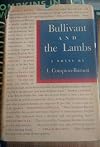
- Bullivant and the Lambs
- Original publication date
- 1947
- People/Characters
- Horace Lamb; Mortimer Lamb; Charlotte Lamb; Bullivant; Mrs. Selden; Miss Buchanan
- First words
- "Is that fire smoking?" said Horace Lamb.
- Quotations
- Horace had married her for her money, hoping to serve his impoverished estate, and she had married him for love, hoping to fulfill herself. The love had gone and the money remained, so that the advantage lay with Horace, if ... (show all)he could have taken so hopeful a view of life.
"I wonder who began this treating of people as fellow creatures," said Charlotte. "It is never a success."
"Appearances are not held to be a clue to the truth," said his cousin. "But we seem to have no other."
"It was a bad hour for George, when he told the truth about himself," said Mortimer. "It was sad to see him thinking that honesty was the best policy."
I have so often resisted temptation, and always without success. When people resist it with success, I always wonder how we know they have had any.
You told me not to write to you, but I am never so malicious as to take people at their word. It is almost like telling them that they have made their bed and must lie on it. Thank you very much for your letter. It has bro... (show all)ken my heart, but that is the natural result of the use of words. - Last words
- (Click to show. Warning: May contain spoilers.)Horace could only be silent.
- Original language
- Inglese
Classifications
Statistics
- Members
- 429
- Popularity
- 71,784
- Reviews
- 9
- Rating
- (3.50)
- Languages
- English, Italian, Spanish, Swedish
- Media
- Paper, Audiobook, Ebook
- ISBNs
- 16
- ASINs
- 12