On This Page
Description
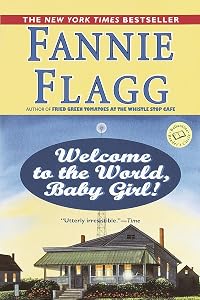
A funny, serious, and compelling novel by Fannie Flagg, author of the beloved Fried Green Tomatoes at the Whistle Stop Cafe (and prize-winning co-writer of the classic movie).“[This] tale of tough, eccentric, endearing women who first endure and then prevail. . . . will make you laugh out loud—and shed a few tears. . . . Welcome to the World, Baby Girl! is another rattling success.”—Richmond Times-Dispatch
Once again, Flagg's humor and respect and affection for her characters show more shine forth. Many inhabit small-town or suburban America. But this time, her heroine is urban: a brainy, beautiful, and ambitious rising star of 1970s television. Dena Nordstrom, pride of the network, is a woman whose future is full of promise, her present rich with complications, and her past marked by mystery.
Among the colorful cast of characters are:
Sookie, of Selma, Alabama, Dena's exuberant college roommate, who is everything that Dena is not; she is thrilled by Dena's success and will do everything short of signing autographs for her; Sookie's a mom, a wife, and a Kappa forever
Dena's cousins, the Warrens, and her aunt Elner, of Elmwood Springs, Missouri, endearing, loyal, talkative, ditsy, and, in their way, wise
Neighbor Dorothy, whose spirit hovers over them all through the radio show that she broadcast from her home in the 1940s
Sidney Capello, pioneer of modern sleaze journalism and privateer of privacy, and Ira Wallace, his partner in tabloid television
Several doctors, all of them taken with—and almost taken in by-Dena
There are others, captivated by a woman who tries to go home again, not knowing where home or love lie. show less
Tags
Recommendations






Member Reviews
This was a fun and fast read, in spite of the fact it's a big fat book. Flagg writes in short chapters and punchy prose. The author does a great job of pealing the onion of the story. It starts with normal people in small town America and a cousin - Dena, the "Baby Girl" of the title - who is a hotshot reporter in New York. Flagg bounces back and forth in time slowly unfolding Dena's murky history as we realize the investigative reporter has never examined the mysteries in her own life: her father, dead in WWII before she was born; her mother's furtive life moving them from place to place and finally disappearing. The ending is surprising and satisfying. Flagg also delivers a blistering critique of network news and her usual paean to show more small town living. Highly recommend this one. show less
I had fun reading this story. There are so many ridiculous characters that you just gotta love. I also didn't figure out the whole deal with her mother ahead of time. I wouldn't have guessed that. There's lots of sadness and laughs and heart.
Fannie Flagg does a spectacular job of diving into these charachter's lives. The detail she spends helping this book come to life is amazing. Starting off in the early 40's she bounces back and forth between that era and one's later in the 20th century with great ease. As the story develops you find yourself laughing, crying, and worrying right along with these people you have come to love (and sometimes hate). This book was nearly impossible to put down. It ony took me two days to read, as I wanted to get back to their world as muchs my world would allow. This is one good book.
Flannery O'Connor is still my favorite southern female writer, but Fannie Flagg certainly deserves a spot in the premier league. I've read Fried Green Tomatoes at the Whistle Stop Café and this, with Standing in the Rainbow on my To Read list.
I even perceive a bit of overlap between Tomatoes and Baby Girl, in the characters of Dot Weems and Neighbor Dorothy. In Tomatoes, Dot Weems was the publisher of the local newspaper, really a full-length Page Six. In Baby Girl, Neighbor Dorothy runs a small radio show out of her front bedroom, "and the news is mostly good."
I even perceive a bit of overlap between Tomatoes and Baby Girl, in the characters of Dot Weems and Neighbor Dorothy. In Tomatoes, Dot Weems was the publisher of the local newspaper, really a full-length Page Six. In Baby Girl, Neighbor Dorothy runs a small radio show out of her front bedroom, "and the news is mostly good."
Well, I loved it!!! Humor, mystery, love, nostalgia, sorrow, anger, and things that make you think!
I like it even more. In the back of the book, she tells about who she based the characters on and the conversation with Tennessee Williams was based on her own conversation with him. Tiny print but it is so good, I don’t notice it. All I did was to hold the book closer to my eyes.
This book gets at what is truly important in life and it is one of those books that you really want to hug. Thank you, Fannie Flagg!
I like it even more. In the back of the book, she tells about who she based the characters on and the conversation with Tennessee Williams was based on her own conversation with him. Tiny print but it is so good, I don’t notice it. All I did was to hold the book closer to my eyes.
This book gets at what is truly important in life and it is one of those books that you really want to hug. Thank you, Fannie Flagg!
I first saw this book on a list of "Gentle Reads" at my local library.
I don't think it is.
It's got a lot to say about racism, prejudice, addiction, anxiety, family problems, etc. And the end-all argument is mostly good. The relationship between the main character and her eventual object of affection was quite realistic (which I appreciated). Flagg does a nice job weaving things together and modernly setting us up for the eventual reveals. But they didn't need to couch it all in language that my grandmother would find offensive. Which is probably why I won't pick up another one in the series.
Which I'm kinda bummed about, because much good is said of this particular author, both in the critical community and by Dick van Dyke (who show more apparently used to work with her when she did television). I wonder if all the television stuff in this novel is based on real life.... show less
I don't think it is.
It's got a lot to say about racism, prejudice, addiction, anxiety, family problems, etc. And the end-all argument is mostly good. The relationship between the main character and her eventual object of affection was quite realistic (which I appreciated). Flagg does a nice job weaving things together and modernly setting us up for the eventual reveals. But they didn't need to couch it all in language that my grandmother would find offensive. Which is probably why I won't pick up another one in the series.
Which I'm kinda bummed about, because much good is said of this particular author, both in the critical community and by Dick van Dyke (who show more apparently used to work with her when she did television). I wonder if all the television stuff in this novel is based on real life.... show less
This book is one of the best ones I've read in a very long time. It tells the story of Dena Nordstrom, America's blonde haired, blue eyed #1 female newsperson in the 1970's. The book jumps back and forth between the 1940's and how Dena's parents met and her childhood, to 1978 New York City. It could easily get confusing, but Fannie Flagg writes it so flawlessly it isn't hard to follow at all.
It mainly centers around Dena and how her life is out of control - she drinks too much, goes out too often and cannot handle any type of relationship. And on top of all that, now she has a bleeding ulcer. What's a girl to do? Go see a psychiatrist. Only problem there is, the second she walks in his office, he falls in love with her. So he refers her show more to another doctor, aptly named Dr. Diggers, who keeps asking her questions about her childhood and her mother in particular.
What can Dena tell her? Her mother was a very private person and Dena did not know her well at all. During Christmas break one year, Dena flys to her mother's apartment in Chicago, only to find that her mother has disappeared off the face of the earth. Why? Where did she disappear to? What secrets was she keeping? Was her mother a Nazi spy? A sleazy reporter thinks so, and he would like nothing better than to destroy Dena and her reputation. Dena has to put the past to rest and the only way to do that is by solving the mystery of her mother's past and what exactly happened to her.
Along the way in this book, you meet some interesting characters, mainly in the town of Elmwood Springs, Missouri - Dena's hometown and the place where she finally becomes whole again.
4 stars out of 5 show less
It mainly centers around Dena and how her life is out of control - she drinks too much, goes out too often and cannot handle any type of relationship. And on top of all that, now she has a bleeding ulcer. What's a girl to do? Go see a psychiatrist. Only problem there is, the second she walks in his office, he falls in love with her. So he refers her show more to another doctor, aptly named Dr. Diggers, who keeps asking her questions about her childhood and her mother in particular.
What can Dena tell her? Her mother was a very private person and Dena did not know her well at all. During Christmas break one year, Dena flys to her mother's apartment in Chicago, only to find that her mother has disappeared off the face of the earth. Why? Where did she disappear to? What secrets was she keeping? Was her mother a Nazi spy? A sleazy reporter thinks so, and he would like nothing better than to destroy Dena and her reputation. Dena has to put the past to rest and the only way to do that is by solving the mystery of her mother's past and what exactly happened to her.
Along the way in this book, you meet some interesting characters, mainly in the town of Elmwood Springs, Missouri - Dena's hometown and the place where she finally becomes whole again.
4 stars out of 5 show less
Members
- Recently Added By
Lists

Southern Fiction
212 works; 51 members

Carole's List
445 works; 13 members

Books Read in 2020
4,379 works; 124 members

A Good Read (Radio 4)
287 works; 1 member

Books Set in Missouri
29 works; 4 members
Author Information

28+ Works 26,843 Members
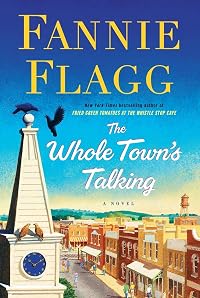
Born on September 21, 1941, in Birmingham, Alabama, and named Patricia Neal, Fannie Flagg attended the University of Alabama, the Pittsburgh Playhouse, and the Town and Gown Theatre. Although she is best known as a novelist and screenwriter, she began her career in Birmingham, in 1964. She was an actress, comedienne, producer, and writer, first in show more Birmingham in 1964, when she was the producer of The Morning Show (WBRC-TV) and later when she was associated with such shows as Candid Camera and Harper Valley. Other works include Coming Attractions: A Wonderful Novel (1981) and the recording My Husband Doesn't Know I'm Making This Phone Call (1971). However, Flagg's greatest claim to fame came when the screenplay for the film Fried Green Tomatoes, which she, together with Jon Avnet, adapted from her novel, Fried Green Tomatoes at the Whistle Stop Cafe, won an Academy Award nomination for Best Screenplay in 1991. She is the author several other works of fiction, including; Standing in the Rainbow, A Redbird Christmas, Can't Wait to Get to Heaven, I Still Dream about You, The All-Girl Filling Station's Last Reunion, and The Whole Town's Talking. (Bowker Author Biography) show less
Awards and Honors
Distinctions
Series

Work Relationships
Common Knowledge
- Canonical title
- Welcome to the World, Baby Girl!
- Original title
- Welcome to the World, Baby Girl!
- Original publication date
- 1998-09-11
- People/Characters
- Dena Nordstrom; Norma Warren; Macky Warren; Gerry O'Malley; Neighbor Dorothy; Ira Wallace (show all 14); Marion Chapman Nordstrom; Sidney Capello; Elner Shimfissle; Wayne Newton; Sarah Jane "Sookie" Simmons Krackenberry; Elizabeth Diggers; Tennessee Williams; Carlos
- Important places
- New York, New York, USA; Elmwood Springs, Missouri, USA; Selma, Alabama, USA; Dallas County, Texas, USA
- Epigraph
- ". . . Poor little old human beings - they're jerked into this world without having any idea where they came from or what it is they are supposed to do, or how long they have to do it in. Or where they are gonna wind up afte... (show all)r that, But bless their hearts, most of them wake up every morning and keep on trying to make some sense out of it. Why, you can't help buy love them, can you? I just wonder why more of them aren't as crazy as betsy bugs."
--Aunt Elner, 1978 - Dedication
- For Sam and Joe Vaughan, with love
- First words
- Everyone in Elmwood Springs and thereabouts remembers the day they put the radio tower in Neighbor Dorothy's backyard, and how excited they were that night when they first saw the bright red bulb on top of the tower, glowing ... (show all)like a cherry-red Christmas light way up in the black Missouri sky.
----------------------------------------
from the Preface:
In the late forties Elmwood Springs, in southern Missouri, seems more or less like a thousand other small town scattered across America. - Last words
- (Click to show. Warning: May contain spoilers.)And the news was mostly good.
- Original language
- English
- Disambiguation notice
- ISBN 9511073850 is for Finnish Vision: Modern Art, Architecture, and Design
Classifications
Statistics
- Members
- 2,523
- Popularity
- 7,654
- Reviews
- 50
- Rating
- (3.65)
- Languages
- 7 — English, German, Hungarian, Italian, Norwegian (Bokmål), Polish, Spanish
- Media
- Paper, Audiobook, Ebook
- ISBNs
- 31
- UPCs
- 1
- ASINs
- 13