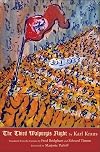
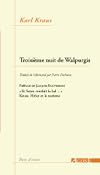
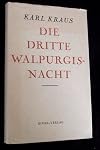
The Third Walpurgis Night
by Karl Kraus
On This Page
Description
The first complete English translation of a far-seeing polemic, written in 1933 by the preeminent German-language satirist, unmasking the Nazi seizure of power Now available in English for the first time, Austrian satirist and polemicist Karl Kraus’s Third Walpurgis Night was written in immediate response to the Nazi seizure of power in 1933 but withheld from publication for fear of reprisals against Jews trapped in Germany. Acclaimed when finally published by Kösel Verlag in 1952, it is show more a devastatingly prescient exposure, giving special attention to the regime’s corruption of language as masterminded by Joseph Goebbels. Bertolt Brecht wrote to Kraus that, in his indictment of Nazism, “You have disclosed the atrocities of intonation and created an ethics of language.” This masterful translation, by the prizewinning translators of Kraus’s The Last Days of Mankind, aims for clarity where Kraus had good reason to be cautious and obscure. show lessTags
Recommendations

























Member Reviews
The Hitler administration hit Germany and the world like a bombshell. Suddenly, relations with all other countries soured. No other leader could find a way to work with him. Germany became reviled globally. Human rights, freedom of speech and travel shriveled. It became a surveillance country. An exit visa was needed, even just to visit Austria next door, as every movement was tracked. What few tourists ventured in were constantly harassed by various forces of police. Government lies and fake news (as it was called even then) became the norm. Though it was not intended as such, The Third Walpurgis Night, written in 1933, presents an eerie parallel universe to the Trump administration today.
The book is a long polemic, incorporating many show more of the abuses of the new Hitler administration. It was written during Hitler’s first term, just as it was just beginning. Its author, Karl Kraus, was a well- known satirist and editor of Die Fackel (The Torch), a satirical magazine. He had both a sly and direct style of attack, and the book he produced was so damning he surely would have been murdered had it been published before he died, some three years later. It is only now available in English, and it is enlightening.
The new Germany was built entirely on fear. For example, courts could not be counted on for any kind of justice; they always sided with the Nazi or the party. Judges were there for their loyalty to Hitler, not their wisdom. If you were beaten up, you must have provoked it, simply by say, being Jewish in public.
Early on, the Hitler administration managed to sequester the elderly president, Hindenburg, by “offering” to compassionately take care of him, at his own home. He never reappeared, but despite publicly disliking Hitler, he suddenly issued a glowing statement praising Hitler’s intellect, knowledge, sagacity and sheer genius - to the skies. He might as well have said very stable genius and The Chosen One. Same thing, only Hitler pretended someone else said it of him, where Trump says it of himself because no one else would. In Germany, it was a key omen of things to come.
Sidelining Hindenburg allowed Hitler to give himself a free hand to make Germany into a war machine like no other before, pouring huge amounts into defense, drafting every man, and instilling the fear of faltering loyalty and nationalism. And all the while, the government denied it was mobilizing. It claimed it only ever sought peace. All the other claims were incorrect and hurtful to Germans. At the time of the book, Germany was already pummeling Austria with air-dropped leaflets and getting it to accept Germanification before it took over completely.
Soon, job applicants had to show party membership and loyalty, and a lack of Jewish blood going back at least three generations. Jews were encouraged to leave, often by beatings, torture and murder. Yet they couldn’t obtain exit visas. (A prominent politician publicly encouraged Einstein to move to the United States, which would be an improvement for both countries, he said.) Instead, they were herded into concentration camps in “protective custody” from the state-encouraged beatings, robberies, torture, arson and murders.
Concentration camps provided free slave labor to giant German firms like Bayer, Krupp, and Siemens. The Hitler administration minimized it, lying that there were only 24,000 in the camps, combined. This led the Prussian state to brag it alone had more than half of all detainees, followed by another state that boasted it had three times many as Prussia. (There are 16 states in Germany.) Like the Chinese today, Germany claimed detainees were in “protective” custody, that they were treated well, fed well, educated, and both enjoyed and appreciated the opportunity. Coerced labor in the USA is not a Trump invention; it is well ingrained in the carceral economy.
The detainees were weekly humiliated by being forced to parade through town. The public could clearly see they were pathetic, skinny, stumbling, foggy, barely clothed remnants of the doctors, lawyers, musicians and craftsmen they used to be. People lined the streets to see if they knew any of them, since disappearing people meant no trail or traceability. The truth is they were worked hard and starved to death, that being cheaper than feeding them. They were disposable, and there was an endless supply.
Kraus takes the lies and presents them straightforwardly, followed by a twist of the knife: “Forms confirming that nothing has happened to torture victims are routinely available In the Brown House to all who succeed in leaving the building.”
He said the outrageous lies, absurd rulings and contradictions emanating from the government engendered disbelief among some, like when the president sided with pillaging protestors over the victims, much as Trump sides with the “very good people” who attack others. Book burnings were encouraged, as ignorance was the preferred state, and attendance became mandatory. Science was frowned upon. Erudition was frowned upon. Foreigners were frowned upon. Restaurants were required to remove all foreign words from their menus.
The lies grew. The government claimed only 20 people had lost their lives in the “revolution,” while hundreds of thousands went missing. Before the current availability of mass media, a prize of 200 Austrian shillings was offered for the best example of fake news out of Nazi Germany, already in 1933. There were endless choices.
Government positions were handed out to loyalists with criminal records – a murderer to a concentration camp guard, as well as a man who horsewhipped a woman to Prime Minister of Saxony. Smallminded men with party cards did very well for themselves. The Trump administration follows this path closely, selecting the totally unqualified for their loyalty.
Jesus was co-opted for the cause. In Hitler’s spec, Jesus always had to be portrayed as a blue-eyed blond, with a swastika prominent on his robe or covering. Trump of course has gone farther, hinting that he might be The Chosen One himself. Both men were totally irreligious, had no knowledge of the bible and broke every commandment continually.
Like Trump’s, the Hitler administration hyped rallies: “… those absurd rallies … aimed at fooling the German people into thinking it is becoming something exceptional without needing to make any special effort.”
Nationalism became both required and obsessive: “As patriotism opens the citizen’s eyes to the interests of the state, it leaves them blind to the interest of humanity at large.”
The constant lying began to become acceptable: “… the big lie of Nazism, which blatantly shifts shape by the hour, yet is never discredited, even when contradicting itself.”
Alternative facts fooled few at first, but were accepted by most before long: “The allegation that Goering was responsible for disseminating news of the Communists having started the Reichstag fire a good hour before it happened is probably mistaken, since the fire itself broke out earlier than scheduled.”
The goal was simple: “… to reduce the life of the state, the economy and cultural practices to its simplest formula, namely annihilation.”
It was clearly madness to those who understood the world: “All around, nothing but wonder at a state whose institutions – down to the last legal paragraph – derive from a delirium.”
Though the three introductions in the book promote Kraus as a master satirist, I could find no satire in it at all. It is all sly sarcasm when it isn’t just a vicious direct attack. Various luminaries of the time have their own chapter where Kraus eviscerates them. As comedians have found with Trump, it is hard to satirize a living satire. It is sufficient to quote them.
Kraus is a highly perceptive, educated and analytical force. The book is peppered with poetic quotes from the likes of Faust, Macbeth, Goethe and Bayard Taylor. Kraus the editor bashes the Nazis for their criminally bad German, misspellings and rhetorical garbage, much as the incoherent and illiterate alt-right rantings on social media plague Americans today.
The atrocities against the Jews are held pretty much at bay until about 150 pages in. At that point, having battered the reader with all the political nonsense, the real ugliness of the Hitler administration comes to the fore. The obvious racism of the Trump administration has not even begun to approach the starting line by comparison.
A problem with the book is that most of the names, well known to all at the time, are completely meaningless in 2020. The pop culture habit of name dropping is great in real time, but doesn’t last beyond a generation. Trying to read the ebook version was worse, as the critical endnotes that help explain who these people were are hard to find, and getting back to where you left off is almost as frustrating. The same goes for the glossary.
The translators have done a grand job, adapting German poetry so it rhymes in English, adapting sentence structure so it rings true to English eyes. It’s too bad it took so long, but it is here now, during the first Trump term, just in time to see how it all unfolds.
As Shakespeare’s Lady Macbeth said:
What need we fear who knows it
When none can call our power to account?
David Wineberg show less
The book is a long polemic, incorporating many show more of the abuses of the new Hitler administration. It was written during Hitler’s first term, just as it was just beginning. Its author, Karl Kraus, was a well- known satirist and editor of Die Fackel (The Torch), a satirical magazine. He had both a sly and direct style of attack, and the book he produced was so damning he surely would have been murdered had it been published before he died, some three years later. It is only now available in English, and it is enlightening.
The new Germany was built entirely on fear. For example, courts could not be counted on for any kind of justice; they always sided with the Nazi or the party. Judges were there for their loyalty to Hitler, not their wisdom. If you were beaten up, you must have provoked it, simply by say, being Jewish in public.
Early on, the Hitler administration managed to sequester the elderly president, Hindenburg, by “offering” to compassionately take care of him, at his own home. He never reappeared, but despite publicly disliking Hitler, he suddenly issued a glowing statement praising Hitler’s intellect, knowledge, sagacity and sheer genius - to the skies. He might as well have said very stable genius and The Chosen One. Same thing, only Hitler pretended someone else said it of him, where Trump says it of himself because no one else would. In Germany, it was a key omen of things to come.
Sidelining Hindenburg allowed Hitler to give himself a free hand to make Germany into a war machine like no other before, pouring huge amounts into defense, drafting every man, and instilling the fear of faltering loyalty and nationalism. And all the while, the government denied it was mobilizing. It claimed it only ever sought peace. All the other claims were incorrect and hurtful to Germans. At the time of the book, Germany was already pummeling Austria with air-dropped leaflets and getting it to accept Germanification before it took over completely.
Soon, job applicants had to show party membership and loyalty, and a lack of Jewish blood going back at least three generations. Jews were encouraged to leave, often by beatings, torture and murder. Yet they couldn’t obtain exit visas. (A prominent politician publicly encouraged Einstein to move to the United States, which would be an improvement for both countries, he said.) Instead, they were herded into concentration camps in “protective custody” from the state-encouraged beatings, robberies, torture, arson and murders.
Concentration camps provided free slave labor to giant German firms like Bayer, Krupp, and Siemens. The Hitler administration minimized it, lying that there were only 24,000 in the camps, combined. This led the Prussian state to brag it alone had more than half of all detainees, followed by another state that boasted it had three times many as Prussia. (There are 16 states in Germany.) Like the Chinese today, Germany claimed detainees were in “protective” custody, that they were treated well, fed well, educated, and both enjoyed and appreciated the opportunity. Coerced labor in the USA is not a Trump invention; it is well ingrained in the carceral economy.
The detainees were weekly humiliated by being forced to parade through town. The public could clearly see they were pathetic, skinny, stumbling, foggy, barely clothed remnants of the doctors, lawyers, musicians and craftsmen they used to be. People lined the streets to see if they knew any of them, since disappearing people meant no trail or traceability. The truth is they were worked hard and starved to death, that being cheaper than feeding them. They were disposable, and there was an endless supply.
Kraus takes the lies and presents them straightforwardly, followed by a twist of the knife: “Forms confirming that nothing has happened to torture victims are routinely available In the Brown House to all who succeed in leaving the building.”
He said the outrageous lies, absurd rulings and contradictions emanating from the government engendered disbelief among some, like when the president sided with pillaging protestors over the victims, much as Trump sides with the “very good people” who attack others. Book burnings were encouraged, as ignorance was the preferred state, and attendance became mandatory. Science was frowned upon. Erudition was frowned upon. Foreigners were frowned upon. Restaurants were required to remove all foreign words from their menus.
The lies grew. The government claimed only 20 people had lost their lives in the “revolution,” while hundreds of thousands went missing. Before the current availability of mass media, a prize of 200 Austrian shillings was offered for the best example of fake news out of Nazi Germany, already in 1933. There were endless choices.
Government positions were handed out to loyalists with criminal records – a murderer to a concentration camp guard, as well as a man who horsewhipped a woman to Prime Minister of Saxony. Smallminded men with party cards did very well for themselves. The Trump administration follows this path closely, selecting the totally unqualified for their loyalty.
Jesus was co-opted for the cause. In Hitler’s spec, Jesus always had to be portrayed as a blue-eyed blond, with a swastika prominent on his robe or covering. Trump of course has gone farther, hinting that he might be The Chosen One himself. Both men were totally irreligious, had no knowledge of the bible and broke every commandment continually.
Like Trump’s, the Hitler administration hyped rallies: “… those absurd rallies … aimed at fooling the German people into thinking it is becoming something exceptional without needing to make any special effort.”
Nationalism became both required and obsessive: “As patriotism opens the citizen’s eyes to the interests of the state, it leaves them blind to the interest of humanity at large.”
The constant lying began to become acceptable: “… the big lie of Nazism, which blatantly shifts shape by the hour, yet is never discredited, even when contradicting itself.”
Alternative facts fooled few at first, but were accepted by most before long: “The allegation that Goering was responsible for disseminating news of the Communists having started the Reichstag fire a good hour before it happened is probably mistaken, since the fire itself broke out earlier than scheduled.”
The goal was simple: “… to reduce the life of the state, the economy and cultural practices to its simplest formula, namely annihilation.”
It was clearly madness to those who understood the world: “All around, nothing but wonder at a state whose institutions – down to the last legal paragraph – derive from a delirium.”
Though the three introductions in the book promote Kraus as a master satirist, I could find no satire in it at all. It is all sly sarcasm when it isn’t just a vicious direct attack. Various luminaries of the time have their own chapter where Kraus eviscerates them. As comedians have found with Trump, it is hard to satirize a living satire. It is sufficient to quote them.
Kraus is a highly perceptive, educated and analytical force. The book is peppered with poetic quotes from the likes of Faust, Macbeth, Goethe and Bayard Taylor. Kraus the editor bashes the Nazis for their criminally bad German, misspellings and rhetorical garbage, much as the incoherent and illiterate alt-right rantings on social media plague Americans today.
The atrocities against the Jews are held pretty much at bay until about 150 pages in. At that point, having battered the reader with all the political nonsense, the real ugliness of the Hitler administration comes to the fore. The obvious racism of the Trump administration has not even begun to approach the starting line by comparison.
A problem with the book is that most of the names, well known to all at the time, are completely meaningless in 2020. The pop culture habit of name dropping is great in real time, but doesn’t last beyond a generation. Trying to read the ebook version was worse, as the critical endnotes that help explain who these people were are hard to find, and getting back to where you left off is almost as frustrating. The same goes for the glossary.
The translators have done a grand job, adapting German poetry so it rhymes in English, adapting sentence structure so it rings true to English eyes. It’s too bad it took so long, but it is here now, during the first Trump term, just in time to see how it all unfolds.
As Shakespeare’s Lady Macbeth said:
What need we fear who knows it
When none can call our power to account?
David Wineberg show less
Kraus was a Viennese and Austrian living institution, a man of letters and all-around critic of cultural and political life. He wrote and published a journal, Die Fackel (The Torch), that was for 36 years a thorn in the side of bourgeois complacency and right wing politics. And yet this last great salvo of his against barbarity and inhumanity was at the last moment suppressed by him, although it was already set and ready to print, because he feared for the consequences its publishing could have on the Jews still in Germany. Kraus died in 1936; the book was first published in 1952.
It contains essays on individual Nazis and Nazi sympathisers, Goebbels, Heidegger, Gottfried Benn, on various acts of barbarism that were accumulating every show more day ever more, on the "satirist's dilemma"--all of this analysed through the travails imposed on the German language, which means on thought itself. (In the introduction the translators make a case such as you can expect in drawing parallels between Kraus' Austria and Trumps' America.)
From Headlong into Servitude: When Madmen Lead the Blind:
What use is the addled brain, that malfunctioning mechanism, faced with a miracle of nature that bedazzles and stupefies us--the big lie of Nazism, which blatantly shifts its shape by the hour yet is never discredited, even when contradicting itself! (...)
"How could it happen?" It could happen because a minority seized existing weapons with which to create new ones, and now as a majority it confronts the groups it vanquished as well as defenceless individuals. show less
It contains essays on individual Nazis and Nazi sympathisers, Goebbels, Heidegger, Gottfried Benn, on various acts of barbarism that were accumulating every show more day ever more, on the "satirist's dilemma"--all of this analysed through the travails imposed on the German language, which means on thought itself. (In the introduction the translators make a case such as you can expect in drawing parallels between Kraus' Austria and Trumps' America.)
From Headlong into Servitude: When Madmen Lead the Blind:
What use is the addled brain, that malfunctioning mechanism, faced with a miracle of nature that bedazzles and stupefies us--the big lie of Nazism, which blatantly shifts its shape by the hour yet is never discredited, even when contradicting itself! (...)
"How could it happen?" It could happen because a minority seized existing weapons with which to create new ones, and now as a majority it confronts the groups it vanquished as well as defenceless individuals. show less
Ratings
Members
- Recently Added By
Author Information

275+ Works 2,173 Members
Series
Belongs to Publisher Series
Common Knowledge
- Canonical title
- The Third Walpurgis Night
- Original publication date
- 1933
Classifications
- Genres
- Nonfiction, History, Politics and Government
- DDC/MDS
- 943.086 — History & geography History of Europe Central Europe: Germany, Austria, Switzerland, Czech, Poland, Hungary Historical periods of Germany Germany 1866- Third Reich 1933-1945
- LCC
- PT2621 .R27 .D75 — Language and Literature German, Dutch and Scandinavian literatures German literature Individual authors or works 1860/70-1960
- BISAC
Statistics
- Members
- 83
- Popularity
- 384,764
- Reviews
- 2
- Rating
- (4.55)
- Languages
- 5 — English, French, German, Italian, Spanish
- Media
- Paper, Ebook
- ISBNs
- 11
- ASINs
- 3