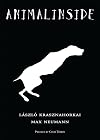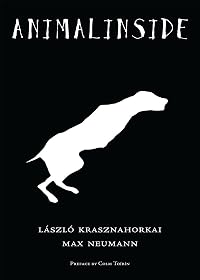
AnimalInside
by Laszlo Krasznahorkai
On This Page
Description
This cahier is the result of a collaboration undertaken specially for The Cahiers Series, between Hungarian novelist L#65533;szl#65533; Krasznahorkai and German painter Max Neumann. Krasznahorkai, author of The Melancholy of Resistance and War & War, responds with 14 texts to 14 depictions of a strange and ill-formed creature made by the renowned German painter Max Neumann. The texts speak from within the head of Neumann's creature that seems to be menacing existence itself. The cahier is show more introduced with a preface by Irish novelist Colm T#65533;ib#65533;n. show lessTags
Recommendations




























Member Reviews
Yet another beautiful Cahier in the series by Sylph Editions.
������Max Neumann is well known for his often eerie portraits that echo psychological states; L��szl�_ Krasznahorkai is well known for his eerie, maddening, and Kafkaesque prose that delves into individuals��� relations to power structures and each other. Responding first to an image of Neumann���s depicting a terrifying yet incomprehensible animal, Krasznahorkai set the chain of collaboration that would become Animalinside into motion; Neumann���s resulting images���from the first textual response���are increasingly more horrifying, and Krasznahorkai���s prose follows this animal���s story in his typical long show more sentences with repetitive rhythms and compact rhetorical ways of rendering diction, e.g., ���I extendextendextend around the Earth at the Equator��� and ������so so sooo big that I extend across two galaxies, if I want and soooo so big that extend across one hundred galaxies.���
Animalinside is about annihilation and apocalypse, but it is more harrowing than that: in identifying our fears and anxieties about power, Krasznahorkai shows that those in positions of power harbor the same kinds of misgivings that we do. In a sense, power entraps us in a very Foucauldian way, and to speak about power���to paraphrase Foucault���is only something that can be done from inside existing power structures. Krasznahorkai���s animal is inside us (���I, that thing that looks so ghastly, is within you, because I am within you���); at the same time, the animal appears to exhibit traits of alienation and isolation that characterize Krasznahorkai���s characters in other work. The impact of this here is to suggest that while we criticize power structures which cage us (���this space-cage... a cage made to my measurements���), preventing us from realizing our individuality, we are, oddly enough, complicit in our victimization within this totalizing hierarchy. ������
Krasznahorkai���s instruments of power are panoptic:
������Called ���the Hungarian master of the apocalypse��� by Susan Sontag, Animalinside shows Krasznahorkai grappling with similar questions that his longer fictions consider; alongside Neumann���s images���often reminiscent of Munch���s Scream (���but what I hate most is how I���m howling here into the infinite���)���the paralyzing fear as we observe our own systemic collapse is made all the more uncanny, absurd, and downright chilling. show less
������Max Neumann is well known for his often eerie portraits that echo psychological states; L��szl�_ Krasznahorkai is well known for his eerie, maddening, and Kafkaesque prose that delves into individuals��� relations to power structures and each other. Responding first to an image of Neumann���s depicting a terrifying yet incomprehensible animal, Krasznahorkai set the chain of collaboration that would become Animalinside into motion; Neumann���s resulting images���from the first textual response���are increasingly more horrifying, and Krasznahorkai���s prose follows this animal���s story in his typical long show more sentences with repetitive rhythms and compact rhetorical ways of rendering diction, e.g., ���I extendextendextend around the Earth at the Equator��� and ������so so sooo big that I extend across two galaxies, if I want and soooo so big that extend across one hundred galaxies.���
Animalinside is about annihilation and apocalypse, but it is more harrowing than that: in identifying our fears and anxieties about power, Krasznahorkai shows that those in positions of power harbor the same kinds of misgivings that we do. In a sense, power entraps us in a very Foucauldian way, and to speak about power���to paraphrase Foucault���is only something that can be done from inside existing power structures. Krasznahorkai���s animal is inside us (���I, that thing that looks so ghastly, is within you, because I am within you���); at the same time, the animal appears to exhibit traits of alienation and isolation that characterize Krasznahorkai���s characters in other work. The impact of this here is to suggest that while we criticize power structures which cage us (���this space-cage... a cage made to my measurements���), preventing us from realizing our individuality, we are, oddly enough, complicit in our victimization within this totalizing hierarchy. ������
Krasznahorkai���s instruments of power are panoptic:
and that���s how life ends for you, because it is impossible to hide away from us, there is no depth within the earth that could be a refuge for you, we are here, above, here, look we���re watching from up here what you���re doing down there, but we don���t have to watch everything, because we know everything about you... I am inscrutable and indivisible and impenetrable...������And the end, as Krasznahorkai sees it here, is hardly something that can be prepared for or reckoned with because all of our cultural myths���and, too, the many ways in which we externalize power/knowledge systems, again to bring Foucault to mind���fail to consider that the true apocalypse does not come from outside, but from within:
every aspiration to the infinite is a trap... and don���t count on me emerging from below the earth, and it is not from the mountains or from the heavens that I shall arrive, every picture drawn in anxiety, ever word written down in horror, every voice sounded in anguish with which you try to prophesize me is senseless, for there is no need of prophecy, there is no need for you to evoke me before I arrive, it will be enough to see me then...A true revolt, then, is impossible, and Krasznahorkai���s pessimism is obviously on display here, but there is also an overriding sense of sympathy for this animal despite his malevolence and his destructive intent: ���if I jump up to sink my teeth into your throat, I hump into the trap definitively and inevitably, there is no point in speaking of escape. Into your throat.���
������Called ���the Hungarian master of the apocalypse��� by Susan Sontag, Animalinside shows Krasznahorkai grappling with similar questions that his longer fictions consider; alongside Neumann���s images���often reminiscent of Munch���s Scream (���but what I hate most is how I���m howling here into the infinite���)���the paralyzing fear as we observe our own systemic collapse is made all the more uncanny, absurd, and downright chilling. show less
Really? Colm Toibin wrote the introduction? Okay then. You'll be glad to know that, according to the introduction, Laszlo writes sentences. I think that's the take-away. (No stars)
More importantly, this is certainly the only book I will ever read that left me wondering whether the speaker was between one and all of: THE VOID, a kind of evil Krishna, a psychotic, a teenage boy trapped in the suburbs and really wanting to break free, a large dinosaur, DEEEEEAAAAATH, or my own pet dog when she's hungry. What starts off--as another reviewer has said--as a kind of dullish, less entertaining Bernhard tale somehow ends up with the speaker demanding to be fed, and suddenly all the early "I WILL COME AND THERE WILL BE NOTHING LEFT OF YOUR PUNY show more EXISTENCE" stuff starts to sound more like that crying whine that dogs do when they want to remind you they're there and would you please put the book down because feeding time is in only fifteen minutes I mean how will you get ready in time???????
The question becomes, is this intentional? Laszlo is often described as a kind of nihilist. If that's true, this book is unintentionally funny. If, however, he has nihilistic leanings and is aware of that fact, is willing to make fun of those leanings, and maybe suggest that there's more to life than those leanings, then he and his books immediately become more interesting. I'm feeling generous, so I'll take this line of interpretation. (two stars)
Also, it's a lovely little object. The art slightly overwhelms the story, I thought, but the story is plainly minor stuff anyway. The production values are astonishing--if only New Directions put this much effort into their other books, I wouldn't have to pick pages of (e.g.) Gottfried Benn up off the floor every time there was a stiff breeze past my bookcases. (two stars). show less
More importantly, this is certainly the only book I will ever read that left me wondering whether the speaker was between one and all of: THE VOID, a kind of evil Krishna, a psychotic, a teenage boy trapped in the suburbs and really wanting to break free, a large dinosaur, DEEEEEAAAAATH, or my own pet dog when she's hungry. What starts off--as another reviewer has said--as a kind of dullish, less entertaining Bernhard tale somehow ends up with the speaker demanding to be fed, and suddenly all the early "I WILL COME AND THERE WILL BE NOTHING LEFT OF YOUR PUNY show more EXISTENCE" stuff starts to sound more like that crying whine that dogs do when they want to remind you they're there and would you please put the book down because feeding time is in only fifteen minutes I mean how will you get ready in time???????
The question becomes, is this intentional? Laszlo is often described as a kind of nihilist. If that's true, this book is unintentionally funny. If, however, he has nihilistic leanings and is aware of that fact, is willing to make fun of those leanings, and maybe suggest that there's more to life than those leanings, then he and his books immediately become more interesting. I'm feeling generous, so I'll take this line of interpretation. (two stars)
Also, it's a lovely little object. The art slightly overwhelms the story, I thought, but the story is plainly minor stuff anyway. The production values are astonishing--if only New Directions put this much effort into their other books, I wouldn't have to pick pages of (e.g.) Gottfried Benn up off the floor every time there was a stiff breeze past my bookcases. (two stars). show less
You know I generally love this guy. But this book, not so hot. It was OK, but still, I was disappointed. I tell why here:
http://mewlhouse.hubpages.com/_1qsqsuzy8itx3/hub/Untamed-Enough-To-Ride-On-Hemin...
http://mewlhouse.hubpages.com/_1qsqsuzy8itx3/hub/Untamed-Enough-To-Ride-On-Hemin...
Ratings
Members
- Recently Added By
Lists

Art-inspired fiction
45 works; 2 members
Author Information

41+ Works 6,650 Members
László Krasznahorkai is an Hungarian Author who has won the 2015 Man Booker International Prize. The $117,600 biennial prize is awarded to a living author, whose body of work is available in English or English translation, in recognition of his or her contribution to fiction 'on the world stage'. (Bowker Author Biography)
All Editions
Some Editions
Awards and Honors
Series
Belongs to Publisher Series
Sylph Cahiers (14)
Work Relationships
Is contained in
Common Knowledge
- Canonical title
- AnimalInside
Classifications
- Genres
- Fiction and Literature, General Fiction
- DDC/MDS
- 894.51134 — Literature & rhetoric Literatures of other languages Literatures of Altaic, Uralic, Hyperborean, Dravidian languages; literatures of miscellaneous languages of south Asia Finno-Ugric languages Ugric languages Hungarian Hungarian fiction 2000–
- LCC
- PH3281 .K8866 .A4513 — Language and Literature Uralic languages. Basque language Uralic. Basque Hungarian
- BISAC
Statistics
- Members
- 112
- Popularity
- 290,380
- Reviews
- 3
- Rating
- (3.70)
- Languages
- English, Hungarian
- Media
- Paper
- ISBNs
- 4