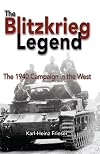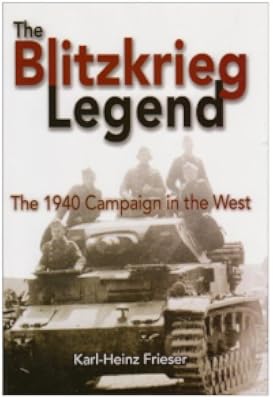
The Blitzkrieg Legend: The 1940 Campaign in the West
by Karl-Heinz Frieser
On This Page
Description
Here, for the first time in English, is an illuminating new German perspective on the decisive Blitzkrieg campaign of 1940. Karl-Heinz Frieser's account provides the definitive explanation for Germany's startling success and the equally surprising and rapid military collapse of France and Britain on the European continent. In a little over a month, Germany decisively defeated the Allies in battle, a task that had not been achieved in four years of brutal fighting during World War I.First show more published in 1995 as the official German history of the 1940 campaign in the west, the book go show lessTags
Recommendations








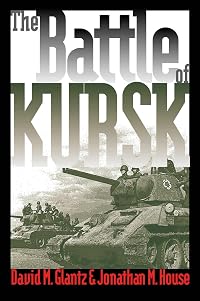
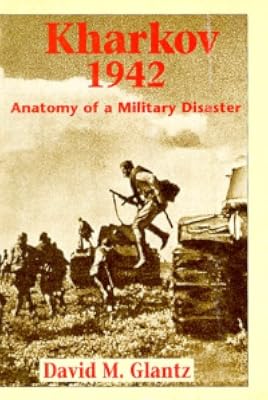



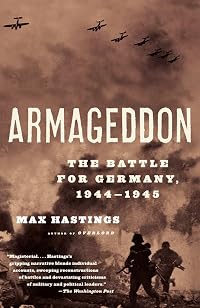
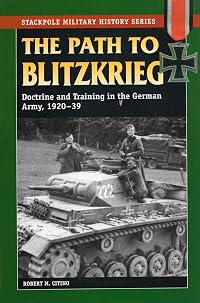








Member Recommendations

jcbrunner The books complement each other well. Zalonga offers color, Frieser the foundation.
Member Reviews
This study didn't quite have the impact for me that I thought it would, but that might be a function of how Frieser's conclusions have been influencing the field for years. In any case, this is the classic analysis debunking the notion that there was a theory of "lightning war" before the wholly unexpected rampant success of German arms in May of 1940. Instead, Frieser finds the case of a desperate strategic gamble that was redeemed by German tactical and operational excellence on one hand, and enabled by French operational and organizational ineptitude on the other.
Mind you, this is not to say that German generals such as Rundstedt and Kluge had their wits about them more than French generals such as Gamelin and Georges, but that the show more German panzer commanders such as Guderian and Hoth could throw success in the face of the chain of command and impose their will on events. This is at least until a belated firming up of the French defense occurred and the strategic gaff of allowing the Dunkirk evacuation took place. For Frieser the last is symptomatic of how the state of German strategic bankruptcy was still in place, if only to be disguised by the new operational art for a little while longer. show less
Mind you, this is not to say that German generals such as Rundstedt and Kluge had their wits about them more than French generals such as Gamelin and Georges, but that the show more German panzer commanders such as Guderian and Hoth could throw success in the face of the chain of command and impose their will on events. This is at least until a belated firming up of the French defense occurred and the strategic gaff of allowing the Dunkirk evacuation took place. For Frieser the last is symptomatic of how the state of German strategic bankruptcy was still in place, if only to be disguised by the new operational art for a little while longer. show less
Frieser's campaign analysis is a real gem. This operational history of one of the most famous campaigns blasts away many commonly held myths about the Blitzkrieg. The Wehrmacht did not plan a lightning strike, did not expect its success and hampered the Panzer forces from achieving the annihilation of the Dunkirk pocket (fortunately for mankind, I might add). Hitler was not the GröFaz but an ignorant, petulant egomaniac whose increasing interference in military matters was enormously detrimental. Hitler's madness was, however, surpassed by the incompetence of the gerontocratic French leadership which squandered their superior resources and lacked the will to fight back.
The success of the campaign lay in the concentration of ten highly show more mobile Panzer divisions connected by wireless communication and supported by the vertical artillery, the Luftwaffe. Based on an unorthodox idea of Manstein (who was transferred out of the operation for it) and executed by rank insubordination by Guderian, Rommel and Reinhardt who did not stop when ordered until the sickle had cut the Allied armies in two. Well, nearly, as the OKH did succeed to stop them twice giving their opponents valuable breathing space.
Based on a rigorous examination of the literature and a thorough discussion of all aspects of the campaign, Frieser has written a landmark study. The book has plenty of detailed, beautifully coloured maps, exemplary OOBs (up to bat. level) and offers many thoughtful remarks, valuable lessons and observations. (Review of the German 3rd Ed.) show less
The success of the campaign lay in the concentration of ten highly show more mobile Panzer divisions connected by wireless communication and supported by the vertical artillery, the Luftwaffe. Based on an unorthodox idea of Manstein (who was transferred out of the operation for it) and executed by rank insubordination by Guderian, Rommel and Reinhardt who did not stop when ordered until the sickle had cut the Allied armies in two. Well, nearly, as the OKH did succeed to stop them twice giving their opponents valuable breathing space.
Based on a rigorous examination of the literature and a thorough discussion of all aspects of the campaign, Frieser has written a landmark study. The book has plenty of detailed, beautifully coloured maps, exemplary OOBs (up to bat. level) and offers many thoughtful remarks, valuable lessons and observations. (Review of the German 3rd Ed.) show less
As part of the planning for the megagame War in the West I bought myself a copy of Blitzkrieg Legend because it is the German Army’s official history (although it didn't get written until the 1990s).
From reading the first couple of chapters and looking through the maps you can see the evolution of the German plan. You can see why the directive was written the way that it was in October 1939.
The most interesting thing for me is that there is no concept of a lightning war, the general staffs & high command all believe that the start of the world war was a gross mistake and spells certain doom for Germany as being too soon to be winnable. the strong belief is that the strength of the economy is what wins wars, not surprise attacks (and show more for my money they were right).
After the planning phase there is a fairly detailed examination of the attacks themselves. What becomes clear is how lucky the Germans were, although some of this is down to the way that the 100,000 man army has trained its troops, and this training continues into the expanded army. It is human factors rather than technology that makes the blitzkreig work. The Germans were exceedingly lucky, when they infiltrate forward and put small parties over rivers and obstacle the enemy retires rather than counter-attacks.
I would certainly recommend this book strongly to anyone who has an interest in WW2, and particularly the Fall of France in 1940. show less
From reading the first couple of chapters and looking through the maps you can see the evolution of the German plan. You can see why the directive was written the way that it was in October 1939.
The most interesting thing for me is that there is no concept of a lightning war, the general staffs & high command all believe that the start of the world war was a gross mistake and spells certain doom for Germany as being too soon to be winnable. the strong belief is that the strength of the economy is what wins wars, not surprise attacks (and show more for my money they were right).
After the planning phase there is a fairly detailed examination of the attacks themselves. What becomes clear is how lucky the Germans were, although some of this is down to the way that the 100,000 man army has trained its troops, and this training continues into the expanded army. It is human factors rather than technology that makes the blitzkreig work. The Germans were exceedingly lucky, when they infiltrate forward and put small parties over rivers and obstacle the enemy retires rather than counter-attacks.
I would certainly recommend this book strongly to anyone who has an interest in WW2, and particularly the Fall of France in 1940. show less
If you read just one book about the May 1940 campaign, this should be it. Frieser clearly shows that the vaunted Blitzkrieg method wasn't a clear doctrine adopted by the German Amry. Instead, it was more or less developed on the spot, as armour commanders such as Guderian and Rommel sought to put their ideas into practise, often against the wishes of higher command.
The seminal account of the Campaign in the West in 1940. Blows a lot of myths out of the water and it is a must read for anyone seriously studying the French Campaign.
Ratings
Members
- Recently Added By
Author Information
Karl-Heinz Frieser is a colonel in the German Army and head of the Department of World Wars I and II at the Military History Research Institute of the Bundeswehr in Potsdam.
Some Editions
Awards and Honors
Series
Belongs to Publisher Series
Common Knowledge
- Canonical title*
- Le mythe de la guerre-éclair. La campagne de l'Ouest de 1940
- Original title
- Blitzkrieg-Legende : Der Westfeldzug 1940
- Original publication date
- 1995 (1e édition originale allemande ∙ R. Odenbourg Verlag GmbH ∙ Munich) (1e édition originale allemande ∙ R. Odenbourg Verlag GmbH ∙ Munich); 1996 (2e édition allemande augmentée d'une préface de Werner Abn ∙ R. Odenbourg Verlag GmbH ∙ Munich) (2e édition allemande augmentée d'une préface de Werner Abn ∙ R. Odenbourg Verlag GmbH ∙ Munich); 2003-06-18 (1e traductio et édition française ∙ Belin) (1e traductio et édition française ∙ Belin); 2015-10-05 (Réédition française ∙ Alpha ∙ Belin) (Réédition française ∙ Alpha ∙ Belin)
- Important events
- World War II (1939 | 1945); Fall of France (1940-05-10 | 1940-06-22)
- Original language*
- Allemand
*Some information comes from Common Knowledge in other languages. Click "Edit" for more information.
Classifications
- Genres
- History, Nonfiction, General Nonfiction
- DDC/MDS
- 940.5421 — History & geography History of Europe History of Europe 1918- Military history of World War II Campaigns and battles by theatre European theatre
- LCC
- D756.3 .F7513 — History of Europe, Asia, Africa and Oceania History (General) World War II (1939-1945)
- BISAC
Statistics
- Members
- 179
- Popularity
- 182,595
- Reviews
- 5
- Rating
- (4.52)
- Languages
- English, French, German, Spanish
- Media
- Paper, Ebook
- ISBNs
- 11
- ASINs
- 1