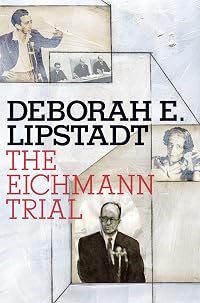
The Eichmann Trial
by Deborah E. Lipstadt, Walter Dixon
On This Page
Description
The capture of SS Lieutenant Colonel Adolf Eichmann by Israeli agents in Argentina in May of 1960 and his subsequent trial in Jerusalem by an Israeli court electrified the world. The public debate it sparked on where, how, and by whom Nazi war criminals should be brought to justice, and the international media coverage of the trial itself, was a watershed moment in how the civilized world in general and Holocaust survivors in particular found the means to deal with the legacy of genocide on show more a scale that had never been seen before. Award-winning historian Deborah E. Lipstadt gives us an overview of the trial and analyzes the dramatic effect that the survivors' courtroom testimony - which was itself not without controversy - had on a world that had until then regularly commemorated the Holocaust but never fully understood what the millions who died and the hundreds of thousands who managed to survive had actually experienced. As the world continues to confront the ongoing reality of genocide and ponder the fate of those who survive it, this trial of the century, which has become a touchstone for judicial proceedings throughout the world, offers a legal, moral, and political framework for coming to terms with unfathomable evil. Lipstadt infuses a gripping narrative with historical perspective and contemporary urgency. show lessTags
Recommendations





























Member Reviews
A competently constructed account of an important cultural and legal episode. Aiming for a popular audience, it will bring to the attention of a new audience the significance of the Eichmann trial, and the events that preceded it. For that reason, however, it fails to consider many of the crucial controversies -- concerning both the questions that arose at the time, and the ramifications of those events for today -- in sufficient depth, at times reading more like a gripping novel or a script for an episode of Law and Order. The definitive historical account remains to be written.
Readers may find problematic many of the positions she asserts, especially when they are unnecessary to her more important arguments. She is by no means an show more impartial chronicler, and her personal beliefs at times blind her to some of the more complex implications of the events she reports. For example, having explained that much of the debate concerned whether Eichmann was a clerk or a master engineer of the Final Solution, she tells of one witness's explanation: One judged asked whether her committee -- one of the Jewish Councils who helped organize the local population for better deportation -- "had considered assassinating Eichmann. Implicit in his question was the accusation that those at the top, the leaders who knew precisely what faced their fellow Jews, had failed to take actions that might have stopped the process. Brand seemed flummoxed by Halevi's question. She recognized, as he seemed not to, that such action would probably not have materially changed matters. 'Let us assume...one of us shoots him. What would we achieve by that?'" This witness appears to be supporting Eichmann's claim that he was but a "cog" in a bigger machine over which he had no control, a reading Lipstadt does not pause to consider. The reason, of course, is that were she to allow that possibility, then the question being asked makes perfect sense, and the Jewish collaborators liable to be held responsible for their support of Eichmann's hideous project. Yet as her characterization suggests -- "she recognized, as he seemed not to" -- this was a possibility that she had ruled out a priori. One quickly senses that there is something going on here that is not history, but something much closer to apologia.
Similarly facile is her treatment of the arguments that Israel had no authority to kidnap and try Eichmann: he was a German, forcibly taken from Argentina, accused of murdering people in Hungary who were not citizens of Israel. She recognizes the claims, but turns them aside with but little discussion of the major points of international law that are being asserted. Even if the concerns were satisfactorily resolved at the time -- and her description shows this not to have been uniformly the case -- as an historian she should have considered the kind of precedent such action has set for contemporary society, wherein one country feels justified in violating the sovereignty of another in order to pursue its own ends, without first even attempting to achieve the extradition through legal means. In this case Israel advanced a "the ends justified the means" argument, which can be extraordinarily problematic in any context, much less in a world as volatile as ours today. The cause of the rule of law is rarely advanced by nonlawful actions.
Finally, I find personally disappointing Lipstadt's support of the characterization of the Holocaust not as a unfathomable atrocity of which Jews were the primary victims, but rather as an episode whose victims were *exclusively* Jews. This is one of the disagreements over which she castigates Hannah Arendt, who favored the former perspective that the Holocaust was a crime against humanity, inflicted on the Jews. In contrast, as Lipstadt reports with apparent approval, all other civilian populations targeted by the Nazis were only "ancillary items". Such callous diminishment of the sufferings of others, merely because they were not Jewish, seems unfortunate, and certainly undermines her overt claims to wish to teach the evils of such blindness to the shared humanity of us all.
In the end, if you wish a description about some facts about the Holocaust, this is a fine place to begin; if, however, you seek a more subtle understanding of the Holocaust, continue to read Arendt. show less
Readers may find problematic many of the positions she asserts, especially when they are unnecessary to her more important arguments. She is by no means an show more impartial chronicler, and her personal beliefs at times blind her to some of the more complex implications of the events she reports. For example, having explained that much of the debate concerned whether Eichmann was a clerk or a master engineer of the Final Solution, she tells of one witness's explanation: One judged asked whether her committee -- one of the Jewish Councils who helped organize the local population for better deportation -- "had considered assassinating Eichmann. Implicit in his question was the accusation that those at the top, the leaders who knew precisely what faced their fellow Jews, had failed to take actions that might have stopped the process. Brand seemed flummoxed by Halevi's question. She recognized, as he seemed not to, that such action would probably not have materially changed matters. 'Let us assume...one of us shoots him. What would we achieve by that?'" This witness appears to be supporting Eichmann's claim that he was but a "cog" in a bigger machine over which he had no control, a reading Lipstadt does not pause to consider. The reason, of course, is that were she to allow that possibility, then the question being asked makes perfect sense, and the Jewish collaborators liable to be held responsible for their support of Eichmann's hideous project. Yet as her characterization suggests -- "she recognized, as he seemed not to" -- this was a possibility that she had ruled out a priori. One quickly senses that there is something going on here that is not history, but something much closer to apologia.
Similarly facile is her treatment of the arguments that Israel had no authority to kidnap and try Eichmann: he was a German, forcibly taken from Argentina, accused of murdering people in Hungary who were not citizens of Israel. She recognizes the claims, but turns them aside with but little discussion of the major points of international law that are being asserted. Even if the concerns were satisfactorily resolved at the time -- and her description shows this not to have been uniformly the case -- as an historian she should have considered the kind of precedent such action has set for contemporary society, wherein one country feels justified in violating the sovereignty of another in order to pursue its own ends, without first even attempting to achieve the extradition through legal means. In this case Israel advanced a "the ends justified the means" argument, which can be extraordinarily problematic in any context, much less in a world as volatile as ours today. The cause of the rule of law is rarely advanced by nonlawful actions.
Finally, I find personally disappointing Lipstadt's support of the characterization of the Holocaust not as a unfathomable atrocity of which Jews were the primary victims, but rather as an episode whose victims were *exclusively* Jews. This is one of the disagreements over which she castigates Hannah Arendt, who favored the former perspective that the Holocaust was a crime against humanity, inflicted on the Jews. In contrast, as Lipstadt reports with apparent approval, all other civilian populations targeted by the Nazis were only "ancillary items". Such callous diminishment of the sufferings of others, merely because they were not Jewish, seems unfortunate, and certainly undermines her overt claims to wish to teach the evils of such blindness to the shared humanity of us all.
In the end, if you wish a description about some facts about the Holocaust, this is a fine place to begin; if, however, you seek a more subtle understanding of the Holocaust, continue to read Arendt. show less
This is a book about the capture of Eichmann and his trial and conviction in Jerusalem. It was a fascinating analysis of the legal issues raised by his capture (and kidnapping from Argentina back to Israel), and issues such as how and by whom Nazi war criminals could be tried--Israel was not in existence when the crimes were committed and the crimes were committed elsewhere, for example, so on what basis could Israel claim jurisdiction? Then there were decisions to be made as to how broad the evidence to be presented should be--should the evidence be limited to only instances of specific actions or deeds of Eichmann, or was testimony from Holocaust victims and camp survivors who may not have had any personal connection with Eichmann show more relevant?
A significant portion of the book revisits some of the analysis and conclusions reached by Hannah Arendt in her seminal book Eichmann in Jerusalem, and arguably one should have read Arendt's book before reading Lipstadt's (I haven't). Lipstadt posits that Arendt's acceptance of Eichmann's claim that he was a small cog in a very big wheel ("the banality of evil"), "mistakenly ignores the central role that historical anti-Semitism played in the role of the Holocaust." Lipstadt delineates the evidence that she believes clearly established that Eichmann was "a man who considered the Nazi leaders to be his 'idols' and who was fully committed to their goals." In addition, Arendt argued that the Nazi actions were crimes against humanity, with the Jews being victims as members of humanity, and under this theory, Arendt believed that the testimony of the survivors was irrelevant. Lipstadt's thesis is that the crimes of the Holocaust were directed against the Jews as Jews per se, and resulted from historical anti-Semitism. In Lipstadt's view, the testimony of the survivors was essential, and in fact may be the most important element of the trial.
Lipstadt's purpose in writing the book was to examine the legacy of the Eichmann trial, and a large part of that legacy was created by Arendt's work and the controversy it created. (There were some who argued that Arendt's book "exonerated" Eichmann). I think Lipstadt's book did a good job of analyzing the issues involved in the trial itself, fairly explained the issues raised by Arendt's book, and logically defended her own conclusions regarding all of these matters. I'm not sure whether I'll read Arendt's book at these late date (50 years after the fact), but I'm glad I read Lipstadt's. show less
A significant portion of the book revisits some of the analysis and conclusions reached by Hannah Arendt in her seminal book Eichmann in Jerusalem, and arguably one should have read Arendt's book before reading Lipstadt's (I haven't). Lipstadt posits that Arendt's acceptance of Eichmann's claim that he was a small cog in a very big wheel ("the banality of evil"), "mistakenly ignores the central role that historical anti-Semitism played in the role of the Holocaust." Lipstadt delineates the evidence that she believes clearly established that Eichmann was "a man who considered the Nazi leaders to be his 'idols' and who was fully committed to their goals." In addition, Arendt argued that the Nazi actions were crimes against humanity, with the Jews being victims as members of humanity, and under this theory, Arendt believed that the testimony of the survivors was irrelevant. Lipstadt's thesis is that the crimes of the Holocaust were directed against the Jews as Jews per se, and resulted from historical anti-Semitism. In Lipstadt's view, the testimony of the survivors was essential, and in fact may be the most important element of the trial.
Lipstadt's purpose in writing the book was to examine the legacy of the Eichmann trial, and a large part of that legacy was created by Arendt's work and the controversy it created. (There were some who argued that Arendt's book "exonerated" Eichmann). I think Lipstadt's book did a good job of analyzing the issues involved in the trial itself, fairly explained the issues raised by Arendt's book, and logically defended her own conclusions regarding all of these matters. I'm not sure whether I'll read Arendt's book at these late date (50 years after the fact), but I'm glad I read Lipstadt's. show less
It is now 50 years since the Eichmann trial (and nearly 35 since I read the famous, contemporary, and controversial Eichmann in Jerusalem by Hannah Arendt, the work for which she coined the phrase "the banality of evil"). In this short book, Lipstadt, an historian, revisits the trial, its impact, and its implications from the perspective of half a century.
Unlike the Nuremberg trials, which were held in defeated Germany, were run by the victors, and took place in the exhausted and devastated aftermath of World War II, the trial of Eichmann took place in a country that didn't exist at the time of the Holocaust, was run by the victims, and riveted the world. Lipstadt is excellent at setting the stage (international views of Israel, show more internal politics, the tentative Israeli relationship with Germany) and analyzing some of the legal issues (the "kidnapping" of Eichmann from Argentina, the right -- and fairness -- of Israel holding the trial, the varying goals of Ben-Gurion, the prosecutor, and the judges, and the scope of the crimes to charge Eichmann with). One of her major themes is the importance (and the controversy) of victims themselves testifying, not necessarily the direct victims of Eichmann, but survivors of the Holocaust as a whole. She also stresses the efforts by the prosecutor not only to avoid blaming the victims for not resisting or even for "collaborating," but to demonstrate the state of terror, horror, and chaos European Jews found themselves in. The trial showed the world what the Nazis really did, in a very personal way that had not previously been presented.*
The heart of the book is the trial itself, its dramas, and its ups and downs, as well as the characters of the key players. Lipstadt was given access to a sealed memoir Eichmann wrote in jail before he was hanged, and is able to show that he was indeed an anti-Semite and that he played a key role in orchestrating rounding Jews up and shipping them to death camps, even if he wasn't the architect of the final solution as prosecutors claimed. She then goes on to analyze Arendt's work, in a both critical and even-handed way, and to discuss the continuing impact of the trial even today.
She concludes with a meeting at Yad Vashem, the Israeli memorial to and research institute on the Holocaust, between young survivors of the Rwandan genocide and then quite elderly French-speaking Holocaust survivors. The Rwandans, too, want to tell their tales so that the "generations who were not there remember." This is a fascinating and thought-provoking book.
*It can be, and has been, argued, notably in Bloodlands] by Timothy Snyder that even the testimony of survivors is inadequate to show what the Nazis really did, because the vast majority of their victims not only were dead but also died in territory captured by the Soviet Union and thus inaccessible for years to Western historians. show less
Unlike the Nuremberg trials, which were held in defeated Germany, were run by the victors, and took place in the exhausted and devastated aftermath of World War II, the trial of Eichmann took place in a country that didn't exist at the time of the Holocaust, was run by the victims, and riveted the world. Lipstadt is excellent at setting the stage (international views of Israel, show more internal politics, the tentative Israeli relationship with Germany) and analyzing some of the legal issues (the "kidnapping" of Eichmann from Argentina, the right -- and fairness -- of Israel holding the trial, the varying goals of Ben-Gurion, the prosecutor, and the judges, and the scope of the crimes to charge Eichmann with). One of her major themes is the importance (and the controversy) of victims themselves testifying, not necessarily the direct victims of Eichmann, but survivors of the Holocaust as a whole. She also stresses the efforts by the prosecutor not only to avoid blaming the victims for not resisting or even for "collaborating," but to demonstrate the state of terror, horror, and chaos European Jews found themselves in. The trial showed the world what the Nazis really did, in a very personal way that had not previously been presented.*
The heart of the book is the trial itself, its dramas, and its ups and downs, as well as the characters of the key players. Lipstadt was given access to a sealed memoir Eichmann wrote in jail before he was hanged, and is able to show that he was indeed an anti-Semite and that he played a key role in orchestrating rounding Jews up and shipping them to death camps, even if he wasn't the architect of the final solution as prosecutors claimed. She then goes on to analyze Arendt's work, in a both critical and even-handed way, and to discuss the continuing impact of the trial even today.
She concludes with a meeting at Yad Vashem, the Israeli memorial to and research institute on the Holocaust, between young survivors of the Rwandan genocide and then quite elderly French-speaking Holocaust survivors. The Rwandans, too, want to tell their tales so that the "generations who were not there remember." This is a fascinating and thought-provoking book.
*It can be, and has been, argued, notably in Bloodlands] by Timothy Snyder that even the testimony of survivors is inadequate to show what the Nazis really did, because the vast majority of their victims not only were dead but also died in territory captured by the Soviet Union and thus inaccessible for years to Western historians. show less
This book was divided in three parts. The opening where the author compares herself and her slander trial brought by a holocaust denier to the story she is about to relate and how Eichmann's trial laid precedent and groundwork that influenced her trial. The central and longest part focused on the actual Eichmann trial. And the last part was a vicious critique of Hannah Arendt's journalistic record and subsequent book about the trial. The book would have been much better without the first and final sections overall.
The central story was well written and presents the efforts of the prosecution and the defendant (who testified), defense, and ultimately the ruling of the three judge panel on guilt and sentence. The analysis of the social show more impact of this trial is excellent as the author explains how it created an international dialog about the holocaust experience and birthed a generation of activists who pushed back against holocaust denial and the temptation to forget holocaust horrors. show less
The central story was well written and presents the efforts of the prosecution and the defendant (who testified), defense, and ultimately the ruling of the three judge panel on guilt and sentence. The analysis of the social show more impact of this trial is excellent as the author explains how it created an international dialog about the holocaust experience and birthed a generation of activists who pushed back against holocaust denial and the temptation to forget holocaust horrors. show less
A good representation of the events leading up to the trial of Eichmann and the aftermath. Writing is somewhat flat at times but an illuminating look at a forgotten period of time.
This is an easy to read, must-read history that everyone should know. It is arguably the best non-fiction book of 2011. Its author, Emory University Professor Deborah E. Lipstadt, wrote another award-winning history book about one of her own experiences. She made the front pages of many world newspapers when an English anti-Semite and holocaust denier sued her in an English court because of her remarks about his attitude. She tells the story of this trial, what prompted it, how it was defended, the reactions on all sides, and how she won, in her Introduction to this almost novel-like history of the Eichmann trial.
The story of the Eichmann case has been written before, including by the well-known Hannah Arendt, who erroneously describes show more Eichmann for the most part as a foolish, colorless, servile civil servant who did poorly in school and followed the Nazi State laws slavishly. But she tells the story the best. She reveals much more than previous writers. She reveals many related facts, including how Simon Wiesenthal, the famed Nazi hunter, misrepresented the number of non-Jews killed by Hitler to further his agenda, how the Israeli Mossad had opportunities to capture Eichmann but did not pursue them, how Eichmann was discovered by amateurish sleuthing and dumb luck by the daughter of a half-Jewish Argentinean man who was dating Eichmann’s son, and how the initial overwhelming reaction in the United States to Eichmann’s capture, including by many Jews, criticized Israel. But much more than that, she reveals the testimony pro and con Eichmann and analyses it.
Lipstadt tells how Eichmann escaped the allied prison after being captured, worked for awhile in upper Germany, and then dashed off to Argentina under an assumed name, lived in a run-down shack, and worked in a Mercedes-Benz assembly plant. Argentina never offered him asylum because he entered the country under an assumed name. When captured, Eichmann acted submissive. He admitted his identity. When he went to the bathroom on the plane, the Israeli captors waited outside the toilet. “After a few minutes, Eichmann called out to Malkin [his captor], ‘Darf ich anfangen? (‘May I begin?’) Only when told yes did he begin to move his bowels.” But this submissiveness, Lipstadt discloses, was deceptive, because Eichmann was clever, as shown by the testimony of many people who encountered him and by some of the slips he made during his own testimony. He was “proactive, energetic, and a creative master of deception.”
When his superior officers “ordered him to deport one trainload of Jews, he pushed for two. Ordered to end deportations on a certain date, he fought to extend the deadline. Ordered to deport Jews from one region, he included those of another.”
She describes the concerns, litigation style, and effectiveness of the prosecutor, the problems faced by Eichmann’s defense counselor, the prejudices and involvements of the three judges who adjudicated the case, and the tearful testimony of witnesses. The prosecutor brought about a hundred holocaust survivors to describe the horrors they experienced. She is careful to identify mistakes by these people as well as the positive aspects, and their contribution to history.
In regard to Hannah Arendt, a Jew born in Germany and former lover of a famed Nazi, she details and explains her errors, distortions, anti-Zionism, anti-Israeli Prime Minister David Ben Gurion, borderline anti-Semitism (“which side of the border is unclear”), unfair criticisms of Jews, including Holocaust survivors, conclusions based on insufficient evidence, and her misunderstanding of Eichmann’s intellect when contrary to clear evidence, in writings and the testimony of people he encountered, she saw him as a mere banal clerk. Remarkably deceptive is Arendt’s claim that she was present throughout the trial when she was only in attendance for a very short time.
She ends her book with a forty page even-handed description of the erroneous depictions by Hannah Arendt in her articles and book about the trial, writings that were very popular, writings that misled her readers. She follows this analysis with a fifteen page discussion on the affects of the trial on Americans, Israelis, and the rest of the world. She also includes eighteen pages of notes and nine pages outlining the chronology of events. show less
The story of the Eichmann case has been written before, including by the well-known Hannah Arendt, who erroneously describes show more Eichmann for the most part as a foolish, colorless, servile civil servant who did poorly in school and followed the Nazi State laws slavishly. But she tells the story the best. She reveals much more than previous writers. She reveals many related facts, including how Simon Wiesenthal, the famed Nazi hunter, misrepresented the number of non-Jews killed by Hitler to further his agenda, how the Israeli Mossad had opportunities to capture Eichmann but did not pursue them, how Eichmann was discovered by amateurish sleuthing and dumb luck by the daughter of a half-Jewish Argentinean man who was dating Eichmann’s son, and how the initial overwhelming reaction in the United States to Eichmann’s capture, including by many Jews, criticized Israel. But much more than that, she reveals the testimony pro and con Eichmann and analyses it.
Lipstadt tells how Eichmann escaped the allied prison after being captured, worked for awhile in upper Germany, and then dashed off to Argentina under an assumed name, lived in a run-down shack, and worked in a Mercedes-Benz assembly plant. Argentina never offered him asylum because he entered the country under an assumed name. When captured, Eichmann acted submissive. He admitted his identity. When he went to the bathroom on the plane, the Israeli captors waited outside the toilet. “After a few minutes, Eichmann called out to Malkin [his captor], ‘Darf ich anfangen? (‘May I begin?’) Only when told yes did he begin to move his bowels.” But this submissiveness, Lipstadt discloses, was deceptive, because Eichmann was clever, as shown by the testimony of many people who encountered him and by some of the slips he made during his own testimony. He was “proactive, energetic, and a creative master of deception.”
When his superior officers “ordered him to deport one trainload of Jews, he pushed for two. Ordered to end deportations on a certain date, he fought to extend the deadline. Ordered to deport Jews from one region, he included those of another.”
She describes the concerns, litigation style, and effectiveness of the prosecutor, the problems faced by Eichmann’s defense counselor, the prejudices and involvements of the three judges who adjudicated the case, and the tearful testimony of witnesses. The prosecutor brought about a hundred holocaust survivors to describe the horrors they experienced. She is careful to identify mistakes by these people as well as the positive aspects, and their contribution to history.
In regard to Hannah Arendt, a Jew born in Germany and former lover of a famed Nazi, she details and explains her errors, distortions, anti-Zionism, anti-Israeli Prime Minister David Ben Gurion, borderline anti-Semitism (“which side of the border is unclear”), unfair criticisms of Jews, including Holocaust survivors, conclusions based on insufficient evidence, and her misunderstanding of Eichmann’s intellect when contrary to clear evidence, in writings and the testimony of people he encountered, she saw him as a mere banal clerk. Remarkably deceptive is Arendt’s claim that she was present throughout the trial when she was only in attendance for a very short time.
She ends her book with a forty page even-handed description of the erroneous depictions by Hannah Arendt in her articles and book about the trial, writings that were very popular, writings that misled her readers. She follows this analysis with a fifteen page discussion on the affects of the trial on Americans, Israelis, and the rest of the world. She also includes eighteen pages of notes and nine pages outlining the chronology of events. show less
I liked it. I didn't love it. I wanted to love it. I like her writing and she gave a lot of information in a very small and readable book. I do wish that she had spent more time on the trial and less time on Hannah Arendt's take on the trial.
Members
- Recently Added By
Lists

r/AskHistorians' Recommended Books
1,068 works; 19 members

Club Read's Recommended Nonfiction Written by Women
618 works; 30 members
Author Information

10+ Works 2,002 Members
Deborah E. Lipstadt is Dorot Professor of Modern Jewish and Holocaust Studies and director of the Institute for Jewish Studies at Emory University.
1 Work 263 Members
Awards and Honors
Awards
Series
Belongs to Publisher Series
Common Knowledge
- Canonical title
- The Eichmann Trial
- Original publication date
- 2011
- People/Characters
- Adolf Eichmann; Gideon Hausner; Hannah Arendt
- Blurbers
- Wiesel, Elie; Gergen, David; Julius, Anthony
Classifications
- Genres
- History, Nonfiction, Politics and Government, General Nonfiction
- DDC/MDS
- 345.5694 — Society, government, & culture Law Criminal Law Asia Middle East
- LCC
- KMK44 .E33 .L57 — Law Israel Israel
- BISAC
Statistics
- Members
- 263
- Popularity
- 122,698
- Reviews
- 11
- Rating
- (3.80)
- Languages
- English, Italian, Polish, Spanish
- Media
- Paper, Audiobook, Ebook
- ISBNs
- 8
- ASINs
- 3