On This Page
Description
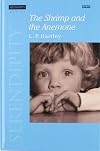
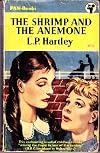
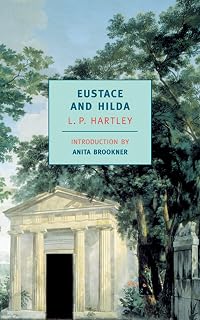
An evocative account of a childhood summer spent beside the sea in Norfolk by brother and sister, Eustace and Hilda.Tags
Recommendations
























Member Reviews
This is the first volume in the trilogy Eustace and Hilda about two Edwardian children living in a southern English town described as a health resort. Written in the 1940s, the setting has the nostalgic air of an earlier time (at one point nurse mentions "that's the fourth motor car I've seen in the last two weeks"). Nine year old Eustace is a gentle boy with health problems who is dominated by his beloved twelve year old sister Hilda. She persuades - or more accurately, orders him to overcome his fright and befriend an elderly neighbour in a wheelchair. It is no surprise that he becomes fond of the old woman and enjoys her company, with surprising results. Hartley's glorious writing appears simple while offering much to think about. show more
Although a trilogy originally published separately between 1944 and 1947, the three volumes have been published as one book since 1958. show less
Although a trilogy originally published separately between 1944 and 1947, the three volumes have been published as one book since 1958. show less
This first book in the Eustace & Hilda trilogy takes place during one summer in the 1930s with Eustace at 9 years old & Hilda 13. He is an odd little boy, at once fanciful and submissive, perhaps due to his poor health. Despite the fact that he is unlike any small boy I have ever known, I quickly became sympathetic to him. The book was a fast read but has some ideas in it that I am still mulling over. I look forward to reading the rest of the trilogy!
Basically this is a story of two Edwardian children,Eustace and his sister Hilda. Eustace is a somewhat weak and sickly child who is cosseted and at the same time dominated by his sister. In the course of the book Hilda persuades Eustace to make friends with an elderly and infirm Miss Fothergill. The old lady at first frightens and disgusts the boy,but later he changes his attitude completely and begins to enjoy her company. As the book concludes,we learn of the far-reaching consequences of the children's actions.
The story continues in two further volumes.
The story continues in two further volumes.
was made to read this for school and ended up loving it. It broke right through my cynicism.
That opening scene, one of the most visceral set-pieces I've ever encountered.
Ratings
Members
- Recently Added By
Lists

The Guardian's 1000 Novels Everyone Must Read
1,005 works; 551 members
Author Information

47+ Works 4,360 Members
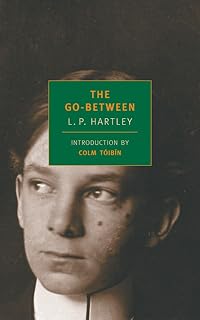
Novelist, short-story writer, and literary critic, L. P. Hartley won the James Tait Black Memorial Prize in 1947 for Eustace and Hilda. Part of a trilogy that offers a penetrating and disturbing psychological study of what Hartley called "sisteritis" in an upper-middle-class family, the three books were described by the London Times as "unique in show more modern writing...diverting and disturbing. Beneath a surface "almost overcivilized' the reviewer found "a hollow of horror."' One of Hartley's special interests is Henry James, with whom he has been compared. In The Tragic Comedians, James Hall devotes a chapter to Hartley, who is respected but not popular in Britain, read by few in America, but praised by discerning critics in both countries: "Along with Green and Powell, Hartley has changed the direction of the comic novel, raising even more seriously than they the question of whether it remains comic at all.... His freshness consists at first in simply changing the patterns of the naturalist novel from social insights to emotional ones; yet in doing so he departs from both the older solid way of conceiving character and the more recent fluid way of conceiving consciousness." David Cecil called The Go-Between (1953) "impressive," and wrote: "Hartley is for me the first of living novelists in certain important respects; beauty of style, lyrical quality of feeling and, above all, the power and originality of his imagination, which wonderfully mingles ironic comedy, whimsical fancy and a mysterious Hawthorne-like poetry." The Novelist's Responsibility is a collection of essays and letters. (Bowker Author Biography) show less
Awards and Honors
Notable Lists
Series

Work Relationships
Is contained in
Has as a student's study guide
Common Knowledge
- Canonical title
- The Shrimp and the Anemone
- Alternate titles
- The West Window
- Epigraph
- "I've known a hundred kinds of love
All made the loved one rue."
— Emily Brontë - First words
- "Eustace! Eustace!" Hilda's tones were always urgent; it might not be anything very serious.
Classifications
Statistics
- Members
- 195
- Popularity
- 168,388
- Reviews
- 5
- Rating
- (3.94)
- Languages
- English
- Media
- Paper
- ISBNs
- 7
- ASINs
- 12