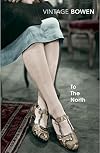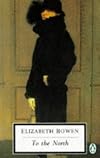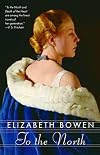
To the North
by Elizabeth Bowen
On This Page
Description
A young woman’s secret love affair leads to a violent and tragic act in one of Elizabeth Bowen’s most acclaimed novels. To the North centers on two young women in 1920s London, the recently widowed Cecilia Summers and her late husband's sister, Emmeline. Drawn to each other in the wake of their loss, the two set up house together and gradually become more entwined than they know. But the comfortable refuge they have made is "a house built on sand"; both realize it cannot last. While show more Cecilia, capricious and unsure if she can really love anyone, moves reluctantly toward a second marriage, Emmeline, a gentle and independent soul, is surprised to find the calm tenor of her life disturbed for the first time by her attraction to the predatory Mark Linkwater. Bowen’s psychological acuity is on full display in a conclusion that plumbs the depths of this seemingly detached young woman in a single, life-shattering moment. show lessTags
Recommendations





















Member Reviews
This is an exceptionally rarefied book - set in a small elite social circle between the wars, where everyone is tired and somehow purposeless. Travel forms a counterpoint to the focus on two young women and their relationships - starting on a train, the book ends in a car, as the dance of partnership ends. This is a book of psychological acuity rather than action - two single sisters in law, so different, are defined in relationship with men, women, their environment, and as one emerges stronger, the other falls apart. The description of internal states and the external world is exquisite and again the growth of love and romantic relationships is set against the many other ways, often comic and grotesque, in which people relate to each show more other. This is a book to read slowly and to savour - I will remember the girls' school, the flight to Paris, emmeline's silver dress, the back garden in st John's Wood, for a long time.. show less
I quite liked this book, my first novel by Elizabeth Bowen. Bowen's writing style is a little odd and took me a while to get used to. There's something about the way she crafts sentences that does feel a bit stilted - I think she puts clauses and descriptors in unexpected places which makes for a different reading flow than I'm used to.
After I gave into her writing style, I really liked the story she set up. This book contrasts two young women, Cecilia and Emmeline, who end up living together after Cecilia's young husband, Henry, dies unexpectedly. Emmeline is Henry's younger sister. At first it seems that Cecilia is the lost and slightly flighty one. She is considering remarriage but can't make up her mind and seems a little show more distracted and unreliable all the time. Emmeline is reserved and responsible, with a job in a travel agency, beautiful and remote. But then she meets a man named Mark Linkwater and she gets into a secret relationship with him that is way over her head to manage. Everything unravels to a dramatic conclusion.
I feel like I've heard mixed reviews of this book, so I went into it with some reservations, but I really ended up liking it and am looking forward to Bowen's other books that are on my shelf. show less
After I gave into her writing style, I really liked the story she set up. This book contrasts two young women, Cecilia and Emmeline, who end up living together after Cecilia's young husband, Henry, dies unexpectedly. Emmeline is Henry's younger sister. At first it seems that Cecilia is the lost and slightly flighty one. She is considering remarriage but can't make up her mind and seems a little show more distracted and unreliable all the time. Emmeline is reserved and responsible, with a job in a travel agency, beautiful and remote. But then she meets a man named Mark Linkwater and she gets into a secret relationship with him that is way over her head to manage. Everything unravels to a dramatic conclusion.
I feel like I've heard mixed reviews of this book, so I went into it with some reservations, but I really ended up liking it and am looking forward to Bowen's other books that are on my shelf. show less
I don't know why I keep trying Elizabeth Bowen--I am always disappointed. I suppose it's because she's such a good prose writer that I keep expecting to like her stories. The characters and their relationships are interesting and complex, but not likeable, and the plots are simply boring.
"To the North" follows the lives of two young women who share a house together. They enjoy each other's company and keep themselves busy and cheerful with work and social activity. Then, for some reason, they both decide to enter into relationships with men they don't even seem to like very much, and destroy the friendship and comfortable existence they had had before. While both are encouraged by their meddlesome aunt to "settle down", there's no other show more apparent social pressure. Their arrangement is perfectly satisfactory and respectable, and I just can't see any reason for them to make the choices they do.
Even as I write this review, I feel that it ought to be a good book--but it isn't. It is somehow flat and spiritless where it ought to be poignant and insightful, and that's how I've felt about Bowen's other books as well. show less
"To the North" follows the lives of two young women who share a house together. They enjoy each other's company and keep themselves busy and cheerful with work and social activity. Then, for some reason, they both decide to enter into relationships with men they don't even seem to like very much, and destroy the friendship and comfortable existence they had had before. While both are encouraged by their meddlesome aunt to "settle down", there's no other show more apparent social pressure. Their arrangement is perfectly satisfactory and respectable, and I just can't see any reason for them to make the choices they do.
Even as I write this review, I feel that it ought to be a good book--but it isn't. It is somehow flat and spiritless where it ought to be poignant and insightful, and that's how I've felt about Bowen's other books as well. show less
As a newcomer to Elizabeth Bowen, To the North makes me hazard a guess that Bowen is a better writer than this book would have you believe.
To the North revolves around the recently widowed Cecilia and her sister-in-law Emmeline. While Cecilia's plot line follows her ambivalence surrounding the prospect of remarriage, Emmeline's plot line concerns her secret (and bound-to-be-disastrous) affair with a young cad. Taken in sum, the plot is pretty mediocre. Cecilia's ambivalence is at once complex and, by the end of the novel, oversimplified, while the reader is left to wonder how or why Emmeline ever gets involved with Markie.
The strength of this book lies in Bowen's ability to give her female characters a satisfying amount of show more psychological depth. The relationships between the female characters are often more interesting and more believable than with the male love-interests. It's a pity that Bowen couldn't tell a story as well as she could construct full-bodied characters. As such, the book is a page turner insofar as one wants to see how the characters' emotional torments play out, but in the end the book falls apart rather predictably. show less
To the North revolves around the recently widowed Cecilia and her sister-in-law Emmeline. While Cecilia's plot line follows her ambivalence surrounding the prospect of remarriage, Emmeline's plot line concerns her secret (and bound-to-be-disastrous) affair with a young cad. Taken in sum, the plot is pretty mediocre. Cecilia's ambivalence is at once complex and, by the end of the novel, oversimplified, while the reader is left to wonder how or why Emmeline ever gets involved with Markie.
The strength of this book lies in Bowen's ability to give her female characters a satisfying amount of show more psychological depth. The relationships between the female characters are often more interesting and more believable than with the male love-interests. It's a pity that Bowen couldn't tell a story as well as she could construct full-bodied characters. As such, the book is a page turner insofar as one wants to see how the characters' emotional torments play out, but in the end the book falls apart rather predictably. show less
Kind of strange- at the start, and for about half the book, I thought this was just light drawing-room comedy. Then I noticed it was getting a bit darker. Everyone felt completely alone, all while pretending to be surrounded by people they loved. Then it got a bit darker again- the main character is called 'inhuman,' and I noticed that yes, indeed, what I'd thought was whimsy could be interpreted as her being detached and emotionally non-responsive. Then it got a bit darker again, when the main character's young man is obviously seen to be an a-hole. And then the final chapter basically says: look at yourself modern world! You suck! You suck so much that you make people go crazy and drive their cars into oncoming traffic!
At the start, show more I thought, nice and light, three stars. The middle two quarters I thought, this is really great, five stars! The ending's so oddly tacked on - great in its own way, but so cut off from the novel - that I came back to four stars. Well worth reading, though not as good as The Heat of the Day. show less
At the start, show more I thought, nice and light, three stars. The middle two quarters I thought, this is really great, five stars! The ending's so oddly tacked on - great in its own way, but so cut off from the novel - that I came back to four stars. Well worth reading, though not as good as The Heat of the Day. show less
Sisters in law, sharing a house but living fairly separate but overlapping lives. Lots of movement and travel allusions, though not much actually happens (even travel). The usual brilliant, caustic and slightly surreal analogies.
For all that the dialog throughout was so stultifyingly alien, this ended very well -- perhaps because the last pages were in narrative. The manner in which these people converse, these British, 1920s, wealthy, painfully reared and exquisitely trained people, is so layered in Received and ulterior meaning that I couldn't follow them. An engagement ring has an emerald and a relative asks whether the wearer is superstitious: this I can follow, from this I understand that in this culture an emerald is more than a pretty green thing. (Um, also I remember from Lace that Lili calls emeralds unlucky -- kill me now -- so it must be a Thing, even though it doesn't come up in Auntie Mame when Mame gives someone emeralds yet somehow manages to show more insult her with the gift.) But whether Dorothy liked her uncle, or whether either young woman liked their aunt-esque and how much she was supposed to resemble Lady Bracknell or Aunt Dahlia or Agatha I could not tell. They're all so languid that the suspense of the final action really surprised me. show less
Members
- Recently Added By
Lists

1,001 BYMRBYD Concensus
723 works; 27 members

My TBR
371 works; 3 members

Books Read in 2021
5,361 works; 113 members
Author Information

74+ Works 9,059 Members
Elizabeth Bowen, distinguished Anglo-Irish novelist, was born in Dublin in 1899, traveled extensively, lived in London, and inherited the family estate-Bowen's Court, in County Cork. Her account of the house, Bowen's Court (1942), with a detailed fictionalized history of the family in Ireland through three centuries, has charm, warmth, and show more insight. Seven Winters is a fragment of autobiography published in England in 1942. The "Afterthoughts" of the original edition are critical essays in which she discusses and analyzes, among others, such literary figures as Virginia Woolf, E. M. Forster, Katherine Mansfield, Anthony Trollope, and Eudora Welty. Bowen's stories, mostly about people of the British upper middle class, portray relationships that are never simple, except, perhaps, on the surface. Her concern with time and memory is a major theme. Beautifully and delicately written, her stories, with their oblique psychological revelations, are symbolic, subtle, and terrifying. A Time in Rome (1960) is her brilliant evocation of that city and its layered past. In 1948, Bowen was made a Commander of the British Empire. Bowen died in 1973. (Bowker Author Biography) show less
Awards and Honors
Series
Belongs to Publisher Series
Work Relationships
Is abridged in
Common Knowledge
- Canonical title
- To the North
- Original title
- To the North
- Original publication date
- 1932
- People/Characters
- Cecilia Summers; Emmeline ; Julian Tower; Mark Linkwater
- Important places
- London, England, UK
- Dedication
- To D.C.
- First words
- Towards the end of April a breath from the north blew cold down Milan platforms to meet the returning traveller.
- Quotations
- For some minutes they drove in silence ... she bore left, uphill ... They swung up the winding curves of the Finchley Road, past Swiss Cottage station, ... along the wide black Hendon way ... He saw "The NORTH" written low... (show all), like a first whisper, on a yellow A.A. plate with an arrow pointing: they bore steadily north between spaced-out lamps, chilly trees, low rows of houses asleep, to their left a deep lake of darkness: the aerodrome. "Hendon", he said.... She turned right up the Barnet by-pass.... Banks rushed up to take their light each side of the by-pass; afterwards, ghostly young beeches along the kerb. up the Barnet by-pass ... Lit banks and low dark running skyline plaited their alternation over his brain ... this was Hatfield: they slipped round the town like thieves. People still stood in doorways or shadowed blinds.
- Last words
- (Click to show. Warning: May contain spoilers.)Suddenly nervous, Cecilia said, turning to Julian: 'Stay with me till she comes home.'
- Blurbers
- Wordsworth, Christopher; Pritchett, V. S.; Ackroyd, Peter
Classifications
Statistics
- Members
- 438
- Popularity
- 69,804
- Reviews
- 9
- Rating
- (3.91)
- Languages
- English, Finnish, German
- Media
- Paper, Ebook
- ISBNs
- 11
- ASINs
- 9