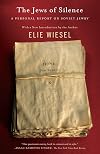
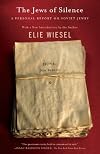
The Jews of Silence: A Personal Report on Soviet Jewry
by Elie Wiesel
264 Members (4.13)
On This Page
Description
In the fall of 1965 the Israeli newspaper Haaretz sent a young journalist named Elie Wiesel to the Soviet Union to report on the lives of Jews trapped behind the Iron Curtain. "I would approach Jews who had never been placed in the Soviet show window by Soviet authorities," wrote Wiesel. "They alone, in their anonymity, could describe the conditions under which they live; they alone could tell whether the reports I had heard were true or false--and whether their children and their show more grandchildren, despite everything, still wish to remain Jews. From them I would learn what we must do to help . . . or if they want our help at all." nbsp; What he discovered astonished him: Jewish men and women, young and old, in Moscow, Kiev, Leningrad, Vilna, Minsk, and Tbilisi, completely cut off from the outside world, overcoming their fear of the ever-present KGB to ask Wiesel about the lives of Jews in America, in Western Europe, and, most of all, in Israel. They have scant knowledge of Jewish history or current events; they celebrate Jewish holidays at considerable risk and with only the vaguest ideas of what these days commemorate. "Most of them come [to synagogue] not to pray," Wiesel writes, "but out of a desire to identify with the Jewish people--about whom they know next to nothing." Wiesel promises to bring the stories of these people to the outside world. And in the home of one dissident, he is given a gift--a Russian-language translation of Night, published illegally by the underground. "'My God,' I thought, 'this man risked arrest and prison just to make my writing available to people here!' I embraced him with tears in my eyes." show lessTags
Recommendations




















Member Reviews
Members
- Recently Added By
Author Information

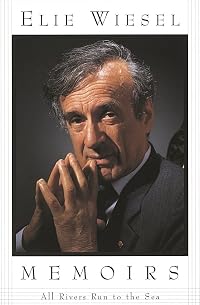
Eliezer "Elie" Wiesel was born in Sighet, Romania on September 30, 1928. In 1944, he and his family were deported along with other Jews to the Nazi death camp Auschwitz. His mother and his younger sister died there. He loaded stones onto railway cars in a labor camp called Buna before being sent to Buchenwald, where his father died. He was show more liberated by the United States Third Army on April 11, 1945. After the war ended, he learned that his two older sisters had also survived. He was placed on a train of 400 orphans that was headed to France, where he was assigned to a home in Normandy under the care of a Jewish organization. He was educated at the Sorbonne and supported himself as a tutor, a Hebrew teacher and a translator. He started writing for the French newspaper L'Arche. In 1948, L'Arche sent him to Israel to report on that newly founded state. He also became the Paris correspondent for the daily Yediot Ahronot. In this capacity, he interviewed the novelist Francois Mauriac, who urged him to write about his war experiences. The result was La Nuit (Night). After the publication of Night, Wiesel became a writer, literary critic, and journalist. His other books include Dawn, The Accident, The Gates of the Forest, The Jews of Silence: A Personal Report on Soviet Jewry, and Twilight. He received a numerous awards and honors for his literary work including the William and Janice Epstein Fiction Award in 1965, the Jewish Heritage Award in 1966, the Prix Medicis in 1969, and the Prix Livre-International in 1980. He received the Nobel Peace Prize in 1986 for his work in combating human cruelty and in advocating justice. He had a leading role in the creation of the United States Holocaust Memorial Museum in Washington, D. C. He died on July 2, 2016 at the age of 87. (Bowker Author Biography) show less
Some Editions
Common Knowledge
- Canonical title
- The Jews of Silence: A Personal Report on Soviet Jewry
- Important places
- Moscow, Russia (as USSR); St Petersburg, Russia (as Leningrad, USSR); Kyiv, Ukraine (as USSR)
Classifications
- Genres
- Nonfiction, History, Travel
- DDC/MDS
- 301.45 — Society, government, & culture Social sciences, sociology & anthropology Sociology and anthropology Formerly: Social structure
- LCC
- DS135 .R92 .W5313 — History of Europe, Asia, Africa and Oceania Asia History of Asia Israel (Palestine). The Jews Jews outside of Palestine
- BISAC
Statistics
- Members
- 264
- Popularity
- 123,155
- Rating
- (4.13)
- Languages
- 7 — Danish, Dutch, English, French, Italian, Norwegian (Bokmål), Spanish
- Media
- Paper, Ebook
- ISBNs
- 12
- ASINs
- 16