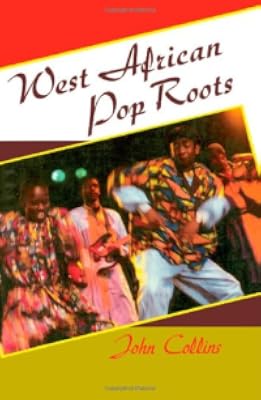
West African Pop Roots
by John Collins
On This Page
Description
"Collins-Lowry gives persuasive examples of how employment gains made by Blacks in the 80's were rather more marginalized than we like to think." --Publishers WeeklyAgainst the backdrop of increasing ambivalence in the federal government commitment to race-based employment policies, this book reveals how African-Americans first broke into professional and managerial jobs in corporations during the sixties and offers in-depth profiles of their subsequent career experiences.Two sets of show more interviews with the most successful Black executives in Chicago's major corporations are used to demonstrate how the creation of the Black business elite is connected to federal government pressures and black social unrest that characterized the civil Rights movement in the sixties.Black Corporate Executives presents, first hand, the dilemmas and contradictions that face this first wave of Black managers and reveals a subtle new employment discrimination. Corporations hired these executives in response to race-conscious political pressures and shifted them into "racialized" positions directing affirmative action programs or serving "special" markets of minority clients, customers, or urban affairs. Many executives became, as one man said, "the head Black in charge of Black people." These positions gave upper-middle-class lifestyles to those who held them but also siphoned these executives out of mainstream paths to corporate power typically leading through planning and production areas. As the political climate has become more conservative and the economy undergoes restructuring, these Black executives believe that the importance of recruiting Blacks has waned and that the jobs Blacks hold are vulnerable.Collins-Lowry's analysis challenges arguments that justify dismantling affirmative action. She argues that it is a myth to believe that Black occupational attainments are evidence that race no longer matters in the middle-class employment arena. On the contrary, Blacks' progress and well-being are tied to politics and employment practices that are sensitive to race. show lessTags
Members
- Recently Added By
Lists

Music Journalism and Biography
56 works; 1 member
Author Information
9 Works 37 Members
John Collins moved to Ghana from Britain in 1952. He has been actively involved in the wider West African music scene since 1969, as a musician, bandleader, record producer and engineer, music union executive, writer, and archivist. He is currently a professor of popular music at the University of Ghana in Legon.
Classifications
- Genres
- Music, Nonfiction, History, Biography & Memoir
- DDC/MDS
- 781.63 — Arts & recreation Music General principles and musical forms Traditions of music Non-western popular music {equally instrumental and vocal}
- LCC
- ML3503 .A358 .C63 — Music Literature on music Literature on music History and criticism Popular music
Statistics
- Members
- 7
- Popularity
- 2,748,205
- Languages
- English
- Media
- Paper, Ebook
- ISBNs
- 3