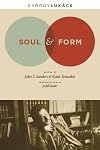
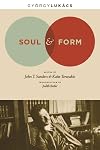
Soul and Form
by Georg Lukacs
124 Members (3.50)
On This Page
Description
György Lukacs was a Hungarian Marxist philosopher, writer, and literary critic who shaped mainstream European Communist thought. Soul and Form was his first book, published in 1910, and it established his reputation, treating questions of linguistic expressivity and literary style in the works of Plato, Kierkegaard, Novalis, Sterne, and others. By isolating the formal techniques these thinkers developed, Lukács laid the groundwork for his later work in Marxist aesthetics, a field that show more introduced the historical and political implications of text. For this centennial edition, John T. Sanders and Katie Terezakis add a dialogue entitled "On Poverty of Spirit," which Lukács wrote at the time of Soul and Form, and an introduction by Judith Butler, which compares Lukács's key claims to his later work and subsequent movements in literary theory and criticism. In an afterword, Terezakis continues to trace the Lukácsian system within his writing and other fields. These essays explore problems of alienation and isolation and the curative quality of aesthetic form, which communicates both individuality and a shared human condition. They investigate the elements that give rise to form, the history that form implies, and the historicity that form embodies. Taken together, they showcase the breakdown, in modern times, of an objective aesthetics, and the rise of a new art born from lived experience. show lessTags
Recommendations




Member Reviews
Members
- Recently Added By
Author Information

336+ Works 4,609 Members
George Steiner calls Lukacs "the one major critical talent to have emerged from the gray servitude of the Marxist world." This well-known writer on European literature combines a Marxist-Hegelian concern for the historical process with great artistic sensitivity. Lukacs joined the Hungarian Communist party in 1918, serving in its first government show more until the defeat of Bela Kun. He spent many years in exile, first in Berlin and then, from 1933 to 1945, in Moscow, writing and studying. He later became a professor of aesthetics in Budapest, but after the 1956 revolution he was stripped of influence because of his too-friendly attitude to non-Marxist literatures. Steiner has written: "A Communist by conviction, a dialectical materialist by virtue of his critical method, he has nevertheless kept his eyes resolutely on the past. Despite pressure from his Russian hosts, Lukacs gave only perfunctory notice to the much-heralded achievements of Soviet Realism. Instead, he dwelt on the great lineage of eighteenth and nineteenth century European poetry and fiction. The critical perspective is rigorously Marxist, but the choice of themes is central European and conservative." Lukacs has concentrated mainly on criticism of Russian, French, and German authors and often writes in German. Robert J. Clements has reported that Hungarian young people regard him as somewhat passe. (Bowker Author Biography) show less
Series
Belongs to Publisher Series
Work Relationships
Is contained in
Common Knowledge
- Original title
- Die Seele und die Formen; Die Theorie des Romans
- Original publication date
- Berlin, Egon Fleischel & Co., 1911; Berlin, Cassirer, 1928
- Dedication
- Alla memoria di Irma Seidler
- Original language
- Tedesco
Classifications
- Genres
- Literature Studies and Criticism, Nonfiction, Fiction and Literature, Philosophy
- DDC/MDS
- 801.93 — Literature & rhetoric Literature, rhetoric & criticism Philosophy and theory Nature and character Literary Aesthetics
- LCC
- PN45 .L713 — Language and Literature Literature (General) Literature (General) Theory. Philosophy. Esthetics
- BISAC
Statistics
- Members
- 124
- Popularity
- 264,087
- Rating
- (3.50)
- Languages
- 7 — Catalan, Danish, English, German, Italian, Portuguese, Spanish
- Media
- Paper, Ebook
- ISBNs
- 17
- ASINs
- 1