On This Page
Description
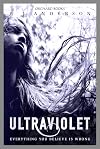
Almost seventeen-year-old Alison, who has synesthesia, finds herself in a psychiatric facility accused of killing a classmate whose body cannot be found.Tags
Recommendations







































Member Reviews
To say I was completely astonished by the turn this book took is an understatement. Whatever I was expecting at the start, it wasn’t that.
Alison Jeffries is admitted to Pine Hills as a mental health patient, having claimed that she murdered Tori Beaugrand, the most popular girl in school. Since she was six years old, Alison was regarded crazy by her mother, with her with her ability to see sounds and taste words and names, and associate colours, flavours and even personalities with letters. Alison’s insistence that Tori disintegrated was the final straw. People don’t just disintegrate. And her panicked, apparently crazed behaviour didn’t help either. Sometime after her admittance, Sebastian Faraday arrives. It is he who tells show more her that she is not insane. Rather, she has a neurological condition called synesthesia. Neither does he believe that she killed Tori. And so it goes from there.
Alison’s synesthesia intrigued me, to say the least. Couple this with her tetrachromacy – being able to see a far wider hue of colours than the average person – and you have a truly unique character. Anderson was able to convey Alison’s perceptions effectively, giving the reader a much more 3-dimensional view of the world. And every so often, there would be this beautifully crafted sentence or paragraph which left me stunned. Normally it may have seemed a little too flowery, but it worked because of Alison’s synesthesia, instead leaving me wanting to see the world as she did for myself.
Up until the huge twist, it was very realistic. It was very easy to feel for Alison; her experiences as a mental health patient and even as a daughter due to misunderstanding of her condition provoked quite a few emotions. Overall, her sense of losing herself and doubting her own sanity really came through.
And as for Sebastian Faraday. I don’t know what to say. Ordinarily I wouldn’t approve of the significant age gap, and I’m not entirely sure I agree with it here. Oddly enough, however, it hasn’t completely put me off. There was something about their relationship that just...worked. Maybe it was the fact that he actually listened to her. That he started out with one set of intentions, and then realised that actually, those no longer applied. I don’t know. But there is also a secret side to Faraday. One that I’m not going to go into, because otherwise the whole point of this book is lost. But what I will say is that is a BIG. SHOCK.
The reason I’ve only given this four stars instead of five is the ending. It didn’t work out quite the way I would have wanted, but then again there is a second one. Even so, I don’t think a sequel would even have been needed if just a little more was added. Still. Overall, it was really well-written book that I would definitely recommend, though I warn you: there is a HUGE twist. Huge. show less
Alison Jeffries is admitted to Pine Hills as a mental health patient, having claimed that she murdered Tori Beaugrand, the most popular girl in school. Since she was six years old, Alison was regarded crazy by her mother, with her with her ability to see sounds and taste words and names, and associate colours, flavours and even personalities with letters. Alison’s insistence that Tori disintegrated was the final straw. People don’t just disintegrate. And her panicked, apparently crazed behaviour didn’t help either. Sometime after her admittance, Sebastian Faraday arrives. It is he who tells show more her that she is not insane. Rather, she has a neurological condition called synesthesia. Neither does he believe that she killed Tori. And so it goes from there.
Alison’s synesthesia intrigued me, to say the least. Couple this with her tetrachromacy – being able to see a far wider hue of colours than the average person – and you have a truly unique character. Anderson was able to convey Alison’s perceptions effectively, giving the reader a much more 3-dimensional view of the world. And every so often, there would be this beautifully crafted sentence or paragraph which left me stunned. Normally it may have seemed a little too flowery, but it worked because of Alison’s synesthesia, instead leaving me wanting to see the world as she did for myself.
Up until the huge twist, it was very realistic. It was very easy to feel for Alison; her experiences as a mental health patient and even as a daughter due to misunderstanding of her condition provoked quite a few emotions. Overall, her sense of losing herself and doubting her own sanity really came through.
And as for Sebastian Faraday. I don’t know what to say. Ordinarily I wouldn’t approve of the significant age gap, and I’m not entirely sure I agree with it here. Oddly enough, however, it hasn’t completely put me off. There was something about their relationship that just...worked. Maybe it was the fact that he actually listened to her. That he started out with one set of intentions, and then realised that actually, those no longer applied. I don’t know. But there is also a secret side to Faraday. One that I’m not going to go into, because otherwise the whole point of this book is lost. But what I will say is that is a BIG. SHOCK.
The reason I’ve only given this four stars instead of five is the ending. It didn’t work out quite the way I would have wanted, but then again there is a second one. Even so, I don’t think a sequel would even have been needed if just a little more was added. Still. Overall, it was really well-written book that I would definitely recommend, though I warn you: there is a HUGE twist. Huge. show less
I’ll confess that I had a hard time deciding what to say in my review. The book left me that much awe. Ultraviolet is a complex read that really makes you think. Every time I began to grow comfortable, something else comes along. At first, I was confused about whether or not Alison’s condition was paranormal or if she really did belong in the psychological institution. While I no longer doubt her sanity, I do wonder how her abilities will continue to develop, if there is a sequel.
The story begins with Alison having been institutionalized in a mental facility for teens having confessed to the murder of her classmate Tori; the problem is that not only is Tori’s body nowhere to be found, Alison’s condition is difficult to diagnose. show more While she appears sane, she associates names, letters, and numbers with colors, taste, and personality. I found it fascinating how each chapter number is associated with something. It brings us one step closer to understanding how Alison’s mind works, along with the detailed imagery that Anderson works into the story.
While the story begins as somewhat of a slow read with Anderson developing Alison’s environment in the mental facility, there is no lack of intrigue. The cast of characters in the psychiatric ward is diverse and entertaining, making Alison seem tame in comparison. You will wonder along with Alison how she ended up there and why she isn’t allowed to go home, though it’s so apparent to Alison that she’s sane. Every time you begin to suspect that you understand the story, Anderson brings in a new twist—such as Faraday and then the scene with Kirk in the library. You begin to question everything you thought you knew all over again. Then come the clues, and you work with Alison to understand what’s going on. That’s the fun part.
I really loved Faraday as a character. Whereas everyone else acts as though he or she knows what is best for Alison, Faraday tries to understand her as a person. He doesn’t treat her as mental; he listens to her, and he believes in her. Alison really needed a supportive character in her life, and Faraday provides this constancy for her.
There’s an amazing twist at the end of the story. I loved learning the truth about Tori’s disappearance and more about Alison’s condition. The ending was just breathtaking and oh so bittersweet. While I love—and hope for—happy endings, real life isn’t always so satisfying. Sometimes, we need a little tragedy, and Ultraviolet has a powerful ending that will stay with you long after you put down your book or e-reader.
Ultraviolet is a literal out-of-this-world adventure filled with mystery and intrigue as Alison struggles to uncover the truth behind Tori’s disappearance and prove her sanity. With each new discovery, readers will wonder who can be trusted and even question Alison’s sanity in the process. Ultimately, it is a story of self-discovery and learning to trust both in others and in oneself. It has been the best out-of-this-world read that I’ve had this year. show less
The story begins with Alison having been institutionalized in a mental facility for teens having confessed to the murder of her classmate Tori; the problem is that not only is Tori’s body nowhere to be found, Alison’s condition is difficult to diagnose. show more While she appears sane, she associates names, letters, and numbers with colors, taste, and personality. I found it fascinating how each chapter number is associated with something. It brings us one step closer to understanding how Alison’s mind works, along with the detailed imagery that Anderson works into the story.
While the story begins as somewhat of a slow read with Anderson developing Alison’s environment in the mental facility, there is no lack of intrigue. The cast of characters in the psychiatric ward is diverse and entertaining, making Alison seem tame in comparison. You will wonder along with Alison how she ended up there and why she isn’t allowed to go home, though it’s so apparent to Alison that she’s sane. Every time you begin to suspect that you understand the story, Anderson brings in a new twist—such as Faraday and then the scene with Kirk in the library. You begin to question everything you thought you knew all over again. Then come the clues, and you work with Alison to understand what’s going on. That’s the fun part.
I really loved Faraday as a character. Whereas everyone else acts as though he or she knows what is best for Alison, Faraday tries to understand her as a person. He doesn’t treat her as mental; he listens to her, and he believes in her. Alison really needed a supportive character in her life, and Faraday provides this constancy for her.
There’s an amazing twist at the end of the story. I loved learning the truth about Tori’s disappearance and more about Alison’s condition. The ending was just breathtaking and oh so bittersweet. While I love—and hope for—happy endings, real life isn’t always so satisfying. Sometimes, we need a little tragedy, and Ultraviolet has a powerful ending that will stay with you long after you put down your book or e-reader.
Ultraviolet is a literal out-of-this-world adventure filled with mystery and intrigue as Alison struggles to uncover the truth behind Tori’s disappearance and prove her sanity. With each new discovery, readers will wonder who can be trusted and even question Alison’s sanity in the process. Ultimately, it is a story of self-discovery and learning to trust both in others and in oneself. It has been the best out-of-this-world read that I’ve had this year. show less
This suspenseful young adult novel had a stellar beginning, a good mysterious premise, and wonderfully descriptive writing, but it suffered from a little too much clouded genre bending that overwhelmed the plot a bit. Teenager Alison wakes up in the psychiatric unit of a hospital, not sure why she's there but knowing it's not good. She believes she has killed someone, a beautiful and popular teen named Tori at her school whom she never liked. The first person narrative, her fear and dread, and her synesthetic perceptions of her world (such as hearing "faint blue splashes of footsteps on tile") drew me right in. Turns out the police and psychiatrists also think she may have had something nefarious to do with Tori's disappearance, but show more noone's quite sure what happened - not even Alison. It had something to do with the wrongness she always felt about Tori, the strange birthmark only she could see on the other teen, the horrible high pitched sound she heard just before whatever happened. But, Alison's daily life is filled with unusual perceptions that she learned to keep strictly to herself, since her synesthesia is undiagnosed, and her feelings about Tori were just another secret. Alison is involuntarily committed and transferred to a psychiatric institution for troubled teens, and she is determined to get herself discharged. The suspense ratchets up from there, as she gets to know the other inmate teens, has an adversarial relationship with the admitting doc, and tries to keep herself and the increasingly disturbing synesthetic sensations under control, and to find out what happened that day with Tori. It's an enjoyable fast read and I think teens will enjoy it, but I do wish the author had stuck with the good mystery and science fiction plot elements, rather than also taking the story arc into the over-the-top unexplainable fantasy realm with Alison's abilities. An author's note explains more about synesthesia. I read an e-galley of the book courtesy of Netgalley. show less
The story opens with a confession that the narrator killed someone, they watched them disintegrate. Then the Narrator, Alison, describes waking up in a bleak hospital room and discovering that she was in an institution and had to deal with what was going on. Try to work out what had happened and come to terms with the fact that maybe, just maybe she wasn't crazy, but there was something different about how she thought.
And then things twisted.
Now I did guess some of the twisting but it still was interesting and kept me reading and while I see where the end came from I'm not sure it shouldn't have been a bit different.
The descriptions of synthesia were deeply interesting and lyrical.
And then things twisted.
Now I did guess some of the twisting but it still was interesting and kept me reading and while I see where the end came from I'm not sure it shouldn't have been a bit different.
The descriptions of synthesia were deeply interesting and lyrical.
I love me an unreliable narrator, particularly when you can‰Ãªt identify what kind of unreliable he or she is. Is he sincere in his beliefs but crazy? Is she a pathological liar? Is he a con man intentionally deceiving his audience? Is she just out of the loop, a narrator who thinks she knows whatÂês going on but is actually being tricked by others? I stayed up until almost midnight to finish this in a marathon reading session, and I found it an incredibly addictive genre-bender.
Alison is set up as suspect right from the start, from the moment she wakes up in a sterile hospital room, arms covered in self-inflicted scratches, missing a bunch of memories and pressed with the uncomfortable feeling that show more somethingÂês gone terribly wrong. The fact that sheÂês been involuntarily committed after a psychotic episode doesnÂêt surprise her as much as it should, and the policeman who escorts her, hand-cuffed, to her new home in a private psych ward for teenagers seems to think she knows something about a classmateÂês disappearance. The missing girl, Tori, had an argument with Alison just before disappearing, and it was no secret they disliked each other ÂÃà but did Alison do something to warrant this suspicious treatment? And do her family and friends and the doctors at the institution really want to help her, or do they all have ulterior motives?
Alison has always worried about being a little crazy because of the different way her mind perceives things: letters, numbers, names, and sounds have colors and emotions and even tastes associated with them. Telling lies taste bad and make her sick; hopefulness in someoneÂês voice tastes like powdered sugar; the ringing sound dishes make while washing make stars burst before her eyes; peopleÂês names hold clues to their personality, based on the qualities of the letters. It gives her narrative an unusual sensory rich quality without being overdone or unreadable, and Anderson does an amazing job using language to convey how Alison experiences the world. Plus, being so firmly in AlisonÂês head makes it hard to doubt her ÂÃà everything is colored by her odd perceptions, and she seems so sincere and honest ÂÃà but also impossible to fully believe she knows the true story, either.
SheÂês been taught by her mother to keep her unusual perceptions a secret, to be ashamed of it, but itÂês a real condition (and I donÂêt feel this is a spoiler, because even the publisherÂês marketing mentions it) called synesthesia. Because I already knew this, I was predisposed to think that Alison wasnÂêt really crazy ÂÃà she just didnÂêt know that there was a real explanation. But then, the more she starts remembering the events of the night Tori disappeared, the more unstable she seems, especially when she flat out admits to herself that she disintegrated Tori with the power of her mind.
Right at that moment, this book took me in wholly, because thatÂês when I had to admit I had no idea where Anderson was going to take this story. The best part of reading this book is trying to figure out, as Alison sorts through her memories and gets drawn into the lives of the other patients in the ward, what really happened that night. Did Alison kill Tori? And did Tori disintegrate, or is Alison just crazy? If she did disintegrate, what the hell does that mean? There is honestly no way to predict, for sure, where the story is going to go without spoilers. This is coming from someone who considers it her particular superpower to make those predictions and be right 98% of the time (what, even someone with superpowers canÂêt be right ALL of the time).
The book starts off as a realistic story taking place in a mental institution, but evidence stacks up, in a subtle way, that something supernatural is going on; the problem is, since weÂêre reading from AlisonÂês point of view, thereÂês no way of knowing if her gathering evidence that points to something otherworldly is legit. There are a lot of promising clues that turn out to be red herrings, and little moments that turn out in retrospect to be clues, while characters you like turn out to be skeevy and vice versa. The later piece of the novel, where the slow-building tension pays off and turns to straight-up action, is surprising and will put off some readers and make others squee with delight (I am one of the second ones). I did feel the transition was a little abrupt, but maybe thatÂês because it doesnÂêt get a lot of expansion compared with the rest of the story, which takes up more than half, and because it moves super fast in comparison; I think these later developments will be more focused in on book two.
I feel like I canÂêt discuss the plot anymore without ruining it, even though IÂêm leaving out a major character/love interest. Of course just saying thereÂês a major tonal shift is sort of setting up new readers for the experience, but that can be a good thing, too. Still, this genre-bender wouldnÂêt be nearly so successful without AndersonÂês great writing. There are so many quotable descriptive moments, like AlisonÂês descriptions that are spot-on and often hilarious (for example, she introduces Tori by saying, ÂÃÃAnd where the new girl had curves, I had angles and despairÂÃÂ; and she introduces another person by describing his clothes as ÂÃÃexciting shades like Old Filing Cabinet and Dryer LintÂÃÂ).
Another plus is the ensemble cast ÂÃà while this book is really all about Alison for most of the time, her fellow patients, her mother and father, the doctors and nurses and orderlies, and a certain potential love interest, all have enough depth to hint that thereÂês more going on with them than Alison realizes. They are believable background players, and when a few of them move into the spotlight, they become as complex as Alison.
Sheer curiosity kept me turning the pages -- I had to know what really happened to Alison and Tori -- but the writing made it worthwhile, and I admire Anderson for really going there with the ending. It's not every day that an author takes a fairly realistic story and turns it into a balls-out alien conspiracy. Can't wait to read the next one! show less
Alison is set up as suspect right from the start, from the moment she wakes up in a sterile hospital room, arms covered in self-inflicted scratches, missing a bunch of memories and pressed with the uncomfortable feeling that show more somethingÂês gone terribly wrong. The fact that sheÂês been involuntarily committed after a psychotic episode doesnÂêt surprise her as much as it should, and the policeman who escorts her, hand-cuffed, to her new home in a private psych ward for teenagers seems to think she knows something about a classmateÂês disappearance. The missing girl, Tori, had an argument with Alison just before disappearing, and it was no secret they disliked each other ÂÃà but did Alison do something to warrant this suspicious treatment? And do her family and friends and the doctors at the institution really want to help her, or do they all have ulterior motives?
Alison has always worried about being a little crazy because of the different way her mind perceives things: letters, numbers, names, and sounds have colors and emotions and even tastes associated with them. Telling lies taste bad and make her sick; hopefulness in someoneÂês voice tastes like powdered sugar; the ringing sound dishes make while washing make stars burst before her eyes; peopleÂês names hold clues to their personality, based on the qualities of the letters. It gives her narrative an unusual sensory rich quality without being overdone or unreadable, and Anderson does an amazing job using language to convey how Alison experiences the world. Plus, being so firmly in AlisonÂês head makes it hard to doubt her ÂÃà everything is colored by her odd perceptions, and she seems so sincere and honest ÂÃà but also impossible to fully believe she knows the true story, either.
SheÂês been taught by her mother to keep her unusual perceptions a secret, to be ashamed of it, but itÂês a real condition (and I donÂêt feel this is a spoiler, because even the publisherÂês marketing mentions it) called synesthesia. Because I already knew this, I was predisposed to think that Alison wasnÂêt really crazy ÂÃà she just didnÂêt know that there was a real explanation. But then, the more she starts remembering the events of the night Tori disappeared, the more unstable she seems, especially when she flat out admits to herself that she disintegrated Tori with the power of her mind.
Right at that moment, this book took me in wholly, because thatÂês when I had to admit I had no idea where Anderson was going to take this story. The best part of reading this book is trying to figure out, as Alison sorts through her memories and gets drawn into the lives of the other patients in the ward, what really happened that night. Did Alison kill Tori? And did Tori disintegrate, or is Alison just crazy? If she did disintegrate, what the hell does that mean? There is honestly no way to predict, for sure, where the story is going to go without spoilers. This is coming from someone who considers it her particular superpower to make those predictions and be right 98% of the time (what, even someone with superpowers canÂêt be right ALL of the time).
The book starts off as a realistic story taking place in a mental institution, but evidence stacks up, in a subtle way, that something supernatural is going on; the problem is, since weÂêre reading from AlisonÂês point of view, thereÂês no way of knowing if her gathering evidence that points to something otherworldly is legit. There are a lot of promising clues that turn out to be red herrings, and little moments that turn out in retrospect to be clues, while characters you like turn out to be skeevy and vice versa. The later piece of the novel, where the slow-building tension pays off and turns to straight-up action, is surprising and will put off some readers and make others squee with delight (I am one of the second ones). I did feel the transition was a little abrupt, but maybe thatÂês because it doesnÂêt get a lot of expansion compared with the rest of the story, which takes up more than half, and because it moves super fast in comparison; I think these later developments will be more focused in on book two.
I feel like I canÂêt discuss the plot anymore without ruining it, even though IÂêm leaving out a major character/love interest. Of course just saying thereÂês a major tonal shift is sort of setting up new readers for the experience, but that can be a good thing, too. Still, this genre-bender wouldnÂêt be nearly so successful without AndersonÂês great writing. There are so many quotable descriptive moments, like AlisonÂês descriptions that are spot-on and often hilarious (for example, she introduces Tori by saying, ÂÃÃAnd where the new girl had curves, I had angles and despairÂÃÂ; and she introduces another person by describing his clothes as ÂÃÃexciting shades like Old Filing Cabinet and Dryer LintÂÃÂ).
Another plus is the ensemble cast ÂÃà while this book is really all about Alison for most of the time, her fellow patients, her mother and father, the doctors and nurses and orderlies, and a certain potential love interest, all have enough depth to hint that thereÂês more going on with them than Alison realizes. They are believable background players, and when a few of them move into the spotlight, they become as complex as Alison.
Sheer curiosity kept me turning the pages -- I had to know what really happened to Alison and Tori -- but the writing made it worthwhile, and I admire Anderson for really going there with the ending.
You know how one of the best things about The Simpsons is how every episode starts out about one thing, and then suddenly the plot does a 180 and becomes about something else all-together?
Yes. That.
I don't want to say anything else because I would hate to spoil the story for anyone, but this thing takes a hard right turn into proper sci-fi territory almost out of nowhere (I saw it coming and HOPED I'd be right about what was to come, but I didn't think the author would actually do it), and it's exciting and fun. I cannot wait for the sequel.
Yes. That.
I don't want to say anything else because I would hate to spoil the story for anyone, but this thing takes a hard right turn into proper sci-fi territory almost out of nowhere (I saw it coming and HOPED I'd be right about what was to come, but I didn't think the author would actually do it), and it's exciting and fun. I cannot wait for the sequel.
Wow, a second top-rated book in less than a month! I hadn't thought I'd encounter another one of those for at least another year! I must have won the "great reads for you" lottery, because this book completely blew me away.
Using superb writing and astonishing characters, Rachel Anderson has crafted a Young Adult novel which is intelligent, consuming and enthralling. I couldn't put this book down and read through the night to finish it with tears in my eyes and a song in my heart. Honestly, I don't know how I'll find the words to do this book justice, but I will try.
Alison experiences the word differently from everyone else she had ever met. She sees the shapes of sounds, she hears the light of the stars, she physically feels sounds. show more Since her early childhood, she believed that this meant that she was crazy and she had been working very, very hard to hide not only how different she is but how she reacts to events - which serves to make her seem even more psychotic to the psychiatrists who have to evaluate her when she lands up in a mental institution, which is where the book starts.
The thin line between psychosis and the supernatural/paranormal is one which I had always found fascinating and almost hypnotic, and Alison's rigid control over her emotions and reactions as well as her constant questioning of her sanity and whether she could trust her own thoughts and feelings was something I may even have over-related to, which may have coloured my entire view of the book. Fair warning!
Anderson's writing skill is simply astounding. Her use of language to explain Alison's perceptions is incredibly well done and I would not hesitate to rank her as one of the best stylistic writers I have ever read. The writing was just that good, so even if the plot or character hold no interest for you (which I find hard to imagine!), Ultraviolet would be well worth the read for the exceptional writing alone.
That said, I found everything else about the book to be admirable. I have seldomly identified so strongly with a character as I did with Alison, despite the fact that I do not experience the world as she does. Her character is amazingly sympathetic and fully developed. The secondary characters are also vibrant and authentic although the reader's perceptions of them are heavily reliant on Alison's first-person narrative.
The plot is absolutely astounding. It hooks you from the first page and takes you on a roller coaster-ride through Alison's mind and life at a mental hospital. The final piece of the puzzle was totally unexpected even though it was clearly foreshadowed, once you knew what to look for - even this veteran of mysteries was fooled!
Ultraviolet is, in one word, fantastic, and I can't recommend it strong enough.
Who would like this book? To be honest, it's hard for me to imagine who wouldn't! It's just so well done! That said, this is a YA book with elements of sci-fi, the paranormal and an exploration into the nature of mental illness. There is also a sexual assault, which may upset and/or trigger. The ending may not fall into everyone's comfort zone, either.
Disclosure: I received a pre-release electronic copy from Netgalley with no obligation to rate the book or even review it, so everything in the review is my own, personal and honest opinion. show less
Using superb writing and astonishing characters, Rachel Anderson has crafted a Young Adult novel which is intelligent, consuming and enthralling. I couldn't put this book down and read through the night to finish it with tears in my eyes and a song in my heart. Honestly, I don't know how I'll find the words to do this book justice, but I will try.
Alison experiences the word differently from everyone else she had ever met. She sees the shapes of sounds, she hears the light of the stars, she physically feels sounds. show more Since her early childhood, she believed that this meant that she was crazy and she had been working very, very hard to hide not only how different she is but how she reacts to events - which serves to make her seem even more psychotic to the psychiatrists who have to evaluate her when she lands up in a mental institution, which is where the book starts.
The thin line between psychosis and the supernatural/paranormal is one which I had always found fascinating and almost hypnotic, and Alison's rigid control over her emotions and reactions as well as her constant questioning of her sanity and whether she could trust her own thoughts and feelings was something I may even have over-related to, which may have coloured my entire view of the book. Fair warning!
Anderson's writing skill is simply astounding. Her use of language to explain Alison's perceptions is incredibly well done and I would not hesitate to rank her as one of the best stylistic writers I have ever read. The writing was just that good, so even if the plot or character hold no interest for you (which I find hard to imagine!), Ultraviolet would be well worth the read for the exceptional writing alone.
That said, I found everything else about the book to be admirable. I have seldomly identified so strongly with a character as I did with Alison, despite the fact that I do not experience the world as she does. Her character is amazingly sympathetic and fully developed. The secondary characters are also vibrant and authentic although the reader's perceptions of them are heavily reliant on Alison's first-person narrative.
The plot is absolutely astounding. It hooks you from the first page and takes you on a roller coaster-ride through Alison's mind and life at a mental hospital. The final piece of the puzzle was totally unexpected even though it was clearly foreshadowed, once you knew what to look for - even this veteran of mysteries was fooled!
Ultraviolet is, in one word, fantastic, and I can't recommend it strong enough.
Who would like this book? To be honest, it's hard for me to imagine who wouldn't! It's just so well done! That said, this is a YA book with elements of sci-fi, the paranormal and an exploration into the nature of mental illness. There is also a sexual assault, which may upset and/or trigger. The ending may not fall into everyone's comfort zone, either.
Disclosure: I received a pre-release electronic copy from Netgalley with no obligation to rate the book or even review it, so everything in the review is my own, personal and honest opinion. show less
Members
- Recently Added By
Lists

Female Protagonist
1,056 works; 57 members

Best Science Fiction Novels
816 works; 430 members

Future Green Dragon Group Read Books
80 works; 6 members

Modern Books for Young Adults
87 works; 11 members
Author Information

13 Works 2,108 Members

R. J. Anderson is a LibraryThing Author, an author who lists their personal library on LibraryThing.
Awards and Honors
Series

Common Knowledge
- Original publication date
- 2011-05-24
- People/Characters
- Alison Jeffries; Sebastian Faraday; Tori Beaugrand; Micheline; Sanjay; Kirk Sutherland (show all 21); Melissa Partridge; Constable Deckard; Dr. Konrad Minta; Mathis; Cherie; Suzanne Jeffries; Alan Jeffries; Chris Jeffries; Jennifer; Sharon; Jill; Jeanne Menard; Shabnam; Rachael; Lara Mackey
- Important places
- Sudbury, Ontario, Canada
- Dedication
- To Josh, who never stopped believing
- First words
- Once upon a time there was a girl who was special.
- Last words
- (Click to show. Warning: May contain spoilers.)This is my story.
Classifications
Statistics
- Members
- 561
- Popularity
- 52,830
- Reviews
- 72
- Rating
- (3.67)
- Languages
- English, French
- Media
- Paper, Audiobook, Ebook
- ISBNs
- 13
- ASINs
- 4