On This Page
Description
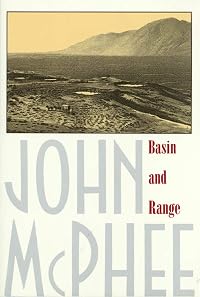
To geologists, rocks are beautiful, roadcuts are windowpanes, and the earth is alive-a work in progress. The cataclysmic movement that gives birth to mountains and oceans is ongoing and can still be seen at certain places on our planet. One of these is the Basin and Range region centered in Nevada and Utah. In this first book of a Pulitzer Prize-winning collection, the author crosses the spectacular Basin and Range with geology professor Kenneth Deffeyes in tow. McPhee draws on Deffeyes' show more expertise to dazzle you with the vast perspective of geologic time and the fascinating history of vanished landscapes. The effect is guaranteed to expand your mind. McPhee's enthusiasm is infectious, as he provides one of the best introductions to plate tectonics and the New Geology. His elegant style is more pleasing than ever with narrator Nelson Runger's smooth, enthusiastic delivery. Runger mines the book's rich veins of poetic prose and subtle humor-and the result is pure gold. show lessTags
Recommendations















Member Reviews
Flabbergasting, the science of geology told artfully. I am gobsmacked by the geologic megapicture. There is a most surprising confession two thirds of the way through this book, an encounter I won't spoil but the most convincing account I've personally heard regarding things inexplicable. McPhee shares the moment with his pal, a professor at Princeton, and a hundred locals. Which is more unlikely, the Earth, the stars, or consciousness itself!?
An unusual book, a delightful read, but does it work for its technical aspect?
I think this was a series of New Yorker pieces, which would certainly explain some of the style. As a book, it lacks a coherent narrative thread. In particular, the geomorphology of basin and range (a new concept to me, as a reasonably geologically literate but non-US reader) is explained briefly, but could have used a warning, "Pay attention, this next concept is going to be referred to endlessly hereafter without any more explanation". Also who's the local Nevada mayor in the last chapter? Deffeyes? Some other character whose name we slip? A good editor, unafraid of McPhee's deserved stature, could have made this work rather better as a book. Even a map show more would help us foreigners.
The beginning of the book has the feel of a travelogue. A Theroux, maybe even HST piece (HST meets the last sun-crazed silver miners?), of gentle companionship and wandering through backwoods America. Midway it moves more towards a geology textbook. This is when it really starts to take off, although I'm unsure of the audience. A handful of foreign geologists? Sophomore students? But the urbane New Yorker reader with clean shoes, do they know the geological background or care enough about the arcane added knowledge? The chapters on 18th century Edinburgh, Hutton, and the invention of geology; on silver-mining and recovering old mine wastes; or best of all, the impact of plate tectonics on geology in the 1960s. I knew (fortunately) all of these things before picking up the book: but I realise now I'd never really understood plate tectonics, or appreciated just how young ocean floors were until reading this.
I was reminded in the end of Sebald's 'Rings of Saturn' (no bad comparison); it's 'a walk outdoors with one of your smartest friends'. A little directionless, but all of it fascinating. show less
I think this was a series of New Yorker pieces, which would certainly explain some of the style. As a book, it lacks a coherent narrative thread. In particular, the geomorphology of basin and range (a new concept to me, as a reasonably geologically literate but non-US reader) is explained briefly, but could have used a warning, "Pay attention, this next concept is going to be referred to endlessly hereafter without any more explanation". Also who's the local Nevada mayor in the last chapter? Deffeyes? Some other character whose name we slip? A good editor, unafraid of McPhee's deserved stature, could have made this work rather better as a book. Even a map show more would help us foreigners.
The beginning of the book has the feel of a travelogue. A Theroux, maybe even HST piece (HST meets the last sun-crazed silver miners?), of gentle companionship and wandering through backwoods America. Midway it moves more towards a geology textbook. This is when it really starts to take off, although I'm unsure of the audience. A handful of foreign geologists? Sophomore students? But the urbane New Yorker reader with clean shoes, do they know the geological background or care enough about the arcane added knowledge? The chapters on 18th century Edinburgh, Hutton, and the invention of geology; on silver-mining and recovering old mine wastes; or best of all, the impact of plate tectonics on geology in the 1960s. I knew (fortunately) all of these things before picking up the book: but I realise now I'd never really understood plate tectonics, or appreciated just how young ocean floors were until reading this.
I was reminded in the end of Sebald's 'Rings of Saturn' (no bad comparison); it's 'a walk outdoors with one of your smartest friends'. A little directionless, but all of it fascinating. show less
John McPhee's first part of the Annals of the Former World collection is stunning. It's tough, gritty and full of words that feel as good to read as the taste sour lollipop. To me, geology is mystifying, fascinating, and as McPhee so eloquently lays out, full of poetry. This is a lovely book of prose about the earth, deep time, and a brief history of the field of geology.
I enjoyed this very much. McPhee has a lovely, engrossing style of writing. I got odd echoes of other books I've enjoyed throughout this one - he repeatedly uses the theme of traveling back and forth over an area over millions of years, and the phrase "If you turned around and came back, a million years later" kept reminding me of Italo Calvino's Cosmicomics (a book I love). Other areas, where he was talking about glaciers and their effects and the discovery of their actions, reminded me of a textbook I've owned and read and reread for years - Prehistoric America by Anne Terry White. I learned quite a bit about the underlying structures of areas I'm familiar with - the titular Basin and Range area is fascinating, and the idea that show more Auburn, California sits on what was once the edge of the continental shelf is amazing. He does, occasionally, go off in transports about the words and phrases of geology, without explaining the meanings behind them, but I recognized enough to more or less follow even in those areas. And one bit, talking about 'new' types of rocks discovered through microscopic and chemical analysis, explained some puzzles I've run into elsewhere - words that meant nothing to me though they were obviously types of rocks. Now I know they were fine distinctions of granite, slate, limestone, etc. Very enjoyable book - I'll look for his other geology ones, now, and see what other subjects he's covered. show less
Ostensibly about the geology of the Basin and Range province in the western United States, but in truth an introduction to the history of geology and the author's series on the geology of the United States as experienced across Interstate 80.
In this volume the author spends much time with Prof. Deffeyes of Princeton, whom we learn is really interested in discovering the silver the miners of a previous era overlooked or did not find of sufficient quality to dedicate time and effort to mine.
The author interweaves an explanation of geologic concepts and a sketch of geologic history and the human history of geology and understanding the environment. The rest of the series is anticipated.
There is some discussion of the Basin and Range as a show more spreading area in which, at some point, a new sea will open up, just like the Red Sea and the Great Rift Valley from Israel to Kenya.
Of the volumes in the series this is the most uneven; its ending isn't even really much of an ending, leaving the author and reader kind of hanging in Winnemucca, Nevada.
But still an interesting exploration into the geology of America. show less
In this volume the author spends much time with Prof. Deffeyes of Princeton, whom we learn is really interested in discovering the silver the miners of a previous era overlooked or did not find of sufficient quality to dedicate time and effort to mine.
The author interweaves an explanation of geologic concepts and a sketch of geologic history and the human history of geology and understanding the environment. The rest of the series is anticipated.
There is some discussion of the Basin and Range as a show more spreading area in which, at some point, a new sea will open up, just like the Red Sea and the Great Rift Valley from Israel to Kenya.
Of the volumes in the series this is the most uneven; its ending isn't even really much of an ending, leaving the author and reader kind of hanging in Winnemucca, Nevada.
But still an interesting exploration into the geology of America. show less
Few writers can successfully mingle fiction writing with natural history, and of these, writers with an interest in pure geology are just a fraction. In «Basin and Range» John McPhee tries to forge a novel out of geographical description and fiction, unfortunately not quite successful enough, thus the natural history writing remains too distinct, a mere relating of facts without a deeper dimension.
John McPhee’s Annals of the Former World is a five-book masterpiece of geology. The series was awarded the Pulitzer Prize in 1999.
Basin and Range is book one in the series. Basin and Range is a term for landscapes that have parallel mountains and valleys. The Great Basin in the Western United States is one of the best examples of this type of topography.
One of the major themes of this book is the radical new (at the time) idea of seafloor spreading. This controversial theory shook the geology world in the 1960s. The idea is that new earth crust is created in the oceans at midoceanic ridges and pushes outwards from there. This process explains continental drift and plate tectonics. If McPhee had to sum up the book with one sentence he show more said it would be this: The summit of Mt. Everest is marine limestone.
McPhee tells many kinds of stories in this book. It’s partly a travelogue of trips he took with a geologist through the Great Basin along I-80. He explains Earth’s processes that formed the landscape he sees along the interstate.
But he also tells the stories of geologists today. They don’t all see geology the same. A new idea like seafloor spreading is not universally accepted all at once. Many geologists even fought against it.
One of my favorite parts of the book is when McPhee talks about “deep time,” his term for explaining geological time. It is the best example I’ve read of comprehending large-scale time frames that are counted in millions or even billions of years.
Do I recommend it?
I’m not a geologist, but I had a great time reading this. However, I’ve always had an interest in the Earth and its processes, so I may be a little biased. The writing is phenomenal and for a book about rocks, I think it can hold many people’s interest. show less
Basin and Range is book one in the series. Basin and Range is a term for landscapes that have parallel mountains and valleys. The Great Basin in the Western United States is one of the best examples of this type of topography.
One of the major themes of this book is the radical new (at the time) idea of seafloor spreading. This controversial theory shook the geology world in the 1960s. The idea is that new earth crust is created in the oceans at midoceanic ridges and pushes outwards from there. This process explains continental drift and plate tectonics. If McPhee had to sum up the book with one sentence he show more said it would be this: The summit of Mt. Everest is marine limestone.
McPhee tells many kinds of stories in this book. It’s partly a travelogue of trips he took with a geologist through the Great Basin along I-80. He explains Earth’s processes that formed the landscape he sees along the interstate.
But he also tells the stories of geologists today. They don’t all see geology the same. A new idea like seafloor spreading is not universally accepted all at once. Many geologists even fought against it.
One of my favorite parts of the book is when McPhee talks about “deep time,” his term for explaining geological time. It is the best example I’ve read of comprehending large-scale time frames that are counted in millions or even billions of years.
Do I recommend it?
I’m not a geologist, but I had a great time reading this. However, I’ve always had an interest in the Earth and its processes, so I may be a little biased. The writing is phenomenal and for a book about rocks, I think it can hold many people’s interest. show less
Members
- Recently Added By
Published Reviews
JOHN MCPHEE has written with dizzying competence about everything from oranges to the making of bark canoes to the proper method of weighing food. Not only is he an excellent journalist, he is a veritable master of expertise, and his latest book, ''Basin and Range,'' represents yet another such foray, this time into the geology of the American continent in the company of scientists who have show more spent their lives climbing, hammering and measuring everything mineral they could lay their hands on between New York and California. show less
added by private library
Lists

Best Science Books for Non-Scientists
113 works; 57 members

Books That Changed Our Perspective
423 works; 168 members
Author Information

59+ Works 21,095 Members
McPhee was born in Princeton, New Jersey, and educated at Princeton University and Cambridge University. His writing career began at Time magazine and led to his long association with the New Yorker, where he has been a staff writer since 1965. That same year he published his first book, A Sense of Where You Are, with FSG, and soon followed with show more The Headmaster (1966), Oranges (1967), The Pine Barrens (1968), A Roomful of Hovings and Other Profiles (collection, 1969), The Crofter and the Laird (1969), Levels of the Game (1970), Encounters with the Archdruid (1972), The Deltoid Pumpkin Seed (1973), The Curve of Binding Energy (1974), Pieces of the Frame (collection, 1975), and The Survival of the Bark Canoe (1975). Both Encounters with the Archdruid and The Curve of Binding Energy were nominated for National Book Awards in the category of science Since 1977, the year in which McPhee received the Award in Literature from the American Academy of Arts and Letters and The John McPhee Reader and the bestselling Coming into the Country appeared in print, Farrar, Straus and Giroux has published Giving Good Weight (collection, 1979), Basin and Range (1981), In Suspect Terrain (1983), La Place de la Concorde Suisse (1984), Table of Contents (collection, 1985), Rising from the Plains (1986), Heirs of General Practice (in a paperback edition, 1986), The Control of Nature (1989), Looking for a Ship (1990), Assembling California (1993), The Ransom of Russian Art (1994), The Second John McPhee Reader (1996), and Irons in the Fire (1997). Annals of the Former World was published in 1998 and was awarded the Pulitzer Prize in 1999. McPhee has taught at Princeton as Ferris Professor since 1975. (Bowker Author Biography) show less
Some Editions
Awards and Honors
Awards
Series

Work Relationships
Is contained in
Common Knowledge
- Original publication date
- 1981
- People/Characters
- John McPhee; Eldridge Moores
- Important places
- Intermountain West, USA
- Original language
- English
Classifications
Statistics
- Members
- 1,006
- Popularity
- 25,892
- Reviews
- 17
- Rating
- (4.02)
- Languages
- English
- Media
- Paper, Audiobook, Ebook
- ISBNs
- 7
- ASINs
- 9