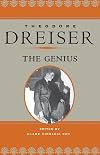
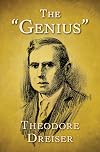
The Genius
by Theodore Dreiser
On This Page
Description
Heavily influenced by Dreiser's own life and experiences, this roman a clef was regarded as shockingly frank in its treatment of sexuality, particularly the sensual nature and intimate conquests of female protagonist Eugene Witla, an up-and-coming artist. As a result of the novel's titillating subject matter, Dreiser encountered a great deal of difficulty when it came to finding a willing publisher, and the book has been banned often in the ensuing decades since its completion..
Tags
Recommendations



































Member Reviews
In November of 1911 Theodore Dreiser sailed for Europe with his English publisher Grant Richards. Dreiser would spend almost six months touring England, with side trips to Florence and Berlin. He returned on 11 April 1912 on the liner Kroonland, having passed up the opportunity to sail on the maiden voyage of the Titanic two days earlier for lack of funds. Having come that close to disaster he would have to continue writing in America to produce the books whose advances had funded his trip abroad. One of those books was his fifth novel, The "Genius", published in 1915.
The "Genius" is a novel dealing with the American Artist and his search for a place in American life. The three sections of the novel narrate the story of an artist who show more begins his life in a small Midwestern town and eventually reaches the heights of magazine publishing in New York City. The first part, "Youth", contains some of Dreiser's best writing and chronicles the youth of Eugene Witla growing up in a middle-class family in Illinois. He moves to Chicago where he becomes a newspaper illustrator and studies evenings at the Art Institute. His life there includes a variety of jobs and the beginnings of his relationships with women that will become an important theme in the book. He returns home and meets a young girl from Wisconsin, Angela Blue, who will he will eventually marry; but only after having spent time as an illustrator in New York. Developing his career there he becomes an artist with potential for major success. The first part of the novel concludes with his return to Wisconsin as he is about to marry Angela, a farm girl who is older and much more conservative than Eugene, the eager independent artist. Their differences are never reconciled over the course of a marriage that covers most of the succeeding two sections of the novel. "Youth" is by far the most successful part of the novel as the remaining five hundred-plus pages of parts two and three become somewhat repetitive with Eugene's multiple affairs with women as background to his rise as a painter and ensuing nervous breakdown. His own destructive impulses impair his career and wound his marriage. Some have suggested that Dreiser's attempts to adapt the story too closely to his own biography may account for some of the problems of these sections. Eugene's life seems to drift. At his peak his genius for painting seemed sui generis and he was becoming recognized in artistic circles, but he made questionable decisions about the direction of his life that took him away from pure art and into the publishing business and investments where, after some apparent success, he ultimately failed.
The epic scope and strength of the novel are marred by unrealistic passages and melodramatic moments and ultimately a failure of the novelist to present a coherent direction for Eugene's life. Dreiser's power as a story-teller holds the novel together in spite of these issues, but he is not able to succeed in bringing it to the level of his earlier successes in Sister Carrie, Jennie Gerhardt, and The Financier. Dreiser's main critical champion, H. L. Mencken, praised its epic panorama while recognizing the "rambling, formless, and chaotic" nature of much of the novel. Other literary critics were less kind. As a fan of Dreiser's work for many years I recognize the flaws but would nonetheless recommend this novel to any who have first enjoyed the best of his novelistic efforts. The greatness within The "Genius" is easier to perceive with that reading as your background. show less
The "Genius" is a novel dealing with the American Artist and his search for a place in American life. The three sections of the novel narrate the story of an artist who show more begins his life in a small Midwestern town and eventually reaches the heights of magazine publishing in New York City. The first part, "Youth", contains some of Dreiser's best writing and chronicles the youth of Eugene Witla growing up in a middle-class family in Illinois. He moves to Chicago where he becomes a newspaper illustrator and studies evenings at the Art Institute. His life there includes a variety of jobs and the beginnings of his relationships with women that will become an important theme in the book. He returns home and meets a young girl from Wisconsin, Angela Blue, who will he will eventually marry; but only after having spent time as an illustrator in New York. Developing his career there he becomes an artist with potential for major success. The first part of the novel concludes with his return to Wisconsin as he is about to marry Angela, a farm girl who is older and much more conservative than Eugene, the eager independent artist. Their differences are never reconciled over the course of a marriage that covers most of the succeeding two sections of the novel. "Youth" is by far the most successful part of the novel as the remaining five hundred-plus pages of parts two and three become somewhat repetitive with Eugene's multiple affairs with women as background to his rise as a painter and ensuing nervous breakdown. His own destructive impulses impair his career and wound his marriage. Some have suggested that Dreiser's attempts to adapt the story too closely to his own biography may account for some of the problems of these sections. Eugene's life seems to drift. At his peak his genius for painting seemed sui generis and he was becoming recognized in artistic circles, but he made questionable decisions about the direction of his life that took him away from pure art and into the publishing business and investments where, after some apparent success, he ultimately failed.
The epic scope and strength of the novel are marred by unrealistic passages and melodramatic moments and ultimately a failure of the novelist to present a coherent direction for Eugene's life. Dreiser's power as a story-teller holds the novel together in spite of these issues, but he is not able to succeed in bringing it to the level of his earlier successes in Sister Carrie, Jennie Gerhardt, and The Financier. Dreiser's main critical champion, H. L. Mencken, praised its epic panorama while recognizing the "rambling, formless, and chaotic" nature of much of the novel. Other literary critics were less kind. As a fan of Dreiser's work for many years I recognize the flaws but would nonetheless recommend this novel to any who have first enjoyed the best of his novelistic efforts. The greatness within The "Genius" is easier to perceive with that reading as your background. show less
300 pages into this 750 page tome, and I've suddenly decided I've had enough. I loved sister Carrie and an American tragedy, but this book just seemed to repeat itself over and over again. this dude is obsessed with young, pretty women, and repeatedly becomes enraptured with them. the first 300 pages show little character or plot development. they were good enough, but I had no desire to read on.
300 pages into this 750 page tome, and I've suddenly decided I've had enough. I loved sister Carrie and an American tragedy, but this book just seemed to repeat itself over and over again. this dude is obsessed with young, pretty women, and repeatedly becomes enraptured with them. the first 300 pages show little character or plot development. they were good enough, but I had no desire to read on.
300 pages into this 750 page tome, and I've suddenly decided I've had enough. I loved sister Carrie and an American tragedy, but this book just seemed to repeat itself over and over again. this dude is obsessed with young, pretty women, and repeatedly becomes enraptured with them. the first 300 pages show little character or plot development. they were good enough, but I had no desire to read on.
300 pages into this 750 page tome, and I've suddenly decided I've had enough. I loved sister Carrie and an American tragedy, but this book just seemed to repeat itself over and over again. this dude is obsessed with young, pretty women, and repeatedly becomes enraptured with them. the first 300 pages show little character or plot development. they were good enough, but I had no desire to read on.
I don't know what to think, the book is really good. Eugene the Genius. Lots of talent lots of lust for beauty. Angel-face stayed till the end, cajoling, threatening, pleading. Well, Angela Won.
Amazon: This was Theodore Dreiser's favorite of his own novels - and his most autobiographical. Although Eugene Witla, the main character, is a painter, Dreiser modeled him so closely after himself that some critics have used incidents from the book as evidence for things in his own life. Much of the novel is an examination and criticism of the sexual mores of the time, which Dreiser felt restrictive and counter-productive.
In the initial section of the novel, after moving to Chicago to pursue a career as an artist, Witla meets Angela Blue; after enjoying much of what the city has to offer (including other woman), Angela and Witla marry.
The next part of the book is concerned mainly with Witla trying to make it as a struggling artist. show more Like Dreiser himself, Witla works for a while as a manual laborer and then as an illustrator in an advertising agency, where he shows some success.
But Witla can't control his restless sexual impulses and much of the last section of the novel concerns his affair with the very young Suzanne Dale, who is too immature and controlled by her mother to return Witla's affections. Angela also becomes pregnant at this time; after Suzanne is dragged off to Europe by her mother, thus ending anything that existed between her daughter and Witla, Angela delivers a baby girl but dies in the process. The book ends with an apparently wiser Witla caring for his daughter, also named Angela. show less
In the initial section of the novel, after moving to Chicago to pursue a career as an artist, Witla meets Angela Blue; after enjoying much of what the city has to offer (including other woman), Angela and Witla marry.
The next part of the book is concerned mainly with Witla trying to make it as a struggling artist. show more Like Dreiser himself, Witla works for a while as a manual laborer and then as an illustrator in an advertising agency, where he shows some success.
But Witla can't control his restless sexual impulses and much of the last section of the novel concerns his affair with the very young Suzanne Dale, who is too immature and controlled by her mother to return Witla's affections. Angela also becomes pregnant at this time; after Suzanne is dragged off to Europe by her mother, thus ending anything that existed between her daughter and Witla, Angela delivers a baby girl but dies in the process. The book ends with an apparently wiser Witla caring for his daughter, also named Angela. show less
Members
- Recently Added By
Lists

First published in 1915
87 works; 11 members

Best 20th Century Books as of 1924
100 works; 6 members

Isle Royale
18 works; 1 member
Author Information

159+ Works 13,779 Members
Theodore Dreiser was born in Terre Haute, Indiana, the twelfth of 13 children. His childhood was spent in poverty, or near poverty, and his family moved often. In spite of the constant relocations, Dreiser managed to attend school, and, with the financial aid of a sympathetic high school teacher, he was able to attend Indiana University. However, show more the need for income forced him to leave college after one year and take a job as a reporter in Chicago. Over the next 10 years, Dreiser held a variety of newspaper jobs in Pittsburgh, St. Louis, and finally New York. He published his first novel, Sister Carrie in 1900, but because the publisher's wife considered its language and subject matter too "strong", it was barely advertised and went almost unnoticed. Today it is regarded as one of Dreiser's best works. It is the story of Carrie, a young woman from the Midwest, who manages to rise to fame and fortune on the strength of her personality and ambition, through her acting talent, and via her relationships with various men. Much of the book's controversy came from the fact that it portrayed a young woman who engages in sexual relationships without suffering the poverty and social downfall that were supposed to be the "punishment" for such "sin." Dreiser's reputation has increased instrumentally over the years. His best book and first popular success, An American Tragedy (1925), is now considered a major American novel, and his other works are widely taught in college courses. Like Sister Carrie, An American Tragedy also tells the story of an ambitious young person from the Midwest. In this case, however, the novel's hero is a man who is brought to ruin because of a horrible action he commits - he murders a poor young woman whom he has gotten pregnant, but whom he wants to discard in favor of a wealthy young woman who represents luxury and social advancement. As Dreiser portrays him, the young man is a victim of an economic system that torments so many with their lack of privilege and power and temps them to unspeakable acts. Dreiser is also known for the Coperwood Trilogy - The Financier (1912), The Titan (1914), and the posthumously published The Store (1947). Collectively the three books paint the portrait of a brilliant and ruthless "financial buccaneer." Dreiser is associated with Naturalism, a writing style that also includes French novelist Emile Zola. Naturalism seeks to portray all the social forces that shape the lives of the characters, usually conveying a sense of the inevitable doom that these forces must eventually bring about. Despite this apparent pessimism, Dreiser had faith in socialism as a solution to what he saw as the economic injustices of American capitalism. His socialist views were reinforced by a trip to the newly socialist Soviet Union, and in fact, Dreiser is still widely read in that country. There, as here, he is seen as a powerful chronicler of the injustices and ambitions of his time. Dreiser officially joined the Communist Party shortly before his death in 1945. (Bowker Author Biography) show less
Work Relationships
Common Knowledge
- Canonical title
- The Genius
- Original publication date
- 1915
- People/Characters
- Angela Blue; Eugene Witla; Suzanne Dale
Classifications
Statistics
- Members
- 181
- Popularity
- 180,491
- Reviews
- 7
- Rating
- (3.64)
- Languages
- English, Italian, Russian
- Media
- Paper, Ebook
- ISBNs
- 45
- ASINs
- 19