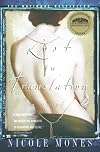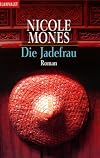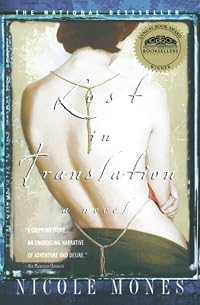
Lost in Translation
by Nicole Mones
On This Page
Description
A novel of searing intelligence and startling originality, Lost in Translation heralds the debut of a unique new voice on the literary landscape.nbsp;nbsp;Nicole Mones creates an unforgettable story of love and desire, of family ties and human conflict, and of one woman's struggle to lose herself in a foreign land--only to discover her home, her heart, herself. At dawn in Beijing, Alice Mannegan pedals a bicycle through the deserted streets.nbsp;nbsp;An American by birth, a translator by show more profession, she spends her nights in Beijing's smoke-filled bars, and the Chinese men she so desires never misunderstand her intentions.nbsp;nbsp;All around her rushes the air of China, the scent of history and change, of a world where she has come to escape her father's love and her own pain.nbsp;nbsp;It is a world in which, each night as she slips from her hotel, she hopes to lose herself forever. For Alice, it began with a phone call from an American archaeologist seeking a translator.nbsp;nbsp;And it ended in an intoxicating journey of the heart--one that would plunge her into a nation's past, and into some of the most rarely glimpsed regions of China.nbsp;nbsp;Hired by an archaeologist searching for the bones of Peking Man, Alice joins an expedition that penetrates a vast, uncharted land and brings Professor Lin Shiyang into her life.nbsp;nbsp;As they draw closer to unearthing the secret of Peking Man, as the group's every move is followed, their every whisper recorded, Alice and Lin find shelter in each other, slowly putting to rest the ghosts of their pasts.nbsp;nbsp;What happens between them becomes one of the most breathtakingly erotic love stories in recent fiction.nbsp;nbsp;Indeed, Lost in Translation is a novel about love--between a nation and its past, between a man and a memory, between a father and a daughter.nbsp;nbsp;Its powerful impact confirms the extraordinary gifts of a master storyteller, Nicole Mones. show lessTags
Recommendations














Member Reviews
Lost in Translation is the imaginative and satisfying first novel by Nicole Mones. The protagonist, Alice Mannegan, is an American living in China, working as an interpreter, and striving to be accepted in the culture she has adopted. When hired by a second-rate American anthropologist, the two hook up with his Chinese counterparts and head to Inner Mongolia looking for the lost remains of Peking Man.
Mones does a great job of weaving the histories of the characters into the main story. While the team follows the trail of homo erectus, Alice struggles to understand her relationship with her powerful father; her boss worries about losing his son’s affection and respect; and their Chinese cohort searches on the sly for the wife he show more cannot abandon although she disappeared to a work camp during the Cultural Revolution. Mones uses the historic relationship between French priest Pierre Teilhard de Chardin and his platonic lover, Lucile Swan, to bring thematic unity to the varied storylines.
Equal parts historical mystery, foreign adventure, and cross-cultural romance, Lost in Translation has a lot to offer. show less
Mones does a great job of weaving the histories of the characters into the main story. While the team follows the trail of homo erectus, Alice struggles to understand her relationship with her powerful father; her boss worries about losing his son’s affection and respect; and their Chinese cohort searches on the sly for the wife he show more cannot abandon although she disappeared to a work camp during the Cultural Revolution. Mones uses the historic relationship between French priest Pierre Teilhard de Chardin and his platonic lover, Lucile Swan, to bring thematic unity to the varied storylines.
Equal parts historical mystery, foreign adventure, and cross-cultural romance, Lost in Translation has a lot to offer. show less
I made the mistake of thinking this was the basis of the Bill Murray Scarlett Johansson movie because the main character had red hair. Clearly it is not. The scion of a racist American politician loses herself in Chinese culture working as a translator. She is employed by an American archaeologist looking to recover Peking man which he believes was hidden in the wilds of Mongolia by the Jesuit priest de Chardin. Two Chinese ethnologist join the expedition, one of whom is seeking the fate of his wife who disappeared during the chaos. All the while the party is trailed by the PLA. The translator engages in multiple love affairs always overshadowed by her controlling father. The glimpse into Chinese culture as it opened to the west was show more enjoyable. Unbelievable plot twists left me going, “Nah.” Knowing the finances of academics, the thought that a failed archaeologist, whose funding has been denied, would rush off to China on a wild goose chase funded by maxing out his credit cards all in an effort to impress his son was too unbelievable. If you can ignore a few flaws Lost in Translation is an enjoyable ride. show less
An elaborate, yet low-key adventure about history, archaeology and finding a place to truly belong. Although the characters had a lot of potential, I never was able to connect with any of them - I had a hard time liking Alice. Her Daddy issues and borderline fetishism with Chinese culture wasn't endearing or understandable, it was annoying. Why Lin? What was special about him? Or her other, near-fiance? It's never quite clear. And why in the world are we, the reader, treated to a very late romantic interlude only for it to fall apart just pages later for a nonexistent argument?
I couldn't understand Spencer's motivation either - he was dedicated to finding Peking Man in order to return triumphantly to his son but after the initial show more devastation of realizing it was lost forever he suddenly decides he wants to stay and work on the Monkey God project? Hadn't I gone through chapter after chapter of Spencer lamenting the separation from his son on a physical AND emotional level?
Still, despite what I thought were some major inconsistencies with the characters, I really enjoyed the thought and history behind this novel. The settings were vivid and emotional, I felt transported to China in practically every chapter. Definitely a different read. show less
I couldn't understand Spencer's motivation either - he was dedicated to finding Peking Man in order to return triumphantly to his son but after the initial show more devastation of realizing it was lost forever he suddenly decides he wants to stay and work on the Monkey God project? Hadn't I gone through chapter after chapter of Spencer lamenting the separation from his son on a physical AND emotional level?
Still, despite what I thought were some major inconsistencies with the characters, I really enjoyed the thought and history behind this novel. The settings were vivid and emotional, I felt transported to China in practically every chapter. Definitely a different read. show less
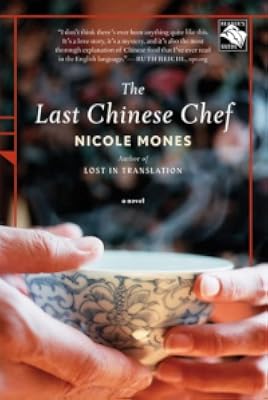
This book is a well written predecessor to her very excellent "The Last Chinese Chef". China that isn't some sort of Orientalist exotic place, yes! A realistic view and excellent expression of the relationship-based cultural style in relation to Western interpretation/misinterpretations, yes! Chinese men with sexuality, yes!
My biggest issue with the book, however, lies with the main character: a lost woman dealing with the aftermath of her racist politician father and her childhood as an icon for White Supremacists. She tries to atone by fleeing to the other side of the world and throwing herself into scrubbing off her whiteness and becoming... Chinese. The problem is that she's going about it in an incredibly wrongheaded manner, and show more despite denials to herself that it isn't the case, she is suffering greatly from a case of "Exotic Orientalism". And, as everyone around her continues to tell her, Chinese isn't a state that one can become. It isn't a haircut that one can eventually gain with care and attention. It's just what you happen to be born as, and grew up to be. It's a lifehood of culture. It's blood. Neither of which she has.
She does grow/mature, though. Eventually. Unfortunately, it takes her awhile and I almost lost patience--- I'm glad I stuck with it. I wasn't quite satisfied with the ending, but it worked. A pretty decent story and enjoyable to read. show less
My biggest issue with the book, however, lies with the main character: a lost woman dealing with the aftermath of her racist politician father and her childhood as an icon for White Supremacists. She tries to atone by fleeing to the other side of the world and throwing herself into scrubbing off her whiteness and becoming... Chinese. The problem is that she's going about it in an incredibly wrongheaded manner, and show more despite denials to herself that it isn't the case, she is suffering greatly from a case of "Exotic Orientalism". And, as everyone around her continues to tell her, Chinese isn't a state that one can become. It isn't a haircut that one can eventually gain with care and attention. It's just what you happen to be born as, and grew up to be. It's a lifehood of culture. It's blood. Neither of which she has.
She does grow/mature, though. Eventually. Unfortunately, it takes her awhile and I almost lost patience--- I'm glad I stuck with it. I wasn't quite satisfied with the ending, but it worked. A pretty decent story and enjoyable to read. show less
A slowly unfolding, low key story with parallel tales of lost things, including the Chinese wife of an archaeologist who is taken away by the NLA to a work camp for verboten information she included in an academic paper, the lost normalcy of an American woman's life after her father's outspoken views causes a murderous riot in her name, and the lost Peking man. I liked the story, and the setting, but the characters were unsympathetic and not fleshed out enough to appreciate them. Overall a good read though, if you are interested in Chinese customs and language.
It was nice to read a book about China, and the archaeological quest was an interesting plot line. However, I found the characters a bit wooden, and the relationships seemed to move ahead in fits and starts. Some of the original parts of the story (like the fact that the American doesn't get his funding) just seemed to fizzle out with no real conclusion: a bit frustrating. I would have liked some feel too of what it means to be a woman in Alice's situation: aside from her foreigner status, she seems to be moving in a very traditional society with almost no effort at all. If China's really like that, a few comments would have been nice, and would have made the novel more three-dimensional for me.
Beautifully written. Atmospheric. Interesting.
But bailed at 67%. Just a bit too "sensual" for me. Didn't pass the "recommend" to mom test. The reference to the female lead masturbating finally put me over the edge. Moving on.
But bailed at 67%. Just a bit too "sensual" for me. Didn't pass the "recommend" to mom test. The reference to the female lead masturbating finally put me over the edge. Moving on.
Members
- Recently Added By
Lists

Top Five Books of 2020
982 works; 350 members
Author Information

10 Works 1,975 Members
Awards and Honors
Common Knowledge
- Canonical title*
- Die Jadefrau
- Original title
- Lost in Translation
- Original publication date
- 1998
- Original language*
- Englisch
*Some information comes from Common Knowledge in other languages. Click "Edit" for more information.
Classifications
Statistics
- Members
- 638
- Popularity
- 45,317
- Reviews
- 14
- Rating
- (3.56)
- Languages
- 6 — English, French, German, Hungarian, Italian, Serbian
- Media
- Paper, Audiobook, Ebook
- ISBNs
- 17
- ASINs
- 8