On This Page
Description
When Newton was not yet twenty - five years old, he formulated calculus, hit upon the idea of gravity, and discovered the spectrum. By 1678, Newton designed a telescope to study the movement of the planets and published Principia, a milestone in the history of science, which set forth his famous laws of motion and universal gravitation. Newton's long-time research on calculus, finally made public in 1704, triggered a heated controversy as European scientists accused him of plagiarizing the show more work of the German scientist Gottfried Leibniz. In this third volume in the acclaimed Ackroyd's Brief Lives series, bestselling author Peter Ackroyd provides an engaging portrait of Isaac Newton, illuminating what we think we know about him and describing his seminal contributions to science and mathematics. A man of wide and eclectic interests, Newton blurred the borders between natural philosophy and speculation: he was as passionate about astrology as astronomy and dabbled in alchemy, while his religious faith was never undermined by his determination to interpret a modern universe as a mathematical universe. By bringing vividly to life a somewhat puritanical man whose desire to experiment and explore bordered on the obsessive, Peter Ackroyd demonstrates the unique brilliance of Newton's perceptions, which changed our understanding of the world. show lessTags
Recommendations




Member Reviews
Ackroyd’s prose always hustles the reader right along, deeper into his subject, and, in Newton, what a subject he found! This edition, one of the series of Brief Lives, by Doubleday, is a joy to hold and read, with hard board covers and hand-cut pages, fitting into the hand as sweetly as Ackroyd’s writing.
Newton, a middle-class lad destined for agricultural life, inheriting a small holding from his farmer father, astounded all with his inherent genius. True to the lore, it was apparent very early in his life, sustained throughout it, and undisputed still. Shy, reclusive yet aware of himself and his own genius, Newton spent most of his life bound within his college. Reluctant to publish his astounding conclusions, rejecting wider show more fame because others may dispute his findings, he somehow became famous … but few dared to offer contentions for his deductions and hypothesis.
A great little book about an enormous mind and an enormous service to mankind - ”if I have served the publik interest it is only through hard work” he said.
Perhaps, but ably assisted by an intelligence that still reigns supreme. show less
Newton, a middle-class lad destined for agricultural life, inheriting a small holding from his farmer father, astounded all with his inherent genius. True to the lore, it was apparent very early in his life, sustained throughout it, and undisputed still. Shy, reclusive yet aware of himself and his own genius, Newton spent most of his life bound within his college. Reluctant to publish his astounding conclusions, rejecting wider show more fame because others may dispute his findings, he somehow became famous … but few dared to offer contentions for his deductions and hypothesis.
A great little book about an enormous mind and an enormous service to mankind - ”if I have served the publik interest it is only through hard work” he said.
Perhaps, but ably assisted by an intelligence that still reigns supreme. show less
Brief life of Sir Isaac. Sympathetic to him, though if one reads between the lines, he could obviously be very difficult to deal with. I realise it's not meant to be a scholarly work, but there were some quotations which were unattributed and it would have been nice to know who said it, even if it was a name I didn't recognise.
A biography of Newton that is one of Ackroyd's short lives series. This biography is not concerned with minute detail; it is as it advertises - short. As such, it is a good selection for someone who would like an overview of the life, without having to go into painstakingly agonizing detail about every year of his life, as some biographers choose to do. Ackroyd hits the highlights. His writing style is good, easy to read, and in spite of being short, it is not incomplete. He does not give a lot of information on Newton's theories themselves; that's OK for a biography, since that information is available in so many places that it isn't needed here. Ackroyd does not simplify his subject; he simply removes needless speculation and show more uninteresting detail. A nice introduction to a complex subject. show less
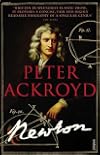
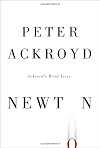
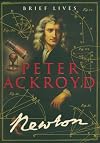
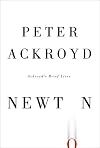
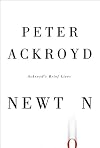
Part of the series of Ackroyd's Brief Lives, this is a short but engaging biography of Sir Isaac Newton. After reading Neal Stephenson's interpretation of Newton in his Baroque Cycle, I was curious to read something about the "real" man, and Newton is just as fascinating without any fictional embellishment. Ackroyd's biography of one of the most brilliant scientists who ever lived is very readable. I borrowed this copy from the library, but I'm tempted to buy one of my own. I even like the cover, with the "O" in "Newton" falling off the page under the influence of gravity, like Newton's famed apple falling from the tree.
I read this because I knew very little about Isaac Newton other than his laws of motion, which like you I learned in high school science classes. In under 200 pages, I learned the truth about the apple story--Newton told four different versions--and many other fascinating things about Newton.
Short and to the point, this biography covers the main accomplishments while hinting at some of the oddities and secrets surrounding Newton's life. It does not speculate, rather, it points out where others have speculated. Good introduction to Newton's work.
I loved the brief nature of this book. I have tried to deal with full length biographies of Newton in the past and always wimped out. This was just right for me. I learned a handful of things I didn't know and got an impression of the time in which he was working. Its got a good beat, you can dance to it, I give it 4 stars!
Members
- Recently Added By
Author Information

90+ Works 31,852 Members
Peter Ackroyd was born in London in 1949. He graduated from Cambridge University and was a Fellow at Yale (1971-1973). A critically acclaimed and versatile writer, Ackroyd began his career while at Yale, publishing two volumes of poetry. He continued writing poetry until he began delving into historical fiction with The Great Fire of London show more (1982). A constant theme in Ackroyd's work is the blending of past, present, and future, often paralleling the two in his biographies and novels. Much of Ackroyd's work explores the lives of celebrated authors such as Dickens, Milton, Eliot, Blake, and More. Ackroyd's approach is unusual, injecting imagined material into traditional biographies. In The Last Testament of Oscar Wilde (1983), his work takes on an autobiographical form in his account of Wilde's final years. He was widely praised for his believable imitation of Wilde's style. He was awarded the British Whitbread Award for biography in 1984 of T.S. Eliot, and the Whitbread Award for fiction in 1985 for his novel Hawksmoor. Ackroyd currently lives in London and publishes one or two books a year. He still considers poetry to be his first love, seeing his novels as an extension of earlier poetic work. (Bowker Author Biography) Peter Ackroyd is the award-winning author of four biographies, most recently the national bestseller "The Life of Thomas More", as well as ten novels, including "Chatterton" & "Hawksmoor". He lives in London, where he is at work on his next book, "London: The Biography. (Publisher Provided) Peter Ackroyd is a bestselling writer of both fiction and nonfiction. He lives in London. (Publisher Provided) show less
Series

Common Knowledge
- Canonical title
- Newton
- Original publication date
- 2006
- People/Characters
- Isaac Newton
Classifications
Statistics
- Members
- 187
- Popularity
- 171,732
- Reviews
- 10
- Rating
- (3.60)
- Languages
- Czech, English, Spanish
- Media
- Paper, Ebook
- ISBNs
- 7
- ASINs
- 2