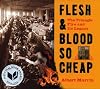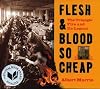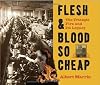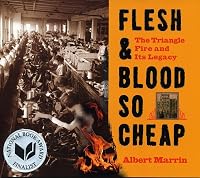
Flesh and Blood So Cheap: The Triangle Fire and Its Legacy
by Albert Marrin
On This Page
Description
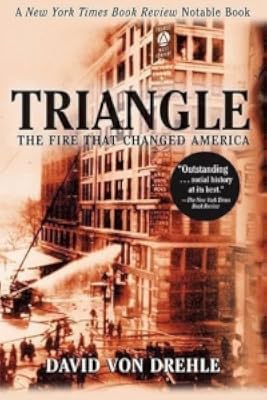
History. Young Adult Nonfiction. HTML:On March 25, 1911, the Triangle Shirtwaist Factory in New York City burst into flames. The factory was crowded. The doors were locked to ensure workers stay inside. One hundred forty-six people—mostly women—perished; it was one of the most lethal workplace fires in American history until September 11, 2001.But the story of the fire is not the story of one accidental moment in time. It is a story of immigration and hard work to make it in a new show more country, as Italians and Jews and others traveled to America to find a better life. It is the story of poor working conditions and greedy bosses, as garment workers discovered the endless sacrifices required to make ends meet. It is the story of unimaginable, but avoidable, disaster. And it the story of the unquenchable pride and activism of fearless immigrants and women who stood up to business, got America on their side, and finally changed working conditions for our entire nation, initiating radical new laws we take for granted today.
With Flesh and Blood So Cheap, Albert Marrin has crafted a gripping, nuanced, and poignant account of one of America's defining tragedies.
Includes a bonus PDF of photographs and images. show less
Tags
Recommendations

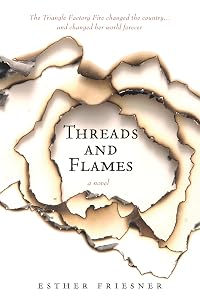
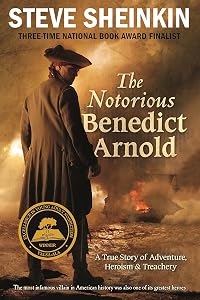
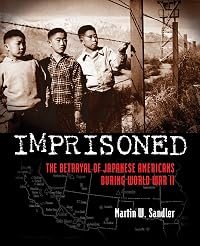
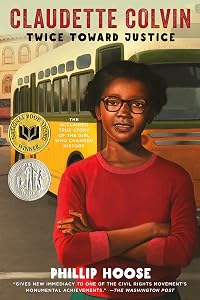


Member Reviews
Five stars. This hit differently as I read it in 2021. I had to set it down twice because I was crying. The book starts out guiding readers through Jewish and Italian immigrant experiences to New York in the turn of the twentieth century: those who would go on to work in garment factories. Four chapter in the beginning of this book pave this path and humanize the workers. The forces, social and economic, around the events leading up to the fire, are detailed. The fifth chapter is dedicated to the fire. The sixth chapter onward examines the societal changes, or lack thereof in terms of working conditions, that took place. Gangsters who were hired to beat up and even murder strikers in 1911 infiltrated unions in 1926. This book helped me show more figure out also why Teamsters Union is code for mafia. The book also examines modern-day sweatshops and disasters similar to the Triangle Shirtwaist fire. I'm so glad this book was published and I got to read it. show less
It was one of the deadliest industrial disasters in United States history, but you may not ever hear about it in history class. The fire at the Triangle Shirtwaist Factory in New York City in 1911 killed almost 150 workers, and yet it didn’t have to happen. This book starts by describing New York City at the turn of the twentieth century, a world of dirty neighborhoods, immigrant families surviving on next to nothing, corrupt and nearly unstoppable mafia bosses, and rapid industrialization. With no rules about how workers ought to be treated, business owners squeezed every advantage they could from employees who would starve if they didn’t have a job. Marrin goes on to explain the events leading up to the fire, the deadly disaster show more itself, and how it forced people to start seeing things a little differently. show less
Flesh and Blood So Cheap: The Triangle Fire and Its Legacy by Albert Marrin describes a major industrial tragedy of the early twentieth century: a fire at the Triangle Shirtwaist Factory, which took many lives in a haunting, horrific way -- all because precautions we take for granted today either did not exist, or had been ignored by the factory's owners. The book was well-written, though certainly not a light or easy read due to the subject matter. There were a few places where I thought the author's personal bias was apparent, but not enough to destroy the book's credibility. I learned a lot from it, though it did leave me wanting to read lighthearted romantic comedies for my next several reads!
This book outlines the circumstances leading up to the 1911 Triangle Factory Fire, the event itself, and the aftermath, including laws requiring workplace safety measures we take for granted today. It's a good example of the purpose of government intervention when businesses refuse to protect employees and the public and of how easily elected officials can ignore the needs of those who lack political power.
At first glance, you'll think this book is only about the fire that occurred at the Triangle Shirtwaist Factory in New York City on March 25, 1911, but that's not all it contains. The book takes its readers back through the experiences of the Southern Italian and Russian Jew immigrants occupying New York City at the time of the fire, providing reasons for their immigration and explanations of what it was like for them once they landed in the U.S. It goes on to discuss the horrible working conditions of the era, particularly for young women who worked in the garment industry. It discusses strikes, New York City politics of the era, and the impact the fire itself had on all of this. It ends with a warning that we are seeing history repeat show more itself in the working conditions at clothing factories overseas, leading readers to understand that we could be heading for another great tragedy like the Triangle fire if we don't do something about it.
This book does an excellent job of providing back story, including lots of photographs from the era that bring the events and people within its pages to life--and sometimes death.
If you're interested in history, especially the history of immigration, labor, and women's rights in New York City at the beginning of the 20th century, then this book is for you! show less
This book does an excellent job of providing back story, including lots of photographs from the era that bring the events and people within its pages to life--and sometimes death.
If you're interested in history, especially the history of immigration, labor, and women's rights in New York City at the beginning of the 20th century, then this book is for you! show less
I was initially skeptical of the historical, "let's talk about how these workers got to America before we discuss New York" approach, but the origins of America's Jewish and Italian populations were too interesting to ignore. The wide scope has a lot to say, though it does delay the triangle fire's placement in the book for a long while.
I don't know what to say about this, except I wasn't very impressed by it and I don't understand why it's on the shortlist for the National Book Award. I did learn a lot from it, but I didn't find the writing especially compelling. I also thought the title was misleading, as this isn't a book about the Triangle Fire so much as a book about immigration, labor rights, workplace safety, and the garment industry. I realize that those issues surround the Triangle Fire and it's necessary to talk about them when you talk about the Triangle Fire, but so few pages were spent on the actual Fire--that's why I call the title misleading.
I think my expectations were too high going into this. I expected something on par with [b:They Called Themselves show more the KKK] (which was truly brilliant) and instead got what I'd call a better-than-average non-fiction book for young people.
So if you're studying how industry, unions, and workers' rights evolved in the United States, this would be a great book to pick up. If you just want to read really great non-fiction, I'd look elsewhere. show less
I think my expectations were too high going into this. I expected something on par with [b:They Called Themselves show more the KKK] (which was truly brilliant) and instead got what I'd call a better-than-average non-fiction book for young people.
So if you're studying how industry, unions, and workers' rights evolved in the United States, this would be a great book to pick up. If you just want to read really great non-fiction, I'd look elsewhere. show less
Members
- Recently Added By
Lists

Mensa for Kids Excellence in Reading Award Program (Nonfiction)
54 works; 4 members
Author Information

56+ Works 5,270 Members
Albert Marrin, professor emeritus of history at Yeshiva University in New York City
Awards and Honors
Awards
Distinctions
Notable Lists
Common Knowledge
- Important places
- New York, New York, USA
- Important events
- Triangle Shirtwaist Factory Fire (1911-03-25)
Classifications
Statistics
- Members
- 353
- Popularity
- 89,435
- Reviews
- 27
- Rating
- (3.98)
- Languages
- English
- Media
- Paper, Audiobook, Ebook
- ISBNs
- 11
- ASINs
- 4