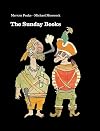
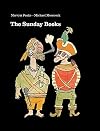
The Sunday Books
by Mervyn Peake (Illustrator), Michael Moorcock
On This Page
Description
Illustrations created by Mervyn Peake to accompany tales he told his family. Moorcock has invented stories and songs to accompany the drawings. Work begins with biographical essay about Peake.Tags
Recommendations





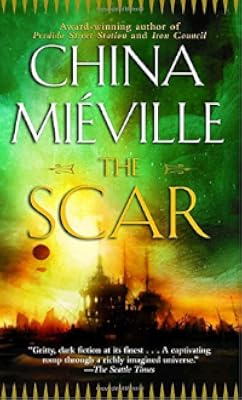


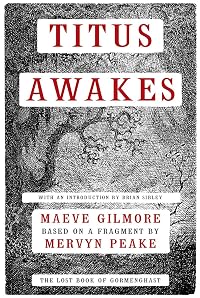
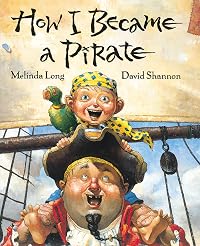

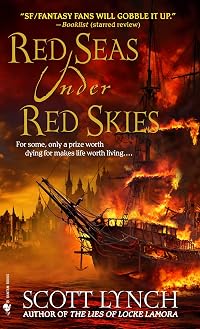












Member Recommendations

Member Reviews
When I saw this book I thought, "Mervyn Peake's illustrations; Michael Moorcock's words: what more could you ask for?" The answer is, "Mervyn Peake's words."
The illustrations were made by Peake for his children's story times and were not originally intended for publication. That many of them are drawn on line-ruled note paper and that some drawings have "leaked" through from the page beneath just adds to the charm.
Some of the drawings are rough sketches, but still clearly "Peake-ian" and worthy of inclusion. For the most part, however, they are really high quality illustrations and they look like they were made for a professional commission.
Moorcock's introduction is sweet and, as a friend of Peake and his family, his affection and show more regard really comes through. There are also some nice photos of the Peake family that I haven't seen before.
Regarding the main text, as Peake didn't record the stories he told to his children while making the drawings, Moorcock has written a story to link them together. He's created a pastiche of [b:Captain Slaughterboard Drops Anchor|39266|Captain Slaughterboard Drops Anchor|Mervyn Peake|http://photo.goodreads.com/books/1309674090s/39266.jpg|1332136] and [b:Letters from a Lost Uncle|39268|Letters from a Lost Uncle|Mervyn Peake|http://photo.goodreads.com/books/1169282265s/39268.jpg|1180463], but it doesn't quite work. The story feels overly forced to reference the illustrations instead of flowing naturally. I also found a few of the references to contemporary news stories (the banking crisis, rising oil prices, etc.) rather jarring. Annoying because Moorcock is a brilliant writer and should have done this better.
So, five stars for Peake's illustrations, three stars for Moorcock's text = 4 stars.
As an artefact, the book is very well put together: good quality paper and sturdily constructed. It sits really well in the hand and is a pleasure to read. show less
The illustrations were made by Peake for his children's story times and were not originally intended for publication. That many of them are drawn on line-ruled note paper and that some drawings have "leaked" through from the page beneath just adds to the charm.
Some of the drawings are rough sketches, but still clearly "Peake-ian" and worthy of inclusion. For the most part, however, they are really high quality illustrations and they look like they were made for a professional commission.
Moorcock's introduction is sweet and, as a friend of Peake and his family, his affection and show more regard really comes through. There are also some nice photos of the Peake family that I haven't seen before.
Regarding the main text, as Peake didn't record the stories he told to his children while making the drawings, Moorcock has written a story to link them together. He's created a pastiche of [b:Captain Slaughterboard Drops Anchor|39266|Captain Slaughterboard Drops Anchor|Mervyn Peake|http://photo.goodreads.com/books/1309674090s/39266.jpg|1332136] and [b:Letters from a Lost Uncle|39268|Letters from a Lost Uncle|Mervyn Peake|http://photo.goodreads.com/books/1169282265s/39268.jpg|1180463], but it doesn't quite work. The story feels overly forced to reference the illustrations instead of flowing naturally. I also found a few of the references to contemporary news stories (the banking crisis, rising oil prices, etc.) rather jarring. Annoying because Moorcock is a brilliant writer and should have done this better.
So, five stars for Peake's illustrations, three stars for Moorcock's text = 4 stars.
As an artefact, the book is very well put together: good quality paper and sturdily constructed. It sits really well in the hand and is a pleasure to read. show less
Ratings
Members
- Recently Added By
Author Information


661+ Works 65,288 Members
Michael Moorcock, 1939 - Writer Michael Moorcock was born December 18, 1939 in Mitcham, Surrey, England. Moorcock was the editor of the juvenile magazine Tarzan Adventures from 1956-58, an editor and writer for the Sexton Blake Library and for comic strips and children's annuals from 1959-61, an editor and pamphleteer for Liberal Party in 1962, show more and became editor and publisher for the science fiction magazine New Worlds in 1964. He has worked as a singer-guitarist, has worked with the rock bands Hawkwind and Blue Oyster Cult and is a member of the rock band Michael Moorcock and the Deep Fix. Moorcock's writing covers a wide range of science fiction and fantasy genres. "The Chronicles of Castle Brass" was a sword and sorcery novel, and "Breakfast in the Ruins: A Novel of Inhumanity" uses the character Karl Glogauer as a different person in different times. Karl participates in the political violence of the French Revolution, the Paris Commune, and a Nazi concentration camp. Moorcock also wrote books and stories that featured the character Jerry Cornelius, who had no consistent character or appearance. "The Condition of Muzak" completed the initial Jerry Cornelius tetralogy and won Guardian Literary Prize in 1977. "Byzantium Endures" and "The Laughter of Carthage" are two autobiographical novels of the Russian emigre Colonel Pyat and were the closest Moorcock came to conventional literary fiction. "Byzantium Endures" focuses on the first twenty years of Pyat's life and tells of his role in the Russian revolution. Pyat survives the revolution and the subsequent civil war by working first for one side and then another. "The Laughter of Carthage" covers Pyat's life from 1920-1924 telling of his escape from Communist Russia and his travels in Europe and America. It's a sweeping picture of the world during the 1920's because it takes the character from living in Constantinople to Hollywood. Moorcock returned to the New Wave style in "Blood: A Southern Fantasy" (1994) and combined mainstream fiction with fantasy in "The Brothel of Rosenstrasse," which is set in the imaginary city of Mirenburg. MoorCock won the 1967 Nebula Award for Behold the Man and the 1979 World Fantasy Award for his novel, Gloriana. (Bowker Author Biography) show less
Some Editions
Classifications
Statistics
- Members
- 38
- Popularity
- 766,173
- Reviews
- 1
- Rating
- (3.50)
- Languages
- English, French, Italian
- Media
- Paper
- ISBNs
- 4
- ASINs
- 1