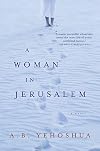
A Woman in Jerusalem
by A. B. Yehoshua
On This Page
Description
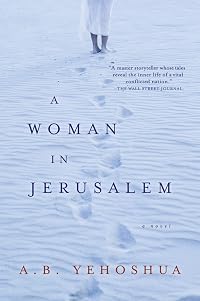
A woman in her forties is a victim of a suicide bombing at a Jerusalem market. Her body lies nameless in a hospital morgue. She had apparently worked as a cleaning woman at a bakery, but there is no record of her employment. When a Jerusalem daily accuses the bakery of "gross negligence and inhumanity toward an employee," the bakery's owner, overwhelmed by guilt, entrusts the task of identifying and burying the victim to a human resources man. This man is at first reluctant to take on the show more job, but as the facts of the woman's life take shape--she was an engineer from the former Soviet Union, a non-Jew on a religious pilgrimage to Jerusalem, and, judging by an early photograph, beautiful--he yields to feelings of regret, atonement, and even love.--From publisher description. show lessTags
Recommendations



















Member Recommendations
Member Reviews
A human resources manager in Jerusalem finds his job more demanding than he anticipated when he is delegated to research the death of an obscure employee killed in a suicide bombing. His long night takes some curious twists as he pieces together the mystery of the deceased woman. Yulia Ragayev, the only character in the book whose name is revealed, was tied to the company by an erroneous pay stub. This led to the tabloid article by a wiley reporter known as the weasel which adversely portrayed the bakery where she had been employed as a cleaner.
The aging owner accepts complete responsibility when he asks: “What is left to us if we lose our humanity?” This is the impetus that leads to the human resource director’s odyssey of show more atonement in Part 2. What began as a work assignment becomes a mission driven by humanity.
This is just one of the layers in this profound book that explores what it is like to live and die in a complicated world where terrorism and ethnicity influence who we are and how we live. Like a good parable, the meaning is not spelled out. The transformation of perspective comes through reading between the lines and seeing beyond the lifeless body of the woman in Jerusalem. Don’t be fooled by the brevity of this book…the subtle deeper layers will occupy your mind long after the final page is read. show less
The aging owner accepts complete responsibility when he asks: “What is left to us if we lose our humanity?” This is the impetus that leads to the human resource director’s odyssey of show more atonement in Part 2. What began as a work assignment becomes a mission driven by humanity.
This is just one of the layers in this profound book that explores what it is like to live and die in a complicated world where terrorism and ethnicity influence who we are and how we live. Like a good parable, the meaning is not spelled out. The transformation of perspective comes through reading between the lines and seeing beyond the lifeless body of the woman in Jerusalem. Don’t be fooled by the brevity of this book…the subtle deeper layers will occupy your mind long after the final page is read. show less
"A Woman in Jerusalem" is the second book I've read by this author: I read "The Lover" a while ago. I may not read another, but this is still a solid effort, and reading it made the author's preoccupations and habits a bit clearer to me. A few recurring elements: marriages in distress, a society under constant stress, and a mystery that slowly comes to obsess the novel's protagonist. In this case, it's the identity, employment status, and, in the end, the basic humanity of an Russian woman who emigrated to Israel only to die in a terrorist bombing. It wouldn't surprise me to learn that the author was a fan of detective fiction: as I read, I could feel the bones of a whodunit -- as it were -- poking through the text. But, as in "The show more Lover, Yehoshua also writes a few dreams into the narrative: he may have wanted to remind his readers that his characters do more than just move his narrative along.
In "A Woman in Jerusalem", as in "The Lover", simple tasks stretch out into lengthy projects and easy questions slowly become complex, emotionally trying mysteries. An effort to limit the fallout of some bad publicity, leads the main character to investigate whether the titular woman was, in fact, employed the bakery that the book's main character works for. "A Woman in Jerusalem" slowly becomes a meditation on what we owe -- and what we can really know about -- the strangers that live among us. I also suspect that the curious quest that our main character has been assigned functions as way to cope with widespread and unrelenting horror by making sure that at least one problem -- the final resting place of a non-Israeli victim -- has been resolved as far as is humanly possible. It'd be easy to write an essay on this topic, or to address them directly in the text, but I was rather impressed by the fact that most of these themes are addressed through the book's plot. I'm sure that some readers may feel that this book would be improved by a slightly faster pace, but I rather enjoyed the fact that events in "A Woman in Jerusalem" unfolded at a speed that felt natural and human. Similarly, the novel's themes revealed themselves as the plot inched forward. This doesn't make for a thrilling read -- which, I suppose, is another thing that would set it apart from detective fiction -- but it's a good of example of an author knowing to show rather than tell. I may not be Yehoshua's ideal reader, but this one is still worth checking out. show less
In "A Woman in Jerusalem", as in "The Lover", simple tasks stretch out into lengthy projects and easy questions slowly become complex, emotionally trying mysteries. An effort to limit the fallout of some bad publicity, leads the main character to investigate whether the titular woman was, in fact, employed the bakery that the book's main character works for. "A Woman in Jerusalem" slowly becomes a meditation on what we owe -- and what we can really know about -- the strangers that live among us. I also suspect that the curious quest that our main character has been assigned functions as way to cope with widespread and unrelenting horror by making sure that at least one problem -- the final resting place of a non-Israeli victim -- has been resolved as far as is humanly possible. It'd be easy to write an essay on this topic, or to address them directly in the text, but I was rather impressed by the fact that most of these themes are addressed through the book's plot. I'm sure that some readers may feel that this book would be improved by a slightly faster pace, but I rather enjoyed the fact that events in "A Woman in Jerusalem" unfolded at a speed that felt natural and human. Similarly, the novel's themes revealed themselves as the plot inched forward. This doesn't make for a thrilling read -- which, I suppose, is another thing that would set it apart from detective fiction -- but it's a good of example of an author knowing to show rather than tell. I may not be Yehoshua's ideal reader, but this one is still worth checking out. show less
An unidentified woman is killed in a Jerusalem suicide bombing, and the only clue to her identity is a pay stub from a prominent bakery. A journalist uses the situation to attack the bakery for callousness in allowing the woman's body to remain in the morgue unidentified. The owner of the bakery delegates responsibility of the situation to the company's human resources manager, who undertakes to solve the mystery of the woman's identity.
At times a mystery story and at times a humorous take on the outcomes of our best efforts, the novel is also a commentary on how people can interact without ever truly seeing the other person. And how people can end up interconnected with the most unlikely of other people if we do open our eyes to the show more possibilities of human relationships. show less
At times a mystery story and at times a humorous take on the outcomes of our best efforts, the novel is also a commentary on how people can interact without ever truly seeing the other person. And how people can end up interconnected with the most unlikely of other people if we do open our eyes to the show more possibilities of human relationships. show less
I don't like AB Yehoshua the man, at least insofar of what I've read of him in articles and in speeches and from quotes. He's not exactly the nicest man or the greatest master of tact (equating Diaspora Judaism to masturbation and apparently returning Saul Bellow's compliment of being a 'world class writer' with 'I wouldn't trade ten Saul Bellows for one William Faulkner'---what an ass) and striking me just a tad as a political hypocrite. And he's certainly not the modern Israeli literary equivalent of William Faulkner despite what he or any of his cheerleaders in Israel and abroad may say or actually believe.
All that being said I hope this properly prefaces this review. This is an excellent book, the best of his I've read since his show more first book The Lover. It doesn't always skilfully navigate the divide between parable and ostensibly realistic story in Israel, having more than a few noticeable slips and moments of friction between the two, but what Yehoshua does well he does incredibly well. Admittedly the first quarter or so of the book is at times painfully slow. Almost as if Yehoshua doesn't quite know what he wants the story to be or what foundation he wants to lay in terms of character basis and tone of narrative.
But these slips are momentary and only last the first eighty or so pages. Where the story really takes off is when (spoiler) the protagonist and others make it to the eponymous woman's native country and begin their funereal journey. Without giving too much away this is where the story's substantive core is revealed and Yehoshua proves his (sometimes) mastery of exploring the Israeli mental and emotional condition when staged outside of the country of Israel and left to fend for itself in a world that may or not even acknowledge Israel or, possibly even more difficult, acknowledge it but just not care, refusing to glorify or demonize but simply give it (the country) and them (the Israelis) no more than a passing glance.
A great read and well worth the time despite the spoken words of the jackass author himself. show less
All that being said I hope this properly prefaces this review. This is an excellent book, the best of his I've read since his show more first book The Lover. It doesn't always skilfully navigate the divide between parable and ostensibly realistic story in Israel, having more than a few noticeable slips and moments of friction between the two, but what Yehoshua does well he does incredibly well. Admittedly the first quarter or so of the book is at times painfully slow. Almost as if Yehoshua doesn't quite know what he wants the story to be or what foundation he wants to lay in terms of character basis and tone of narrative.
But these slips are momentary and only last the first eighty or so pages. Where the story really takes off is when (spoiler) the protagonist and others make it to the eponymous woman's native country and begin their funereal journey. Without giving too much away this is where the story's substantive core is revealed and Yehoshua proves his (sometimes) mastery of exploring the Israeli mental and emotional condition when staged outside of the country of Israel and left to fend for itself in a world that may or not even acknowledge Israel or, possibly even more difficult, acknowledge it but just not care, refusing to glorify or demonize but simply give it (the country) and them (the Israelis) no more than a passing glance.
A great read and well worth the time despite the spoken words of the jackass author himself. show less
An anonymous woman is killed in a terrorist attack in Jerusalem, and her body lies unidentified and unclaimed. A recent pay stub is found among her belongings, and a news weekly publishes an article, calling the company uncaring and negligent. The elderly owner calls on his human resources manager to uncover the truth and salvage the company's reputation.
The human resources manager, recently divorced, is dealing with problems of his own. But he has no choice. Researching personnel records, he discovers the woman was an immigrant from one of the countries in the former Soviet Union, and had come to the city for religious reasons. Although trained as an engineer, she was employed as a cleaning woman on the night shift. She was recently show more let go, but an apparent clerical error resulted in her continuing to receive wages. The human resources manager meets with her supervisor, learns some interesting details, and finds himself personally committed to locating the woman's family and making arrangements for burial. This becomes a journey of atonement and, while it was initially intended simply to clear the company's name, the human resources manager begins to view it as a personal quest, even though he did not know the woman personally.
Yehoshua's prose is terse and understated. The characters do not have names. Yet I found myself caught up in the story, sympathizing with the human resources manager, and mourning with the woman's family. I couldn't put this down and finished it in an afternoon. show less
The human resources manager, recently divorced, is dealing with problems of his own. But he has no choice. Researching personnel records, he discovers the woman was an immigrant from one of the countries in the former Soviet Union, and had come to the city for religious reasons. Although trained as an engineer, she was employed as a cleaning woman on the night shift. She was recently show more let go, but an apparent clerical error resulted in her continuing to receive wages. The human resources manager meets with her supervisor, learns some interesting details, and finds himself personally committed to locating the woman's family and making arrangements for burial. This becomes a journey of atonement and, while it was initially intended simply to clear the company's name, the human resources manager begins to view it as a personal quest, even though he did not know the woman personally.
Yehoshua's prose is terse and understated. The characters do not have names. Yet I found myself caught up in the story, sympathizing with the human resources manager, and mourning with the woman's family. I couldn't put this down and finished it in an afternoon. show less
I seem to have liked this book much, much more than its other reviewers. What struck me most was the narrative of this story. It was so tight and telling about one particular situation. The flow of the story was missing no details (except for the names of the characters, but that only made the story much more creative and its telling much more difficult). It was so well directed.
A lapse by a (nameless) human resources manager in a large baking operation was named by a newspaper article as the reason for the death of a middle age woman in a terrorist bombing in the city of Jerusalem, Israel. The (nameless) owner of this company wants a no-holds-barred effort made to absolve his company of any wrong-doing and appoints the human resources show more manager to be in charge of this. How he goes about doing this is the story of his efforts to bring Yulia Ragayev (our deceased woman) to her final resting place.
I thought this story was brilliant. It is not about Israel or about Jerusalem, yet it is because we hear thoughts about the country and the city subtly spoken by many of the characters. Funny in places (not the laugh-out-loud kind, but the absurd kind), this story was a delight to read - especially the ending.
This is the kind of story in which the reader has to just suspend his disbelief in what happens and play along with the author. Enjoy the characters and the trip (which is a long one!). You will be justly rewarded. show less
A lapse by a (nameless) human resources manager in a large baking operation was named by a newspaper article as the reason for the death of a middle age woman in a terrorist bombing in the city of Jerusalem, Israel. The (nameless) owner of this company wants a no-holds-barred effort made to absolve his company of any wrong-doing and appoints the human resources show more manager to be in charge of this. How he goes about doing this is the story of his efforts to bring Yulia Ragayev (our deceased woman) to her final resting place.
I thought this story was brilliant. It is not about Israel or about Jerusalem, yet it is because we hear thoughts about the country and the city subtly spoken by many of the characters. Funny in places (not the laugh-out-loud kind, but the absurd kind), this story was a delight to read - especially the ending.
This is the kind of story in which the reader has to just suspend his disbelief in what happens and play along with the author. Enjoy the characters and the trip (which is a long one!). You will be justly rewarded. show less
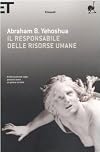
Il mio primo Yehoshua - sicuramente non l'ultimo. Una scrittura molto asciutta, quasi completamente priva di avverbi (avranno forse ragione gli insegnanti anglosassoni di scrittura creativa? Mi sa che questo autore ha fatto una scelta personale e non guidata, tuttavia).
La cosa che mi è piaciuta di più: la delicatezza nel trattatare temi un po' fuori dal coro e la surrealità di certe scelte nella trama.
La cosa che mi è piaciuta di più: la delicatezza nel trattatare temi un po' fuori dal coro e la surrealità di certe scelte nella trama.
Members
- Recently Added By
Published Reviews
ThingScore 100
The enormous weight of Jerusalem as metaphor is everywhere in Yehoshua’s fiction; and can be found again, and powerfully, in his remarkable new book, “A Woman in Jerusalem.”
This novel has about it the force and deceptive simplicity of a masterpiece: terse (or relatively so, given that Yehoshua’s novels are often long), eminently readable but resonantly dense.
This novel has about it the force and deceptive simplicity of a masterpiece: terse (or relatively so, given that Yehoshua’s novels are often long), eminently readable but resonantly dense.
added by SqueakyChu
Lists

Jewish Books
367 works; 24 members

Best Israeli Reading
55 works; 12 members
Author Information

75+ Works 4,431 Members
Abraham B. Yehoshua, known commonly as A.B. Yehoshua, was born in Jerusalem on December 19, 1936. He studied Hebrew literature and philosophy at the Hebrew University in Jerusalem. He has taught at high-school and university levels and is currently a professor of literature at Haifa University. He is a novelist, essayist, and playwright. His first show more book of stories, The Death of the Old Man, was published in 1962. His novels include Mr. Mani, Open Heart, Five Seasons, and Friendly Fire. He won the Israeli Prize in 1994. (Bowker Author Biography) show less
Some Editions
Awards and Honors
Awards
Distinctions
Notable Lists
Series
Belongs to Publisher Series
Common Knowledge
- Canonical title
- A Woman in Jerusalem
- Original title
- שליחותו של הממונה על משאבי אנוש
- Original publication date
- 2004
- People/Characters
- human resources manager; night supervisor; Yulia Ragayev; the owner; the journalist; the phtographer
- Important places*
- Gerusalemme, Israele
- Related movies
- The Human Resources Manager (2010)
- Dedication
- To the memory of our friend Dafna who was killed in a terrorist attack on Mount Scopus in the summer of 2002.
- First words
- Even though the manager of the human resources division had not sought such a mission, now, in the softly radiant morning, he grasped its unexpected significance.
- Last words
- (Click to show. Warning: May contain spoilers.)As always, I am at your service.
- Original language
- Hebrew
*Some information comes from Common Knowledge in other languages. Click "Edit" for more information.
Classifications
- Genres
- Fiction and Literature, General Fiction
- DDC/MDS
- 892.436 — Literature & rhetoric Literatures of other languages Afro-Asiatic literatures Jewish, Israeli, and Hebrew Hebrew fiction 1947–2000
- LCC
- PJ5054 .Y42 .S4913 — Language and Literature Oriental languages and literatures Oriental philology and literature Hebrew Literature Individual authors and works
- BISAC
Statistics
- Members
- 607
- Popularity
- 48,153
- Reviews
- 30
- Rating
- (3.48)
- Languages
- 11 — Catalan, Dutch, English, French, German, Hebrew, Italian, Portuguese, Russian, Spanish, Swedish
- Media
- Paper, Ebook
- ISBNs
- 21
- ASINs
- 5