On This Page
Description
Tallinn, 1419. What links the Keeper of the Tower, a prostitute and a Flemish painter to a haunted house on Rataskaevu Street? All three claim to have seen a ghost near the house, and each is found dead soon afterwards. Melchior Wakenstede, apothecary and assistant bailiff, is charged with unearthing the truth. With a cultivated sense for justice, Melchior investigates the deaths and attempts to find out whether, as the denizens of medieval Tallinn believe, ghosts can reap their revenge upon show more the living. When a powerful merchant dies, Melchior perceives a corporeal connection between this and the other deaths. As Melchior becomes embroiled in the conflicts and rivalries between religious orders, merchant guilds and Teutonic Knights, all vying with one another for control of the town, what he discovers is more incredible and more terrible than any ghost. show lessTags
Recommendations





















Member Reviews
Unfortunately this is a repeat of the botched job done with the publication of [book:Apothecary Melchior and the Mystery of St Olaf's Church|29595945], which was the English translation of the 1st book of the Estonian language Apothecary Melchior mediaeval mystery series by [author:Indrek Hargla|1068348]. Similar errors of incorrect tense, missing words, doubled words, misspelled words, odd translations and no translations (with no explanations via a glossary) are present throughout and a sample selection is provided below. There were several minor points which I've let slide from the errata (e.g. Brother Hinricus was left with his full name in the first translated book, but is named Brother Hinric here - shouldn't there be some show more consistency in the supporting character names between books in an ongoing series?)
The translators of the 2 Melchior books are different, [author:Adam Cullen|3518709] in the case of St. Olaf’s and [author:Christopher Moseley|684817] in Rataskaevu. Both translators have been represented by excellent typo-free books translated from Estonian in the past (e.g. Cullen for Mihkel Mutt’s [book:The Cavemen Chronicle|26777807], Moseley for Andrus Kivirähk's [book:The Man Who Spoke Snakish|25246592]) so this really confirms the case of sloppy work by the present Publisher and their Editors.
Rataskaevu somewhat follows the pattern of St. Olaf’s in presenting several murders and mysteries which the inquisitive apothecary is able to solve with his queries and the occasional aid of his Estonian wife Keterlyn and the town magistrate Wentzel Dorn. The town executioner and torturer also makes a (thankfully brief) appearance. It is the often very brutal killings or torments along with the occasional explicit sex scene that takes the Melchior series into more noirish territory than [author:Ellis Peters|4046]’s Brother Cadfael series which is probably its closest parallel in mediaeval mysteries. The solution in the end of Rataskaevu may seem like quite a stretch, but Hargla does drop all the appropriate clues along the way, often in a single, easily overlooked sentence. I gave the original Estonian a 4 rating, but my continued distress and distraction with the typos here are the reason for a 2 this time.
I have heard that the current plans are for only the first 2 books of the Apothecary Melchior series to be translated into English. More may come if the first 2 are successful, but based on the lack of care that went into them, I’m not very hopeful. Meanwhile the French are zipping along with No. 4 [book:L'étrangleur de Pirita|30633074] (Apothecary Melchior and the Strangler of Pirita) released early in 2016, topped only by the Finns who are completey up to date with No. 5 [book:Apteekkari Melchior ja Tallinnan kronikka|29888754] (Apothecary Melchior and the Chronicles of Tallinn).
Stray Observations
• This book jumps to the year 1419 from book 1’s 1409 which was necessary to stay historically accurate with the preliminary building dates of the St. Bridget's Convent which is a subplot of the book. See an English language history of the St. Bridget's Convent at http://www.piritaklooster.ee/index.php?id=10605
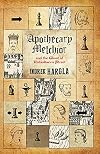
• The 3D City Map seen in cut-out squares on the cover has nothing to do with the Tallinn (Reval) of 1419. The excerpts are actually redrawn from the 1561 “Woodcut” map of London, England (once attributed to Ralph Agas), specifically the City of Westminster in the extreme lower left hand corner. See the full 1561 map here https://mapoflondon.uvic.ca/agas.htm (you can zoom in on the City of Westminster).
• Similarly, the sketch portraits shown on the cover have no relationship to the characters in the book. The source of the sketches is unknown to me.
• The Curse of the Wakenstedes update: There is no further clarification in this book about the occasional inherited pains that Melchior refers to as the curse of the male line in his family. The pain is throughout his body though and is not specifically localized, so my idea of migraine headaches based on reading book 1 seems to be a non-starter.
ERRATA
pg. 34 “a woman can been an alleviator”
pg. 38 “and it wouldn’t be long before didn’t have enough money”
pg. 47 “…, but this boy really in too poor a shape.”
pg. 68 “Those had been the Dorn’s words,…” (translates “kohtufoogt” (which is translated in the rest of the book as “magistrate” or occasionally as the old high german “vogt”) as “the Dorn” as if Magistrate Wentzel Dorn’s last name was his position or title)
pg. 74 “once could access the strip of land” (should be “one could access…”)
pg. 74 & 80 inconsistently capitalized “Apothecary” sometimes written simply as “apothecary” even on the same page.
pg. 81 “...heard that thge Master of Jackewolde…”
pg. 86 “…and the she had been to the saun…”
pg. 115 “…where crew were needed…”
pg. 116 “kogge ships” is left untranslated (“kogge” is German), could have been translated as “cog ships”. There is no glossary to explain this.
pg. 145 etc. “But Dorothea was insane.” (translates the Estonian “nõdrameelne” as “insane”, which is technically a correct translation, but seems very harsh in the context of the story, where the daughter is portrayed as more of a simple-minded soul)
pg. 149 “cheeseparers” (translation of the Estonian “peenikesed”?)
pg. 151 “…for where would a holy brother being going in the morning…"
pg. 166 “dörnse” not translated, Old High German?. No web translation found, but in the context this seems to be a living room which the merchant is also using as a bedroom. No glossary to explain this.
pg. 166 “diele” not translated, Old High German “hallway in a private residence”. No glossary to explain this.
pg. 177 uses the archaic “horary prayers” instead of “hourly prayers” for the translation of the Estonian “tunnipalvuseks”, technically correct, but just seems off. There is nothing archaic about the Estonian wording.
pg. 181 “The brothers at my biscuits last night, did they?” (should be “ate my biscuits”)
pg. 182 “They Swedes used to call it Mariendal,…” (“Swedes” wasn’t even in the original Estonian, this could have been “They used to…” or “The Swedes used to…”, but not both)
pg. 183 “…was deeply rutted by wagons wheels..."
pg. 188 “…, be he decided that he was invited...”
pg. 188 inconsistent spelling of “Bridget”, sometimes as “Brigit”.
pg. 190 “...some of these men went Rome and to the Council of…”
pg. 194 “…and they had hang back even further…”
pg. 267 “…taken to a prison cell in the in the Bremen Tower." show less
The translators of the 2 Melchior books are different, [author:Adam Cullen|3518709] in the case of St. Olaf’s and [author:Christopher Moseley|684817] in Rataskaevu. Both translators have been represented by excellent typo-free books translated from Estonian in the past (e.g. Cullen for Mihkel Mutt’s [book:The Cavemen Chronicle|26777807], Moseley for Andrus Kivirähk's [book:The Man Who Spoke Snakish|25246592]) so this really confirms the case of sloppy work by the present Publisher and their Editors.
Rataskaevu somewhat follows the pattern of St. Olaf’s in presenting several murders and mysteries which the inquisitive apothecary is able to solve with his queries and the occasional aid of his Estonian wife Keterlyn and the town magistrate Wentzel Dorn. The town executioner and torturer also makes a (thankfully brief) appearance. It is the often very brutal killings or torments along with the occasional explicit sex scene that takes the Melchior series into more noirish territory than [author:Ellis Peters|4046]’s Brother Cadfael series which is probably its closest parallel in mediaeval mysteries. The solution in the end of Rataskaevu may seem like quite a stretch, but Hargla does drop all the appropriate clues along the way, often in a single, easily overlooked sentence. I gave the original Estonian a 4 rating, but my continued distress and distraction with the typos here are the reason for a 2 this time.
I have heard that the current plans are for only the first 2 books of the Apothecary Melchior series to be translated into English. More may come if the first 2 are successful, but based on the lack of care that went into them, I’m not very hopeful. Meanwhile the French are zipping along with No. 4 [book:L'étrangleur de Pirita|30633074] (Apothecary Melchior and the Strangler of Pirita) released early in 2016, topped only by the Finns who are completey up to date with No. 5 [book:Apteekkari Melchior ja Tallinnan kronikka|29888754] (Apothecary Melchior and the Chronicles of Tallinn).
Stray Observations
• This book jumps to the year 1419 from book 1’s 1409 which was necessary to stay historically accurate with the preliminary building dates of the St. Bridget's Convent which is a subplot of the book. See an English language history of the St. Bridget's Convent at http://www.piritaklooster.ee/index.php?id=10605
• The 3D City Map seen in cut-out squares on the cover has nothing to do with the Tallinn (Reval) of 1419. The excerpts are actually redrawn from the 1561 “Woodcut” map of London, England (once attributed to Ralph Agas), specifically the City of Westminster in the extreme lower left hand corner. See the full 1561 map here https://mapoflondon.uvic.ca/agas.htm (you can zoom in on the City of Westminster).
• Similarly, the sketch portraits shown on the cover have no relationship to the characters in the book. The source of the sketches is unknown to me.
• The Curse of the Wakenstedes update: There is no further clarification in this book about the occasional inherited pains that Melchior refers to as the curse of the male line in his family. The pain is throughout his body though and is not specifically localized, so my idea of migraine headaches based on reading book 1 seems to be a non-starter.
ERRATA
pg. 34 “a woman can been an alleviator”
pg. 38 “and it wouldn’t be long before didn’t have enough money”
pg. 47 “…, but this boy really in too poor a shape.”
pg. 68 “Those had been the Dorn’s words,…” (translates “kohtufoogt” (which is translated in the rest of the book as “magistrate” or occasionally as the old high german “vogt”) as “the Dorn” as if Magistrate Wentzel Dorn’s last name was his position or title)
pg. 74 “once could access the strip of land” (should be “one could access…”)
pg. 74 & 80 inconsistently capitalized “Apothecary” sometimes written simply as “apothecary” even on the same page.
pg. 81 “...heard that thge Master of Jackewolde…”
pg. 86 “…and the she had been to the saun…”
pg. 115 “…where crew were needed…”
pg. 116 “kogge ships” is left untranslated (“kogge” is German), could have been translated as “cog ships”. There is no glossary to explain this.
pg. 145 etc. “But Dorothea was insane.” (translates the Estonian “nõdrameelne” as “insane”, which is technically a correct translation, but seems very harsh in the context of the story, where the daughter is portrayed as more of a simple-minded soul)
pg. 149 “cheeseparers” (translation of the Estonian “peenikesed”?)
pg. 151 “…for where would a holy brother being going in the morning…"
pg. 166 “dörnse” not translated, Old High German?. No web translation found, but in the context this seems to be a living room which the merchant is also using as a bedroom. No glossary to explain this.
pg. 166 “diele” not translated, Old High German “hallway in a private residence”. No glossary to explain this.
pg. 177 uses the archaic “horary prayers” instead of “hourly prayers” for the translation of the Estonian “tunnipalvuseks”, technically correct, but just seems off. There is nothing archaic about the Estonian wording.
pg. 181 “The brothers at my biscuits last night, did they?” (should be “ate my biscuits”)
pg. 182 “They Swedes used to call it Mariendal,…” (“Swedes” wasn’t even in the original Estonian, this could have been “They used to…” or “The Swedes used to…”, but not both)
pg. 183 “…was deeply rutted by wagons wheels..."
pg. 188 “…, be he decided that he was invited...”
pg. 188 inconsistent spelling of “Bridget”, sometimes as “Brigit”.
pg. 190 “...some of these men went Rome and to the Council of…”
pg. 194 “…and they had hang back even further…”
pg. 267 “…taken to a prison cell in the in the Bremen Tower." show less
Melchior is back. Set ten years after after the first book, mysterious murders shake the medieval Tallinn again but nothing can stay hidden from our favourite pharmacist who once again uncovers the terrible truth.
Igavesti vahva raamat! Süžee on selline välja mõeldud, et uskumatu kohe. Raske oleks seda olnud ette välja mõelda. Ja hästi haaravalt oli kirjutatud ka. Ühe hooga lugesin läbi. Ja nüüd ootan kannatamatult järge.
Feb 20, 2011Estonian
Ratings
Members
- Recently Added By
Author Information

46+ Works 800 Members
Series

Common Knowledge
- Canonical title
- Apothecary Melchior and the Ghost of Rataskaevu Street
- Original title
- Apteeker Melchior ja Rataskaevu viirastus : kriminaalromaan vanast Tallinnast
- Original publication date
- 2010
- First words*
- Kuolema haisi makean eltaantuneelta ja mädäntyneeltä, vanhalta ja homeiselta.
- Last words*
- (Click to show. Warning: May contain spoilers.)Mutta ehkä hänestä vain tuntui siltä.
*Some information comes from Common Knowledge in other languages. Click "Edit" for more information.
Classifications
- Genres
- Fiction and Literature, Mystery, Historical Fiction, General Fiction
- DDC/MDS
- 894.5453 — Literature & rhetoric Literatures of other languages Literatures of Altaic, Uralic, Hyperborean, Dravidian languages; literatures of miscellaneous languages of south Asia Finno-Ugric languages Finnic languages Estonian Estonian fiction
- LCC
- PH667.18 .A74 .A68 — Language and Literature Uralic languages. Basque language Uralic. Basque Other Finnic languages and dialects Estonian
- BISAC
Statistics
- Members
- 89
- Popularity
- 354,651
- Reviews
- 3
- Rating
- (3.59)
- Languages
- English, Estonian, Finnish, French
- Media
- Paper, Ebook
- ISBNs
- 12
- ASINs
- 2